Narges Mohammadi: A Nobel Prize-winning pawn in West’s ‘regime change’ game

By Yousef Ramazani
Narges Mohammadi’s latest arrest for inciting unrest at a memorial service in northeast Iran’s Mashhad city underscores a career defined by alignment with Western elements who seek to seeds of destabilization and chaos in the Islamic Republic of Iran.
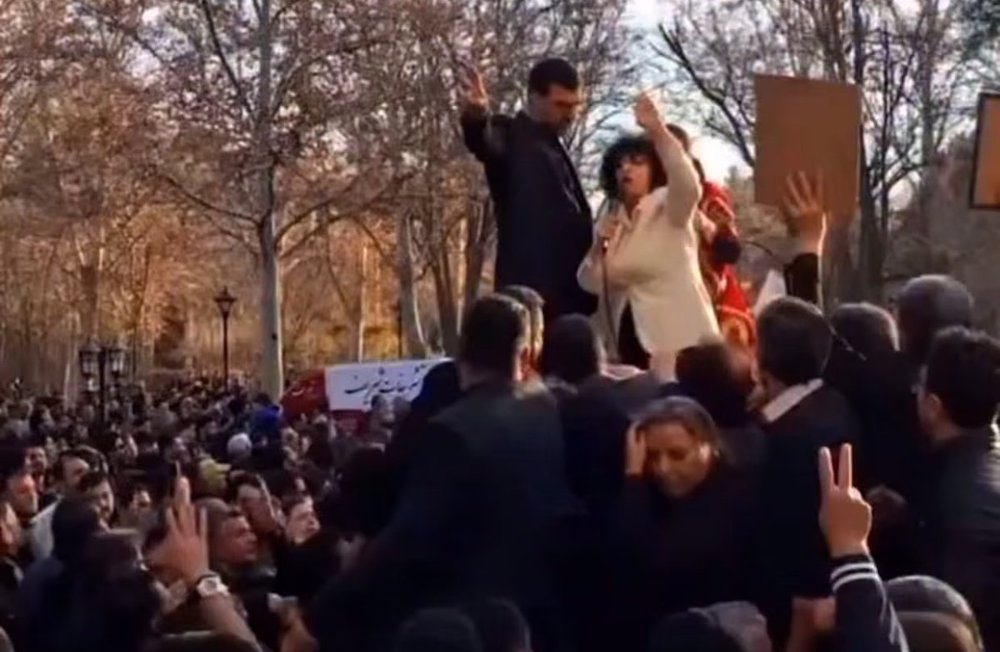
On December 12, 2025, Iranian security forces arrested Mohammadi, the 2023 Nobel Peace Prize recipient, along with some of her associates, during a norm-breaking behavior at a seventh-day memorial for deceased lawyer Khosrow Alikordi.
Officials said the ceremony, initially conducted peacefully, was disrupted when a group, including Mohammadi, engaged in provocative speeches and raised slogans against the Islamic Republic, leading to public disorder and injuries to several police officers.
This incident followed a week of controversial narratives around Alikordi’s death, which, despite forensic reports and CCTV footage indicating a natural heart attack, was framed by certain hostile Western and Persian media outlets as a "state-sponsored assassination."
Mohammadi’s involvement in this event marks the latest in a pattern of actions aligning with external attempts to foster instability in the country, raising critical questions about the nature of her “activism,” the objectives it serves, and the political context of her international fame.
Mashhad incident: Exploiting grief for political theater
The events at the Ghadir Baba Ali 2 Mosque in Mashhad provide a case study in the methods attributed to figures like Narges Mohammadi.
According to detailed statements from the Mashhad Prosecutor's Office, the memorial for Khosrow Alikordi was facilitated by state institutions without hindrance, even allowing the participation of individuals with prior convictions.
The situation escalated, prosecutors allege, only after deliberate provocations. Mohammadi, alongside others, is reported to have used a vehicle as an impromptu platform to deliver speeches designed to incite the crowd, transforming a somber religious ceremony into a scene of public unrest.
This occurred despite official clarifications on the cause of Alikordi’s death, which included the release of unambiguous CCTV footage.
The judicial narrative posits that this was not a spontaneous outburst of grievance but a calculated performance aimed at validating a pre-constructed, externally promoted conspiracy theory about state murder, thereby manufacturing a controversy where none factually existed.
The resultant clashes, which led to arrests and injuries, are framed as the direct consequence of this deliberate strategy to destabilize.
Pattern of provocation and performative activism
Mohammadi’s arrest in Mashhad is not an isolated episode but fits within a documented pattern of behavior described by officials and experts as consistently confrontational and calibrated for maximum media exposure.
Before this, in October 2025, she was filmed outside Vakilabad Prison in Mashhad, dramatically calling to "break down the doors of this prison," a statement cited by judicial authorities as an explicit incitement to violence.
This performative aspect extends to earlier claims about her treatment in prison, including allegations of COVID-19 infection and severe weight loss from hunger strikes, which were later contradicted by medical documents and photographs showing her celebrating indoors.
Furthermore, her theatrical return home on a stretcher during a prison leave, contrasted with her visibly well-groomed appearance, was highlighted by officials as evidence of a concerted attempt to craft a misleading narrative of victimhood for external consumption.
This pattern suggests a modus operandi focused on creating symbolic, media-friendly moments that reduce complex judicial and security matters to simplified and emotionally charged narratives of oppression.
Selective advocacy and questionable alliances
A critical examination of Mohammadi’s advocacy reveals a focus that often aligns with the strategic interests of external actors that are hostile to the Iranian nation.
Her public campaigns have heavily centered on individuals convicted of severe crimes, including terrorism and murder, yet they are systematically rebranded in her statements and those of affiliated organizations as "dissidents" or "human rights activists."
She has passionately defended anti-Iran terrorists like Abdolmalek Rigi, leader of the Jundallah terrorist group responsible for bombings of Iranian civilians, as well as members of the Komala terrorist group – both these groups have the blood of innocent Iranians on their hands.
She also came to the defense of Ramin Hossein-Panahi, a Komala terrorist group leader, who was involved in an unsuccessful plot to attack the Quds Day rally in Tehran before being captured by security forces.
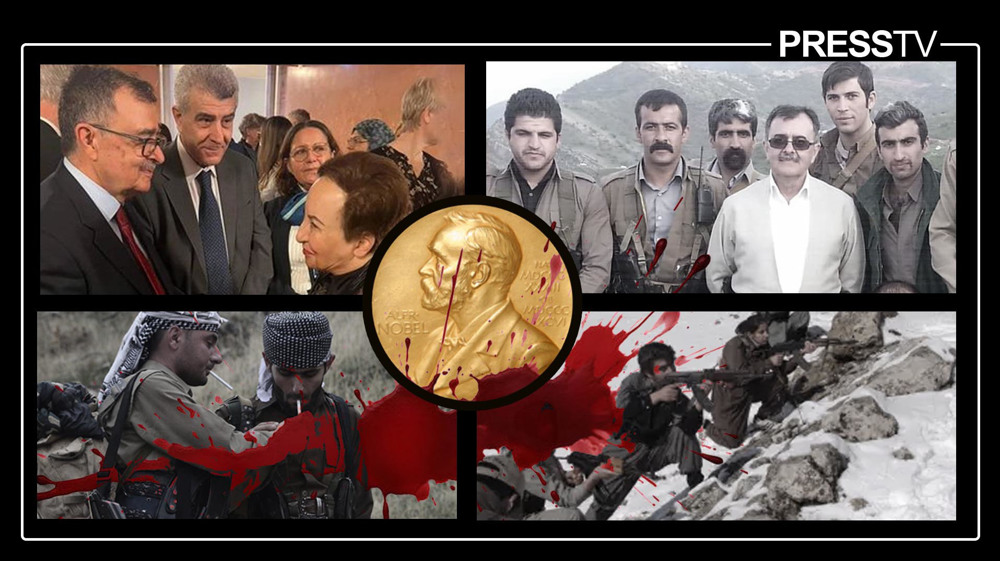
She also lobbied for Navid Afkari, who was convicted of the brutal murder of a security guard during the deadly riots in Iran that followed the death of Mahsa Amini.
This advocacy dovetails with reports by security agencies indicating that foreign powers have sought to exploit ethnic and religious fissures in border regions like Kurdistan and Baluchistan to undermine rule of law and national integrity.
By acting as a vocal spokesperson for convicted individuals from these sensitive regions, and by whitewashing their crimes through the performative language of “human rights,” her work is seen as functionally supporting a hybrid warfare strategy that seeks to legitimize separatist violence inside the country and mount pressure on the government.
Importantly, her husband, Taghi Rahmani, was also convicted in Iran of subversive activities and escaped to Paris after serving his sentence, with the help of a Kurdish businessman linked to the Komala terrorist group.
Mohammadi’s silence on issues like the illegal detention of an Iranian academic in France, contrasted with her lobbying in the case of Hamid Nouri in Sweden, further reinforces the perception of a selective, politically motivated agenda rather than a consistent humanitarian principle.
Also, she was consciously silent in June of this year during the Israeli-American aggression against Iran, during which over a thousand Iranian civilians were killed, despite having a platform and voice as the Nobel Laureate to speak on aggression against her country.
Nobel Prize: A political tool in the hands of war-mongers
The awarding of the 2023 Nobel Peace Prize to Mohammadi marked a seminal moment, reinforcing widespread perceptions that the prize – given by the Nobel Foundation in accordance with the principle of "for the greatest benefit to humankind" – has evolved into an instrument of soft power for Western warmongers.
The ceremony itself was illustrative, featuring the presence of Abdulla Mohtadi, the leader of the Komala terrorist group, alongside Shirin Ebadi, a previous Iranian Nobel laureate known for her aggressive lobbying for anti-Iran sanctions and anti-Iran terrorism.
It underscored a shared political project rather than a universal commitment to peace. The immediate congratulatory message from the Israeli Minister of Intelligence, who labeled Mohammadi a “symbol of battle against Iran,” alongside endorsements from senior French, German, and US officials, cemented the perception of the award as a political endorsement.
Analysts point to a direct lineage from Ebadi’s prize, which also followed a strategy of amplifying internal dissent for external policy goals.
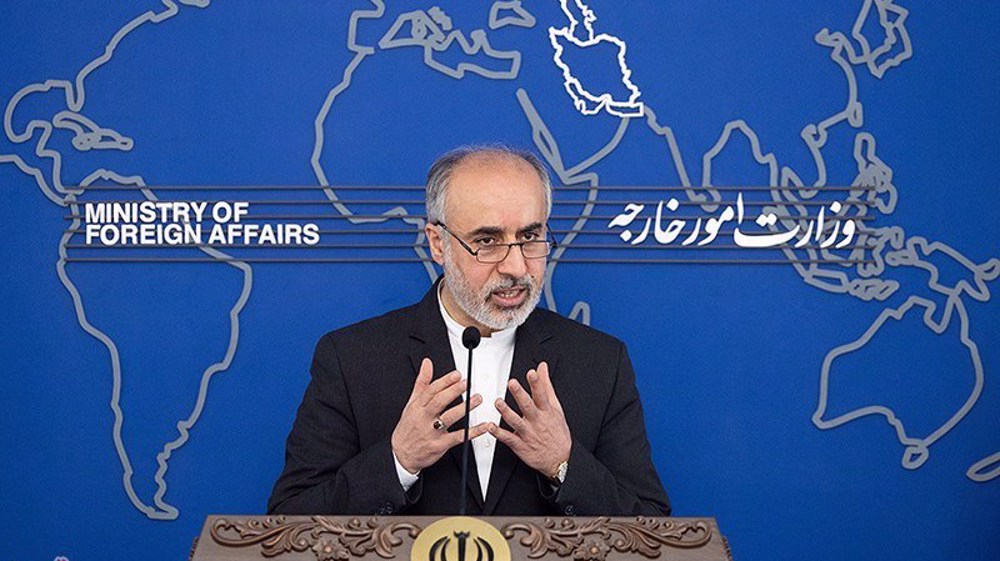
According to observers, the Nobel Committee’s decision is framed not as a recognition of tangible peace building but as a "thank you" for serving as a focal point in the information war against Iran, a reward for amplifying narratives that justify external pressure, sanctions, and diplomatic isolation.
The 2025 award to Venezuelan opposition figure María Corina Machado, a known advocate for US military intervention in the South American country, is a parallel, reinforcing a pattern where the prize rewards individuals aligned with confrontational Western foreign policy.
As author and journalist Jonathan Cook recently stated, the Trump administration has correctly renamed its "Department of Defense" as the "Department of War," so it is time for the Nobel Committee to rename its "Peace Prize" as the "War Prize."
Arwa Mahdawi, a New York–based writer, put the skepticism surrounding the prize into perspective.
“The Nobel Peace Prize is a farce; it has been for a long time. Really, it’s time we stopped pretending otherwise and put an end to the pomp and pretense altogether. Indeed, it’s amazing anyone can still say the words ‘Nobel Peace Prize’ with a straight face, considering its recipients constitute a who’s who of hawks, hypocrites, and war criminals,” she noted.
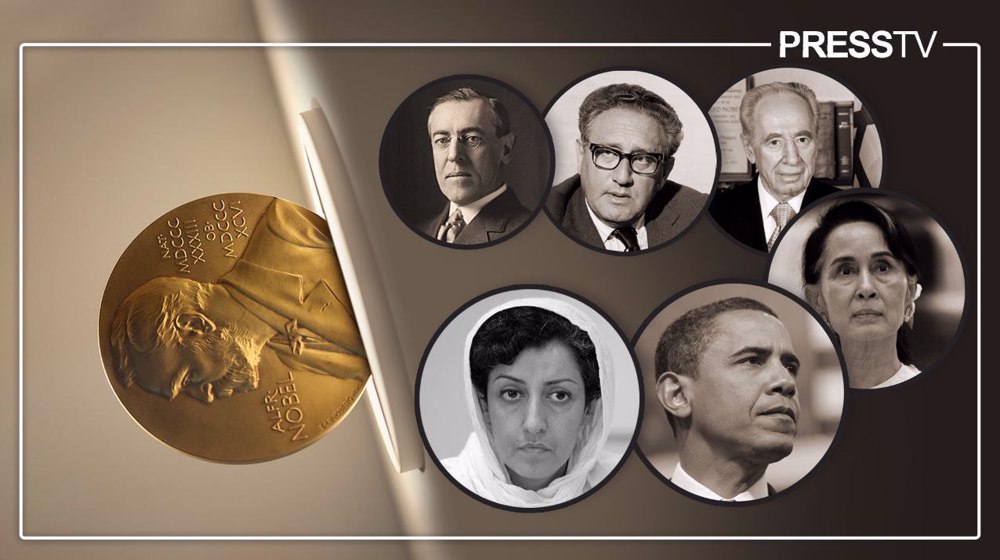
The list of Nobel Peace Prize recipients who are war-mongers is long. From Woodrow Wilson to Henry Kissinger to Barack Obama to Shimon Peres and Aung San Suu Kyi.
Architecture of information warfare
Mohammadi’s role extends beyond street protests to the heart of information warfare.
Operating as part of the so-called Defenders of Human Rights Center (DHRC), an organization founded by Ebadi and reported to receive substantial funding from the US, Europe and the Israeli regime, her work involves curating and disseminating anti-Iran narratives to the media.
Iranian security sources state that organizations like DHRC collect and categorize data on Iranian nationals, fabricate reports, in order to provide pretexts for more crippling Western sanctions against specific Iranian officials and entities.
✍️ Feature -Nobel Peace Prize: When war-mongers are felicitated in the name of 'peace'
— Press TV 🔻 (@PressTV) December 11, 2024
By @HumairaAhad_83 https://t.co/ocbLyrPyCd
Mohammadi’s social media activity, such as her post in November 2025 accusing the government of indifference to forest fires despite documented firefighting efforts, was seen as a textbook example of this tactic: leveraging natural disasters to sow distrust in state institutions and provoke mass discontent.
This strategy mirrors methods used during previous floods and earthquakes in the country, where tragedy was immediately politicized to fracture national unity and solidarity.
By acting as a primary, uncritically cited source for Western media on Iran’s internal affairs, she functions as a key node in a circuit where unverified claims are amplified into established facts, shaping international perception and policy, observers say.
Activist as a geopolitical pawn
The trajectory of Mohammadi, from little-known activist to Nobel laureate to arrested provocateur, illustrates the complex interplay between local dissent and global power politics.
While her Western supporters portray her as "a brave defender of human rights," the reality and a critical reading of her actions paint a different picture: that of an individual whose “activism” is systematically leveraged by external powers seeking to destabilize Iran.
Her methods – exploiting moments of grief, championing convicted terrorists, engaging in performative victimhood, and circulating damaging narratives – are seen not as pursuits of justice but as tactics in a broader, hybrid conflict.
The Nobel Prize, in this context, serves not to honor peace but to weaponize her profile, providing a mantle of moral authority to a deeply political project.
The events in Mashhad, therefore, are less a simple news item and more a reflection of an ongoing, multifaceted struggle where information, symbolism, and street-level agitation are fused into a potent instrument of geopolitical pressure.
The ultimate criticism lies in the perceived incongruity: a "Peace Prize" awarded for a lifetime of work that, by the accounts of the state she opposes, has consistently fomented unrest and aligned with the agendas of foreign intelligence services and hostile governments.
How Iran’s two-week retaliatory strikes exposed cracks in US military architecture in Persian Gulf
Empty crates, decoys, desperation: How US strikes against Iran ran out of targets – and strategy
Dangerous bet: How Kuwait and Bahrain miscalculated by becoming launchpads for US strikes on Iran



Iran known as a powerful, respected country; enemy targets symbols of its strength: President
Saudi-led EA buyout spotlights Trump's son-in-law's Persian Gulf ties
Yemeni forces say directly hit Saudi oil tanker in Gulf of Aden
Pro-Palestine Democrat wins US state primary, angering Trump, Israel lobby
Iran says US must resolve promise breaches for Strait of Hormuz reopening
Israeli violations obstruct Gaza ceasefire implementation: Hamas spokesman
VIDEO | Trump trapped by Hormuz?
VIDEO | Why can't Trump enforce his strategy?



 PressTV NEWSLETTER
now
PressTV NEWSLETTER
now
 This makes it easy to access the Press TV website
