How Israel hijacked US politics, media and tech – without Americans even realizing

By Maryam Qarehgozlou
When tech billionaire Larry Ellison was tapped to help oversee TikTok’s US operations, the move immediately drew scrutiny over the Oracle co-founder’s longstanding ties with the Israeli regime and how it could sharpen censorship of pro-Palestinian content on the platform.
Oracle’s ascendance came after the US Supreme Court upheld a law banning TikTok earlier this year, positioning the company as the frontrunner to take control of the Chinese-owned app.
Under the arrangement, Oracle would serve as the “secure cloud provider,” storing US user data and controlling the recommendation algorithm, an authority Washington framed as necessary to counter alleged Chinese “manipulation.”
But while the campaign against TikTok was outwardly led by China hawks, pro-Israel contractors, and the powerful Zionist lobby in Washington, played a central role in shaping the political pressure that made Oracle an obvious choice for the takeover.
Pro-Palestine advocates point out that a deeper motivation has been to silence the overwhelming pro-Palestinian opinions and sentiments on TikTok, where users have in great detail documented Israel’s genocidal war on Gaza and challenged American-Israeli narratives about it.
The platform has become a key outlet for unfiltered footage from Gaza, including scenes of devastation, civilian casualties, and global solidarity campaigns.
Research from Northeastern University has consistently shown that pro-Palestinian posts dwarf pro-Israel content—most recently, in September 2025, by a ratio of roughly 17 to 1.
This imbalance reflects TikTok’s younger user base—Gen Z and millennials—who increasingly reject Washington’s and Tel Aviv’s deceptive and deeply manipulative positions.
Israel’s leadership understands the stakes. Benjamin Netanyahu recently described social media as a decisive “weapon” in modern warfare, calling the TikTok sale “the most important purchase” for securing influence over US public opinion.
Oracle’s deep alignment with Israeli interests has only heightened concerns. The company had already tightened its grip over aspects of TikTok’s operations while openly embracing a pro-Israel agenda and, as an Intercept investigation revealed, suppressing pro-Palestine activism within its own ranks.
Oracle CEO Safra Catz, an Israeli-American and longtime supporter of the Zionist project, made her stance bluntly clear, telling an Israeli business outlet: “For employees, it’s clear: if you’re not for America or Israel, don’t work here—this is a free country.”
Ellison, a major funder of Israeli causes and a close ally of Donald Trump, has long been celebrated by the US political establishment.
Trump—who placed him in the front row at his inauguration—famously hailed him as “one of the most serious players in the world.”
In 2017, Ellison made the largest single donation in the history of the so-called "Friends of the Israel Forces," a US-based organization tied to the Israeli military responsible for genocidal attacks across Gaza and the occupied West Bank.
Oracle’s material support for Israel extends far beyond philanthropy. In 2021, the company opened a $319 million data center in occupied al-Quds, providing cloud services to Israeli banks, health institutions, and military units.
✍️ Feature - New war zone: Netanyahu admits weaponizing social media, influencers in narrative battle
— Press TV 🔻 (@PressTV) October 2, 2025
By Maryam Qarehgozlou
Read More: https://t.co/K2mHonS9Kt pic.twitter.com/79gnWxQrcs
Immediately after Israel launched its genocidal assault on Gaza on October 7, 2023, Oracle publicly declared its support for the regime even as hospitals and schools were bombed.
Catz instructed that the message “Oracle Stands with Israel” be displayed across all company screens in more than 180 countries.
The company has also actively participated in Israel’s digital propaganda efforts. Following the outbreak of the war on Gaza, Oracle and the Israeli regime officials developed “Words of Iron,” a project designed to amplify pro-Israel content while whitewashing horrendous war crimes and countering critical narratives on TikTok, Instagram, and Twitter.
In February 2024, Oracle collaborated with the Israeli military's cyber department on a hackathon seeking “tech solutions” for rehabilitating illegal settlements near Gaza.
Around the same time, Oracle donated medical and environmental supply bags worth half a million dollars to Israeli occupation forces.
Oracle’s political lobbying worked in tandem with its technological support. Last summer, Catz joined a closed-door meeting with US senators to push for continued weapons shipments to Israeli-occupied territories.
Later that year, Oracle partnered with Rafael Advanced Defense Systems—one of Israel’s major weapons manufacturers—on an AI program to provide “warfighters with quick, actionable insights in the battlespace.”
While Israel escalated its bombing and invasion of Gaza, some Oracle employees reported that the company was actively curtailing internal support for Palestinians.
Oracle’s charitable matching program quietly removed organizations such as Medical Aid for Palestinians and UNRWA from its list of eligible beneficiaries, effectively blocking workers from directing matched funds toward humanitarian relief.
Ellison and Catz are hardly outliers; they are part of a broader pattern of influential Zionist figures holding disproportionate power across US political, financial, media, academic, tech, and cultural institutions.
Although only about 2 percent of the US population identifies as Jewish, Jewish and Zionist representation among American elites is significantly higher—a trend that has shaped US foreign policy, cultural production, and the sustained alignment with Israel’s violent occupation.
Below is a list of influential Zionist figures who occupy key positions across these sectors.
Jews in American politics
In February 2021, less than a month after former US President Joe Biden's inauguration, the Israeli daily The Jerusalem Post celebrated the new president’s appointments of 15 Jewish politicians.
“US President Joe Biden has appointed a strong, experienced team for his new administration. Among them are a minyan and a half of Jews. Indeed, I wonder if there has ever been a more Jewish US administration,” columnist Shlomo Maital wrote in the article.
The article added that “a vigorous American presence in world affairs, spearheaded by the Jewish A-Team, is in Israel’s long-term interest, more than an ‘America first’ administration that made the US largely irrelevant in global affairs.”
Secretary of State Anthony Blinken, CIA Deputy Director David Cohen, Attorney General Merrick Garland, and Director of National Intelligence Avril Haines were among the Jewish members of Biden’s administration holding influential positions.
The list also included Chief of Staff Ronald Klain, Office of Science and Technology Policy Director Eric Lander, Deputy Health Secretary Rachel Levine, and Secretary of Homeland Security Alejandro Mayorkas.
Other key figures were NSA Cybersecurity Director Anne Neuberger, Deputy Secretary of State Wendy Sherman, Treasury Secretary Janet Yellen, COVID-19 Coordinator Jeff Zients, and CDC Director Rochelle Walensky.
Also serving in senior economic and political roles were Jared Bernstein, a member of the Council of Economic Advisors, and Douglas Emhoff, husband of Vice President Kamala Harris.
As Secretary of State, Blinken was a central public and diplomatic defender of US support for Israel during the initial phase of the Gaza genocide — pressing allies, coordinating arms transfers, and publicly backing negotiations framed to protect the Israeli regime while offering limited humanitarian concessions for the besieged people of the Gaza Strip.
According to rights groups and activists, his steady diplomatic backing helped shield Israeli genocidal actions from stronger, public US rebukes.
Yellen’s Treasury enforced and expanded financial pressure instruments, such as sanctions that the US uses against Iran and other supporters of the Palestinian resistance.
The Treasury under Yellen issued targeted sanctions on Iran’s petroleum and petrochemical sectors.
Cohen, as Under Secretary for Terrorism and Financial Intelligence (Treasury), also designed and executed sanctions that targeted Iran’s oil, petrochemical, and financial sectors.
He is widely described in reporting and policy bios as the administration’s “sanctions guru.”
As Deputy Director of the CIA (and acting director briefly), Cohen brought his sanctions experience into targeting work against Iran — shaping covert disruption tools in addition to Treasury levers.
These unilateral sanctions form a core non-military lever in the US hawkish toolkit.
A Lancet study in August found a significant link between sanctions and higher mortality. The US and EU sanctions were associated with over 564,000 deaths annually from 1971 to 2021 in 152 countries.
It is similar to the global mortality burden associated with armed conflict.
Children under 5 years faced about an 8-9 percent higher death risk, and adults aged 60-80 years had about a 2-3 percent higher risk.
The study found the strongest effects for unilateral, economic, and US sanctions, but none from UN sanctions.

Trump’s first term also included many Jewish officials in senior roles. Jared Kushner, his son-in-law and senior advisor, was among the most influential, alongside Elliot Abrams, Special Representative for Venezuela and later Iran, and David Friedman, Ambassador to the Israeli-occupied territories.
Other key figures included Jason Greenblatt, Special Representative for International Negotiations on Palestine; Steve Mnuchin, Secretary of the Treasury; Stephen Miller, Senior Advisor for Policy; Gary Cohn, Director of the White House National Economic Council; Reed Cordish, Assistant to the President for Intragovernmental and Technology Initiatives; and Avrahm Berkowitz, Deputy Advisor to the President.
Additional senior officials were Rod Rosenstein, Deputy Attorney General; Elan Carr, Special Envoy to Monitor and Combat Antisemitism; Ellie Cohanim, Deputy Special Envoy for the same office; Jeffrey Rosen, Attorney General; Morgan Ortagus, State Department spokesperson; David Shulkin, Secretary of Veterans Affairs; and Lawrence Kudlow, Director of the National Economic Council.
Also serving in high-level positions were Ivanka Trump, the president’s daughter and advisor, who was raised Christian but converted to Orthodox Judaism to marry Kushner in 2009; John Eisenberg, National Security Council Legal Counsel; Ezra Cohen-Watnick, Acting Under-Secretary of Defense for Intelligence; and Len Khodorkovsky, Deputy Secretary of State and Senior Advisor to the US Special Representative for Iran.
Several senior Jewish members of the Trump administration played central roles in reshaping US policy in ways strongly favorable to the Israeli regime.
Kushner was the architect of the Abraham Accords, the normalization agreements between Israel and several Arab states — including the UAE, Bahrain, Morocco, and Sudan.
Kushner also helped push forward the administration’s West Asia so-called “Peace to Prosperity” plan, which embraced long-standing Israeli positions on expansion of illegal settlements in the West Bank, and occupation of Palestine.
David Friedman, the Ambassador to Israeli-occupied territories, used his position and strongly supported recognizing occupied al-Quds as Israel’s capital, encouraged the relocation of the US embassy from Tel Aviv to al-Quds, and backed Israel’s claim to West Bank settlements.
His diplomatic messaging consistently pushed Washington toward formally accepting Israeli control over the occupied territories.
Jason Greenblatt, Trump’s envoy for Israeli-Palestinian negotiations, worked closely with Friedman and Kushner.
He was one of the primary US officials promoting the idea that settlement expansion was not an obstacle to peace. His role helped shift the State Department’s language away from the traditional American view of settlements as “illegitimate,” aligning it more closely with Israeli regime positions.
Lawrence Kudlow and Gary Cohn, who headed the National Economic Council at different times, supported the administration’s economic components of West Asia policy, including aid packages tied to normalization and economic incentives designed to complement Kushner’s diplomatic agenda.
Elan Carr and Ellie Cohanim, from the State Department’s antisemitism office, advanced aggressive messaging on global antisemitism that often intertwined with defending the Israeli regime's genocidal and apartheid policies. Their public diplomacy helped cast any criticisms of Israel in terms of antisemitism, influencing international discussions.
After re-entering the White House for a second term in January, Trump once again packed his inner circle with vocal Jewish and Zionist loyalists, many of whom stand out for their unprecedented hostility toward the Palestinian people and their basic rights.
Trump stacked his advisory ranks with a mix of familiar figures and newer faces who exert outsized influence over his relationship with the Jewish community in the US and in the occupied territories.
Among them are Will Scharf, White House staff secretary; Stephen Miller, White House deputy chief of staff for policy and homeland security adviser; Steve Witkoff, US special envoy to West Asia; Howard Lutnick, secretary of commerce; Boris Epshteyn, Trump’s personal senior counsel; Elizabeth Pipko, national spokesperson for the Republican Party; Lee Zeldin, administrator of the Environmental Protection Agency; and Laura Loomer, an extremist influencer who operates as an unofficial loyalty enforcer within Trump’s political orbit.
Ivanka Trump and her husband were notably absent from much of Trump’s 2024 campaign and announced two years ago that they had stepped back to support Trump “outside the political arena.”
However, as one of Trump’s former top aides alongside Kushner—who played a central role in brokering the Abraham Accords and now runs a multibillion-dollar private equity fund bankrolled by the governments of Saudi Arabia, the United Arab Emirates, and Qatar—many speculate that the couple’s influence, particularly Kushner’s, will persist throughout Trump’s presidency.
This influence is expected to be especially pronounced in shaping the administration’s interference in West Asian affairs, as has already witnessed during the so-called Gaza "truce deal."
Miller, one of Trump’s most hardline advisers on immigration during his first term, was instrumental in shaping some of the administration’s controversial policies, including the travel ban targeting seven Muslim-majority countries and the policy that separated the children of undocumented migrants from their parents at the border.
Pipko is an avowed Zionist and stated following her appointment that “supporting Israel is in the best interest of the United States.”
She has also attacked pro-Palestinian protests on US college campuses, singling out demonstrations at her alma mater, Harvard.
In an interview with Ynet News, she dismissed the protests as “awful” and “disgusting.”
Loomer, who has described herself as “a proud Islamophobe,” ran an online campaign in August that pressured the US State Department into halting visa issuance for children from Gaza in desperate need of medical care amid Israel’s genocidal war on the besieged Strip.
Zionist donors heavily underwrote Trump’s 2024 presidential campaign.
Miriam Adelson, a casino magnate with an estimated net worth of $35 billion and a prominent Zionist mega-donor, spent more than $100 million to propel Trump back into the White House.
She is the widow of Sheldon Adelson, one of the most prolific financiers of illegal Israeli settlements in history.
Miriam Adelson is herself a settler, born and raised in the occupied Palestinian territories, and has been a vocal champion of the regime's settler-colonialism.
She is closely associated with the ideology of neo-Zionism, which advocates not only the permanent retention of occupied Palestinian land but also the expansion of the occupation through annexation of Palestine and neighboring countries.
✍️ Investigation - Bankrolling genocide: The biggest donors to AIPAC, America's leading Zionist lobby group
— Press TV 🔻 (@PressTV) March 18, 2025
By Ivan Kesichttps://t.co/pBut23sEtK
Ivy League presidents
The Ivy League is a group of eight elite private universities located in the northeastern United States. They include Brown, Columbia, Cornell, Dartmouth, Harvard, Princeton, the University of Pennsylvania, and Yale.
At present, five of these institutions are led by Jewish presidents.
Their Jewish and Zionist identities have become most visible amid the wave of pro-Palestine university encampments that swept campuses across the United States.
Beginning at Columbia University on April 17, 2024, pro-Palestinian students established encampments on at least 80 college and university campuses nationwide, demanding that their institutions disclose investments tied to Israeli-occupied territories and divest from financial and cultural entities that support Israel’s occupation of Palestine.
These demands were raised in the context of the ongoing genocide in Gaza, the killing of tens of thousands of Palestinians—most of them women and children—and the continuation of the violent ethnic cleansing of Palestinians from their land.
The protests echoed a call from Palestinian civil society for the Boycott, Divestment, and Sanctions (BDS) of Israel.
The largely peaceful demonstrations, however, were met overwhelmingly with force. Police crackdowns resulted in mass arrests and injuries, actions frequently ordered by the students’ own university administrators and, in some cases, backed by faculty members.
After taking office in January, Donald Trump signed an executive order to “combat antisemitism,” directing federal agencies to explore avenues for deporting pro-Palestinian activists, including student protesters—a demand to which many universities, including Ivy League institutions, readily capitulated.
Christopher Ludwig Eisgruber, a Jewish-American who has served as Princeton University’s 20th president since July 2013, ordered the removal of a major pro-Palestinian encampment on Cannon Green, citing preparations for commencement, and has repeatedly resisted demands that Princeton divest from the Israeli regime.
In April 2024, when police—acting on authorization from university administrators—arrested dozens of students during pro-Palestinian protests, including at Princeton, Eisgruber warned that those students would face disciplinary action that could “extend to suspension or expulsion.”
Alan Garber, another Jewish academic leader, was appointed president of Harvard University in August 2024 after serving as interim president since January 2 of that year.
He succeeded Claudine Gay, who was forced to resign after being accused by members of Congress of failing to adequately condemn and combat “anti-Semitism” on Harvard’s campus during pro-Palestine encampments.
Under Garber’s leadership, Harvard shared information with the US Department of Homeland Security in response to its request for the disciplinary records of international students and records of pro-Palestinian activity.
Crackdown at US campuses rooted in Israeli lobby's repression of academia
— Press TV 🔻 (@PressTV) May 2, 2024
The recent brutal clamp down on pro-Palestine protesters across US universities is exposing the strong influence of Israeli lobby on American academia. pic.twitter.com/mouBqZKeLw
Sian Leah Beilock, the president of Dartmouth College, is another Jewish leader within the Ivy League.
She faced sharp criticism for her decision to call in police to dismantle a pro-Palestinian encampment on campus on May 1 of last year.
Mike Kotlikoff, who is also Jewish, assumed permanent leadership of Cornell University in March, as universities faced unprecedented pressure from the Trump administration over pro-Palestinian student protests.
In November 2024, while serving as Cornell’s interim president, a leak revealed that Kotlikoff had suppressed academic freedom after criticizing a pro-Palestinian professor’s planned course on the Gaza genocide in an internal email.
The course, Gaza, Indigeneity, Resistance, was set to be taught by Eric Cheyfitz, who is also Jewish.
Cheyfitz, the Ernest I. White Professor of American Studies and Humane Letters and a scholar of Indigenous studies, wrote in the course description that it would examine how Indigenous peoples have been engaged “in a global resistance against an ongoing colonialism.”
He further stated that the course would “present a specific case” of the ongoing genocidal war as “settler colonialism in Palestine with a particular emphasis on the International Court of Justice finding ‘plausible’ the South African assertion of ‘genocide’ in Gaza.”
Kotlikoff wrote in an email to another professor that he “personally finds the course description to represent a radical, factually inaccurate, and biased view of the formation of [...] Israel and the ongoing conflict.”
Kotlikoff replaced Martha Pollack, who is also Jewish, and stepped down amid sweeping pro-Palestinian protests across US college campuses.
During the protests, Pollack expressed disappointment with student demonstrators and warned that if they refused to dismantle their encampments, “more temporary suspensions... are forthcoming.”
Christina Paxson, who converted to Judaism after marriage, serves as president of Brown University.
Last year, for the second time during her tenure, Paxson rejected divestment from 10 companies identified by a student-led pro-Palestine initiative as facilitating “the Israeli occupation of Palestinian Territory.”
(1/15) ✍️ Feature - Harvard muzzles pro-Palestine voices by adopting Zionist lobby’s antisemitism definition
— Press TV 🔻 (@PressTV) February 1, 2025
By Maryam Qarehgozlouhttps://t.co/3iL9e32ghs pic.twitter.com/dv7JkSdFzT
Hollywood
It is widely documented that Jewish people are overrepresented in Hollywood relative to their share of the overall population.
Jews account for roughly 2 percent of the American population, yet various estimates suggest they have historically comprised a far higher proportion of key industry roles, including studio executives, writers, and actors.
Some discussions cite figures of 20 percent or higher in certain sectors of the entertainment industry.
Jewish entrepreneurs were instrumental in founding most of the major film studios during Hollywood’s so-called Golden Age.
These figures include Adolph Zukor, founder of Paramount Pictures; William Fox, founder of the Fox Film Corporation; Louis B. Mayer and Marcus Loew, co-founders of Metro-Goldwyn-Mayer (MGM); Harry, Albert, Sam, and Jack Warner, the brothers behind Warner Bros; Carl Laemmle, a founder of Universal Pictures; and Harry and Jack Cohn, founders of Columbia Pictures.
In more recent decades, prominent Jewish executives have continued to occupy influential positions in the entertainment industry.
They include Bob Iger, chief executive officer of The Walt Disney Company; Adam Aron, CEO of AMC Entertainment; Jon Feltheimer, CEO of Lionsgate; Shari Redstone, president and CEO of National Amusements; David Zaslav, CEO of Warner Bros. Discovery; and influential film producer and former Sony Pictures head Amy Pascal.
For years, activists and some academics have warned that this concentration of power has helped shape an industry culture that frequently aligns with pro-Israel narratives, whitewashing Zionist crimes while marginalizing or excluding Palestinian perspectives.
Jewish Hollywood power brokers, they say, used their influence in the mid-20th century to mobilize cultural support for the Zionist project, portraying settler violence as “Jewish self-defense” in early films and theatrical productions.
By contrast, Palestinian narratives are routinely sidelined. Palestinian films are often excluded from major festivals and streaming platforms, while Israeli atrocities are frequently framed in ways that downplay or obscure Palestinian suffering.
Even films and documentaries that seek to center Palestinian humanity and lived experience have become a subject of sustained controversy within the industry.
✍️ Feature -A ‘liberal Zionist’ filmmaker wins Oscar for equating colonizer with colonized
— Press TV 🔻 (@PressTV) March 5, 2025
By @mypenmyworld https://t.co/A92gUzw7GO
Finding mainstream Hollywood productions that portray Palestinians in a balanced, non-dehumanizing manner remains difficult, as decades of output have either perpetuated negative stereotypes or erased Palestinian perspectives altogether.
The few films that do offer more nuanced or humanizing depictions of Palestinians are typically independent productions or international co-productions, often directed by Palestinian filmmakers working outside the Hollywood studio system.
Meanwhile, public support for Palestinian rights or criticism of the Israeli regime or its backers has increasingly carried professional consequences in Hollywood.
Actors and industry professionals—both Jewish and non-Jewish—have faced reprisals ranging from being dropped by agents to losing roles, contributing to a pervasive “silencing effect.”
In December 2023, two months into Israel’s genocidal war on Gaza, actress Melissa Barrera, a star of the Scream franchise, was fired from the next installment after posting on social media about Israel’s real-life horror show in the Gaza Strip.
Barrera was not alone. In November of the same year, actress Susan Sarandon was dropped by United Talent Agency (UTA) after speaking at a pro-Palestinian rally.
Actor Mark Ruffalo also faced backlash during Israel’s May 2021 assault on Gaza, when he was pressured to apologize for using the term “genocide.”
Top 50 Billionaires
The latest rankings of the world’s wealthiest individuals highlight a notable trend: of the top 50 billionaires globally, at least 12 are Jewish, showcasing their considerable influence across technology, finance, and investments.
Leading the pack is Larry Ellison, co-founder of Oracle, whose fortune stands at $213.7 billion, making him the third richest person in the world.
Close behind is Mark Zuckerberg, CEO of Meta Platforms, which includes Facebook, Instagram and WhatsApp, with a net worth of $202.4 billion and a world rank of 4.
The search engine giants Larry Page and Sergey Brin, co-founders of Google, are ranked 6th and 7th, respectively, with fortunes of $157.8 billion and $150.7 billion.
Other prominent Jewish billionaires in the top 50 include Steve Ballmer of Microsoft ($127.7 billion, rank 9), Michael Dell of Dell Technologies ($113.5 billion, rank 12), and media mogul Michael Bloomberg of Bloomberg LP ($104.7 billion, rank 16).
Stephen Schwarzman, a major figure in investments, ranks 28th with $50.4 billion, while Jeff Yass, active in trading and investments, holds $49.6 billion at rank 29.
Luxury fashion also sees Jewish representation through Gerard Wertheimer and Alain Wertheimer, owners of Chanel, both holding $41.5 billion and sharing world rank 38.
The Miriam Adelson & family, tied to the casino industry, are valued at $34.9 billion, ranking 49.
The overwhelming majority are based in the United States, dominating technology and investment sectors, and heading companies that shape global information flows.
But beyond wealth, their power has had devastating consequences for Palestinians.
Meta and Oracle, for example, have been implicated in censoring Palestinian voices online, shaping narratives in favor of Israeli policies while silencing dissent.
Google, Microsoft, and Dell Technologies have enabled the Israeli military’s genocidal war on Gaza over the past two years, providing cloud infrastructure, AI, and technology services that the regime has used to target Palestinian civilians.
This concentration of wealth and technological control underscores not only the disproportionate influence of Jewish billionaires in the US tech world but also raises profound questions about the ways these platforms and services are weaponized in geopolitics—always aligning with US and Israeli agendas to the detriment of human rights.
Sport teams owners
Ownership patterns across major US professional sports leagues reveal a striking concentration of power among a small group of ultra-wealthy Jewish stakeholders, many of whom hold openly pro-Zionist political positions or have backed policies hostile to Palestinian advocacy.
In the National Basketball Association (NBA), estimates indicate that roughly 40 percent of franchises are majority-owned by individuals or groups with Jewish backgrounds—far exceeding their approximate 2 percent share of the US population.
An additional five teams include Jewish minority stakeholders, underscoring a level of influence that extends well beyond ownership into league governance and political positioning.
Out of 30 NBA teams, 12 are majority-owned by Jewish stakeholders.
These include Anthony Ressler (Atlanta Hawks); Gabe Plotkin and Rick Schnall (Charlotte Hornets); Jerry Reinsdorf (Chicago Bulls); Dan Gilbert (Cleveland Cavaliers); Miriam Adelson (Dallas Mavericks); Joe Lacob and Peter Guber (Golden State Warriors); Herbert Simon (Indiana Pacers); Micky Arison (Miami Heat); Marc Lore (Minnesota Timberwolves); Steve Ballmer (Los Angeles Clippers); Joshua Harris and David Blitzer (Philadelphia 76ers); and Mat and Justin Ishbia (Phoenix Suns).
Teams with Jewish minority owners include the Jacobs family (Sacramento Kings), Larry Tannenbaum (Toronto Raptors), George Kaiser (Oklahoma City Thunder), Oliver Weisberg (Brooklyn Nets), and Larry Fink (New York Knicks).
For four decades, the NBA itself has been led by two commissioners—David Stern (1984–2014) and Adam Silver (2014–present)—both of whom presided over eras marked by close alignment with US foreign policy narratives and repeated controversies related to Palestine.
The league has faced sustained criticism for suppressing or sanitizing Palestinian references under political pressure.
In 2017, the NBA removed “Palestine—occupied territory” from an official website list following a complaint from Israel’s sports minister.
A year later, the league apologized after a fan-voting list for the All-Star Game included “Occupied Palestine,” blaming an outsourced firm after Israeli officials demanded its removal.
Senior NBA figures, including Commissioner Adam Silver, along with current and former players, have participated in high-profile trips to Israeli-occupied territories, meeting with Israeli regime officials and engaging in public relations efforts to normalize occupation.
Meanwhile, players who expressed solidarity with Palestinians faced swift backlash.
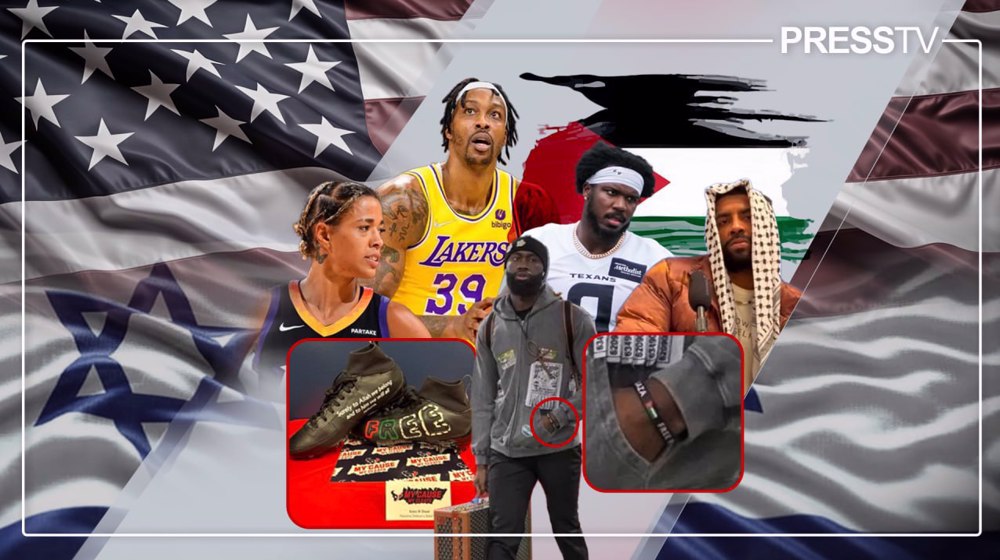
Former NBA star Dwight Howard said he was pressured to delete a “Free Palestine” tweet in 2014 after receiving multiple calls, including one from the commissioner’s office.
This concentration of ownership and political alignment is not limited to basketball.
In the National Football League (NFL), 11 of the league’s 32 teams are owned by individuals or families with controlling Jewish stakes, including Arthur Blank (Atlanta Falcons), David Tepper (Carolina Panthers), Jim Irsay (Indianapolis Colts), Mark Davis (Las Vegas Raiders), Stephen Ross (Miami Dolphins), the Wilf family (Minnesota Vikings), Robert Kraft (New England Patriots), Steve Tisch (New York Giants), Jeffrey Lurie (Philadelphia Eagles), the Glazer family (Tampa Bay Buccaneers), and Josh Harris and Mitchell Rales (Washington Commanders).
Major League Baseball (MLB) shows similar patterns.
Eight of its 32 teams are majority-owned by Jewish stakeholders—David Rubenstein (Baltimore Orioles), Jerry Reinsdorf (Chicago White Sox), Bruce Sherman (Miami Marlins), Mark Attanasio (Milwaukee Brewers), Steve Cohen (New York Mets), the Fisher family (Oakland Athletics), Stuart Sternberg (Tampa Bay Rays), and the Lerner family (Washington Nationals).
Six additional teams have Jewish minority owners or executives, including Tom Werner (Boston Red Sox), David Blitzer (Cleveland Guardians), Stan Kasten and Peter Guber (Los Angeles Dodgers), and Lester Crown (New York Yankees).
Several teams without Jewish majority owners—including the New York Yankees, San Francisco Giants, Los Angeles Dodgers, and Toronto Blue Jays—are run by Jewish presidents or senior executives.
Across leagues, Jewish owners and executives with strong pro-Israel views have helped shape institutional responses that activists warn would marginalize Palestinian voices while reinforcing US and Israeli political narratives.
Federal Reserve
Beyond sports and entertainment, Jewish financiers have played central roles in US monetary power structures.
Paul Moritz Warburg, a German-Jewish banker from Kuhn, Loeb & Co., was a key architect of the US Federal Reserve System.
From 1987 to 2014, the Federal Reserve was chaired consecutively by Alan Greenspan, Ben Bernanke, and Janet Yellen— three Jewish individuals overseeing periods of aggressive financial intervention that disproportionately benefited Wall Street while entrenching US global dominance.
Other influential Jewish figures include Emmanuel Goldenweiser, who supervised early Federal Reserve Board operations, and Stanley Fischer, who later served as vice chair.
Media, advertising, adult entertainment
Jewish Americans have also been influential across a wide spectrum of media, advertising, and public relations industries, sectors that play a decisive role in shaping political narratives, as well as adult entertainment businesses.
In the advertising and public relations world, influential Jewish executives include Richard Edelman, CEO of the global PR firm Edelman; Carl Spielvogel, co-founder of the major agency Backer & Spielvogel; Ronn Torossian, founder of 5W Public Relations; and Marian Salzman, a senior advertising and communications executive and trend expert.
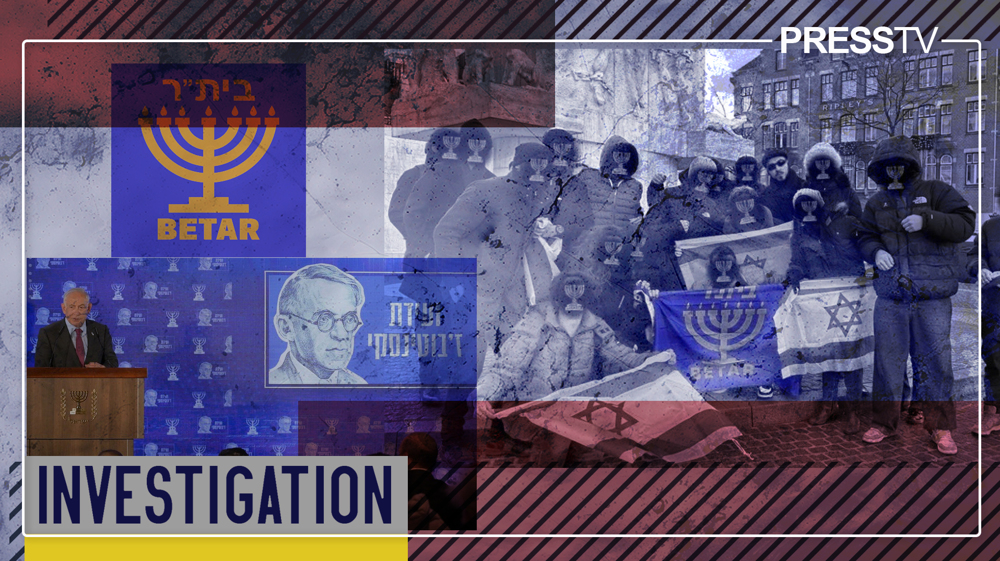
Torossian, an American public relations executive, is a prominent and controversial figure in the far-right Zionist movement, known for his leadership of the recently re-launched Betar USA organization.
Betar USA, under Torossian’s leadership, has been using inflammatory rhetoric and calling for violence. In response to a social media post about Palestinian children killed in the Israeli genocidal war on Gaza, the group’s account commented, “Not enough. We demand blood in Gaza!”
Betar has been involved in identifying and circulating lists of pro-Palestinian protesters for deportation.
Digital media platforms have also been dominated by Jews with allegiance to the Tel Aviv regime.
Susan Wojcicki was an American business executive who was the chief executive officer of YouTube from 2014 to 2023.
Human rights and digital media advocacy groups, such as the organization 7amleh, have denounced YouTube’s policies and blatant bias against Palestinian voices and in favor of Israeli narratives.
In November 2015, Wojcicki and other Google representatives met with Israeli Deputy Foreign Minister Tzipi Hotovely to establish a mechanism for monitoring and removing Palestinian content deemed “inflammatory” by the apartheid regime in Tel Aviv.
In adult entertainment, prominent founders and executives include Michael Lucas, the founder and CEO of Lucas Entertainment, one of Manhattan’s largest gay adult film companies.
Last year, the adult film producer faced intense backlash after bragging about writing his name on a missile to be dropped in Gaza in a post on social media.
Several adult entertainment stars have since vowed to boycott working with Lucas and his company over the “reprehensible” post.
Taken together, the American landscape reveals not a coincidence but a pattern: a dense web of political power, corporate control, cultural influence, and financial leverage that consistently converges to protect Israel from accountability while suppressing Palestinian voices.
Disguised under the language of “security,” “shared values,” and “combating antisemitism,” US institutions have been mobilized by the powerful Zionist lobby to normalize occupation, whitewash mass killings, and criminalize solidarity with the oppressed.
The result, according to activists, is a manufactured consensus in which Israel’s crimes are laundered through American power centers, and dissent is treated as a threat.
As Gaza is starved, bombed, and erased in real time, this alignment exposes the moral bankruptcy of an order that privileges loyalty to a settler-colonial regime over international law, human rights, and basic human life, they warn.

Wikipedia has become propaganda tool for CIA, other powerful institutions, cofounder warns

Pentagon pushes military contractors to accelerate production amid shortages

Trump’s man in Bogotá: How Colombia is pivoting toward US and Israel under new far-right president



Iran Army Ground Force on full alert, ready to ‘cut off feet’ of any invading troops: Cmdr.
Russia's Rosatom plans to increase staff at Iran’s Bushehr nuclear plant
Japan marks 81st anniversary of US atomic bombing of Nagasaki
Iran unveils homegrown technology to design, produce targeted cancer-killing viruses
Israel strikes southern Lebanon after US-mediated talks in Rome
Saudi-Turkish-Pakistani military alliance shaped by fear of Israel, not Iran: Analyst
Bulgaria summons Ukrainian envoy after drone explodes on its territory
Iran won’t hold new talks as long as US violates war-ending understanding: FM Araghchi




 PressTV NEWSLETTER now
  This makes it easy to access the Press TV website