Explainer: How poor savings and strained social security are fueling America’s retirement crisis
By Ali Zeraatpisheh
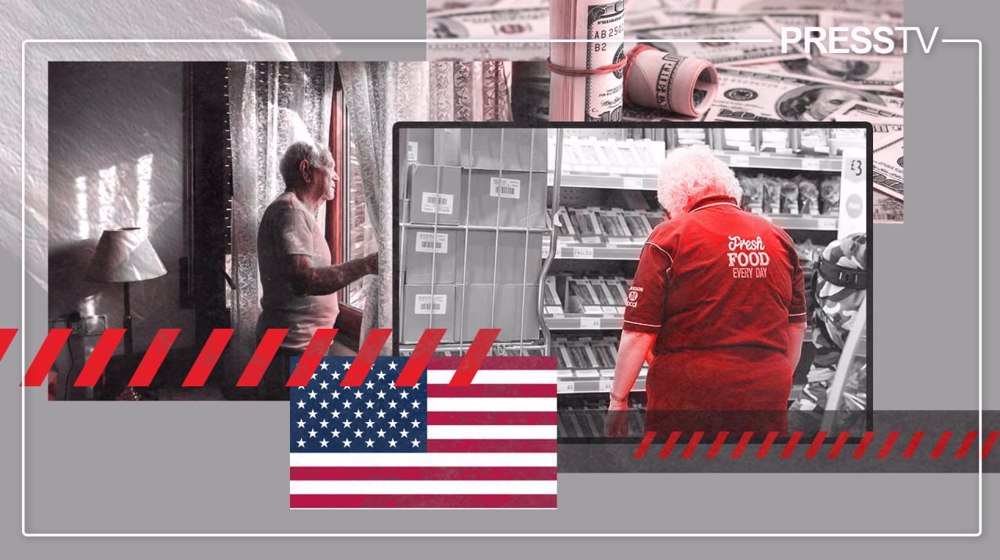
An 88-year-old US Army veteran named Edmund “Ed” Bambas was still working full-time at a grocery store, not out of choice, but necessity. After losing his wife, exhausting his savings on medical care, and seeing his pension disappear, retirement became impossible.
His situation only came to public attention when a social media influencer filmed a short video about him. The clip went viral, and within days, strangers donated more than $1.5 million so that Bambas could finally stop working.
The story was widely shared as a feel-good moment about generosity and kindness. But that framing misses the larger point.
Bambas’ experience is not exceptional. It is one of the rare cases that have been seen. For every elderly worker rescued by a viral video, there are millions more who continue working quietly into their seventies and eighties, not because they want to, but because the system leaves them no alternative.
The US is heading toward a retirement crisis that exposes the fragility of its economy. What was once seen as a “happy retirement,” a time to rest after decades of work, is increasingly marked by financial insecurity, continued labor, and near-poverty for millions of older Americans.
The Federal Reserve’s Survey of Consumer Finances (SCF) shows that nearly 46 percent of households have no retirement savings at all.
Only 26 percent have over $100,000 saved, and just 9 percent have more than $500,000, well below the roughly $1 million many financial planners say is needed for a secure retirement. Tens of millions of future retirees lack the basic funds to sustain themselves once they stop working.
Social Security is the main safety net, but it is often insufficient. According to the Social Security Administration (SSA), 73.9 million Americans receive benefits, including 52.6 million retired workers.
For many, these checks, averaging just under $2,000 per month, are their primary or sole income. Nearly 38.3 million rely on Social Security for at least half of their income, and 16.4 million depend on it entirely.
Even these benefits are struggling to keep up. Surveys show 77 percent of older Americans think the 2026 cost-of-living adjustment will not cover rising expenses for essentials like housing, food, and healthcare. Many retirees are forced to delay retirement, return to work, or survive on unstable part-time income instead of enjoying the financial security promised to them.
How does retirement saving work in the United States?
Unlike many countries with broad government pensions, the US relies on a patchwork system that puts most of the responsibility on workers and private markets.
Retirement depends on three pillars: Social Security, employer-sponsored plans like 401(k)s, and personal savings such as Individual Retirement Accounts (IRAs). Each has major weaknesses, leaving millions at risk of poverty in old age.
Most private-sector employees now rely on defined contribution plans like 401(k)s rather than traditional pensions. In these plans, workers, not employers, take on the risk of saving and investing. Contributions go into accounts tied to stocks, bonds, or mutual funds and retirement outcomes depend on market performance and consistent contributions over decades. Defined benefit pensions, which guarantee a monthly income, are rare; only about 15 percent of private-sector workers still have access.
Shifting to 401(k)-style plans changed the retirement landscape. Pensions once offered a stable income, but 401(k)s do not guarantee benefits. The National Institute on Retirement Security finds these plans can cost individuals more because pensions pool investment risks and manage funds collectively, while 401(k) holders face market risk and management fees.
Retirement accounts are often inadequate. Many nearing retirement have balances far below what is needed for a modest lifestyle. Some withdraw or borrow from accounts during financial stress, reducing future income.
Access is uneven. Tens of millions, especially part-time or small-firm workers, have no employer-based plan, relying entirely on Social Security and personal savings. Pew Charitable Trusts (PCT) reports roughly 56 million private-sector workers lack workplace retirement plans, leaving them with far smaller retirement assets.
Market volatility adds further risk. In early 2025, total US retirement assets fell for the first time since 2022, largely due to declines in 401(k)s, highlighting the dangers of relying on market-dependent accounts. IRAs offer another option, but many contribute little or nothing, and the limits are too low to build sufficient retirement funds.
Overall, the US system encourages saving but does not guarantee it, leaving millions exposed to economic swings, long life, and under-saving, a structural flaw at the heart of the retirement crisis.
What role do government policies play in retirement security?
Government programs are meant to be a safety net, but reality is grim. Social Security, the main public retirement support, serves over 73 million Americans, including 52.6 million retired workers. Yet the system is under strain.
The Social Security Trustees’ 2024 (SST 2024) report warns that trust funds could run out by 2035, after which benefits could be cut by roughly 23 percent if no action is taken. Nearly 38.3 million Americans rely on Social Security for at least half of their income, and 16.4 million depend on it entirely.
Healthcare adds another burden. Medicare covers older Americans but leaves out high costs, including premiums, deductibles, and long-term care, which averages $6,900 per year for hospital services and over $150,000 for nursing home care. Medicaid only helps those with very low income or assets, leaving many middle-class retirees exposed.
State programs offer limited relief. A few states have automatic enrollment IRAs for private-sector workers without employer plans, but participation is uneven. Federal law also restricts mandatory contributions, leaving tens of millions without a reliable way to save.
Political gridlock worsens the problem. Reforms to Social Security and Medicare are often delayed or diluted, forcing older Americans to bear the consequences. Public policy, instead of ensuring retirement security, normalizes financial instability for much of the aging population.
How does the retirement crisis affect the elderly?
The flaws in the US retirement system leave many older Americans struggling to maintain even a modest standard of living. More than half of working-age households have no retirement account, leaving many retirees dependent solely on Social Security, which averages just under $2,000 per month.
For millions, this is not enough to cover housing, food, healthcare, and daily necessities.
Financial insecurity forces many to delay retirement or return to work past 65. The US Bureau of Labor Statistics reports nearly 23 percent of Americans aged 65-74 are still working, up from 12 percent two decades ago. Many take low-wage, part-time jobs with no benefits, increasing stress and health risks.
Healthcare costs add further strain. Long-term care costs $8,000-$10,000 per month in nursing homes, while home support can exceed $5,000 monthly. Many retirees must sell assets, take on debt, or rely on family support, and some go without essential care.
The psychological impact is severe. American Association of Retired Persons (AARP) studies link financial stress among the elderly to higher rates of depression, anxiety, and chronic illness, creating a cycle where poor health and poverty reinforce each other.
Housing insecurity is growing. Harvard’s Joint Center for Housing Studies (JCHS) reports that more than 3 million older households spend over 50 percent of their income on housing, leaving little for other needs.
In short, many retirees face a mix of inadequate savings, weak public support, and rising costs, turning what was supposed to be a secure “golden age” into a struggle for survival.
How does the retirement crisis affect society
The retirement crisis affects far more than older Americans. As many retirees struggle financially, the burden shifts to families, communities, and the wider economy. PCT reports that nearly 20 percent of adult children provide financial support to parents aged 65 and older, often sacrificing their own savings or delaying debt repayment.
Healthcare systems also feel the strain. Medicare and Medicaid do not fully cover long-term care, forcing families to step in as unpaid caregivers. AARP estimates that unpaid caregiving for older adults is worth about $470 billion a year, a hidden support system that carries high emotional and financial costs for working-age adults.
Older Americans staying in the workforce creates additional pressure. Delayed retirement can limit job openings for younger workers, while chronic health issues reduce productivity and raise employer healthcare costs. Together, these trends contribute to slower economic growth.
Public finances and social cohesion are also at risk. With Social Security facing potential insolvency by 2035, federal budgets will tighten and political conflict over benefits will intensify. Communities see rising elder poverty, housing insecurity, and demand for social services, while trust between generations weakens.
The retirement crisis is not just a personal problem. It is a systemic threat that exposes deep economic weaknesses and challenges the long-term stability and social balance.
Poll: Over half of US Jews say Netanyahu fueling American anti-Semitism
US man standing trial for shooting three Palestinian students says CIA, Mossad instructed him

‘I support Israel’: Comedian’s opening line prompts audience walkout



VIDEO | Press TV's news headlines
Yemeni scholars call Saudi Mecca claim a ‘pure fabrication'
VIDEO | Saudi Arabia will face more Houthi reprisals unless it changes course: Analyst
VIDEO | Israeli siege forces Gaza hospitals to cut services
Grand Ayatollah Shobeiri Zanjani passes away at age of 98
Yemen pledges to escalate campaign to break Saudi blockade
VIDEO | Iran's warning to US, regional allies
Gaza health system nears collapse amid shortages and fuel crisis



 PressTV NEWSLETTER
now
PressTV NEWSLETTER
now
 This makes it easy to access the Press TV website
