Munich circus excludes Iran’s elected representatives, platforms ‘regime change’ lobbyists
By Yousef Ramazani
At the 2026 Munich Security Conference, a NATO forum that purports to champion peace and democracy, attendees include the cheerleaders of war against the Islamic Republic of Iran.
As Foreign Minister Abbas Araghchi succinctly stated, the much-hyped summit has turned into a “circus” when it comes to Iran, with “performance preferred over substance.”
“The EU appears confused, rooted in an inability to understand what is happening inside Iran,” the top Iranian diplomat wrote on X, formerly Twitter, on Saturday.
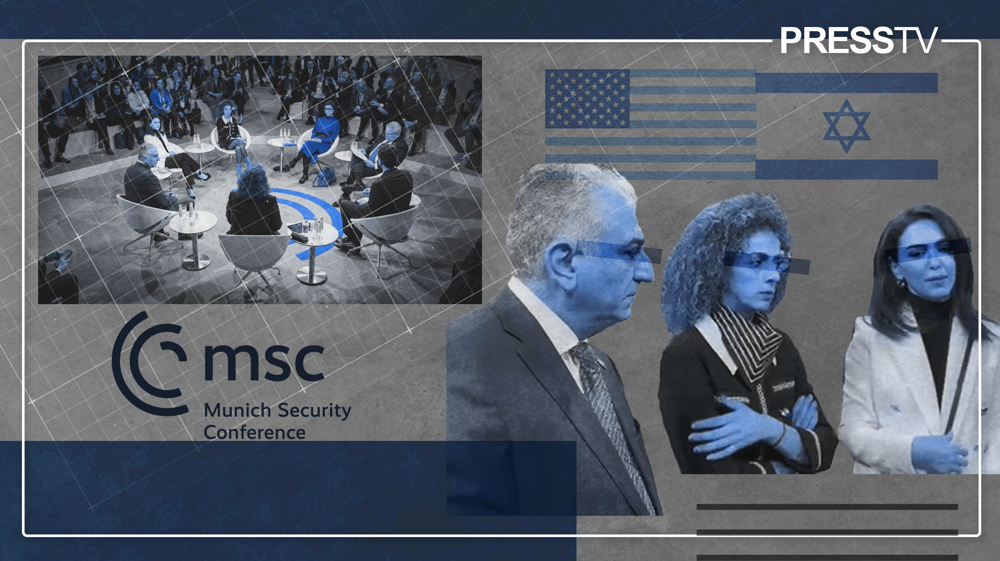
This year’s conference, which began in Munich on Friday, offered a platform to controversial war-mongers such as Reza Pahlavi, Masih Alinejad and Nazanin Boniadi, who have been actively lobbying for foreign military intervention and “regime change” in Iran.
The summit is projected as a premier global event for addressing the world’s most pressing security challenges through dialogue and diplomacy. Yet this year’s proceedings reveal the real motive, particularly in the treatment of issues concerning the Islamic Republic of Iran.
For the third consecutive year, Iranian government officials were excluded, while the stage was set for the likes of Pahlavi and its American neo-conservative backers to indulge in war rhetoric.
A town hall session titled “Breaking or Repeating the Cycle? Iran’s Next Chapter,” moderated by CNN’s Christiane Amanpour, featured Pahlavi and Boniadi, which raised fundamental questions about whether such gatherings genuinely foster peace or instead serve as echo chambers for geopolitical agendas of the US and its European allies.
The amplification of voices explicitly calling for military action against Iran, coordinated with parallel pro-war demonstrations in Munich, Toronto, and Los Angeles, underscored a troubling trend: what is presented as a forum for security dialogue increasingly resembles a stage for orchestrating pressure campaigns rather than facilitating authentic engagement.
Architecture of exclusion
The decision by Munich Security Conference organizers to systematically exclude Iranian government representatives while provide stage to individuals who openly and unabashedly advocate for “regime change” marks a significant departure from traditional diplomatic practice, according to experts.
This selective invitation policy, maintained for three consecutive years, they stress, signals that certain voices are deemed illegitimate regardless of their official standing or representation.
By framing Iranian affairs without input from those who govern the country, the conference sought to create an artificial narrative space in which opposition figures present their perspectives uncontested by alternative viewpoints.
Such curation, experts believe, inevitably shapes how attendees and global observers understand complex national realities.
The organizers’ claim to facilitate dialogue is questioned when one party to any potential conversation is systematically denied participation, while its most vocal critics receive prominent billing, experts told the Press TV website.
Exiled dictator’s son advocating military action
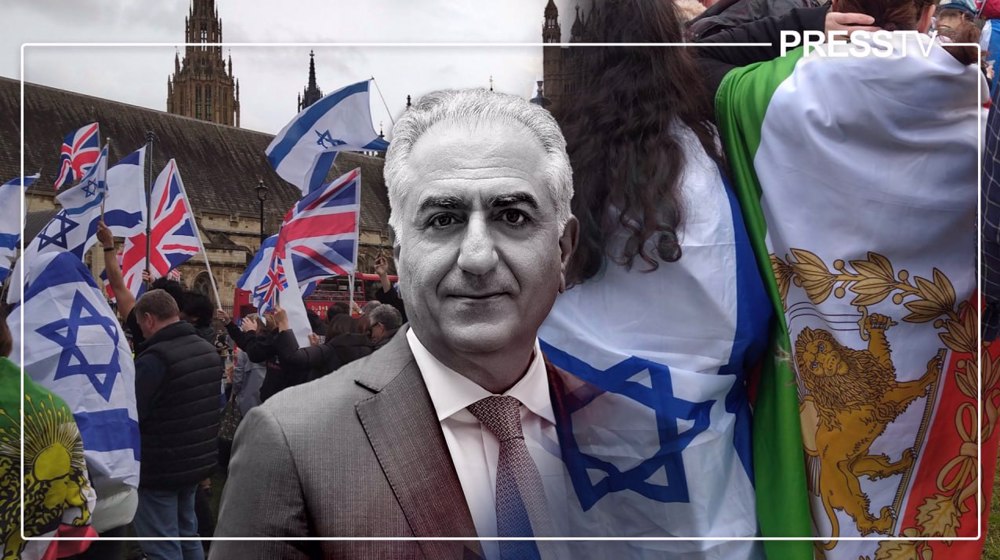
Reza Pahlavi, son of Iran’s last monarch, who was deposed in the 1979 Islamic Revolution, was a key attendee, weeks after he presided over deadly riots in Iran that claimed over 3,000 lives.
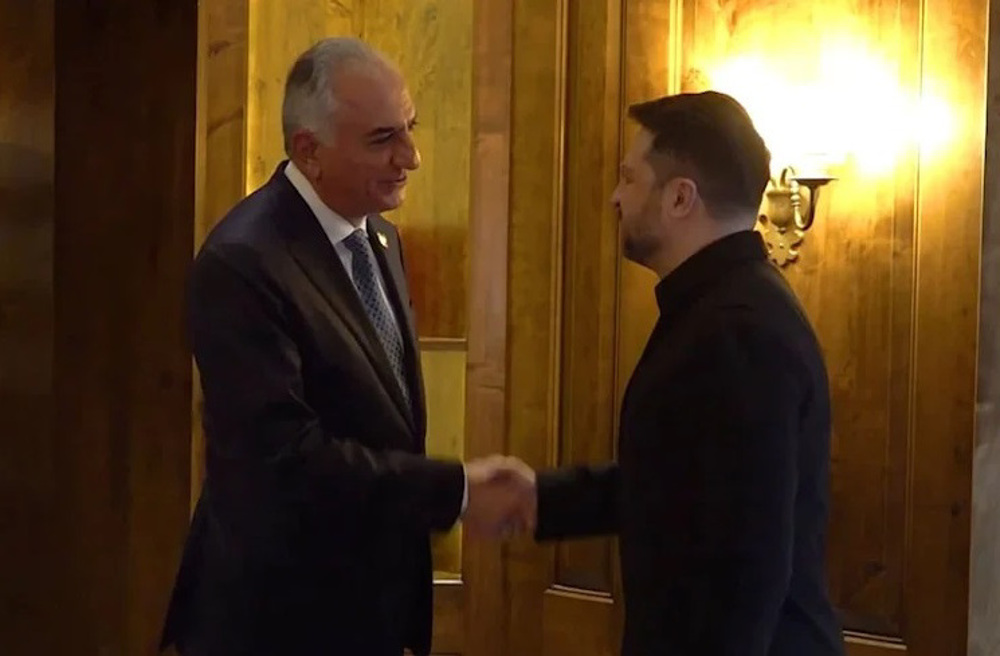
Pahlavi’s presence in Munich, including a meeting with Ukrainian President Volodymyr Zelenskyy and discussions with some neo-con American senators like Lindsey Graham, represents decades of attempts by the exiled self-styled “crown prince” to position himself as an alternative to Iran’s current government.
Observers note that Pahlavi’s consistent advocacy for foreign intervention fundamentally conflicts with principles of national sovereignty and self-determination.
His calls for increased sanctions, diplomatic isolation, and so-called “humanitarian intervention” invite external powers to pressure – and militarily engage against – Iran.
Elevating figures who promote foreign military action against their country of origin, especially those lacking electoral mandates or popular support, raises serious questions about legitimacy, believe analysts.
At a rally in Munich on Saturday attended by a small group of his loyalists, Pahlavi said he was ready to lead the country to a "secular democratic future". Ironically, his remarks came a day after he told CNN’s Amanpour he was not after the crown or title, showing contradictions.
When Lindsey Graham was asked by Amanpour in the same session if he supports Pahlavi as a potential leader of Iran, the hawkish American senator clearly said “no” in a moment of embarrassment for the son of Iran’s former monarch.
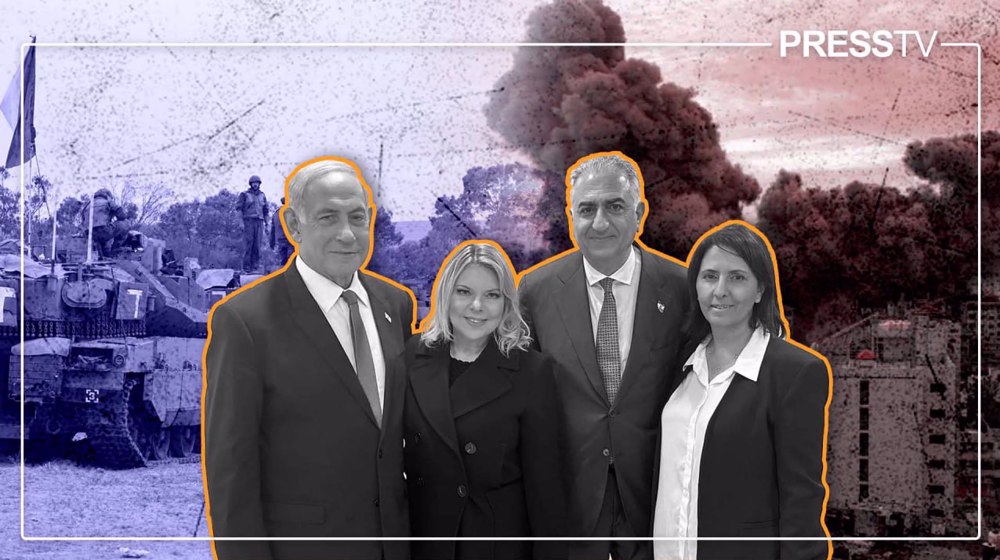
Pahlavi’s history reveals long-standing ties to networks advocating maximum pressure on Iran, including associations with neoconservative figures and organizations closely aligned with Israeli government perspectives.
During the Trump administration’s “maximum pressure” campaign, he vocally supported policies that international humanitarian organizations documented as inflicting significant hardship on ordinary Iranians.
His subsequent visit to Israeli-occupied territories, where he expressed support for the Israeli regime’s hard-nosed policies while omitting reference to Palestinian concerns, further underscores his alignment with regional actors opposed to the Islamic Republic.
The monarchist project Pahlavi faces credibility challenges beyond its lack of domestic support. Historical documentation indicates that during the 1980s Imposed War, he sought Israeli assistance in organizing a coup against Iran’s government, a plan that ultimately failed but revealed his willingness to collaborate with foreign powers during a period of national vulnerability.
His personal biography, including admitted financial difficulties and lawsuits from former associates, contrasts sharply with the leadership image he projects on international stages.
A failed actor and her controversial associations
Boniadi’s participation in the Munich summit reflects a broader pattern of filmy figures moving into political roles related to Iran that closely align with Western government perspectives.
Since 2009, the former Iranian actress has served as a spokesperson for Amnesty International USA and engaged in campaigns ostensibly focused on “human rights” in Iran. Amnesty’s Iran coverage has been widely criticized for its lack of nuance and blatant bias and Boniadi has been a key part of that push.
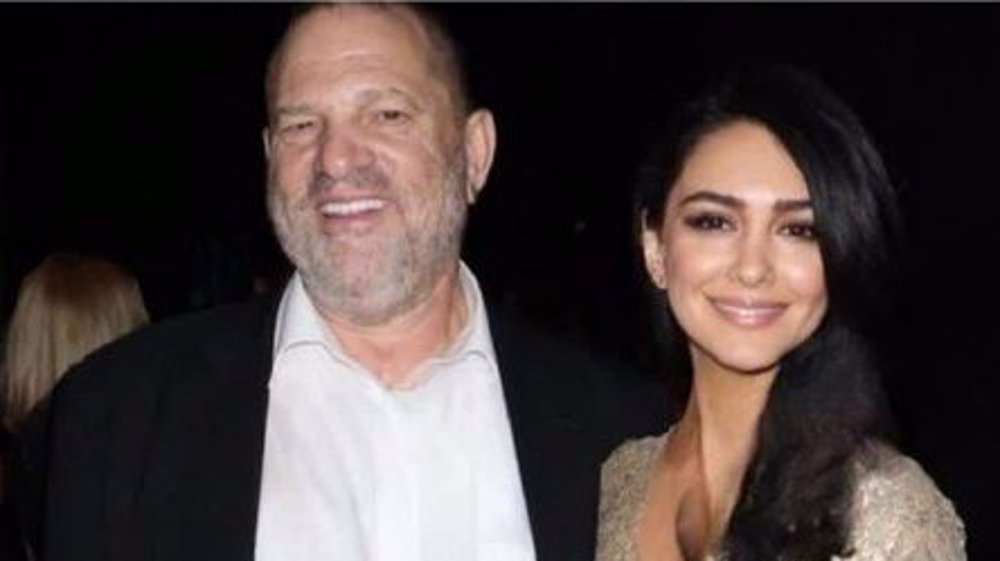
Her off-screen work has drawn her into associations that raise questions about the moral authority with which she addresses human rights. Notably, her collaboration with Harvey Weinstein on Amnesty International campaigns supporting Iranian filmmakers has attracted scrutiny in light of Weinstein’s subsequent convictions for sexual assault and rape.
Photographs of Boniadi posing with Weinstein – images from which she has never publicly distanced herself – stand in stark contrast to her advocacy for women’s rights and her critiques of those who enable abusive power structures.
In a 2019 interview, Boniadi discussed systemic abuse and the networks of complicity that protect powerful predators, drawing parallels to how oppressive regimes maintain control. The irony of making such observations while maintaining associations with a convicted predator undermined her moral credibility, which rests on the consistency of her positions, according to analysts.
Boniadi’s personal history also includes a decade-long involvement with the Church of Scientology, including a widely publicized alleged relationship with Tom Cruise.
Though she has since distanced herself from the organization, her trajectory from Scientology to human rights advocacy illustrates how Western media and advocacy circles often embrace figures whose backgrounds might otherwise raise questions about judgment and associations.
Leaked documents reveal organized strategy
Beyond the conference itself, leaked documents circulating among monarchist networks suggest coordinated efforts to mobilize diaspora communities in support of foreign intervention against Iran. Shared via WhatsApp and Telegram, these materials explicitly call for military action and regime change, framing such intervention as advancing Western strategic interests.
One communique obtained by the Press TV website reads: “Our request: We demand the immediate approval of a military attack and regime change. Return security to America, peace to the world and the Middle East, and freedom to Iran.”
The document further outlines how a post-invasion Iran would serve foreign interests, including “containing China and Russia with a strategic ally, American companies accessing Iran’s market, Iran possessing nine percent of the world’s resources,” and offers to repay war costs “with oil and gold.”
A ten-point media advisory circulating in monarchist circles provides detailed instructions for generating international visibility for protests timed to coincide with the Munich conference.
Supporters are directed to converge on Washington, London, Paris, Los Angeles, and other major cities, with emphasis on proximity to media hubs rather than actual crowd size. Slogans must be in English, narrowly focusing on “regime change” and “military attack,” framed explicitly as Western security concerns rather than Iranian domestic matters.
The advisory further encourages using artificial intelligence tools to mass-produce posters and compile journalist contact lists, and instructs participants to carry host-country flags and position themselves for aerial photography to create the impression of larger crowds. One guideline even suggests that participants be brought “even by force,” prioritizing optics over genuine engagement.
The convergence of this coordinated strategy with the Munich conference, where the very figures promoted by these networks are given a platform, illustrates how the lines between grassroots diaspora expression and centrally planned influence operations have become increasingly blurred.

Question of legitimacy: Who speaks for whom?
The elevation of diaspora figures at international forums raises fundamental questions about representation and legitimacy. Pahlavi has lived outside Iran for over four decades, leaving as a child amid the revolution that overthrew his father’s regime.
Boniadi was born in Tehran but raised in London from infancy, building her career entirely in Western contexts. Alinejad, another "regime change" proponent who is also taking part in this year's summit, has resided in the United States and Europe for many years, bankrolled by US spy agencies.
None of these figures holds any elected position or demonstrable mandate from Iranian citizens. None participates in the political processes they seek to influence from abroad.
Their authority to speak on behalf of Iranians derives entirely from the platforms Western institutions choose to provide, platforms that confer legitimacy through visibility rather than through any organic connection to the populations they claim to represent.
Meanwhile, millions of Iranians who engage with the country’s elections, political institutions, and society from within remain unheard at forums like the Munich Security Conference. Their representatives are excluded, their voices silenced, and their perspectives deemed irrelevant to discussions about their own future.
Intervention advocacy as a service to foreign agendas
The positions advanced by figures featured at the Munich conference align closely with the strategic objectives of powers seeking to destabilize and undermine the security of Iran.
Calls for increased sanctions, diplomatic isolation, and external “regime change” serve interests fundamentally opposed to Iran’s sovereignty and independent foreign policy.
Leaked documents explicitly frame intervention as serving foreign agendas, promising that a post-intervention Iran would contain China and Russia, provide American companies access to Iranian markets, and repay intervention costs with national resources.
This framing reduces Iran’s future to a commodity to be traded for foreign gain – a perspective fundamentally at odds with authentic nationalism or genuine concern for Iranian welfare.
When Diaspora advocacy consistently mirrors the objectives of powers seeking to weaken Iran, when funding traces to government agencies or allied organizations, and when coordination with foreign officials precedes public campaigns, the line between authentic expression and orchestrated influence operations becomes blurred.
✍️Feature - Behind the riots: Israel-Pahlavi nexus and the delusion of ‘regime change’ in Iran https://t.co/ws0vTnT5CC
— Press TV 🔻 (@PressTV) January 11, 2026
Dialogue or stagecraft?
The 2026 Munich Security Conference’s handling of Iran-related matters exposes yet again the gap between the forum’s professed commitment to dialogue and its actual function as a stage for advancing war-centric narratives against independent nations.
By excluding legitimate and democratically elected Iranian representatives while elevating figures who advocate foreign intervention, the conference signals that its interest lies not in genuine exchange but in amplifying voices aligned with particular geopolitical agendas.
Coordinated protests, leaked strategy documents, and the consistent alignment of featured speakers with foreign government positions suggest that what appears as spontaneous diaspora expression is increasingly the product of organized campaigns designed to generate visibility for interventionist objectives.
The use of artificial intelligence, strategic media placement, and instructions to prioritize optics over authentic participation reflects a sophisticated understanding of modern media manipulation to create impressions of consensus where none exists.
For observers committed to peace, sovereignty, and genuine international dialogue, the Munich conference’s evolution raises troubling questions.
When security forums become platforms for advocating military action against sovereign states, when humanitarian rhetoric serves interventionist agendas, and when exclusion replaces engagement, the foundations of diplomatic exchange are undermined.
The voices most essential to resolving differences – those who govern and those who live under the systems being discussed – are silenced, while figures with no mandate and demonstrated alignment with foreign powers occupy center stage.
Whether such practices will ultimately serve peace or further entrench conflict remains uncertain. What is clear is that the 2026 Munich Security Conference, in its treatment of Iran, demonstrates how easily forums dedicated to security can become instruments of insecurity, how platforms meant for dialogue can amplify calls for confrontation, and how the language of human rights can be deployed to advance agendas far removed from the welfare of the very people whose rights are purportedly at issue.

‘War criminal promotion tactics’: Adidas faces boycott calls over campaign featuring Israeli trooper
Germany approves $930 million in arms exports to Israel amid Gaza genocide

German Left Party opposes Volkswagen’s planned military deal with Israeli firm



Israel demolishes historic house in fresh attacks on southern Lebanon: Report
VIDEO | Stunning 89% of Americans say government corruption is widespread
Israel’s destruction of Gaza sewage system backfires, triggering water crisis for regime
Yemeni forces deal heavy blows to Saudi mercenaries in Ta’izz, Red Sea coast
Discover Iran: From Alamut Kilims to Pan-Bafi, Qazvin’s crafts carry centuries of living tradition
VIDEO | US attacks against Iranian oil vessels is an act of desperation: Author
IRGC strikes US unmanned vessel in Hormuz, vows ‘decisive’ response to enemy moves
VIDEO | Press TV's news headlines


 PressTV NEWSLETTER
now
PressTV NEWSLETTER
now
 This makes it easy to access the Press TV website
