Beacon of justice: Hazrat Fatima Zahra’s lasting legacy in shaping women's role in society
By Humaira Ahad
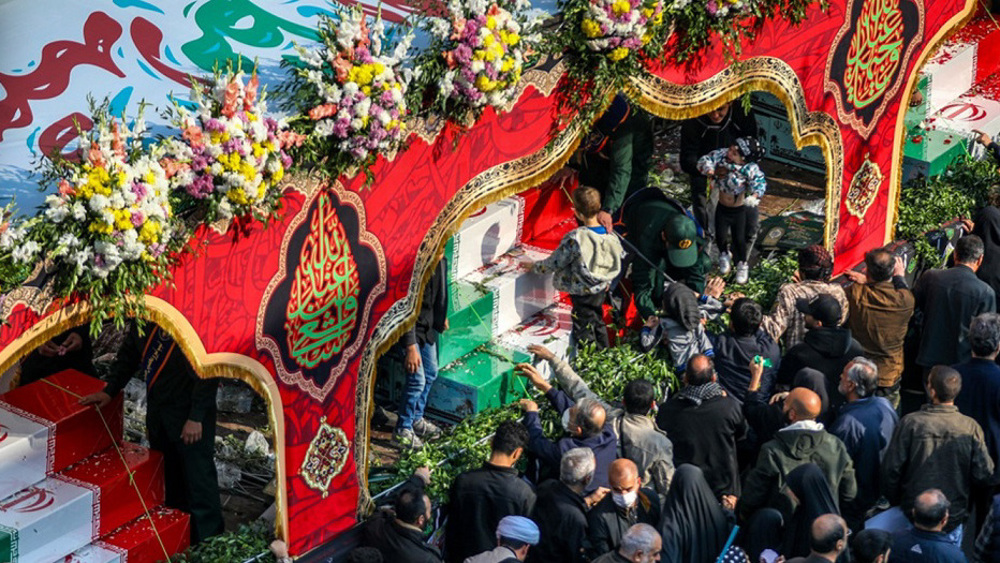
Every year, around this time, the streets of Tehran and other major Iranian cities are adorned with colourful banners, and women and men gather in mosques and community centers for cultural programs honoring the illustrious life of Hazrat Fatima Zahra (sa).
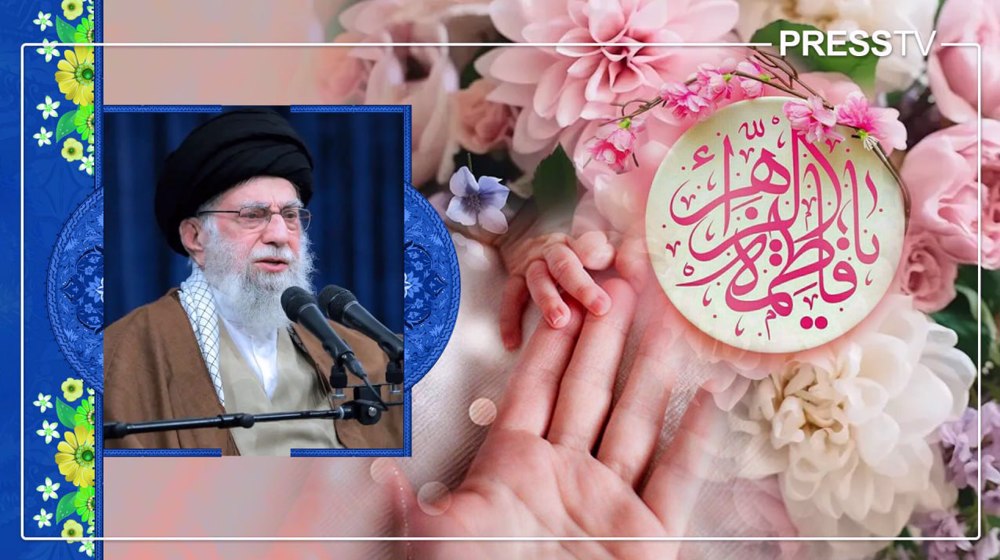
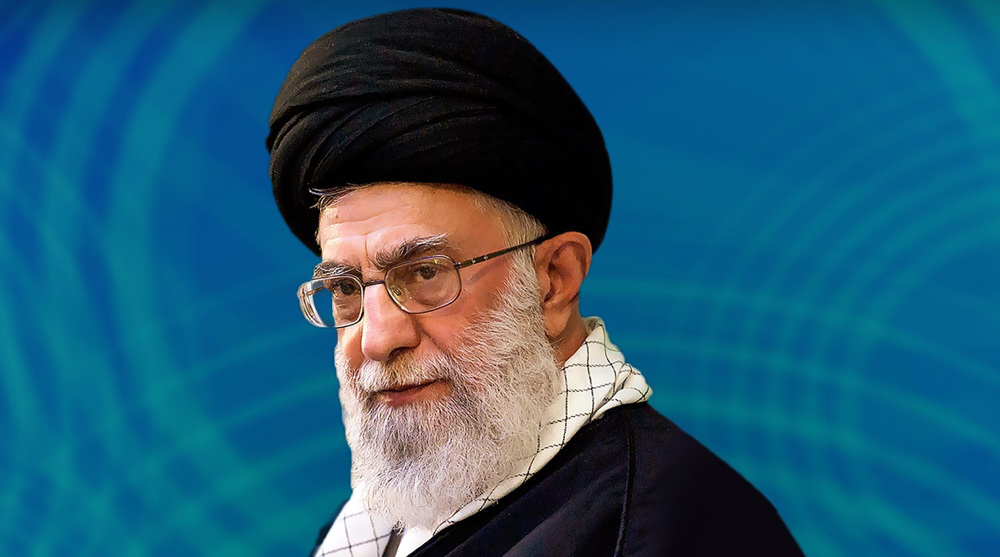
As the Leader of the Islamic Revolution, Ayatollah Seyyed Ali Khamenei, noted in his recent speech, the life and legacy of Prophet Muhammad’s (peace be upon him) beloved daughter stand as a beacon of inspiration for all Muslims.
Across Iran, her birth anniversary is marked as Women's and Mother's Day — an occasion to reflect on the evolving role of women in Islamic society, both private and public spaces.
For Iranians, it is not only a commemoration of a revered figure in Islamic history, but also a celebration of the ideals she embodied: her spiritual resilience, courage in adversity, moral integrity, and deep sense of social responsibility.
Hazrat Fatima Zahra (sa) is revered as a symbol of the highest ideals of womanhood — a benchmark against which courage, compassion, and leadership are measured.
Leader beyond her time
In his recent speech, Ayatollah Khamenei emphasized the extraordinary dimensions of Hazrat Fatima Zahra’s (sa) multifaceted personality, spanning the spiritual, political, human, and feminine realms.
He described her as the perfect role model for both women and men across eras, noting that her anger and pleasure correspond, according to Shia and Sunni narrations, to the anger and pleasure of the Almighty.
“It is truly magnificent and astonishing that a young woman, in terms of spirituality and her celestial and divine identity, could reach a level where, according to both Shia and Sunni narrations, her anger corresponds to the anger of God and her pleasure corresponds to the pleasure of the Lord,” the Leader said, addressing a gathering of women last week.
On the eve of the birth anniversary of Hazrat Fatima al-Zahra (SA), coinciding with National Women and Mother’s Day, Tehran’s historic Azadi Tower was illuminated Wednesday night in a maternal-themed display.
— PressTV Extra (@PresstvExtra) December 11, 2025
Follow: https://t.co/0EMmcJsEtj pic.twitter.com/pbPjbbGp04
He added that Hazrat Zahra (sa), in her childhood, youth, married life, and overall conduct, represents the highest, most beautiful, and most eloquent role model for Muslim women.
“She shared in the Prophet’s (peace be upon him) grief during hardships, accompanied Imam Ali (as) in jihad, captivated the angels with her worship, delivered eloquent and fiery sermons, and raised Imam Hasan (as), Imam Hussain (as), and Hazrat Zainab (as).”
The Leader added that from her childhood to her youth, and through marriage and motherhood, she exemplified the pinnacle of Islamic womanhood — a figure whose life continues to inspire devotion, contemplation, and reverence.
Her unique qualities, deeply human at their core, embody patience in suffering, endurance amid hardship, and a tireless commitment to justice and family.
Champion of justice
Hazrat Fatima Zahra’s (sa) courage was most vividly expressed in her unwavering insistence on justice. Historical accounts describe her standing firmly against decisions that contradicted the Prophet’s (peace be upon him) guidance.
Muslim scholars believe she fearlessly confronted those in power, speaking with moral authority and refusing to compromise truth out of fear of retribution.
In his book Fatima is Fatima, Ali Shariati, the renowned Iranian sociologist, emphasizes that Hazrat Zahra’s (sa) life demanded constant vigilance and responsibility. She defended her family, guided her children, and ensured that societal and religious principles were upheld — demonstrating that women could exercise moral leadership even in the harshest environments.
Every year, Iranians commemorate the national Women’s Day and Mother’s Day on the 20th day of the lunar Islamic month of Jamadi al-Thani, which marks the birthday anniversary of Hazrat Fatima Zahra, the beloved daughter of the Prophet Muhammad (PBUH).https://t.co/mLGcUTS2ei pic.twitter.com/O9KaV9gFwC
— Press TV 🔻 (@PressTV) December 10, 2025
Her advocacy also took practical form within her home and community, where she nurtured ethical responsibility and instilled in her children the principles that would later shape generations.
According to scholars and historians, even after her martyrdom, Hazrat Fatima Zahra’s (sa) life continued to reverberate across generations, igniting movements for social justice and shaping the moral compass of communities.
Her steadfast opposition to oppression became a benchmark for leadership and ethical responsibility — a standard that demands courage, integrity, and unwavering commitment from all who follow her example.
Spiritual legacy and universal values
The influence of Hazrat Fatima Zahra (sa) did not remain confined to the Arab world or Persia, it transcended borders.
The Pakistani poet-philosopher Allamah Muhammad Iqbal drew a striking comparison between her and Hazrat Maryam (sa), noting that while Maryam (sa) is honoured due to her relation to Jesus, Hazrat Fatima Zahra (sa) holds distinction through three extraordinary relationships: her father, Prophet Muhammad (peace be upon him), her husband, Imam Ali (as) and her sons, Imam Hassan (as) and Imam Hussain (as).
“Maryam az yak nisbat-e-Isa azeez,
Az seh nisbat Hazrat-e-Zahra azeez”
(Maryam (sa) is honoured due to her link to Jesus,
But Hazrat Zahra (sa) is honoured through three relations.)
Iqbal described her as the spiritual heart of her household and central to the Prophet’s (peace be upon him) mission to awaken a world submerged in darkness.
The Pakistani national poet regards her generosity and compassion legendary.
Narrating a historical account, Iqbal says that for the sake of a needy person, Hazrat Zahra (as) sold her own cloak to a Jewish trader.
Behar-e-muhtaji dilash aan guneh sookht,
Ba yahudi chadar-e-khud ra furokht”
(For the sake of a needy person, her heart burned,
She sold her own cloak to a Jew.)
Muslim chroniclers say that these actions were not isolated moments but expressions of a life deeply rooted in spirituality, ethical responsibility, empathy, and social consciousness.
In the mystical tradition, her generosity and moral clarity are reflections of a profound inner state.
Fatimah Zahra (pbuh) is the exemplary woman that #Islam introduces pic.twitter.com/FfRN5etSAS
— Khamenei Media (@Khamenei_m) December 16, 2023
In Prophetic traditions, Hazrat Fatima Zahra (sa) is often described as occupying the position of the “soul of the Prophet.” According to mystic scholars, she holds a position so spiritually elevated that her heart functions as a flawless mirror, “the mirror of God” in the intensity of her purity and receptivity to divine light.
“A mirror does not create light; it reflects it without distortion. In the same way, her heart was understood to hold no shadow of self, only the radiance of divine attributes.”
Kashmiri poet and scholar Syed Habib captures this spiritual resonance in his mystical booklet Shifa, writing:
“Fatima ki lab kushai, la ila ka atiraf
Bahr o bar ka raqs, ya ayaat-abyaz bar ghilaaf.”
(Her words affirm the very essence of the creed, beginning with La and ending with Allah
They moved with the rhythm [dance] of the cosmos, mirroring the sacred signs etched like white lines upon the black covering [of the holy stone.])
These spiritual interpretations and poetic tributes deepen the understanding of her actions, presenting them as outward reflections of an inner world shaped by divine proximity.
Life of trial and triumph
Hazrat Fatima Zahra’s (sa) life was marked by trials that tested the limits of human endurance.
Dr. Shariati described her early years beside Prophet Muhammad (peace be upon him) as formative, portraying a young girl who comforted her father, earning the title ummi abiha — mother of her father.
She accompanied him in public, offered comfort in moments of trial, maturing into a woman shaped by the twin forces of faith and duty.
After marrying Imam Ali (as), Shariati notes that her life assumed new challenges. She shared in the struggles of family, faith, and social justice, guiding her children and nurturing the principles that would mould human consciousness.
“Becoming Fatima is not easy. She is a holy trust. It requires that she ascend many steps and fly many flights into higher worlds while being step by step and wing to wing with Ali. She must share with Ali in his sorrows and in his difficulties,” the Iranian scholar writes.
Hazrat Fatima Zahra must be a role model in all aspects, social and revolutionary movements in particular: Leader of the Islamic Revolution pic.twitter.com/Thonvk9sDU
— Press TV 🔻 (@PressTV) January 23, 2022
This dedication is also reflected in the spaces she inhabited. The physical spaces associated with Hazrat Fatima Zahra (sa) carry deep historical and spiritual significance.
Imam Khomeini often reflected on the humble home where she nurtured human beings “whose light shone from the vast expanse of the earth to the highest heavens.”
For Islamic scholars, Hazrat Zahra’s (sa) small room, modest in dimensions was immense in spiritual value and served as a reminder that transformative influence is not always grand in scale, but profound in moral and ethical substance.
Foundation for Iranian women
The birth anniversary of Fatima Zahra (sa) is closely linked to the celebration of women in the Islamic Republic of Iran.
The founder of the Islamic Revolution Imam Khomeini repeatedly highlighted her significance as a model for Iranian women.
In May 1979, he declared that if any day could be called “Women’s Day,” it is the birthday of Fatima Zahra (sa), a day that honours the pride of the family of divine revelation.
The following year, he addressed the Iranian nation, particularly its women, emphasizing that Hazrat Zahra’s (sa) life illuminates the path to restoring women’s dignity in society.
Imam Khomeini linked her example to broader societal roles.
“From the point of view of Islam, women have a sensitive role in building the Islamic society, and Islam upholds women to such an extent that she can regain her real human position in the society and get out of the limit of being an object,” he said once.
In another statement, he asserted that women are "the leaders of our movement" and "we are their followers," nothing that "I accept your leadership and I am your servant.”
Through his words, the founder of the Islamic Revolution intertwined Hazrat Zahra’s (sa) legacy with the empowerment of women in contemporary Iran, ranging from the household to leadership in public and religious life.
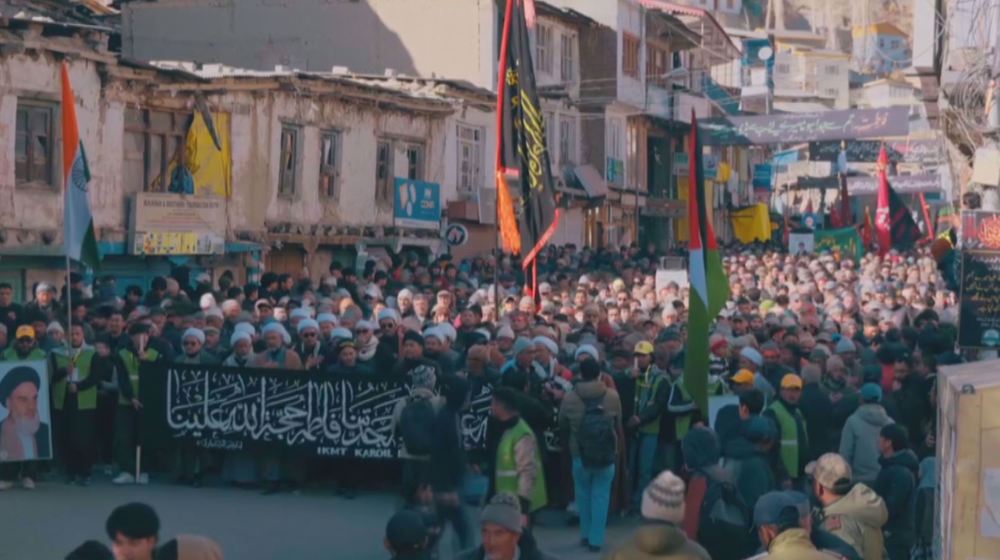
Kashmir remembers Hazrat Fatima Zahra as a symbol of resistance
— Press TV 🔻 (@PressTV) November 18, 2024
Press TV's @syedalisafvi reports from Kashmir pic.twitter.com/kBD99JEi42
Enduring symbol
French philosopher Henry Corbin described Hazrat Fatima Zahra (sa) as “the supracelestial earth…the manifested form…the very soul of the Imams, the threshold through which the Imams effuse the gift of their light,” capturing the extraordinary spiritual and moral stature she embodied.
For the French philosopher and Iranologist, her life was a seamless fusion of knowledge, eloquence, and devotion, establishing a model for female scholarship and public engagement.
Beyond her historical presence, she demonstrated that moral courage, ethical leadership, and social responsibility are inseparable.
In Iran, Hazrat Fatima Zahra’s (sa) legacy is closely intertwined with the modern narrative of women’s rights, spiritual guidance, and ethical leadership. Across the country, her life continues to inspire reflection, research, and reverence.
From the speeches of Imam Khomeini and Ayatollah Khamenei to the writings of Allamah Iqbal and Dr. Shariati, Hazrat Fatima (sa) emerges as a figure whose life is historical but also immediate.
Educational programs, lectures, and seminars highlight her unwavering moral compass and the remarkable balance she maintained between household responsibilities and public engagement.
Students in Iran often learn of her pivotal role in guiding her family, supporting the Prophet Muhammad (peace be upon him) and Imam Ali (as), and advocating for justice in the face of adversity.
Across mosques and cultural centers, Hazrat Fatima Zahra’s (sa) story endures as a source of inspiration, shaping a society where devotion, justice, courage, and leadership are not just honored but actively practiced.
Discover Iran: Tabriz’s ‘Mausoleum of Poets,’ where centuries of Persian literary history live on
Discover Iran: Tabriz’s Blue Mosque, where glorious history meets timeless Iranian architecture
200 nights, one resilient nation: Iranian people’s epic in defense of homeland and Revolution



US aggression, economic warfare amount to crimes against humanity: Iran's UN envoy
Protests erupt in US as ICE agent shoots Venezuelan driver
US pressure fuels cooperation among Muslim states: Pezeshkian
Major TV networks suspend White House pool coverage after Trump ban
US visa ban on Palestinian UN delegation violates international agreements: Hamas
VIDEO | Press TV's news headlines
Iran calls on France to respect law after suspending French cultural institute in Tehran
Israel lobby no longer shy about its grip on US policy on Iran: Araghchi


 PressTV NEWSLETTER
now
PressTV NEWSLETTER
now
 This makes it easy to access the Press TV website
