New era in lunar science: Iran takes center stage in mapping Moon’s electric frontier
By Ivan Kesic
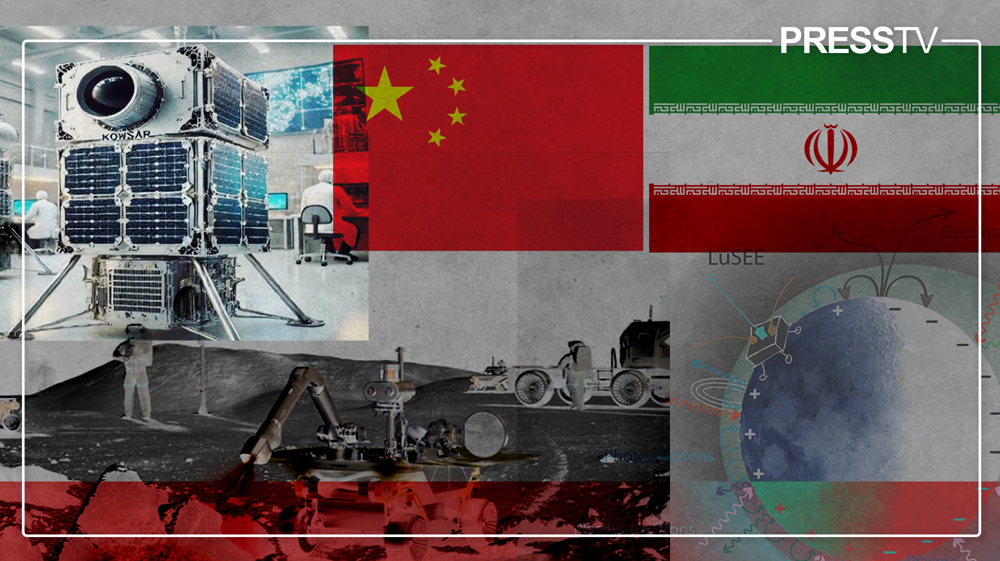
In a significant development, Iran has embarked on a landmark international partnership by designing a key scientific instrument for China’s lunar program.
This collaboration marks its entry into the elite realm of sustainable lunar exploration and secures its place within the China-led International Lunar Research Station (ILRS).
Formalized this year, this strategic move represents a significant evolution in Iran’s space program, shifting from national orbital projects to a vital role in a major multinational endeavor.
At the heart of this cooperation is Iran’s commitment to develop a payload that will measure the lunar surface’s electric potential – an essential instrument slated for China’s Chang’e-8 mission.
This initiative forms a core part of the broader ILRS project, spearheaded by China and Russia as a direct counterpart to the US-led Artemis Program.
For Iran, this collaboration is more than a single mission. It is a meticulously planned step toward mastering the skills needed for future extraterrestrial resource exploitation.
By aligning with the ILRS, Iran gains access to cutting-edge lunar science and embeds itself within a growing global coalition dedicated to establishing a permanent human-robotic presence on the Moon, ensuring it will have a voice and role in the next chapter of humanity’s space exploration.
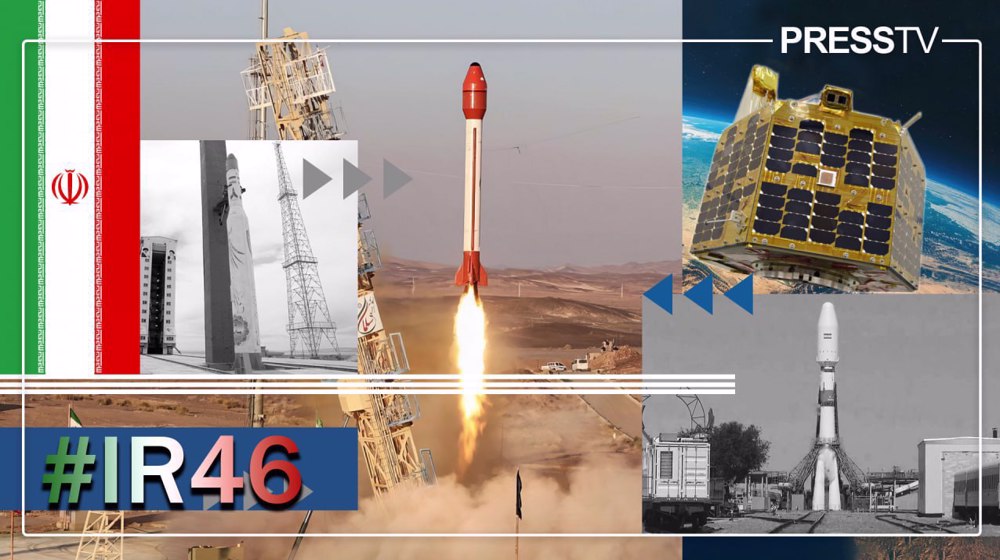
✍️ #IR46: How Iran developed and mastered bioastronautical and human space program
— Press TV 🔻 (@PressTV) February 4, 2025
By Ivan Kesichttps://t.co/WSiJO8DK3B
International Lunar Research Station: A global lunar outpost
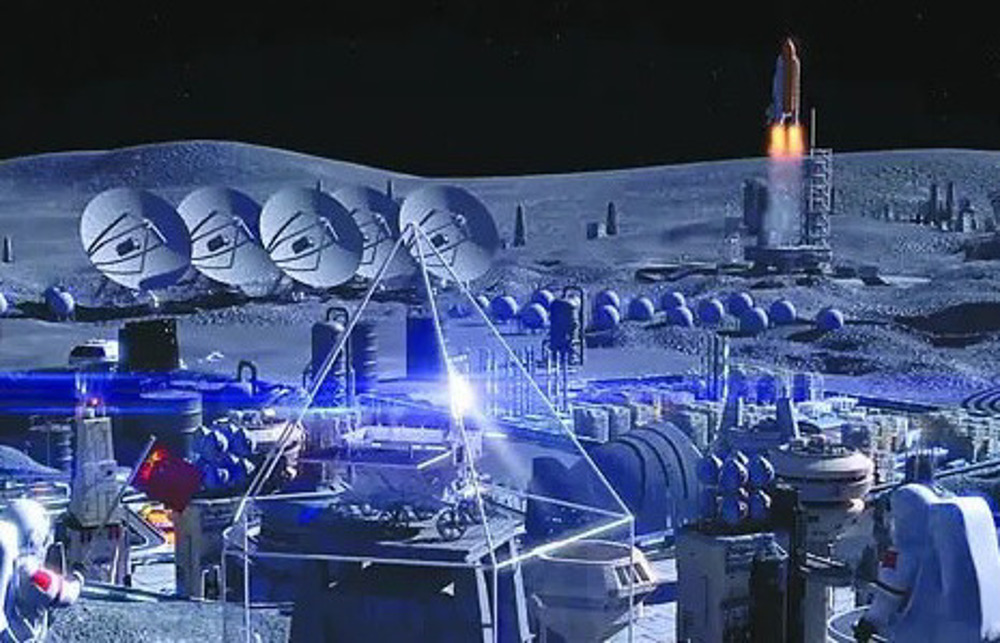
The International Lunar Research Station (ILRS) is a visionary initiative led by China and Russia to establish a permanent robotic – and eventually crewed – research base on the Moon.
Announced in 2021, the ILRS marks a significant shift in space exploration, moving from short-term missions to a philosophy of sustainable presence and resource utilization.
Its core mission emphasizes openness, inviting international partners to contribute to and benefit from a shared platform for scientific discovery and technological advancement.
The project follows a phased roadmap spanning two decades: a reconnaissance phase that scours the lunar South Pole, a construction phase that deploys core infrastructure, and a utilization phase that enables long-term crewed and robotic operations.
While China’s National Space Administration and Russia’s Roscosmos lead the effort, the ILRS’s success hinges on building a broad international consortium, creating a multipolar model of lunar exploration distinct from other global initiatives.
A defining feature is its rapidly expanding partnership network, extending far beyond the founding countries.
Nearly a dozen countries and organizations, especially from the Global South, have joined by signing Memoranda of Understanding, contributing scientific payloads, ground station support, technology development, and personnel training.
The Asia-Pacific Space Cooperation Organization, including members like Turkey and Peru, allows smaller spacefaring countries to pool resources and participate collectively.
The United Arab Emirates, with experience from its Mars mission and ambitious lunar plans, may contribute rovers or communication technology.
This collaborative framework functions as a coalition of the willing, enabling partners to negotiate specific contributions without massive standalone financial commitments, fostering a diverse and inclusive platform for lunar exploration.
Iran's strategic entry into lunar exploration
Iran’s path to becoming a recognized partner in the ILRS unfolded through strategic announcements throughout 2025, signaling its deliberate integration into the program.
The initial confirmation came in May 2025, when Iran officially joined China’s lunar exploration program with plans to send a scientific payload aboard the Chang’e-8 mission.
This partnership aligned with Iran’s ten-year national space roadmap and followed extensive technical consultations that earned Chinese confidence in Iranian researchers.
In April, during China National Space Administration’s Space Day announcements, Iran was formally listed among international partners selected for the Chang’e-8 mission, securing a share of the 200 kilograms of international payload capacity, a key milestone later highlighted by Iranian officials too.
Diplomatic momentum grew in October 2025 when Russia’s Roscosmos extended a public invitation for deeper collaboration. During World Space Week ceremonies in Tehran, Roscosmos’s head invited Iranian engineers and scientists to join efforts on the Russian Orbital Station and the ILRS, noting preliminary discussions with the Iranian Space Agency (ISA).
This underscored the multilateral nature of Iran’s engagement. By mid-October, ISA head Hassan Salarieh confirmed the lunar mission was moving from agreement to implementation, calling it a strategic element of Iran’s scientific roadmap.
He emphasized that multilateral cooperation was essential for sharing costs and expertise, enabling Iran to participate effectively alongside major space powers.
Iranian payload: Measuring the Moon's electrical personality
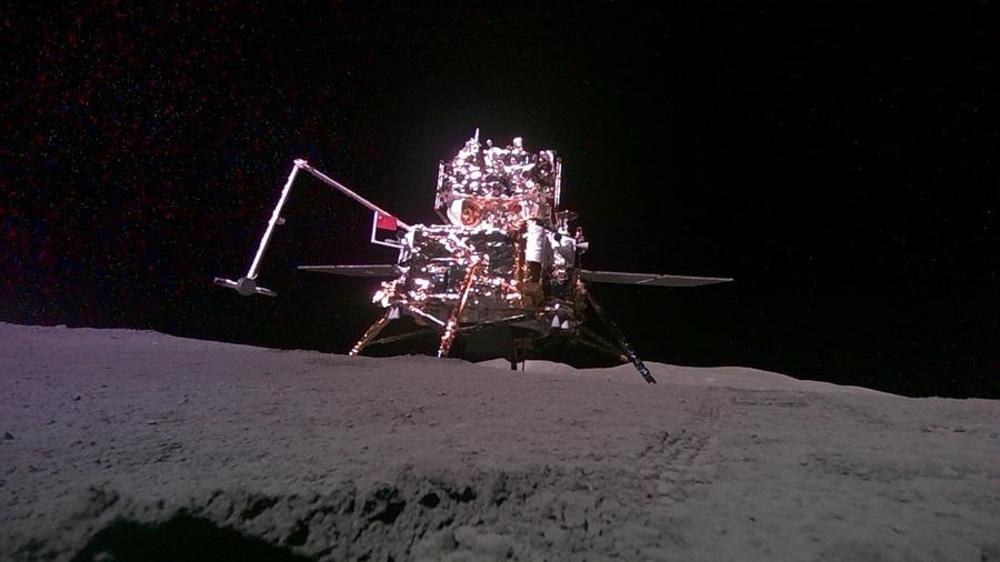
Iran’s centerpiece technical contribution to the Chang’e-8 mission is a sophisticated instrument designed to measure the static electric potential on the lunar surface, a critical scientific tool.
The Moon’s surface is electrically charged by constant solar wind and ultraviolet radiation, creating a complex, dynamic environment, especially at the lunar South Pole’s areas of permanent shadow and sharp sunlight targeted by the ILRS.
Understanding this electric potential is vital because it affects lunar dust behavior – an abrasive, sticky hazard threatening spacecraft, spacesuits, and equipment.
Data from Iran’s payload will help engineers design habitats, power systems, and rovers that mitigate dust adhesion and electrical discharge risks.
Moreover, this knowledge is essential for planning in-situ resource utilization, as handling lunar soil for water ice or minerals depends on regolith electrostatic properties.
For the Islamic Republic of Iran and its space program, developing this payload offers a strategic opportunity to master a niche but critical space engineering field.
The project showcases Iran’s ability to produce reliable, precise scientific instruments that can endure launch stresses and the harsh lunar environment, demonstrating the technical maturity of its research and academic institutions on the global stage.
✍️ Feature - Islamic Revolution at 45: Iranian space industry’s phenomenal feats despite odds
— Press TV 🔻 (@PressTV) February 5, 2024
By Ivan Kesic#IslamicRevolution45https://t.co/DK60FZNC2Z pic.twitter.com/DNPqoT1yPN
A calculated step in Iran's expanding space program
For Iran, participation in the Chang’e-8 mission and the broader ILRS framework is a strategic move aligned with its long-term goals of technological self-reliance and securing a role in the emerging space economy.
Iranian officials emphasize this collaboration as vital to avoid being sidelined in the global race for lunar and planetary resources. Given the high costs and technological demands of deep-space exploration, international cooperation is essential for Iran’s ambitious space ambitions.
Partnering with established space powers grants Iran access to launch vehicles, lunar landers, and shared mission data, opportunities otherwise unattainable for decades.
Contributing a specialized instrument in exchange for a Moon mission seat is a pragmatic, cost-effective way to build capacity and credibility.
The Iranian Space Agency head addresses domestic criticism by framing space investment as key to the nation’s future industrial and economic strength, comparing it to geostationary satellites that yield long-term returns.
Beyond science, this partnership boosts Iran’s diplomatic soft power, integrating its scientists and engineers into a major international enterprise, fostering knowledge transfer, and securing Iran’s role in humanity’s next giant leap beyond Earth orbit.
Iran’s Royan Institute ranked among world’s top 10 institutions in male infertility research

Iran's Alamut Castle, six associated fortresses earn UNESCO Heritage status as engineering marvels
Iran develops indigenous smart system that boosts oil recovery by 59%



VIDEO | Washington's anxiety grows as Beijing surges ahead in robotics
VIDEO | Press TV's news headlines
Ukraine escalates maritime attacks, hits Russian ship in Black Sea
Israeli lawyer calls for killing all Palestinians in occupied West Bank
Those invoking Prophet's message must first assess their own conduct, Iran tells Bahrain
Iranian arrangement for Hurmuz passage is ‘only option’, says MP amid US threats
VIDEO | Tunisia resumes Russian fuel imports amid shifting global energy trade
VIDEO | Sebastia's global recognition: Can UNESCO protect a heritage at risk?


 PressTV NEWSLETTER
now
PressTV NEWSLETTER
now
 This makes it easy to access the Press TV website
