Iran prepares for first solid-fuel launch from Chabahar spaceport
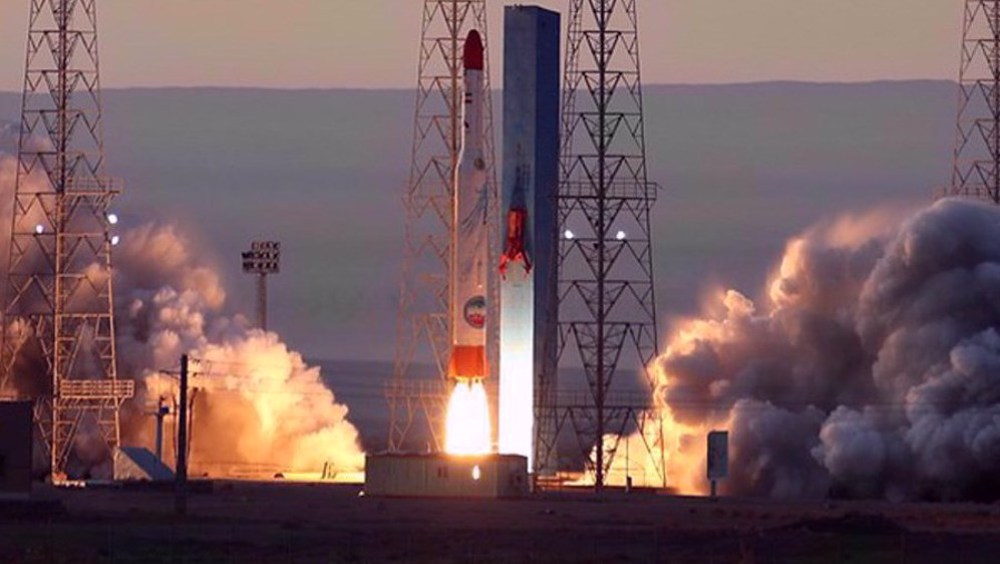
The head of the Iranian Space Agency has announced the completion of the first phase of the Chabahar spaceport for solid-fuel launchers located in southeastern Iran, saying preparations are currently underway for its inaugural launch.
Hassan Salarieh made the remarks at the inauguration ceremony of the World Space Week 2025 at the Ministry of Communications on Saturday, where he outlined Iran’s latest achievements and plans in space science and exploration.
Salarieh also noted that the second phase of this base, designed for liquid-fueled rockets capable of heavier payloads and multiple launches, is currently in the design stage.
“With its privileged geographical location, the Chabahar base provides access to orbits with an inclination of 40 to 100 degrees, which is essential for satellite constellations,” he said.
Upcoming satellite launches, international cooperation
Elsewhere in his remarks, Salarieh provided new details about upcoming satellite launches, expansion of international collaborations, indigenous technology development, and the active participation of the private sector in space projects.
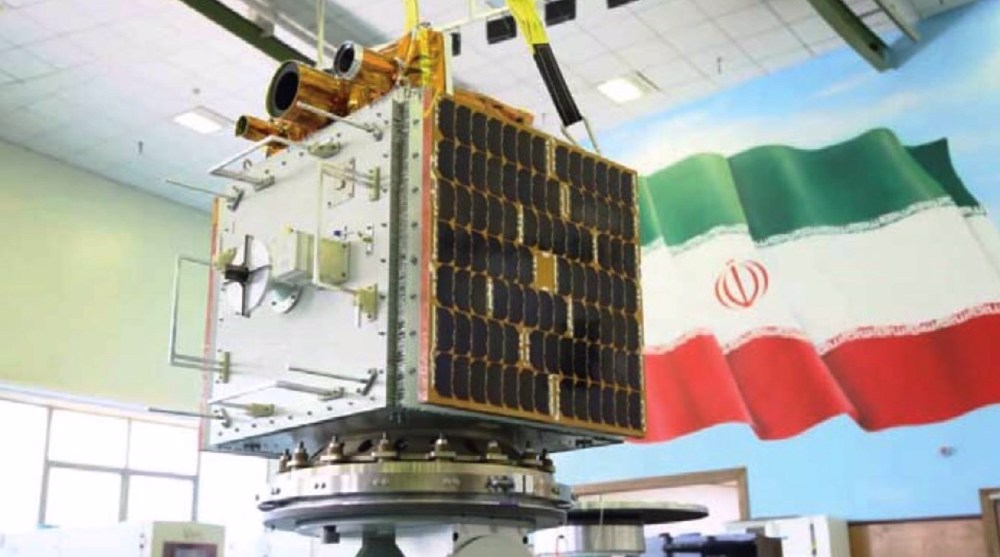
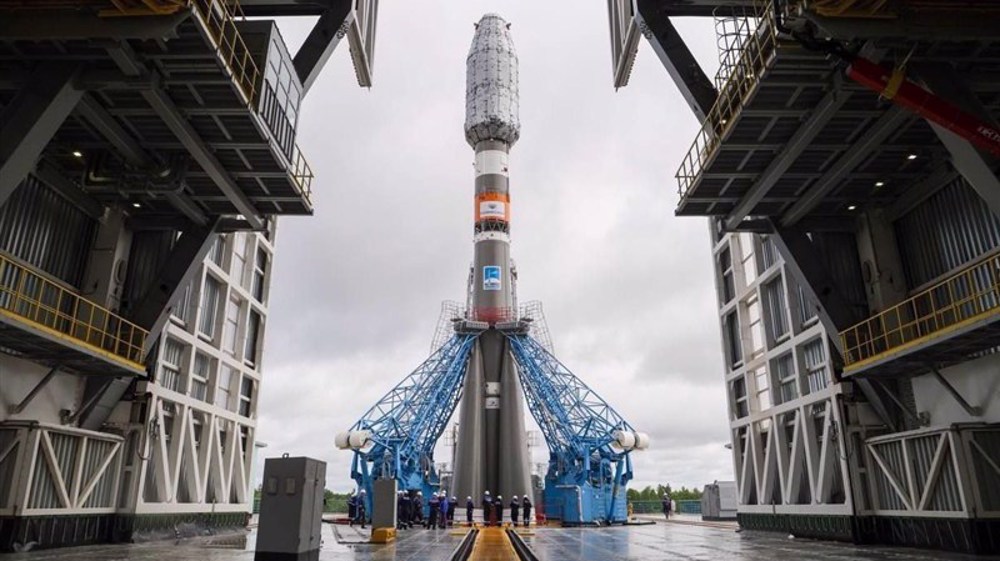
He revealed that the Zafar-2 and Paya remote-sensing satellites will be launched in the coming months using a foreign launch vehicle.
The head of the Iranian space agency also said that Nahid-2 will be launched aboard Iran’s Simorgh rocket, while additional test launches are planned for satellites in the Shahid Soleimani constellation project.
Emphasizing the importance of international cooperation in space science, Salarieh said Iran has joined China’s Chang’e-8 lunar program, with the design phase completed and engineering model development set to begin.
He also stated that talks are underway with other spacefaring nations to participate in future space station projects.
Regarding research and development progress, Salarieh announced Iran's advancements in the design of a new generation of reentry capsules and experimental research platforms capable of conducting suborbital and orbital life science tests, including studies on radiation, temperature, and pressure effects on living organisms.
Following the successful launch of a 500-kilogram reentry capsule in 2023, new prototypes are now under development, with subsystem testing scheduled to begin soon, he said.
Salarieh also mentioned Iran's progress in advancing the next generation of remote-sensing and communications satellites, including Pars-3 with sub-meter imaging resolution, Radar SAR (Rad-2) satellite with 20-meter imaging capability, Nahid-3, a high-bandwidth communications satellite, and Pars-2, which is undergoing final tests before launch.

He added that the Kowsar-2 satellite, developed by Iran’s private sector and offering four-meter imaging resolution, is also ready for launch after improvements to its initial version.
The head of the Iranian space agency also reported progress on the Shahid Soleimani narrowband satellite constellation, consisting of about 20 nano-satellites in its first phase, noting that two experimental models – a 3U CubeSat and a 6U CubeSat – have already been built to test key subsystems developed by Iranian private companies.
Salarieh further stressed the importance of cooperation with universities and research institutes in expanding the country's space ecosystem.
He also announced that several tenders, including those for the construction of research satellites, will be opened to academic institutions and knowledge-based companies so that they can play a direct role in the design and construction of satellites.
Salarieh concluded by saying that Iran’s space program is expected to include multiple domestic and international launches this year, covering remote-sensing, communications, and experimental satellites, with precise launch dates subject to technical readiness.
Iran ranks among the world’s top 10 nations capable of developing and launching satellites.
The untold story of hidden war on Iran's dinner table
Iran localizes 2,000 sanctioned petrochemical components to boost domestic production

Iran's homegrown aerospace industry takes wing with Simorgh



Iran's Royan Institute preserves fertility of two girls with cancer through advanced surgery
VIDEO | Palestine convoy arrives in Ankara, voices solidarity with Gaza
North Korea says US-led ‘cyber warnings’ aim to tarnish its image
VIDEO | Arbaeen pilgrimage preparations
VIDEO | Press TV's news headslines
VIDEO | Arbaeen in Karbala: Millions renewing Imam Hussain’s call for unity, justice
VIDEO | Pakistan's Arbaeen commemorations echo calls to resist oppression
Iran FM discusses regional developments in phone talks with Pakistani, Omani counterparts


 PressTV NEWSLETTER
now
PressTV NEWSLETTER
now
 This makes it easy to access the Press TV website
