Israeli-Emirati power play across the Horn of Africa and Jeffrey Epstein's covert role
By David Miller
When people refer to “Greater Israel,” they usually mean the concept of expanding colonial control to encompass what Zionists call Eretz Yisrael.
This is the territory that stretches between the Nile and Euphrates rivers, covering all of Palestine, Lebanon, Jordan, and portions of Syria, Saudi Arabia, Iraq, Kuwait, and Egypt.
Some interpretations even extend it to a small part of Turkey.
In The Complete Diaries, Vol. II, p. 711, Theodor Herzl, the founder of the political Zionism project, writes that the territory of the so-called “Jewish state” would extend “from the Brook of Egypt to the Euphrates.”
Similarly, Rabbi Fischmann, a member of the Jewish Agency for Palestine, declared in his testimony before the UN Special Committee of Enquiry on July 9, 1947, that “the Promised Land extends from the River of Egypt up to the Euphrates; it includes parts of Syria and Lebanon.”
This idea resurfaced in the 1980s with the publication of the so-called Yinon Plan.
The document, originally written in Hebrew by Oded Yinon, was translated into English in 1982 by the anti-Zionist activist Israel Shahak.
In his foreword, Shahak writes: “In a highly revealing article published in the World Zionist Organization periodical Kivunim, Oded Yinon advocates that Israeli strategy in the 1980s aims to redraw the map of the Middle East, fragment the Arab states, and become, in effect, a regional superpower.”

However, many commentators argue that the idea of a “Greater Israel” has been framed in ways that extend far beyond West Asia. This has even been hinted at by Netanyahu.
When the i24NEWS channel asked him whether he subscribed to a “Greater Israel” vision, he replied, “Absolutely.” Pressed again during the interview on whether he felt connected to that vision, he answered: “Very much.”
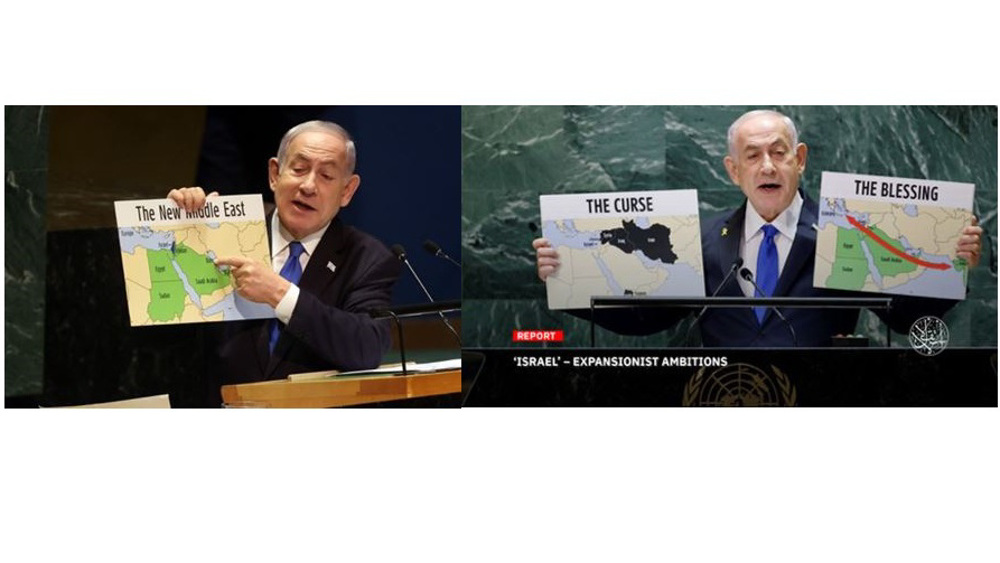
He has even presented maps of a so-called “new Middle East” that includes all of Saudi Arabia and Egypt, as well as Sudan, far larger than earlier interpretations of the concept.
Observers maintain that plans associated with this idea are already developing far beyond what these maps suggest.
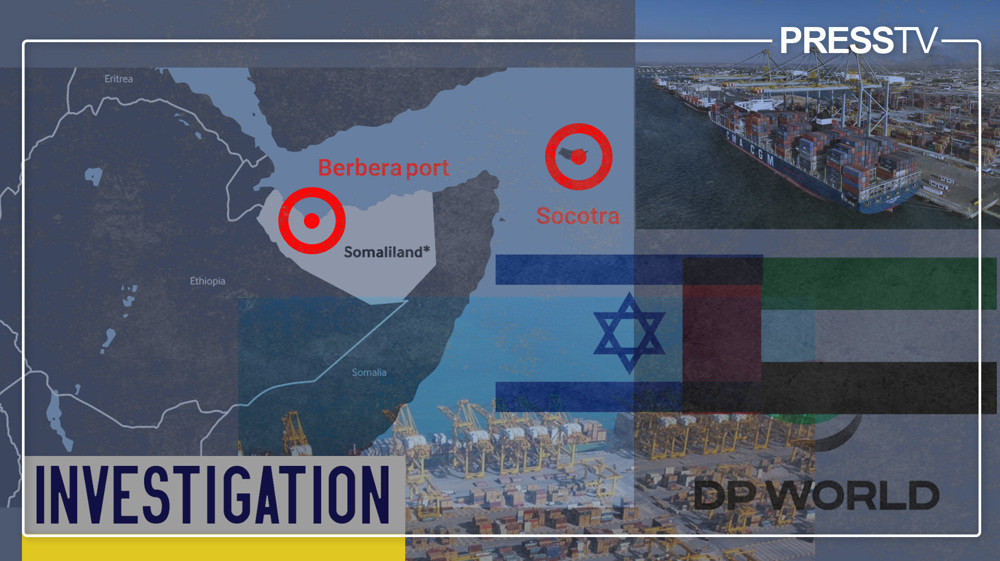
Somaliland is one of the targets for the settler-colonial Zionist entity. It’s a 'country' which the Zionist movement wants to turn into a military base from which the Zionists and the Emiratis can carve up Africa into easily manipulated resource-plundering zones.
Crucially, it is also very close (around 150 nautical miles) from the Somaliland port of Berbera to the coast of Yemen (the port of Aden), where the Zionists seek to destroy the Ansarullah-led government.
Hence, Berbera is a focal point linking Somaliland’s leadership, the UAE, and the late financier and convicted sex offender Jeffrey Epstein, illustrating a wider network of interests shaping the region.

Somaliland is a former British colony bordering Djibouti, Ethiopia, and Somalia that declared independence from Somalia in 1991 without receiving international recognition.
Under international law, Somaliland is currently deemed an autonomous district of Somalia. In 1960, when Somaliland was briefly independent, Israel was among the first to recognize its independence.
Back in the 1990s, the self-styled ‘president of the so-called ‘Republic of Somaliland wrote to the Zionist regime asking for help with overcoming the so-called “Islamist adversaries” of the people of Somaliland.
“My government needs the support and assistance of the State of Israel” to defend our nascent state from the menace of pro-Islamist dark forces,” he wrote.
In February 2010, Israeli foreign ministry spokesperson Yigal Palmor revealed that Netanyahu was prepared to recognize Somaliland again, though it did not happen at the time.
The plans are now in active mode again.
In late 2024, reports emerged that Israel had secretly approached Somaliland with an offer to establish a military base on its territory in exchange for official recognition. Somaliland is reportedly willing to accept the Israeli base, provided that Israel recognizes Somaliland and invests in it.
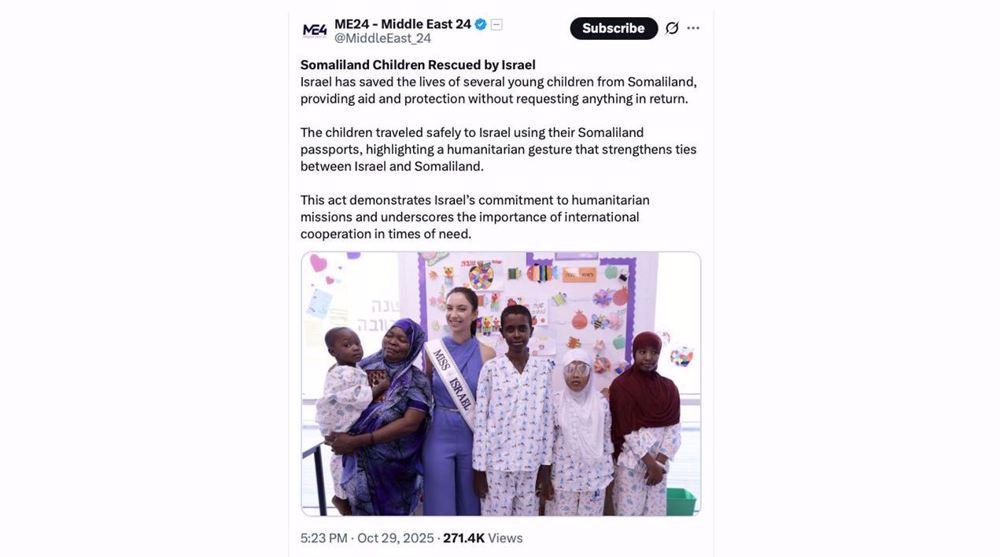
In October this year, the Zionist regime dispatched ‘Miss Israel’ on a mission to supposedly save Somali children, claiming, in manifest propaganda, that they were “providing aid and protection without requesting anything in return.”
The neighbouring Sudanese government’s view is that "Somaliland now serves as a UAE military hub—armored vehicles, weapons, and gear flow through, moving onward to Ethiopia and into Darfur, fueling the RSF and UAE-backed mercenaries."
Somaliland is on fire not despite, but because of the intervention of the Zionists and their UAE proxies.
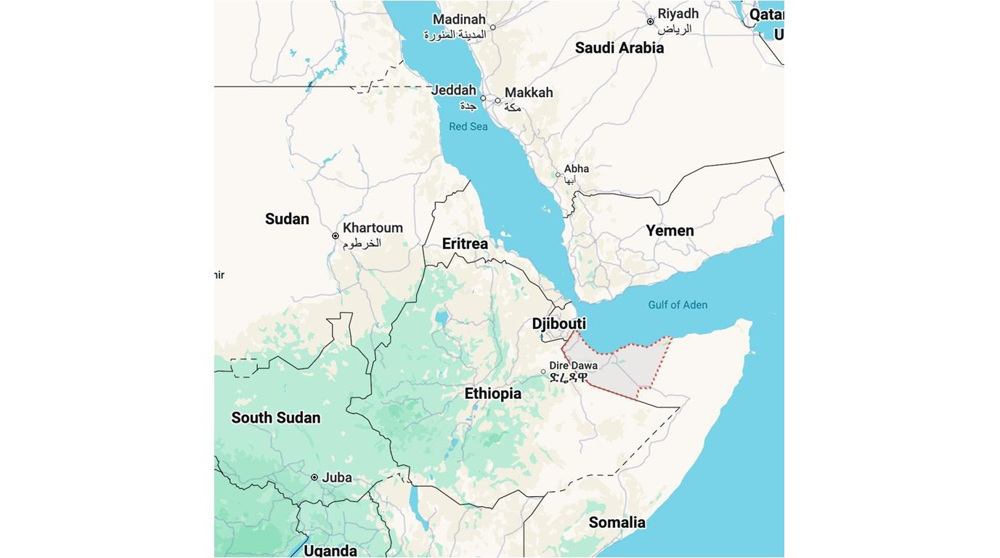
Zionist/UAE infiltration of the horn of Africa
The countries bordering the Red Sea and the Horn of Africa have all been under assault by the Zionist regime, which has contributed to regional instability.
Djibouti
In 1986, the Mossad embarked on a secret mission to transport Ethiopian Jews to the occupied territories via Djibouti. However, the operation went disastrously wrong, with reports of rape, torture, and fatalities involving those connected to the mission, particularly the Mossad agents.
Today, perhaps unsurprisingly, Djibouti is opposed to normalisation with Zionism and to the genocide. In 2015, Djibouti broke off diplomatic relations with the UAE and “evicted Saudi and Emirati troops”.
It now hosts the only Chinese overseas military base.
Eritrea
Zionist-Eritrean cooperation dates back to the mid-1990s. The Zionist regime reportedly established a military base on the Dahlak Archipelago, located 43 km off the Eritrean coast.
This base is said to be the second-largest naval facility outside the occupied territories and one of the most advanced intelligence centers in the Horn of Africa, strategically positioned to oversee the Red Sea.
Surveillance towers atop the islands’ mountains are used by the Israeli Air Force for targeting purposes. Israel has also launched operations against Sudan from this base.
After the UAE and Saudi troops were expelled from Djibouti, the UAE shifted its focus to Eritrea. In 2015, under a partnership agreement, the UAE secured a 30-year lease for military use of the mothballed deep-water port at Assab and the nearby Assab airfield, which features a 3,500-meter runway capable of accommodating large transport aircraft.
However, this base was dismantled in 2021.
In recent years, Eritrea has reportedly pivoted towards Russia, China, and Iran, blocking the arrival of a new Zionist ambassador in 2020.
In 2022, the Zionist regime ordered the closure of its embassy in Asmara, Eritrea’s capital. In October 2023, reports emerged of a Zionist officer stationed at the base being killed by a gunman.
In August 2024, there were reports of explosions at the site. It remains unclear whether the secretive Zionist base, which the Eritrean government has consistently denied, has been shut down.
Ethiopia
Israel and Ethiopia maintain close military and intelligence ties. In November 2020, the Ethiopian National Intelligence and Security Service signed an agreement with Mossad to enhance intelligence sharing and counterterrorism cooperation.
In 2021, a joint operation led to the arrest of 16 suspects in Addis Ababa who were reportedly planning attacks on UAE embassies in Ethiopia and Sudan.
Military cooperation between Israel and Ethiopia has expanded in recent years, including the provision of military support, training, and equipment.
In January 2024, Ethiopia signed an agreement with Somaliland to lease a naval base at the port of Berbera. However, the agreement reportedly “swiftly unraveled.”
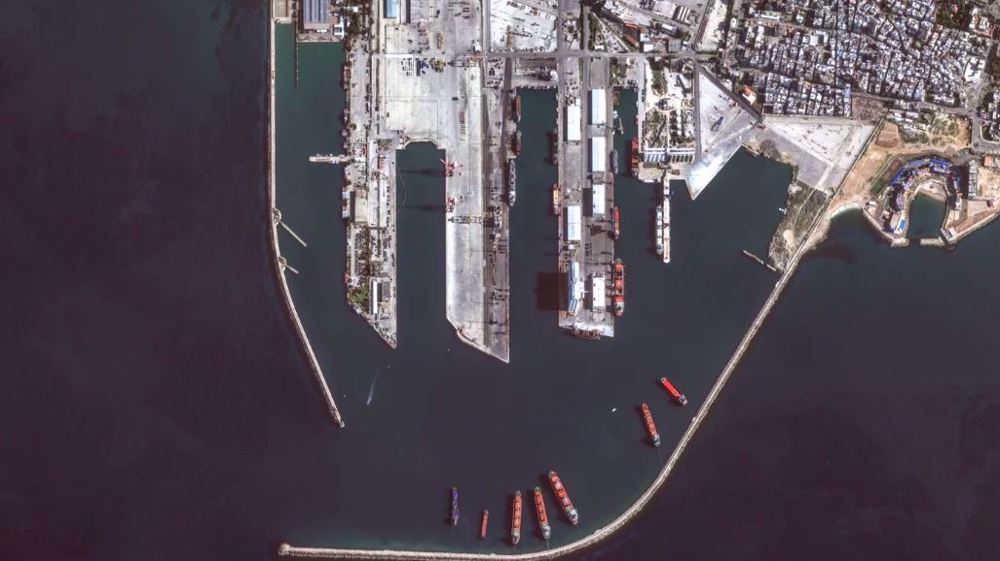
By October, there were indications that the relationship was being “rekindled.” A key player behind these developments is the United Arab Emirates. The port of Berbera is operated by DP World, a foreign company headquartered in the UAE and wholly owned by the Emirate of Dubai, one of the seven emirates that make up the UAE.
In June 2025, the UAE announced plans to fund a $3 billion railway project connecting Addis Ababa to Berbera. This followed DP World’s $442 million expansion of Berbera Port in 2021, after which the adjacent Berbera Free Trade Zone opened in 2023.
Yemen/Socotra
Socotra is a small and strategic archipelago of Yemeni islands just off the coast of Yemen which the UAE invaded and occupied in 2018.
Recent reports suggest an Israeli ambition to build a military and intelligence facility there.
Construction is reportedly already underway on Abd al-Kuri Island, part of Socotra, where a port, runway, and helicopter landing pad have been built.
UAE as sub-imperial power
The role of the UAE in the region – and indeed across the African continent – is extensive and increasingly recognized. In a detailed analysis published by the Transnational Institute in February 2025, author Husam Majoub summarized the UAE’s expanding sub-imperial influence as follows:
The UAE has invested billions of dollars in multiple African countries across key sectors such as mining, oil, infrastructure, logistics, and agriculture, thereby gaining control over significant portions of their national economies.
It has also played decisive roles in countries affected by the uprisings collectively known as the ‘Arab Spring,’ especially Egypt, Libya, Tunisia, and Yemen.
The UAE’s support for the Ethiopian government has significantly influenced the outcome of the Tigray War and shaped developments in the Horn of Africa and the Red Sea region.
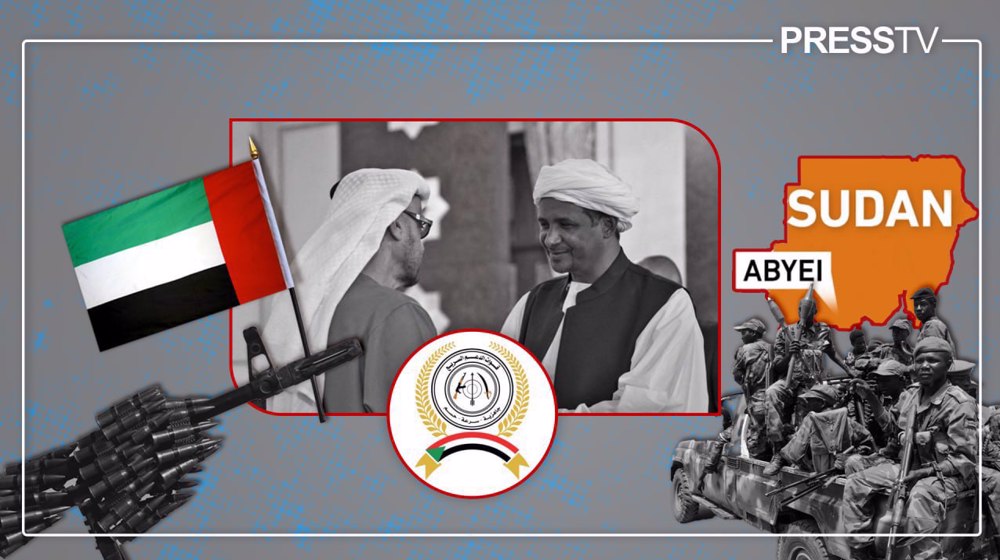
Moreover, the UAE is deeply involved in the ongoing war in Sudan, backing the notorious Rapid Support Forces (RSF) militia, which has been accused of widespread war crimes, crimes against humanity, ethnic cleansing, and genocide.
Beyond this, the UAE has worked closely with militias and employed mercenaries across various conflicts, effectively shaping who governs these countries and how they are governed, positioning itself as the region’s new kingmaker.
While Majoub does identify the Israeli regime as another sub-imperial power, there is little acknowledgment that the UAE acts as an agent or vassal of the Zionist regime, leveraging this relationship for power projection, a dynamic we will now explore.
A key element of this influence is the UAE’s control of the port of Berbera through DP World. In 2021, Rolling Stone Magazine revealed intriguing details about Epstein’s connections to this region.
In the last decade of his life, after being released from jail, Epstein boasted to various contacts, including journalists, that he advised a broad range of foreign leaders, including Vladimir Putin, Mohammed bin Zayed, Mohammed bin Salman, several African dictators, Israeli agents, the British, and of course, the Americans.
He also claimed to be making a fortune trading in arms, drugs, and diamonds.
Notably, Epstein told journalist Edward J. Epstein that he was so close to the owner of the deep-water port of Djibouti – a notorious smuggling hub on the Horn of Africa – that he was “basically in charge” of it.
This reference is significant because, between 2000 and 2018, the port of Djibouti was operated by DP World. In 2018, the Djiboutian government terminated the 30-year concession, seized the port, and expelled DP World employees.
DP World is led by Sultan Ahmed bin Sulayem on behalf of UAE ruler Mohammed bin Zayed, the very individual Epstein claimed to be “so close” to.
Today, DP World operates the port of Berbera just along the coast in Somaliland, an area infamous for the smuggling of weapons, people, drugs, and other illicit goods.
The Rolling Stone article somewhat dismissively noted about Epstein’s claims that “according to my sources in the intelligence world, this is hyperbole, but also not completely ridiculous.”
Epstein’s name was “mentioned as a middleman in both Africa and the Middle East,” known in intelligence circles as a “hyper-fixer” – someone capable of navigating between different cultures and networks.
The close relationship between Epstein and Sultan Ahmed bin Sulayem has been further exposed through the release of thousands of emails exchanged over more than a decade.
Among them is a 2009 message in which Epstein calls himself Sulayem’s “biggest fan” and claims, “I sell Dubai, to its detractors.”
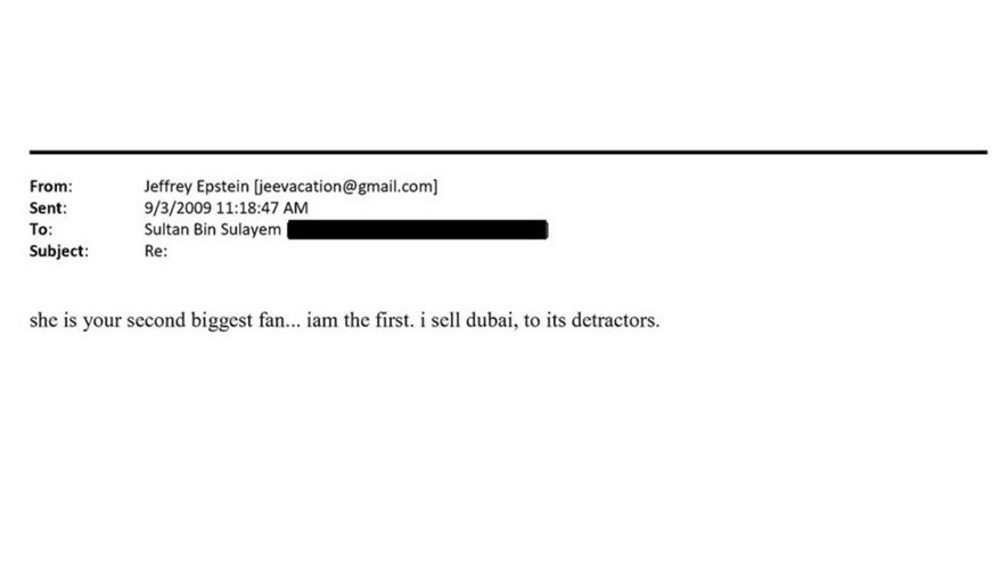
In 2018, Epstein wrote to an associate describing Sultan Ahmed bin Sulayem as “totally trustworthy.” In a 2011 email, Sulayem shared with Epstein details about sneakers embedded with GPS tracking devices, advertised to monitor children.
The email was titled “GPS GTX Smart Shoe,” to which Epstein responded, “Thanks, great idea, I really like your friend.” Given Epstein’s notorious involvement in child and human trafficking and abuse, alongside the Zionist regime’s documented surveillance and targeting activities, including those against children, this exchange is deeply disturbing.
Moreover, Epstein’s apparent close ties to DP World operations raise further questions about the Zionist regime’s role in UAE military bases and DP World-controlled ports.
According to Middle East Eye: “The UAE’s allies, including Israel and the US, have been instrumental in creating and expanding these bases. Israeli officers have been deployed on the islands, and Israeli radar systems and other military and security apparatus enable the UAE to monitor and thwart attacks by the Houthis—the Iran-aligned group that has fired missiles at Israel in solidarity with Palestinians and targeted ships traversing the Red Sea and Gulf of Aden.”
The UAE and Israel also maintain a joint intelligence-sharing platform known as Crystal Ball, which “designs, deploys, and enables regional intelligence enhancement” in partnership, according to a promotional slideshow.
“The relationship between the UAE and Israel was very developed even before formal diplomatic relations were established, but it was kept quiet. Not secret, just quiet,” said Alon Pinkas, an Israeli diplomat who served as an adviser to four foreign ministers, in an interview with Middle East Eye.
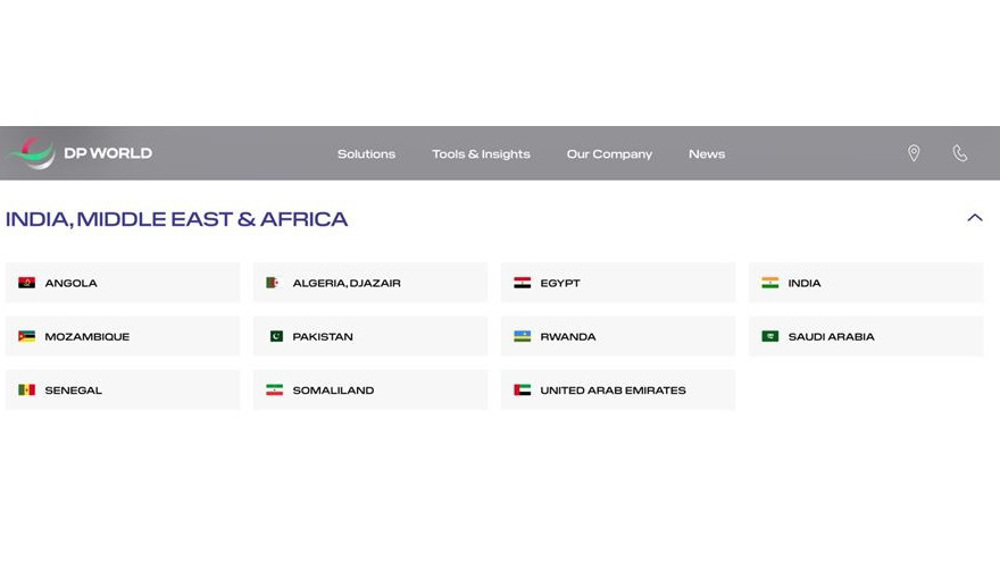
DP World advertises operations in ports or facilities across several African countries, including Angola, Algeria (Djazair), Egypt, Mozambique, Rwanda, Senegal, and Somaliland. In October 2023, DP World added the massive port of Dar es Salaam in Tanzania to its portfolio.
The BBC reported that details of the $250 million deal first surfaced in July, provoking opposition criticism that it “violated Tanzania’s constitution and endangers national sovereignty.”
These concerns are clearly valid. The likelihood that Mossad and the Zionist military are neither integrated with nor actively operating at these bases and ports is highly remote.
This UAE-Israel axis sometimes acts as a satellite of US power but now also pursues its own expansionist interests (as in Socotra, or power projection bases, such as South Sudan and Somaliland).
These interests can also be seen in the aggressive lobbying used by the UAE to pursue its own interests in the US and UK.
In the UK, this has involved pushing the British state to become more Islamophobic under pressure of threatened cancelled arms and oil contracts as we showed in a long report in 2018.
In the US, in recent years, this has included
- According to one report in 2022: “UAE meddling in US politics is now a national security concern, according to a classified report compiled by US intelligence officials and briefed to policymakers in Congress and the executive branch.”
- In early 2025 it was reported that the “UAE has begun mobilizing its lobbyists in the United States in an effort to counteract proposals aimed at imposing sanctions on Abu Dhabi due to its involvement in the civil war in Sudan.”
- Lobbying against the Arab League’s plans for post War Gaza in 2025.
The ideological base of the UAE-Israel axis is Zionist Islamophobia, combined with totalitarian hyper-neoliberalism.
his ideology is in accord with US imperial interests, but the UAE-Israel axis does not trust the US and seeks independence from it. Hence the debate on the Zionist right is whether the Israeli regime should continue to accept US aid or not.
Zionist agents embedded inside the Trump movement are now pushing this perspective.
Laura Loomer, the ultra-Zionist “feisty Jewess” in the US, called recently (10 November) for cutting all US aid to the Zionists so that – the “Pentagon’s leash comes off” . This would give the Zionists a free hand to “neutralize threats” and “manage” its “nuclear arsenal”, she said.
Part of the reason some anti-imperialists still cling to outdated ideas of the Zionist project and some Persian Gulf states as simple US satellites is this major blind spot about the importance of the UAE-Israel relationship and how its black ops are changing the world, from Europe to Africa to India to West Asia.

Trump impeachment on the horizon post-midterms
Iranian nuclear chief barred from IAEA conference
Irish, Scottish and Welsh leaders to meet to discuss UK break-up



Yemen's control of Bab al-Mandab 'deepens crisis' in Israel
Iran calls for ‘zero-tolerance’ policy on attacks against nuclear facilities at IAEA
Skyrocketing US inflation
US clears way for F-35 sale to Saudi Arabia amid aggression against Yemen
‘Nightmare for enemies’: Iran launches mass ‘Sacrifice for Iran’ drill
Iran: Unilateral US weaponization of space accelerates arms race
Russia, China veto rejects ‘political abuse’ of UNSC, marks end of ‘unipolar order’: Qalibaf
Iran finds new platform in SCO to develop its rare-earth potential


 PressTV NEWSLETTER
now
PressTV NEWSLETTER
now
 This makes it easy to access the Press TV website
