Iran school massacre shows global failure to enforce war crime accountability: Analyst
By Mohammad Ali Haqshenas
As outrage grows over the deadly US-Israeli terrorist strike on a primary school in southern Iran, an international law scholar says the tragedy is not an aberration but the result of a global failure to enforce accountability.
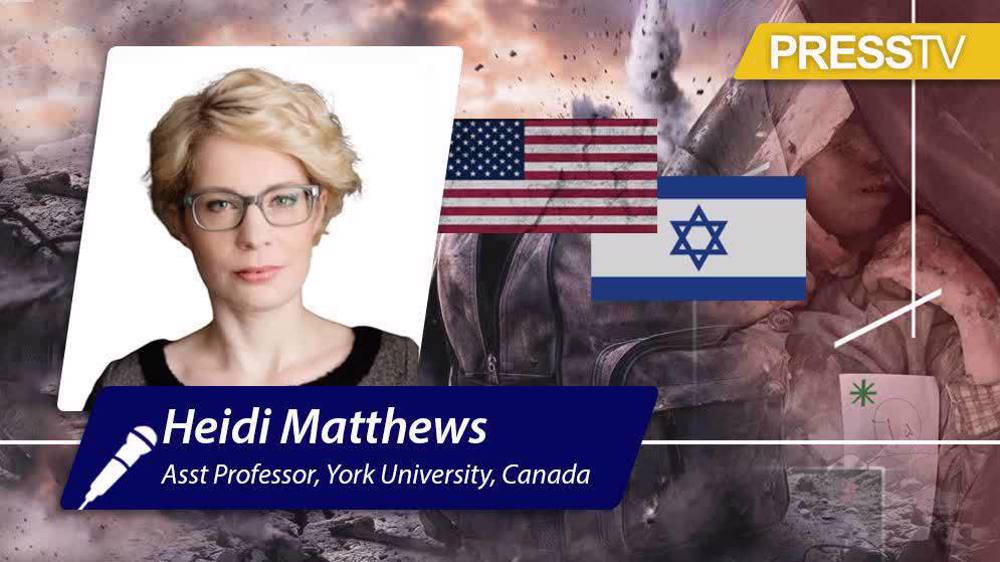
Speaking in an interview with the Press TV website, Heidi Matthews, Assistant Professor at Osgoode Hall Law School of York University, reacted to the recent US-Israeli war crime that killed nearly 170 people, most of them children.
“A key reason why this kind of destruction continues to happen is the lack of accountability, both politically and legally,” she said.
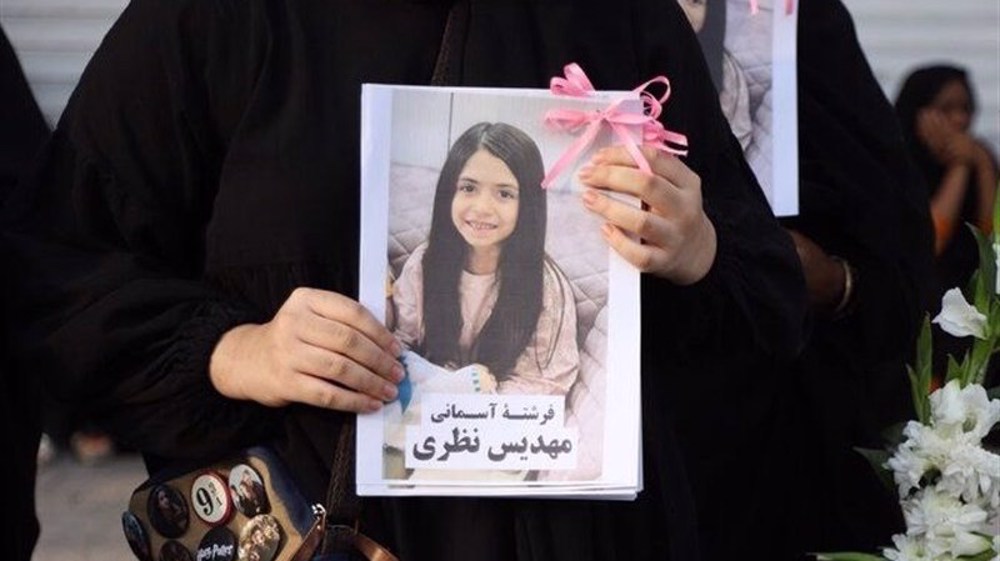
On Saturday morning, multiple Israeli-American airstrikes struck the two-story building of a primary school named Shajareh Tayyebeh in Minab, southern Hormozgan province.
Iranian authorities said five air raids were carried out at 11:30 a.m. against the girls’ and boys’ sections of the school, followed by another strike at 3:40 p.m. targeting a nearby clinic.
According to Mojtaba Ghahremani, head of the Hormozgan Justice Department, 165 students were murdered in cold blood in the gruesome attack. He added that dozens of female teachers and four parents were also among the dead.
The funeral procession for scores of the victims was held on Tuesday.
For Matthews, the attack echoes patterns seen elsewhere.
“Within the context of its military operations in Gaza, Israel has repeatedly struck schools sheltering displaced Palestinians,” she said. Scholars, she noted, have described this systematic destruction of educational capacity and infrastructure as “scholasticide.”
Aerial photo shows the number of graves where Iranian elementary school students will be laid to rest.
— Press TV 🔻 (@PressTV) March 2, 2026
A total of 165 students were martyred in the US-Israeli aggression in Minab.
Follow: https://t.co/mLGcUTS2ei pic.twitter.com/rtnMN7ZK3q
The core problem, in her view, lies in the erosion of international legal enforcement.
“Most Western states have failed to meaningfully support international legal efforts to hold Israeli leaders responsible for war crimes, including at the International Criminal Court and the International Court of Justice,” she said.
Rather than reinforcing accountability mechanisms, she noted, “states stood by while the US has subjected the ICC and United Nations Special Rapporteur Francesca Albanese to crippling sanctions.”
Without sustained political and material backing, she warned, “The post-World War II system of international law cannot work to prevent crimes or hold perpetrators responsible without states' material and moral support for its core institutions and offices.”
The Minab massacre unfolded amid an unprovoked and unlawful war of aggression against the Islamic Republic of Iran in the middle of indirect nuclear talks between Iran and the US.
President Masoud Pezeshkian called the school bombing “another dark page in the endless record of the aggressor's crimes,” while Foreign Minister Abbas Araghchi said dozens of innocent children had been murdered at the site and warned the crimes would not go unpunished.
The expert placed these developments within a broader "atmosphere of impunity" for the aggressors.
The United Nations called for an investigation into the attack on Minab school that resulted in the martyrdom of 168 elementary students.
— Press TV 🔻 (@PressTV) March 4, 2026
Follow: https://t.co/mLGcUTSA3Q pic.twitter.com/Q7R4Dx19BC
Another dynamic fuelling this climate, she said, is the growing reliance on artificial intelligence in military operations — and its parallel role in shaping public narratives.
“With respect to Gaza, misinformation and disinformation propagate in part because Israel has denied entry of international journalists and has systematically targeted Palestinian journalists,” she explained. Artificial intelligence, she added, is playing a role in that dynamic.
“In Gaza, Israel used AI extensively, raising serious concerns that doing so may increase the risk to civilians and civilian objects, laundering this risk under the guise of machine-generated precision.”
Following the Minab attack, misinformation was disseminated at a dizzying pace online. She noted that X’s AI tool, Grok, “was responsible for misinformation, having initially and falsely reported that images of graves being dug for victims were from Indonesia.”
There is also, she suggested, reason to question whether AI played a role in the strike itself.
“There is reason to suspect that AI may also be responsible for the strike on the school, as we know that AI is playing a key role in target identification and prioritization,” she said.
🎥 Thousands of Iranian mourners attend the funeral ceremony of the Minab student martyrs, who were murdered in US-Israeli strikes on their school.
— Press TV 🔻 (@PressTV) March 3, 2026
Follow: https://t.co/GKZwI4ehqL pic.twitter.com/Ejm7lBj175
AI, she warned, “is said to shorten the kill chain, reducing the capacity for human oversight in life and death decision-making processes and raising serious questions about compliance with international humanitarian laws requirements relating to distinction, precaution and target verification.”
Such concerns intersect with the muted response from governments that routinely champion human rights.
“Widespread silence from Western states that have historically prided themselves on their dedication to human rights and international law fuels impunity and manufactures consent for violations of international humanitarian law,” she said.
She pointed to Canada as a case in point, which has backed the illegal aggression.
“The government of my own country, Canada, vocally supported the US-Israeli attacks and now also calls for a diplomatic solution,” she said.
Yet the official discourse by Prime Minister Mark Carney and the Minister of Foreign Affairs “has refrained both from using the international law category of aggression and from addressing the strike on the school.”
In her assessment, “This foreign policy is not only internally inconsistent, but it plainly contracts the principled … commitment to fundamental values, sovereignty, territorial integrity, the prohibition of the use of force, except when consistent with the UN Charter, and respect for human rights that the Prime Minister spoke about in his famed speech at Davos.”
Back in Minab, workers continue to clear debris from what was once a brightly painted school known for its cheerful classrooms and children’s artwork.

BRICS paving way for alternative world order, not a war machine against West: Analyst

Iran’s strategic location, energy resources position it as a key player in BRICS alliance: Analyst
Yemeni military advance along Red Sea alters balance of power amid Saudi siege, aggression: Analyst



US lawmaker admits American people footing bill for Trump’s failed aggression against Iran
VIDEO | Trump's America is dying for Israel
US visa ban on Iranian president’s media team is bid to hide the truth: FM spokesman
VIDEO | Iran fully prepared to respond to new aggression
US aggression, economic warfare amount to crimes against humanity: Iran's UN envoy
Protests erupt in US as ICE agent shoots Venezuelan driver
US pressure fuels cooperation among Muslim states: Pezeshkian
Major TV networks suspend White House pool coverage after Trump ban



 PressTV NEWSLETTER
now
PressTV NEWSLETTER
now
 This makes it easy to access the Press TV website
