Op. True Promise 4: Iran launches 22nd wave with new generation missiles
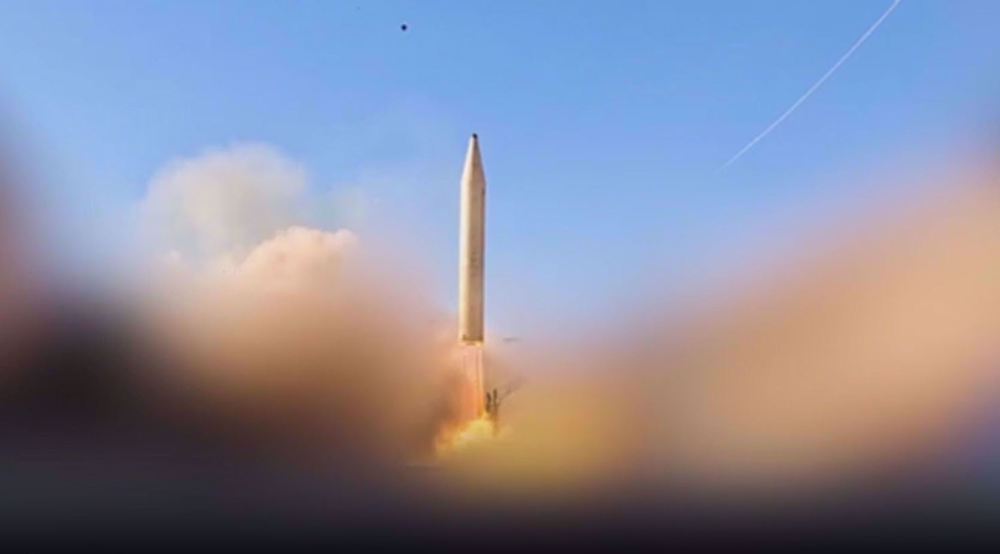
The Islamic Revolution Guards Corps (IRGC) has launched the 22nd wave of Operation True Promise 4 with a barrage of Khorramshahr 4, Khaibar and Fattah missiles targeting the "heart of the occupied territories," with a senior official revealing that Iran has so far used mostly decade-old missiles and is preparing new advanced weapons for a prolonged war.
The IRGC’s Public Relations department said the operation began Friday afternoon under the code name "Ya Hossein ibn Ali (AS)," according to Tasnim news agency.
This wave targeted American and Zionist regime positions from the Persian Gulf to Tel Aviv with the launch of Khaibar, Khorramshahr-4, and Fattah missiles, in retaliation for the child-killing perpetrators who murdered Iran's children at the Minab school, said the statement.
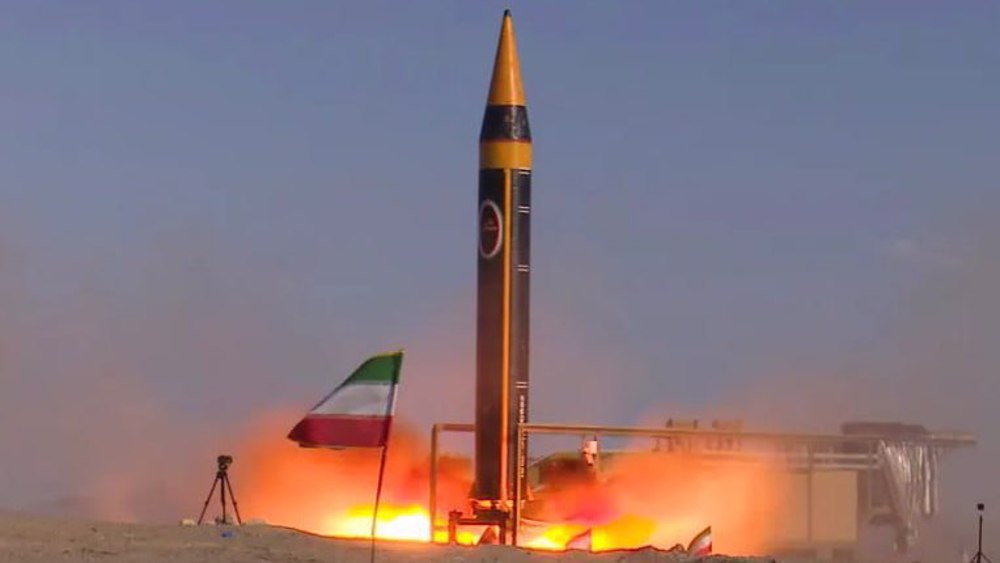
It added that one of the launched missiles was ultra-heavy "Khorramshahr-4" missile, carrying a 2-ton warhead and traveling at a speed exceeding Mach 14, which has been directed at the targets of the wicked enemies of the Iranian nation.
American and Zionist regime bases in the Persian Gulf countries, Tel Aviv, Ben Gurion Airport, and military centers in Haifa were struck by new-generation missiles, it added.
"The complete success in launching these missiles from the sustained chain of IRGC missile bases on the seventh day of the war nullified the absurd claim by the propaganda machine of the global arrogance about the weakening of defense capabilities and the reduced rate of missile and drone launches," it added.
Watch: Iran launches Khorramshahr‑4, Kheibar, and Fattah missiles
— Press TV 🔻 (@PressTV) March 6, 2026
In the 22nd wave of Operation True Promise 4, Iran fired missiles in a retaliatory strike against the US‑Israeli targets.
Follow: https://t.co/LWoNSpkc2J pic.twitter.com/9qvt58Iptk
A senior IRGC official told Fars news agency that missiles used over the past seven days were predominantly from production years 2012 through 2014.
"Given our forecasts for a prolonged war, until now the missiles used in this round of attacks are mainly related to the years 2012, 2013 and 2014, and Iran has not used its new generation of missiles except in rare cases," the official said.
The official described the defense industry's production cycle as continuously active, with design and assembly lines operating simultaneously to produce various missile systems.
"It is expected that in the coming days, a new style of attacks will be on the agenda, utilizing advanced and less-used long-range missiles," the official added.
IRGC spokesman Brigadier General Ali Mohammad Naeini said Friday that Iran is prepared for a prolonged war until the aggressor is punished.
"The enemy should expect painful blows in every wave of operations," Naeini said.
He emphasized that Iranian innovations and new weapons are on the way and have not yet been widely deployed in comparison to what is available.
The United States and Israel launched a fresh round of aerial aggression against Iran on February 28, some eight months after they carried out unprovoked attacks on the country.
Iran has retaliated with barrages of missile and drone attacks on Israeli-occupied territories and US bases in regional countries.
The Khorramshahr 4, Khaibar and Fattah missiles mentioned in the IRGC’s statement represent some of Iran's more recent systems, with the Fattah being unveiled in 2023 as a hypersonic missile capable of maneuvering during flight to evade defenses.
Iran Army hits US base in Kuwait as satellite images show fresh damage

Iran FM warns of Israeli false-flag plots after drone attack in Egypt
Coffins now part of US equipment in region: Top Iranian commander



US mulling decrease in military footprint in Kuwait due to Iran operations: Report
Empty crates, decoys, desperation: How US strikes against Iran ran out of targets – and strategy
VIDEO | Press TV's news headlines
Trump admits Rubio’s anti-ICC campaign aimed to shield Netanyahu from prosecution
Iran warns US allies: Shield America and ‘you will burn in flames of war’
Fate of three Iranian Su-24 pilots still unknown; efforts to trace them continue: Army spox
First black stork spotted in Western Iran’s Zaribar Wetland, marking an environmental milestone
Israeli forces demolish 120-year-old building in West Bank


 PressTV NEWSLETTER
now
PressTV NEWSLETTER
now
 This makes it easy to access the Press TV website
