Japan PM’s 'reckless' Taiwan remarks cater to US attempts to contain China: Analyst
By Press TV Website Staff
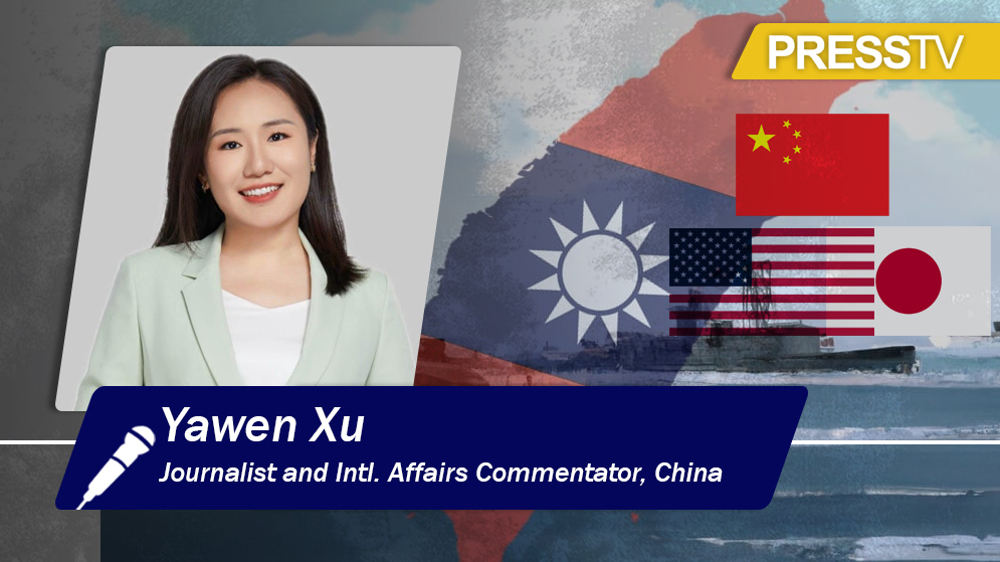
Japanese Prime Minister Sanae Takaichi’s remarks linking Taiwan to Japan’s "existential crisis" are not a passive US-set "trap" but an active, risky gamble, fueled by its own strategic anxiety and ambitions for military normalization, says a Chinese journalist and commentator.
In an interview with the Press TV website, Yawen Xu, a Beijing-based journalist and international affairs commentator, said the controversial remarks “caters to US attempts to contain China, binds Japan’s fate to Washington’s strategy, and masks its deep fear of being discarded as a disposable ally.”
In her first parliamentary address since assuming office in October, Takaichi last week said Japan could potentially take military action if China were to invade Taiwan – a dramatic shift from the country’s longstanding adherence to the one-China policy.
The newly elected Japanese premier referred to what she called a “Taiwan contingency,” indicating that an attack on Taiwan could constitute an existential threat to Japan and, in such a scenario, prompt Japan to respond militarily.
Many have linked it to the growing American influence on the government in Tokyo.
Xu said the US-Japan alliance is “far from unbreakable,” invoking Jonathan D. Caverley, professor at the US Naval War College, who noted in an August 2024 Foreign Affairs article that Taiwan is a "high-risk, low-reward" option for Washington, which is re-evaluating its commitment to allies.
She said US President Donald Trump’s recent remarks that "many allies are not friends" and his emphasis on pursuing "good relations with China" further expose the fragility of Japan’s reliance on US support.
“Japan’s miscalculation lies in confusing 'strategic collusion' with 'reliable backing.' By acting as a vanguard for US interests in the Taiwan Strait, Japan seeks to gain US acquiescence for its military expansion: from the controversial 2015 security bill that lifted collective self-defense restrictions—breaking the red line of Article 9 of Japan’s Constitution—to the 2022 "Three Security Documents" that explicitly authorize "counterattack capabilities" and a sharp hike in defense spending to 2% of its GDP,” the Chinese journalist told the Press TV website.
“Yet it turns a blind eye to a core fact: the U.S. will never sacrifice its own interests for Japan’s provocation against China. Japan is not merely following the U.S. lead but using Washington to fulfill its militaristic ambitions, a dangerous game that could leave it abandoned as tensions escalate.”
Following the remarks by Takaichi, which created a stir in China, a Chinese military outlet warned that Japan would “become a battlefield” if it intervenes in Taiwan, and the Chinese foreign ministry cited the 1972 China–Japan Joint Communiqué, stressing that Japan must honor its commitments regardless of which administration is in power.
On how to understand this episode in the broader context of China-Japan relations, Xu said China’s response, whether in official statements or military media warnings, is not an “overreaction” but a “necessary defense of core national interests and bilateral agreements.”
“Japan’s claim that its Taiwan stance “remains consistent with the 1972 Sino-Japanese Joint Statement” is a blatant distortion of facts: the statement explicitly states that “The Government of Japan recognizes the Government of the People’s Republic of China as the sole legal Government of China,” and that “The Government of Japan fully understands and respects the stand of the Government of the People’s Republic of China that Taiwan is an inalienable part of the territory of the People’s Republic of China,” she stated.
✍️ Conversation -Beijing-Tokyo ties suffer ‘major dent’ after Japanese PM’s remarks on Taiwan: Journalist @hilton_ctwh https://t.co/x2pVc8kZ1H
— Press TV 🔻 (@PressTV) November 17, 2025
“The four political documents that form the cornerstone of China-Japan relations clearly define Japan’s obligations regarding Taiwan. The 1972 joint statement confirms Japan’s understanding and respect for China’s territorial sovereignty over Taiwan; the 1978 Treaty of Peace and Friendship legalizes these principles; and subsequent declarations repeatedly prohibit official exchanges with Taiwan. Takaichi’s remarks directly violate these commitments, shaking the very foundation of China-Japan relations.”
The broader context, Xu asserted, reveals a “dangerous trend,” like Japan’s “gradual abandonment of post-war restraint.”
“From reinterpreting its pacifist constitution to linking Taiwan to "existential crisis," Japan is reviving its creeping militarism of the 1930s. This will seriously damage bilateral ties if Japan persists – economic and people-to-people exchanges that benefit both nations cannot offset the collapse of political trust,” she warned.
The Beijing-based journalist and analyst said data shows China is Japan’s largest trading partner, second-largest export destination, and largest source of imports.
“Bilateral trade volume reached $308.3 billion in 2024, with China’s imports from Japan standing at $156.25 billion. Meanwhile, Chinese tourists led all countries in total spending in Japan last year. A sharp drop in Chinese tourists to Japan would reduce its GDP by 0.36%, resulting in an initial economic loss of 101.16 billion yuan (about $14.7 billion). Japan’s reckless provocations are putting these hard-won gains at risk,” she said, warning of the repercussions of worsening ties.
Furthermore, she added, such moves will “further erode” Japan’s relations with other neighboring countries, especially those that suffered under Japanese militarism during World War II.
“These nations will revisit the trauma of the past, question Japan’s commitment to post-war peace, and arouse widespread vigilance and distrust,” she remarked.
“Yet the door to dialogue remains open. As long as Japan withdraws its erroneous remarks and earnestly abides by its commitments, China-Japan relations can still return to the track of stable development. China cherishes the hard-won progress of bilateral relations, but will never compromise on issues involving national sovereignty and territorial integrity.”
Amid rising tensions between China and the US, mainly over Taiwan, some are even warning of a potential military confrontation.
Xu said it must be emphasized that the Taiwan question is “purely China’s internal affair,” and no external interference will be tolerated by Beijing.
“Even the United States has never openly stated that 'what happens to Taiwan is what happens to the US'. Meanwhile, Sanae Takaichi’s reckless remarks have severely heightened tensions between China and Japan, and drawn strong opposition from the people of Taiwan,” she told the Press TV website.
China warns that Japan will suffer a crushing defeat if it tries to intervene militarily over Taiwan.
— Press TV 🔻 (@PressTV) November 14, 2025
Follow Press TV on Telegram: https://t.co/LWoNSpkJSh pic.twitter.com/DaUTHBq7Tw
On Monday, more than 30 Taiwanese groups, including the Taiwan Labor Party and the Cross-Strait Peaceful Development Forum, jointly issued a protest statement, condemning Takaichi for claiming that Taiwan could trigger Japan’s "existential crisis" and hinting at military intervention.
“The groups put forward four demands: first, Takaichi must immediately retract her reckless Taiwan-related remarks and publicly apologize to the Taiwan people, the Okinawan people and regional countries; second, the Japanese government must halt military escalation under the pretext of the Taiwan Strait and cease hyping the "Taiwan contingency" theory; third, the DPP authorities must not acquiesce to, echo, or collaborate with Japan’s military ambitions, but clearly reject Japanese military intervention and resist any external forces that push Taiwan toward war; fourth, the DPP authorities must resume cross-Strait dialogue on the legal basis of the one-China principle as soon as possible to build a peaceful framework that ensures the safety of the Taiwan people,” Xu said.
She noted that the statement stressed that “Taiwan is neither Japan’s shield nor America’s outpost—what Taiwan needs is peace, not war; a shared future across the Strait, not a proxy war.”
“In recent years, avoiding war has become the core consensus of Taiwan society. The trust of the Taiwan people in the United States and Japan is fading. They recognize that external forces will never truly safeguard Taiwan’s security, relying on them only reduces Taiwan to a geopolitical pawn, and the call for cross-strait dialogue to avoid proxy war is growing louder,” the Chinese journalist and analyst said.
On whether the Japanese prime minister’s remarks must be interpreted through the lens of lingering historical grievances between the two countries, Xu said the link cannot be ignored.
“Japan’s failure to sincerely reflect on its wartime atrocities has laid the groundwork for its current provocative stance on the Taiwan question. This year marks the 80th anniversary of the victory in the Chinese People’s War of Resistance Against Japanese Aggression and the World Anti-Fascist War, yet Japan’s prime minister openly threatens to intervene in China’s internal affairs, echoing the militarist rhetoric of the past,” she said.
Takaichi’s “existential crisis” claim, she added, is identical to Japan’s historical excuses.
“The 1931 Mukden incident was justified as 'vital to Japan’s survival,' the 1937 full-invasion of China as 'protecting Japanese interests,' and the 1941 attack on Pearl Harbor as breaking the 'ABCD line.' This consistent narrative reveals a lack of genuine remorse for history and a lingering desire for military expansion,” she said.
“Japan’s post-war military moves follow the same incremental pattern as its pre-WWII armament. Without confronting its past, Japan cannot establish a correct view of sovereignty and regional order. Its provocative remarks on the Taiwan question are not just a diplomatic mistake, but a warning sign of resurgent militarism—one that alarms all Asian countries that suffered from Japan’s brutal aggression.”
Xu said genuine reconciliation requires “facing history,” including Japan abandoning “its militarist fantasies, honoring its commitments under the four political documents governing China-Japan relations, and stopping the use of the Taiwan island as a pawn.”
“Only by sincerely reflecting on history can Japan build stable relations with its neighbors and avoid repeating the mistakes of the past,” she said.
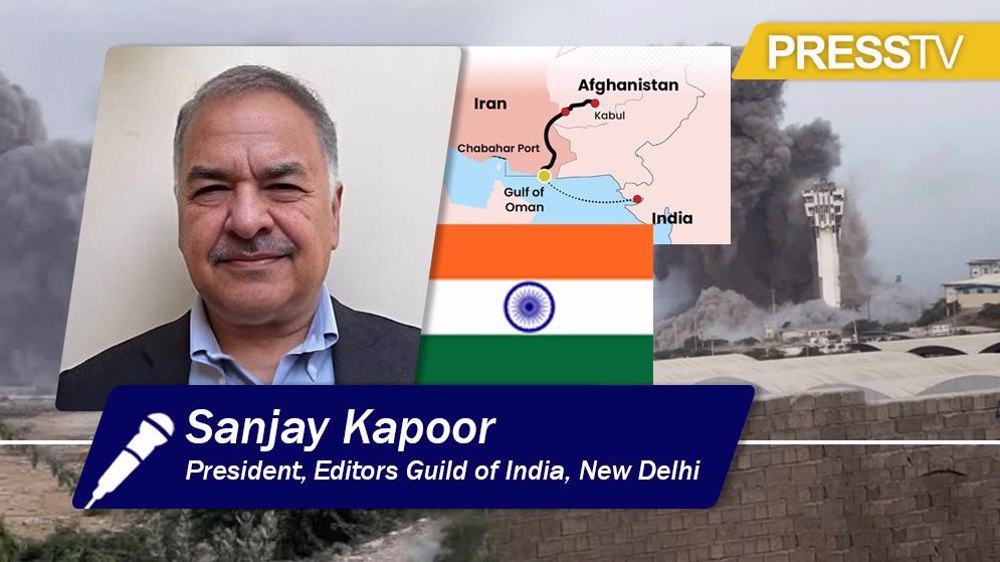
India's silence over US attacks on Chabahar exposes contradictions in its Iran policy: Journalist
US violations of MoU not surprising; war against Iran to spell end of US imperialism: Activist
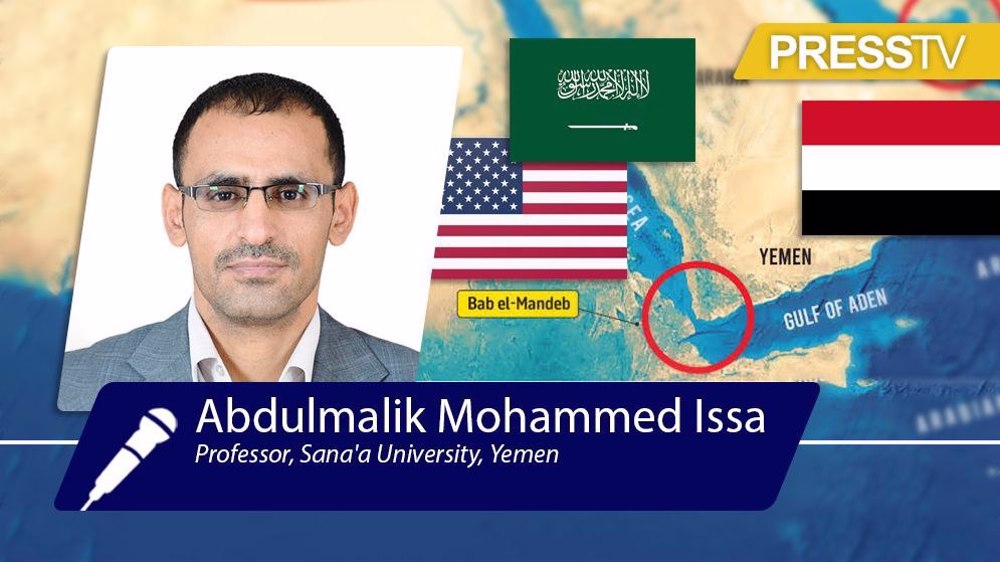
Bab al-Mandab and expanding missile capabilities have turned Yemen into regional power: Academic



Diplomacy remains open, but our priority is defending the nation: Iran's FM spokesperson
VIDEO | US war crimes in Iran
Iran turns a dormant volcano into a clean energy asset
Iran tells Russia it will defend its interests after Ukrainian attack
VIDEO | Britain bans IRGC
Extremist Israeli settlers launch arson attacks on West Bank mosques
VIDEO | Press TV's news headlines
VIDEO | Persian Gulf states host, fund major American spy bases: Analyst




 PressTV NEWSLETTER
now
PressTV NEWSLETTER
now
 This makes it easy to access the Press TV website
