Racing against extinction: World’s last Asiatic cheetahs in the deserts of Iran
By Maryam Qarehgozlou
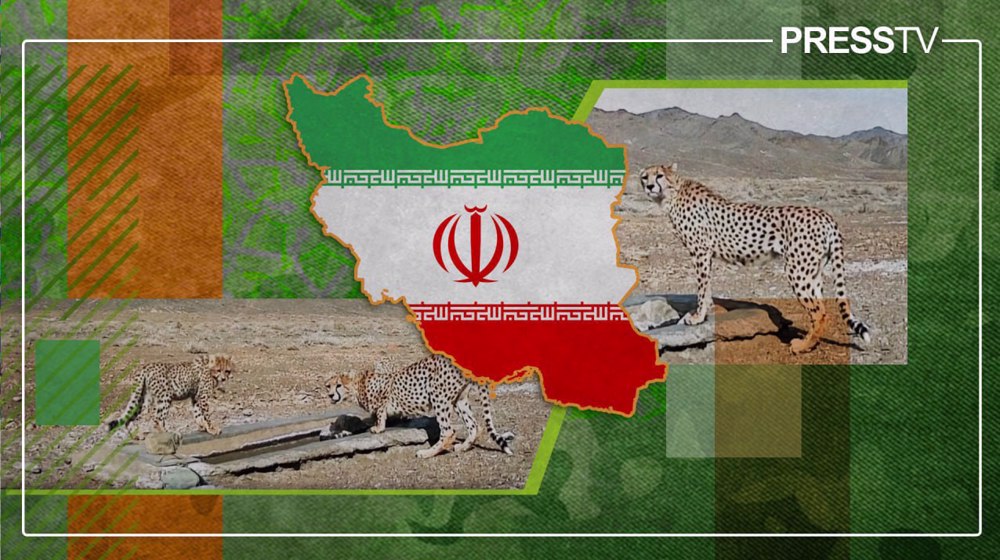
In the windswept plains of Touran National Park, a rare and breathtaking sight was captured on camera last week: two Asiatic cheetahs, strolling unbothered across the desert soil before breaking into a graceful run.
The fleeting moment, filmed by a local in Shahroud County in central Semnan province, has once again reignited hope for the survival of the world’s most endangered big cat, now found only in Iran.
The timing is notable. August 31 marks National Cheetah Day in Iran, a day dedicated to raising awareness about this critically endangered species and its precarious existence.
The day also commemorates a tragic event that occurred in 1994 in the city of Bafq, Yazd province, a story that illustrates the fragility of these magnificent animals.
That summer, under the sweltering heat, a female cheetah ventured toward the local palm groves with her three cubs in search of water.
Local residents, fearing an attack, surrounded the animals. After valiantly resisting blows and stones hurled by the crowd, the mother managed to escape—but her cubs were not so fortunate.
One died instantly, while a second succumbed to injuries on the way to safety. The third cub survived initial treatment in Yazd and was swiftly transferred to Tehran to prevent its death.
Named Marita, the young cheetah eventually recovered and spent the next nine years in Pardisan Park, an urban facility for endangered species, passing away in December 2003.
Environmental officers in Bafq reported that the mother cheetah returned daily to the area, searching for her lost cubs, but after a week of fruitless efforts, she was never seen again.
The tragic tale of Marita and her family serves as a somber reminder of the challenges faced by Iran’s remaining cheetahs.
National Cheetah Day is not just a day of remembrance—it is a call to action, a chance to raise public awareness, and an effort to safeguard the future of one of the planet’s rarest big cats, conservationists say.
A striking appearance
With its long, lean body, amber eyes lined with distinctive black “tear marks,” and legs built for explosive bursts of speed, the Asiatic cheetah looks almost identical to its African cousin.
Yet this rare subspecies, Acinonyx jubatus venaticus, tells a very different story.
Once roaming from India to the Arabian Peninsula, today the Asiatic cheetah survives only in Iran’s central deserts — a fragile ghost of its former range.
Adults stand about 70–75 centimeters at the shoulder, measure over a meter in body length, and weigh between 34 and 54 kilograms.
Agile, elusive, and beautiful, they represent the last flicker of a lineage now teetering at the edge of extinction.
A vanishing population
No one knows the exact number of Asiatic cheetahs left in the wild.
Estimates have varied from fewer than 12 individuals in 2022, according to a grim statement by Iranian officials, to more optimistic tallies of around 20–30, based on camera-trap records in the Touran and Miandasht (North Khorasan province) reserves.
The truth may lie somewhere between: a scattered, ultra-small population, clinging to survival across fragments of desert.
Saeed Yousefpour, Director-General of the Environmental Protection Department in Semnan province, told the Press TV Website that monitoring efforts over the past year have recorded 20 cheetahs in the Touran and Yuzkonam Pol-e Abrisham areas, including 14 adults and six cubs.
The Yuzkonam Pol-e Abrisham region, located in Meyami county, Semnan province, has long been a hotspot for cheetah sightings, underscoring the ecological value of this section of Touran National Park.
The participatory protected area spans more than 400,000 hectares, forming a vital link between the Touran Biosphere Reserve, the Miandasht Wildlife Refuge, and the Khosh Yeylaq Protected Area—currently the only regions known to shelter Iran’s dwindling cheetah population.
According to Yousefpour, the area is monitored every month, with comprehensive assessments published every three months.
“At present, all cheetahs in the area are in good health,” he confirmed.
Historically, Yousefpour said, cheetahs roamed widely across Kerman, Yazd, Isfahan, Razavi, and South Khorasan provinces, but without systematic camera-trap monitoring in these regions, experts believe the species has likely disappeared from much of its former range.
In conservation circles, such a population is often described as “functionally extinct” — not yet gone, but unable to sustain itself without urgent intervention.
Bagher Nezami, director of the National Asiatic Cheetah and Habitat Conservation Project, also told Press TV Website that the country’s new five-year cheetah conservation plan has been developed with the input of a wide range of experts.
“If this plan is not fully implemented and effective action is not taken during these five years, the Asiatic cheetah will most likely vanish forever from Iran’s wilderness,” he warned.

Deadly roads and vanishing prey
For an animal built to run, it is cruel irony that roads have become its greatest killer.
Highways slicing through Iran’s reserves — particularly the Shahroud–Sabzevar route in Semnan province — have claimed multiple cheetahs in collisions.
Experts warn that speed bumps and warning signs are not enough; only continuous fencing combined with wildlife underpasses and overpasses can prevent further losses.
Beyond vehicles, prey depletion has left cheetahs starving in their own homeland.
Gazelles, wild goats, and antelopes — once plentiful — have been hunted, overgrazed, or driven away by drought.
Add to this the spread of livestock, herding dogs, and poachers, and the cheetah’s already narrow ecological niche collapses further.
Even when cubs are born, many will never reach adulthood in such hostile terrain.
Fighting back
There are, however, glimmers of hope. Conservationists and NGOs have funded ranger patrols, water supplies in arid zones, and extensive camera-trap monitoring to track individuals.
International projects backed by the UN Development Programme have urged stricter land-use planning and the protection of migration corridors between reserves.
Most urgently, experts emphasize the need to secure roads by installing continuous fencing and building wildlife crossings at known danger zones, where collisions have already claimed many cheetah lives.
Yousefpour told Press TV Website that a new 10-kilometer fencing project has recently been launched in the area to strengthen protection measures.
Equally critical is the revival of the cheetah’s natural prey base: rebuilding gazelle and antelope populations, enforcing anti-poaching laws, and tightening controls on livestock grazing so that wild herbivores can reclaim their range.
Nezami also pointed out that prey loss is among the most pressing challenges.
Overgrazing is rampant, with camel populations in some cheetah ranges exceeding the land’s capacity by a factor of 15, he added.
“To tackle this, we have begun reducing camel numbers and reintroducing prey species into cheetah habitats,” Nezami explained.
Conservationists also stress the human dimension. Better training and support for rangers, coupled with programs that give local communities a stake in protecting rather than competing with the cheetah, are essential.
According to Nezami, public awareness efforts are also underway, with NGOs working to educate shepherds and local communities about the importance of conservation.
And above all, funding and commitment must be sustained over the long term, ensuring that conservation efforts do not wither with changing administrations or economic pressures.
Nezami noted that the program faces serious financial hurdles, as cheetah conservation efforts lack an independent budget. He also pointed out that a shortage of trained personnel poses a major challenge.
“One-third of the areas protected by Iran’s Department of Environment are cheetah habitats, yet only three percent of the country’s rangers are tasked with safeguarding them,” he said.
Cheetahs represent both a national and international heritage, Yousefpour stressed.
“Their survival hinges on financial investment and human commitment. Routine protection plans are no longer enough—a comprehensive ‘National Survival Plan’ is essential if we are to save this species from extinction,” he noted.
Captive breeding: Hope or mirage?
Faced with collapse in the wild, Iran has turned to captive breeding.
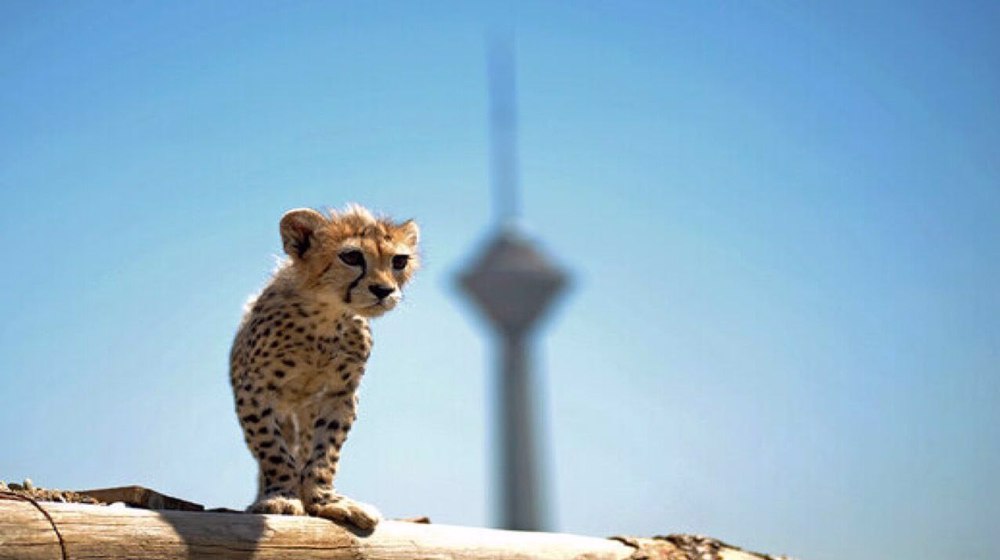
In May 2022, a female cheetah in Touran reserve — aptly named Iran — gave birth to three cubs.
Two died within months. The sole survivor, nicknamed Pirooz, became a national symbol; his health was followed daily on social media.
When Pirooz died of kidney failure in March 2023, public mourning was intense — and many experts questioned whether the project was ever more than symbolic.
Earlier attempts, such as pairing two famous cheetahs named Koushki and Delbar at Tehran’s Pardisan Park, also failed to produce offspring.
Captive breeding may buy time, but some conservationists stress it cannot substitute for protecting wild habitats and restoring prey populations.
“Breeding behind fences is a last resort,” says one expert. “Without safe landscapes, there is nowhere left for them to run.”
Nezami stressed that protecting habitats remains the top priority for the cheetah conservation project, with 93 percent of its budget directed toward this goal.
Still, he added, captive breeding is also vital to preserve the species’ genetic reserves.
At present, five Asiatic cheetahs live in captivity in Iran.
The Asiatic cheetah is more than a cat on the brink. It is a living remnant of the ancient Persian plains, a symbol etched into Iran’s national identity — even appearing once on the jersey of the country’s World Cup football team. Yet symbolism alone will not save it.
In the deserts of Touran, if you are impossibly lucky, you might still glimpse a flash of pale gold against the horizon, a streak of spots vanishing into dust.
Every sighting is a reminder: the fastest land animal on Earth may not outrun extinction unless Iran — and the world — acts now.
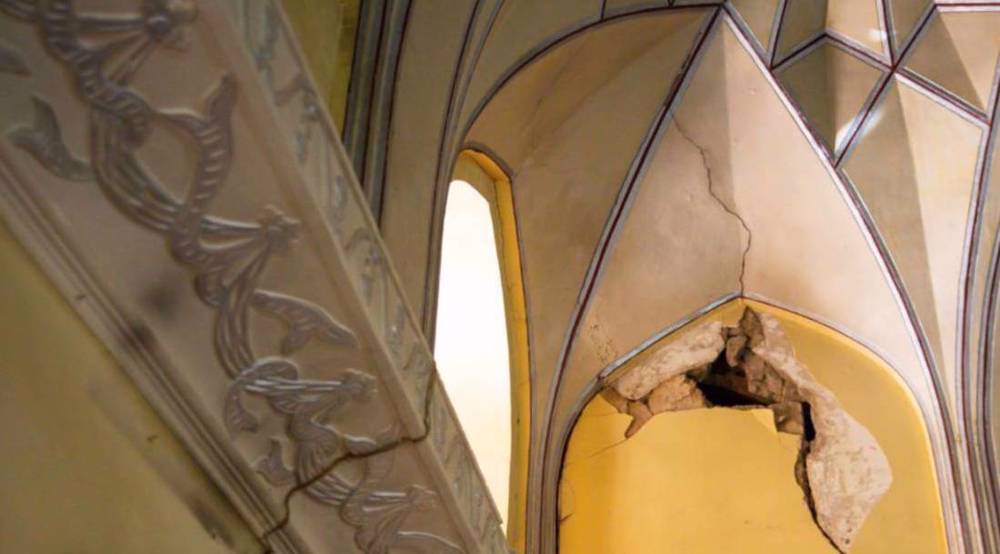
Tehran says 131 historical monuments, 64 tourism facilities damaged by US-Israeli assaults

‘Attack on Iran’s scientific foundation’: US-Israeli bombing of top universities sparks outcry
'Wish we could offer our lives': Kashmir pours its heart in massive donation drive for Iran



US-Israeli aggression on Iran: What happened on 34th day of the imposed war
Yemeni forces carry out third joint ballistic missile strike on vital Israeli targets
Hegseth fires US Army chief as failed war on Iran exposes deep military cracks
IRGC hits US tech giant Oracle's data center, computing site in UAE over new assassinations
Trump flaunts his war crimes as Iranian bridges, health centers are bombed
True Promise 4: Iran and resistance axis ops. against US-Israeli assets on April 2
Araghchi: US-Israeli strikes on Iranian civilian infrastructure expose enemy’s moral collapse
IRGC launches massive strikes on Tel Aviv, Haifa in Wave 91



 PressTV NEWSLETTER
now
PressTV NEWSLETTER
now

 This makes it easy to access the Press TV website
