Arbaeen Walk ignored by West because peaceful rallies rarely make headlines: Scholar
By Press TV Website Staff
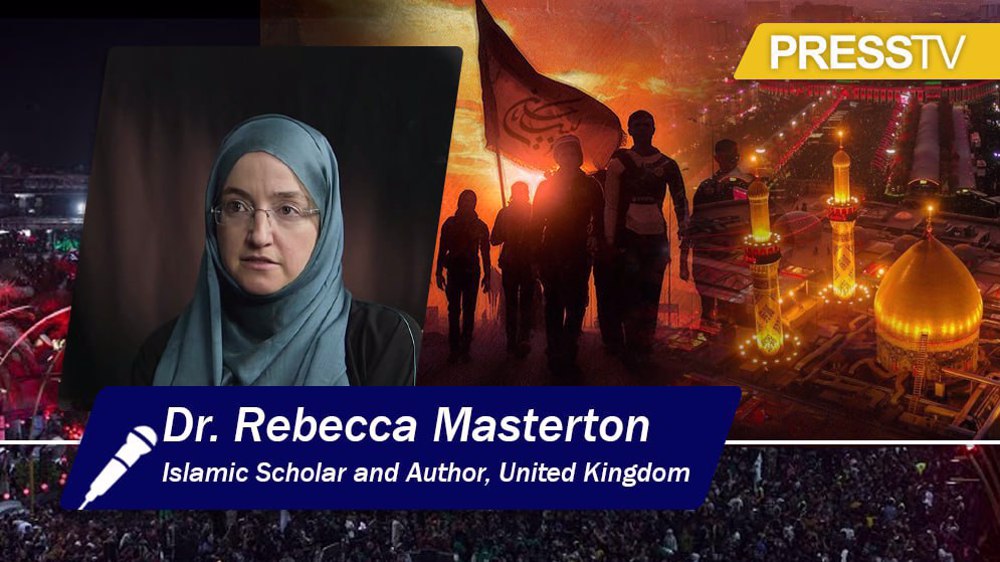
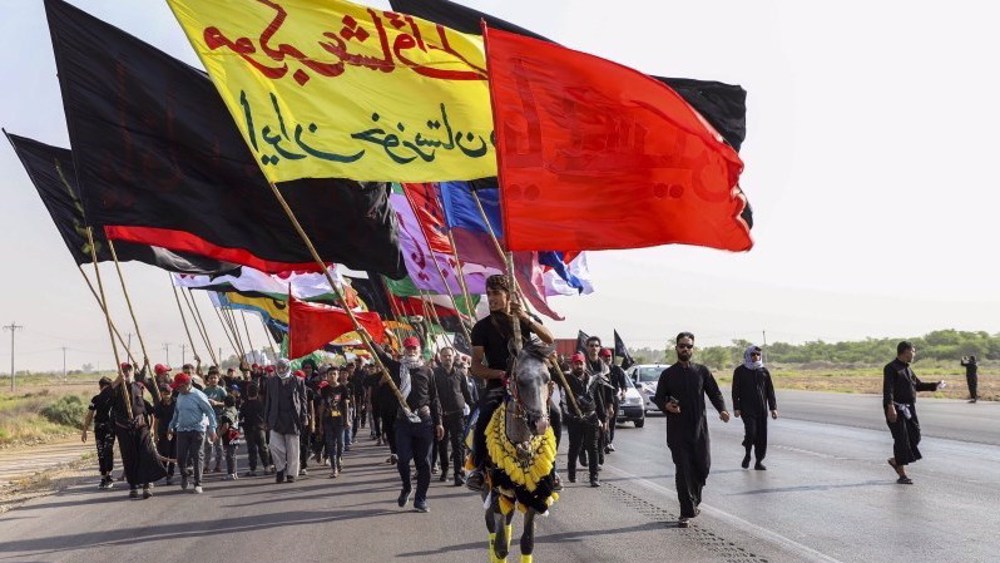
Arbaeen Walk, the largest peaceful gathering on Earth drawing millions, remains largely ignored because, unlike war and violence, peace makes no headlines, says a British scholar.
In an interview with the Press TV website, Rebecca Masterton, a UK-based Islamic scholar, author and TV presenter, reflected on why the Arbaeen commemorations in Iraq receive little global attention despite their massive scale and significance.
“Peace does not make news headlines. Only drama, division, and violence sell,” she asserted.
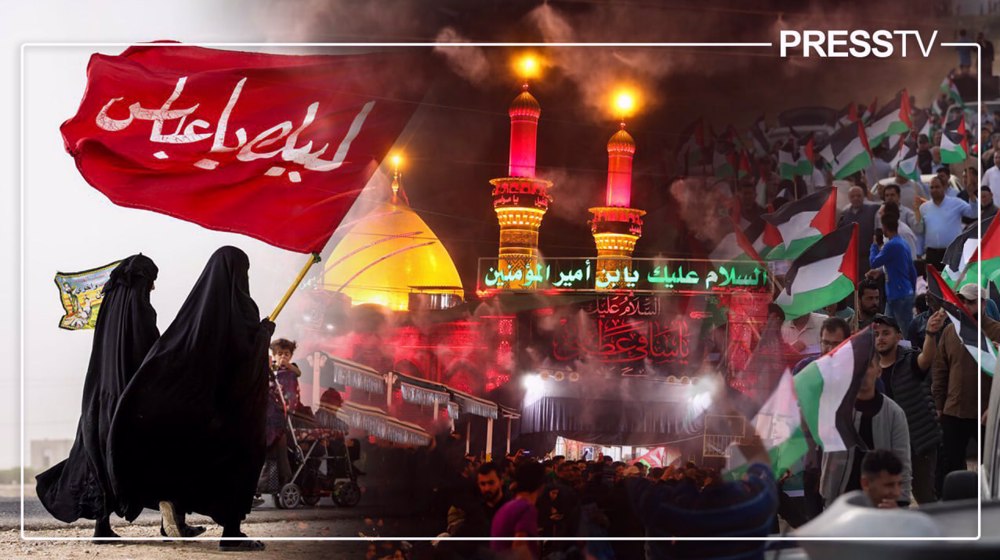
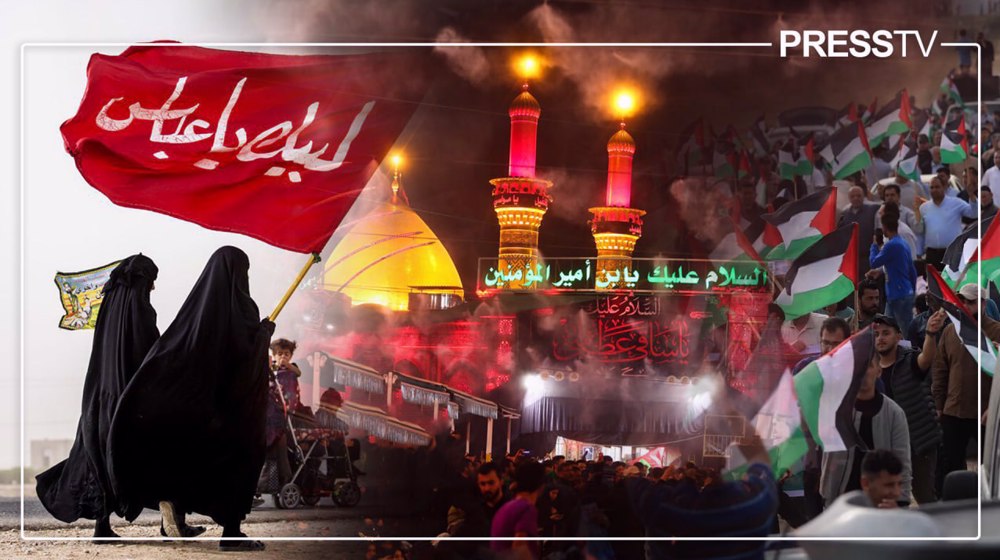
Arbaeen—meaning “forty” in Arabic—is observed on the 40th day after Ashura, marking the martyrdom of Imam Hussein, grandson of Prophet Muhammad (PBUH), in 680 CE at Karbala.
While not a mandated ritual like the Hajj, it is the largest annual religious gathering on earth. Last year, Iraqi authorities estimated over 21 million participants, including more than 3.6 million Iranians.
Most pilgrims make the journey on foot along the 80-kilometer route from Najaf to Karbala.
Thousands travel from even farther—across Iraq, Iran, Pakistan, and beyond—sometimes covering hundreds of kilometers. Along the routes, thousands of moukebs, or volunteer service stations, offer free food, water, medical care, and rest to pilgrims.
Reporting from the Arbaeen pilgrimage, Press TV’s Farzaneh Ashoorioun says the march serves as a bridge linking the historic and ongoing struggles against oppression.
— Press TV 🔻 (@PressTV) August 12, 2025
Follow: https://t.co/mLGcUTS2ei pic.twitter.com/CsyHBfZuog
Masterton described the Arbaeen Walk as a living connection between past and present.
“According to some contemporary scientists, time is not what we think it is. The past has not finished. It exists now. When people gather to connect their hearts to Imam Hussein, they connect their time to the time of Imam Hussein… It is an antidote to the spiritual emptiness of the modern world,” she said.
She also highlighted the universal appeal of Arbaeen and the historic uprising of Imam Hussein against the despotic Umayyad ruler on the desert plains of Karbala that continues to inspire campaigners for truth and justice across the world more than fourteen centuries later.
“When people hear the story of Imam Hussein, whatever their background, they feel inspired. In Iraq, Christians of different nationalities also come to honour his sacrifice. People from all cultures come,” she said, on how Arbaeen fosters a collective identity beyond sectarian and national divisions.
On the impact of Arbaeen and the message of Imam Hussein on oppressed communities, she said it is “often the most oppressed people, such as the Shi'a of Pakistan, who travel by bus all the way to Karbala, who risk their lives to show that he is their true leader.”
“The poor find inspiration from Imam al-Hussein's stand against oppression,” Masterson noted.
🎥 Companions - Part 1
— Press TV Documentary (@presstvdoc) August 10, 2025
🔻This documentary reveals how Imam Hussain’s shrine, once forbidden, is now a symbol of unity and faith kept alive by devoted pilgrims on Arbaeen.
📺 Tune into Press TV
🗓 Wednesday, August 13th
🕧 00:30 | 05:30 | 11:30 | 16:30 | 21:30 GMT pic.twitter.com/Xdd3aPqcKP
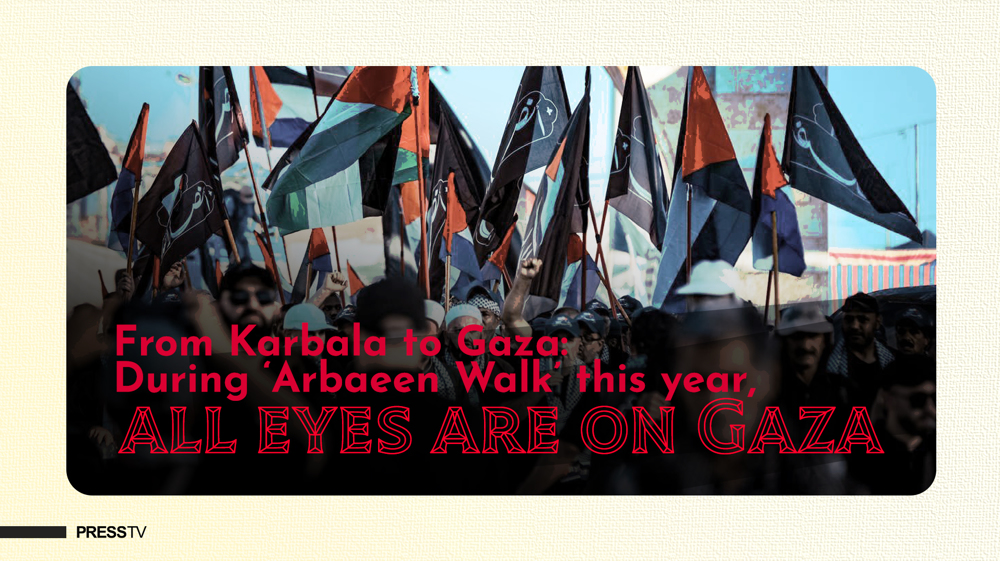
Photos and videos circulating on social media this year show strong support among pilgrims for the oppressed people in the besieged Gaza Strip, where ongoing US-enabled Israeli genocidal attacks and a starvation campaign have killed roughly 61,500 Palestinians since October 7, 2023.
Masterton also sees Arbaeen as a counter-narrative to the Western media’s depiction of Islamic resistance movements as violent or sectarian. The Arbaeen procession held in London, she noted, has drawn curious tourists in the past years.
“They walk among Shi'a Muslims feeling safe, and absorb the atmosphere. They can ask questions about what the procession is and experience the spiritual culture,” she stated.
Once heavily restricted under former dictator Saddam Hussein, Arbaeen has grown significantly since 2003, evolving from a few million attendees to one of the world’s largest annual peaceful assemblies.
Thousands of people who cannot make it to Iraq hold symbolic Arbaeen walks in their cities. Such processions have been held in the past years in countries like Canada, the UK, and Nigeria etc.
During Mosaddegh's time, US pursued the same policy toward Iran as today: Filmmaker
Iran’s new military appointments signal ‘offensive’ posture toward US, Israel: Analyst
Colombia's right-wing win reflects deep polarization as US alignment and Israel ties loom: Analyst



VIDEO | Humanoid games showcase China’s AI rise, raising US concerns
Hamas condemns Zionist Regime’s use of children’s kites as flimsy pretext for genocide in Gaza
Iran’s heroic defense, assertive diplomacy source of pride for allies: Lebanese MP in meeting with A
Supporting US economic war is an 'act of war': Iran’s top security official warns
VIDEO | US-Canada trade war
Ayatollah Khamenei ‘awakened consciences’ in defense of faith and dignity: PMU chief
Iran to detain, confiscate violating ships in Strait of Hormuz: PGSA
VIDEO | Press TV's news headlines


 PressTV NEWSLETTER
now
PressTV NEWSLETTER
now
 This makes it easy to access the Press TV website
