Srebrenica, 30 years on: The genocide of 8,000 Muslims Europe enabled and denied
Press TV Staff Writer
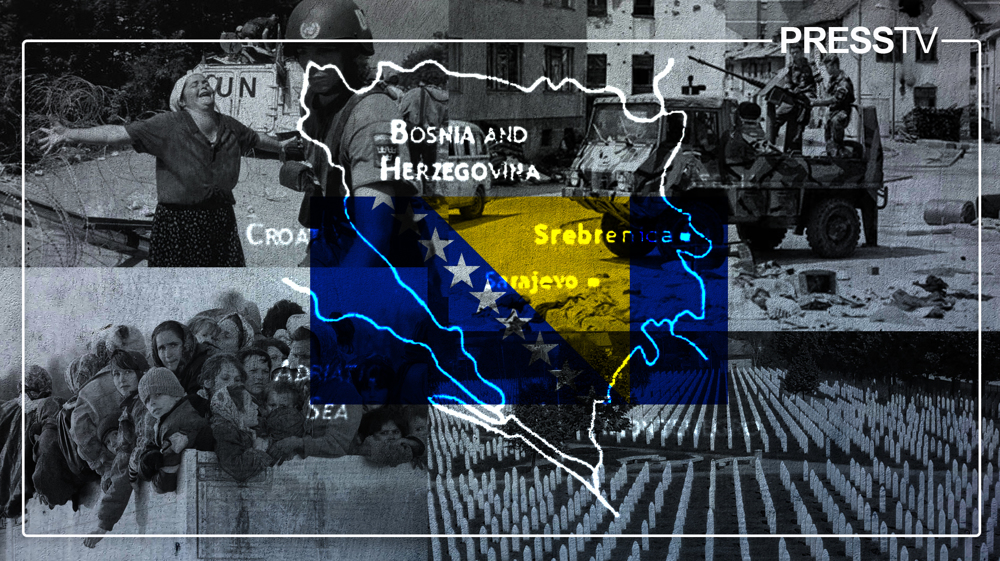
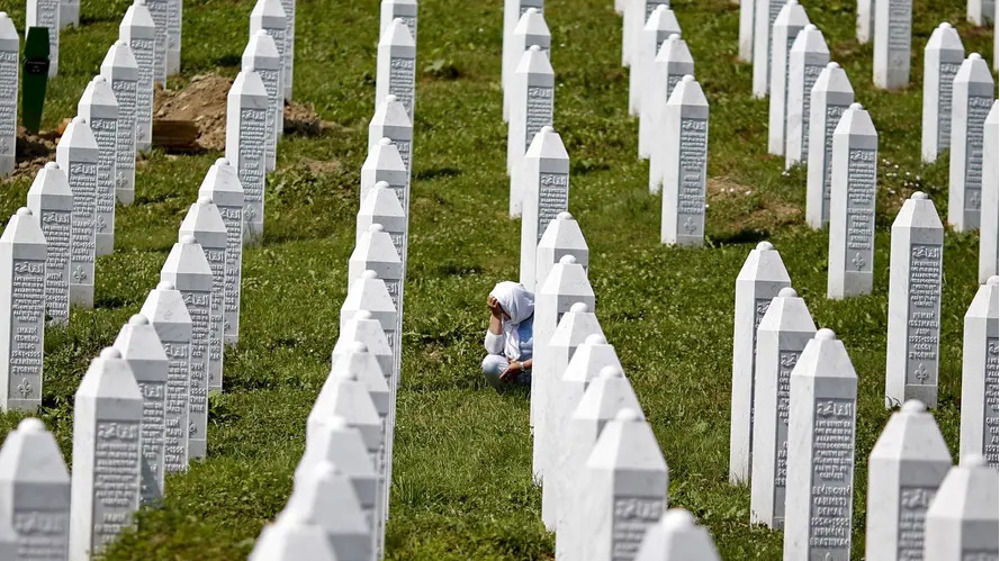
Friday marked the 30th anniversary of the Srebrenica genocide, which saw the extermination of over 8,000 Bosnian Muslim men and boys in July 1995 after Bosnian Serb forces took control of the UN-declared “safe zone” during the final year of the Bosnian War.
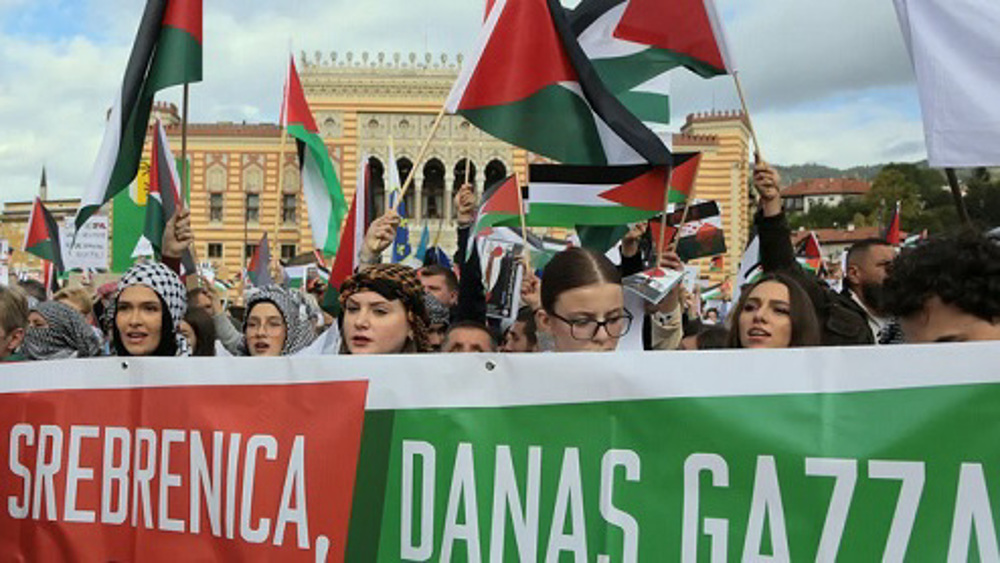
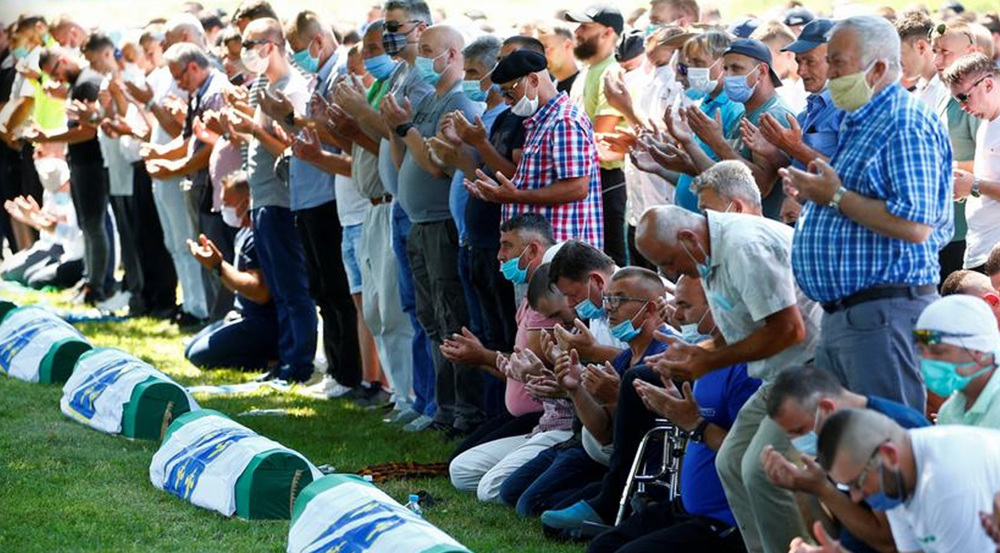
Thousands gathered in towns and rural communities across Bosnia and Herzegovina to honor the memory of the Srebrenica genocide, marking three decades since the unforgettable tragedy.
It began on July 11, 1995, when Bosnian Serb armed forces—comprising the army, police, and irregular units—violently seized control of the area, which had been designated a United Nations “safe zone” amid the bloodshed of the Bosnian War.
What followed over the next twenty days was the most brutal crime committed in Europe since the end of the Second World War, and the most horrific episode of violence in the conflicts following the breakup of Yugoslavia.
International legal bodies, including the International Criminal Tribunal for the former Yugoslavia (ICTY) and the International Court of Justice (ICJ), concluded that the killings were an act of genocide. Nonetheless, Serbian authorities have refused to label it as such.
These dark days not only pushed Bosnia and Herzegovina toward the end of the war but also dramatically influenced the political trajectory of the Balkan region in the aftermath.
Understanding Srebrenica
Srebrenica lies in a mountainous region near Bosnia’s eastern border with Serbia. Historically known for its natural springs and mineral resources—particularly silver—it derived its name from the latter.
In 1991, a year before the Bosnian war broke out, Srebrenica’s population numbered around 36,666 residents, predominantly Muslim Bosniaks, with a smaller Orthodox Serb minority.
Following the war and under the terms of the 1995 Dayton Peace Agreement, the town became part of Republika Srpska (RS), the Serb-administered entity within Bosnia and Herzegovina.
Due to mass killings and wartime expulsions, Srebrenica's population plummeted. By recent estimates, only about 13,409 people live there, and just over half are now Bosniak.
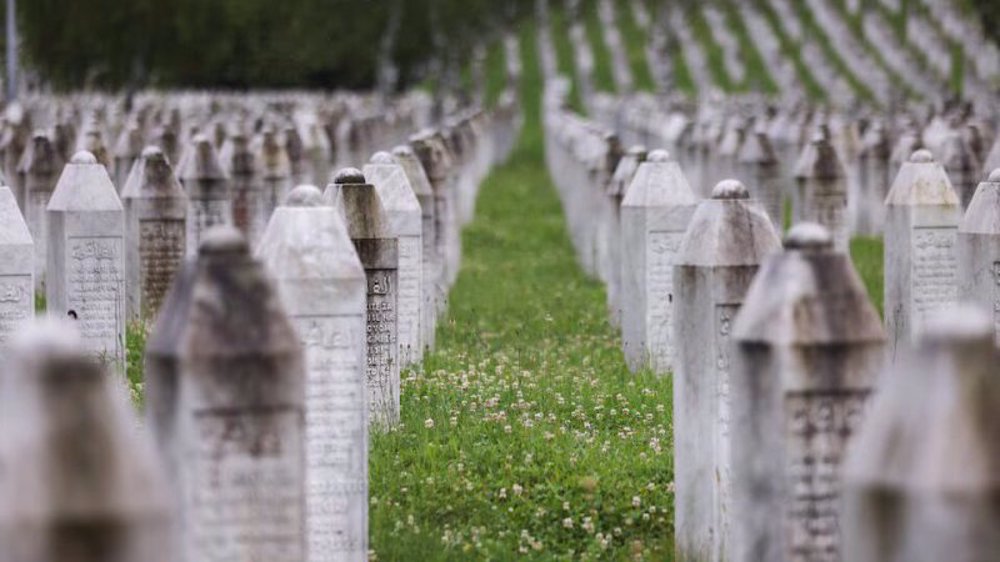
The genocide in Srebrenica happened after Bosnian Serbs took control over the enclave in July 1995. They executed Muslim men and boys and dumped their remains into mass graves, which were later dug out and reburied to cover the crime.
— Press TV 🔻 (@PressTV) July 11, 2025
Follow: https://t.co/mLGcUTS2ei pic.twitter.com/Yfdf4zwIMf
Events leading to the genocide
The disintegration of Yugoslavia in the early 1990s saw Bosnia and Herzegovina declare independence in 1992 via a referendum, which Bosnian Serbs rejected. In response, they launched an armed uprising aimed at forging an ethnically homogenous Serbian entity.
Srebrenica, heavily Bosniak and strategically located between Serb-controlled regions, disrupted these ambitions. It soon became a target of Serbian forces, who blockaded the area with support from the Yugoslav army.
For over three years, the town endured a siege. Despite limited resources, Bosniak defenders led by Naser Orić held their ground, even as Serbian attacks and shelling intensified.
Declared a “safe area” by the UN in 1993, Srebrenica was overwhelmed by displaced people. However, humanitarian aid was often blocked or looted, worsening conditions for civilians.
How the genocide unfolded
By mid-1995, with food and medicine becoming scarce and starvation setting in, Bosnian Serb forces decided to capture the enclave entirely. Encouraged by RS President Radovan Karadžić, they launched a final offensive.
Though a Dutch battalion of UNPROFOR troops was stationed there, they did not resist the Serb advance. Dutch commander Thomas Karremans requested NATO air support, but no intervention occurred. Srebrenica soon fell under the command of General Ratko Mladić.
Amid the takeover, a few groups managed to escape through the forests to reach safer territory. Still, around 25,000 civilians—mostly women, children, and the elderly—remained trapped.
Bosnian Muslims mark 30th anniversary of Srebrenica massacre
— Press TV 🔻 (@PressTV) July 11, 2025
In Europe’s worst atrocity since WWII, over 8,000 men and boys were slaughtered by Serbian forces and buried in mass graves.
Follow: https://t.co/mLGcUTS2ei pic.twitter.com/6hsIocCHuX
Mechanics of the atrocity
Following the fall, Serbian forces took over the UN base at Potočari, where thousands had sought refuge. They began separating males—many as young as 15 and as old as 70—from their families.
These men and boys were packed into abandoned buildings such as schools and storage facilities. To prevent resistance or escape, captives were blindfolded, restrained, or had their shoes taken.
Afterward, they were driven in groups to remote execution sites. There, they were lined up and gunned down. Survivors were often finished off with close-range bullets.
Western complicity and denial
In the years since, numerous deniers—particularly in Europe—have attempted to whitewash or even celebrate the perpetrators of the genocide, while casting suspicion on the victims.
Experts say this reflects broader complicity among Western powers.
Taylor Branch, in his book The Clinton Tapes, writes that some European leaders saw an independent Muslim-majority Bosnia as "unnatural," suggesting that the genocide of Muslims was the only way out.
Statements from then-French President François Mitterrand and unnamed British officials suggested a desire to maintain a "Christian Europe."
In contrast, Iran was among the first nations to offer Bosniaks tangible support during the war, stepping in as Western governments hesitated or undermined the Bosnian cause.
Threat, ultimatum, retreat: Why Trump’s bellicose rhetoric against Iran always ends in backtracking
Iranian precision drones cripple US Patriot shield in Erbil, forcing a hasty American pullout
Eagle’s final flight: How Martyr Kazemi and other Su-24 pilots struck at the heart of US air power



Emails show UN official repeatedly shared confidential information with Israeli diplomats
VIDEO | Israeli raid on Qalandia raises fears of prolonged targeting of West Bank refugee camps
VIDEO | Iran-Oman talks on Hormuz
VIDEO | Press TV's news headlines
Trump increasingly frustrated by Iran retaliation, rages at Hegseth over munitions shortages: Report
Pakistan committed to promoting peace and security through dialogue in West Asia: Envoy
Iran known as a powerful, respected country; enemy targets symbols of its strength: President
Saudi-led EA buyout spotlights Trump's son-in-law's Persian Gulf ties


 PressTV NEWSLETTER
now
PressTV NEWSLETTER
now
 This makes it easy to access the Press TV website
