Troubled waters: India, Pakistan, and the future of the Indus Waters Treaty
By Amin Noorafkan
On April 22, 2025, militants carried out a brutal attack on tourists at a hill resort in Indian-administered Kashmir, leaving 26 people dead. Indian authorities swiftly blamed Pakistan, responding by downgrading diplomatic ties and initiating a series of escalatory measures.
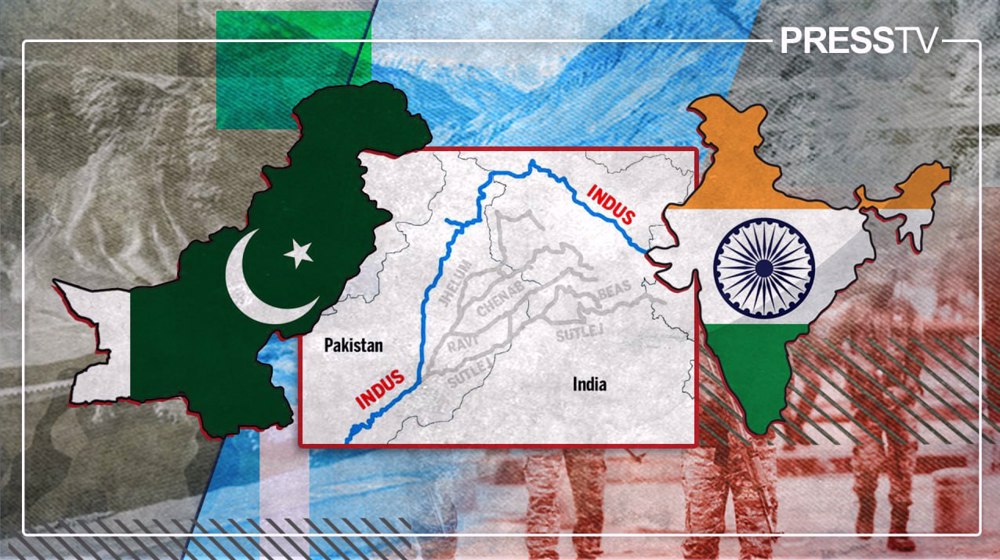
Among these measures, one that took many observers by surprise was India’s decision to suspend the Indus Waters Treaty (IWT) – a landmark water-sharing agreement signed in Karachi in September 1960.
Despite decades of hostilities and multiple wars, the treaty had long endured as a rare symbol of cooperation between the two estranged neighbors.
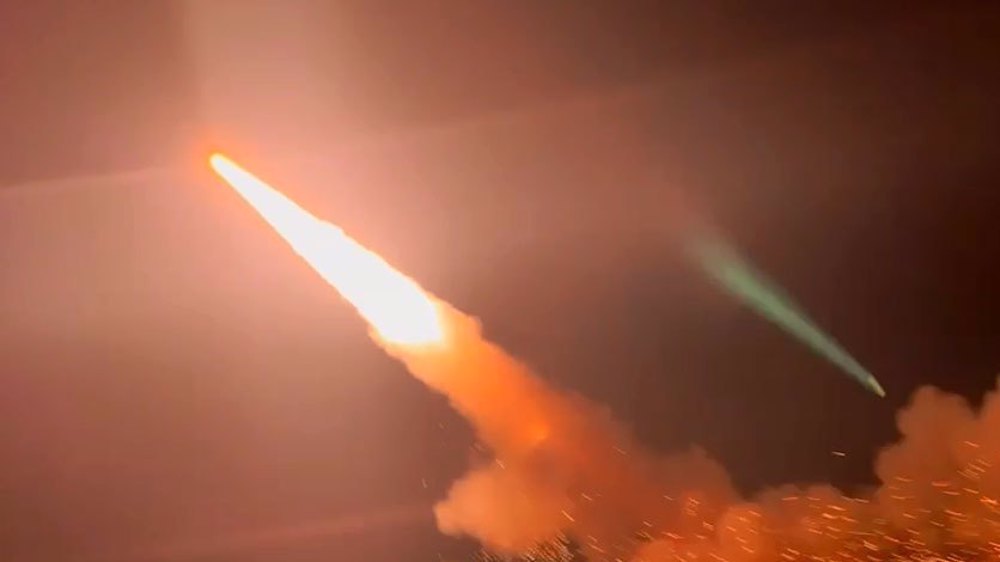
As tensions surged, India launched a military operation on the morning of May 7, firing a barrage of missiles deep inside Pakistan and Pakistan-administered Kashmir, reportedly killing dozens.
In retaliation, Pakistan struck several Indian cities, including key military installations, three days later.
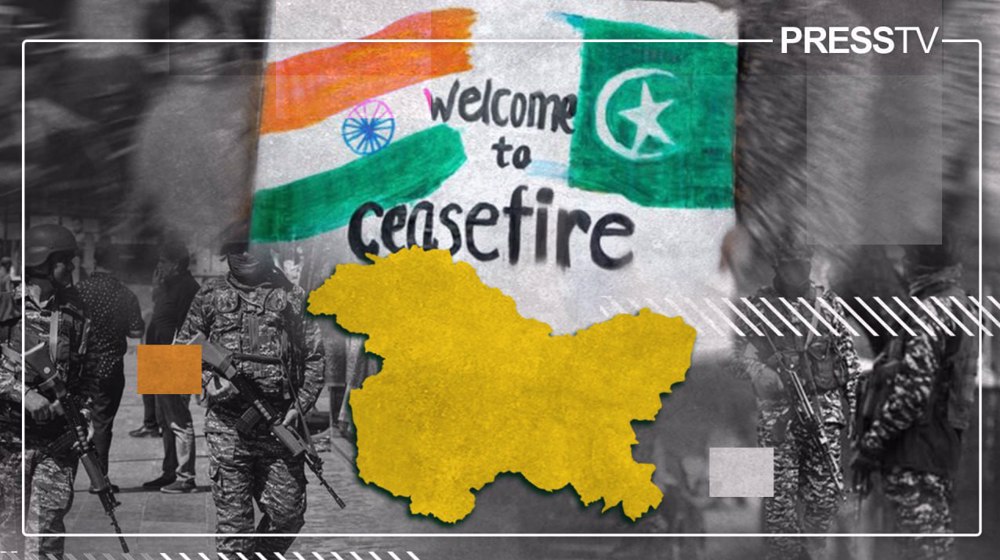
A ceasefire was brokered just hours after Pakistan’s attack, halting the escalation between the two nuclear-armed nations. However, underlying tensions remain high.
A key point of contention is the continued suspension of the Indus Waters Treaty. Pakistan’s Deputy Prime Minister Ishaq Dar, in remarks on Monday, warned that the fragile ceasefire could unravel if the treaty is not reinstated.
India-Pakistan truce brings hope of lasting peace
— Press TV 🔻 (@PressTV) May 11, 2025
Munawar Zaman reports from New Delhi.
Follow: https://t.co/mLGcUTS2ei pic.twitter.com/j64PzGYSaP
Indus Waters Treaty: Status, India’s stance and Pakistan’s response
India’s cabinet committee on security announced the Indus Waters Treaty – long seen as a symbol of "water for peace" – would be held “in abeyance” until Pakistan ends its support for cross-border terrorism.
India’s Foreign Secretary confirmed the suspension, stating it would remain in place until Pakistan “credibly and irrevocably abjures” terror support.
On the ground, India backed up its announcement with action. It briefly restricted flows on the Chenab River, and then released large volumes of water from the Baglihar and Salal dams as levels rose.
Indian Prime Minister Narendra Modi vowed that “India’s water will flow only in India,” emphasizing that water previously shared with Pakistan would now be conserved for domestic use.
Echoing this, Jal Shakti Minister C.R. Patil said, “We will ensure that not even a drop of water from the Indus River goes to Pakistan.”
In Islamabad, the reaction was defiant and dramatic. Pakistani leaders condemned India’s suspension of the treaty as “an act of war”.
Foreign Minister Ishaq Dar and military officials publicly warned that blocking Pakistan’s water share would trigger a full response. Pakistan also announced it would pursue international legal action.
The government is reportedly preparing cases before the World Bank (the treaty’s broker), the Hague’s arbitration tribunals and even the International Court of Justice.
This escalation is particularly notable given the treaty’s durability. The Indus Waters Treaty remained intact through the wars of 1965, 1971, and 1999.
What is clear is that water has moved to the center of the current standoff. India's handling of dam flows appears to serve more as a signal of power than a direct retaliation; a message to Pakistan that New Delhi can, at will, alter the course of shared rivers.
The Indus basin dams underpin Pakistan’s food and energy security. A recent report showed that over 80% of Pakistan’s irrigation and nearly 50% of its GDP depend on the Indus water.
But there is another player that needs to be factored into the equation.
Press TV journalist in Indian-administered Kashmir @SHAHANABUTT provides the latest updates on the escalating tensions between India and Pakistan. pic.twitter.com/rtFTt0gDTR
— Press TV 🔻 (@PressTV) May 10, 2025
China’s role and upstream developments
Adding complexity to the dispute is the growing role of China. In January 2023, satellite imagery revealed extensive dam construction by China on the Indus headwaters in Tibet and on the Brahmaputra (Yarlung Zangbo).
Images also show China building a dam on the Mabja Zangbo (which is a tributary flowing toward Nepal and India) and planning a mega-dam on the lower Brahmaputra.
The Brahmaputra provides about 30% of India’s freshwater and 44% of its hydropower potential, giving Beijing strategic leverage.
Some analysts warn that India’s current use of the IWT as a geopolitical tool could set a precedent, encouraging China to do the same against India downstream.
China's involvement also has a strategic aspect. Under the China-Pakistan Economic Corridor (CPEC), Beijing has poured billions into Pakistan’s hydropower sector, co-developing large dams like Diamer-Bhasha, Dasu, and Mohmand. These projects are central to Pakistan’s water and energy plans, and China's investment makes it a key stakeholder.
As a result, any dramatic shift in Indus water flows or treaty dynamics is unlikely to remain a bilateral issue. China could respond directly, especially on the Brahmaputra, or through its partnership with Pakistan, by accelerating joint hydropower projects.
✍️ Feature -India-Pakistan ceasefire brings respite to Kashmir, but the calm is laced with fear
— Press TV 🔻 (@PressTV) May 12, 2025
By Fareeha Azmathttps://t.co/zSFeeUmQlP
A fragile equilibrium
India’s moves risk triggering a “double-edged sword.” By choking Indus flows, it could prompt Beijing to tighten its grip on Himalayan rivers flowing into India.
In effect, the water dispute now entangles three powers: India, Pakistan, and China, each competing for control over critical transboundary rivers.
However, not all leverage is equal. While China’s upstream position on the Brahmaputra is significant, its practical impact is more limited. The Brahmaputra’s flow through India is largely driven by monsoons, with only 7–10% originating in Tibet.
Even a theoretical full diversion (which remains unlikely due to technical and geopolitical constraints) would reduce India’s national freshwater by 10–15%, impacting less than 1% of GDP. India’s more diversified economy and lower dependence on agriculture (13.5% of GDP) offer some buffer.
Still, China's dam-building project signals its intent to assert hydro-hegemony in the region.
And as tensions mount, rivers are no longer just a source of sustenance; they are emerging as instruments of strategy and power.
India reopened 32 airports that had been shut down due to military tensions with Pakistan.
— Press TV 🔻 (@PressTV) May 12, 2025
Follow: https://t.co/mLGcUTS2ei pic.twitter.com/G65GSmW3CK
Future scenarios for water diplomacy and conflict
The coming months will reveal whether the current crisis can be resolved through diplomacy or whether tensions will spiral further.
Pakistan appears determined to internationalize the dispute. It has signaled intentions to pursue legal action through the World Bank – the designated facilitator of the Indus Waters Treaty – as well as the Permanent Court of Arbitration and potentially the International Court of Justice.
However, the World Bank has already sought to distance itself. President Ajay Banga stated that the institution has “no role to play beyond a facilitator,” casting doubt on its capacity to mediate a meaningful resolution.
As of now, there are no reports of substantive diplomatic progress. This vacuum raises the risk that the ceasefire may falter, potentially reigniting conflict. Looking ahead, several possible scenarios emerge:
- Legal/diplomatic resolution: Pakistan could formally invoke treaty mechanisms, filing for arbitration and launching protests under international law. A mediated renegotiation might follow, potentially involving updated water allocations or enhanced confidence-building measures. India has long advocated for revisions to the treaty. Under international pressure, New Delhi might seek new security guarantees, while Islamabad could push for a more robust monitoring framework to ensure compliance.
- Escalation: If India persists in withholding water flows or damming key rivers in Kashmir, Pakistan’s response may not remain confined to legal avenues. Officials have warned of potential covert retaliation, including cyberattacks or sabotage targeting Indian water infrastructure. Military confrontation cannot be ruled out either. Pakistani leadership has labeled water denial as an existential threat, with some officials mentioning the possibility of a “last resort response.”
- International mediation/coercion: While the World Bank has signaled a limited role, other global actors may step in. The United States, which helped broker the current ceasefire, could take further steps to mediate the water dispute. Other states – including China, Iran, and Saudi Arabia – may offer to facilitate negotiations or introduce incentives for cooperation. Thus far, however, India has resisted most third-party involvement, making an exception only for US-led efforts.
Although some might view the water dispute as a separate, technical issue, it increasingly reflects the broader geopolitical rivalry between India and Pakistan.
Climate stress and growing water scarcity only raise the stakes. With mounting global pressure, both sides may eventually find incentives to restore or reform the treaty.
Whether the Indus Waters Treaty is sidelined permanently or begins a new, more contentious chapter will likely be decided in the coming year.
Amin Noorafkahn is a student of regional studies at Allamah Tabatabai University, Tehran. He is interested in political science, literature, and sociology.
(The views expressed in this article do not necessarily reflect those of Press TV)
Iran, Pakistan FMs discuss regional developments, energy supplies
Iran condemns deadly terrorist attack on mosque in Pakistan
Dozens killed in mosque blast, militant clashes in Pakistan’s Khyber Pakhtunkhwa



Arab League slams dangerous Israeli escalation at al-Aqsa Mosque and across West Bank
VIDEO | Martyr Nasrallah made people believe in possibility of victory, liberation: Political activist
VIDEO | Nasrallah's leadership was based on resistance, liberation, national unity: Analyst
UK police evacuate homes near airbase used by US over bomb threat
US just 'gaslighting' over Hormuz: Iran's Parliament speaker
VIDEO | Press TV's news headlines
Reyhaneh Karimi makes history with Iran’s first women’s weightlifting medal at Asian Games
Iran ‘fully prepared’ for war to resume with US but still trying diplomacy: Araghchi


 PressTV NEWSLETTER
now
PressTV NEWSLETTER
now
 This makes it easy to access the Press TV website
