Promising prospects in Iran’s ammonia industry
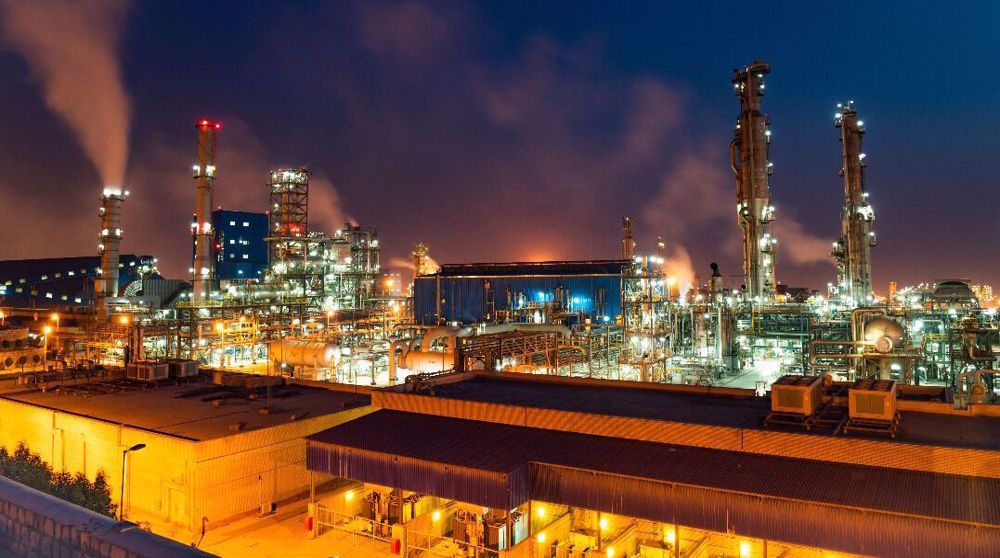
With the world's second largest gas and fourth oil reserves, its privileged geopolitical position and place as among the top 10 mineral countries in the world, Iran has the potential to become a chemical production and export hub.
Chemical products include petrochemical and mineral raw materials and bases, and the entire chemical production chain up to the most advanced and highest value-added level.
What is needed is to conceive an integrated, comprehensive, and long-term policy to direct the flow of investment and production towards complementary industries that generate more added value. Iran’s access to high seas allows for the establishment of complementary petrochemical industries.
As things stand, the chain of benefits, incentives, and supports for complementary industries downstream of petrochemical raw material production is not strong enough to generate motivation and courage for domestic and foreign investors to commit to the sector and reap a plethora of its dividends.
Industrial chemicals are used for a variety of purposes in manufacturing, cleaning, metalworking, power generation, food processing and many other industrial sectors such as agriculture, construction, rubber and plastic products, textiles, petroleum refining, pulp and paper, and primary metals.
The imperative is clear. The development of the chemical industry, its products, and underlying processes, in addition to generating more income, also prevents the sale of crude oil and gas.
This is the true embodiment of the resistance economy - an economic model, which provides growth and prosperity for a nation, even under pressure and sanctions.
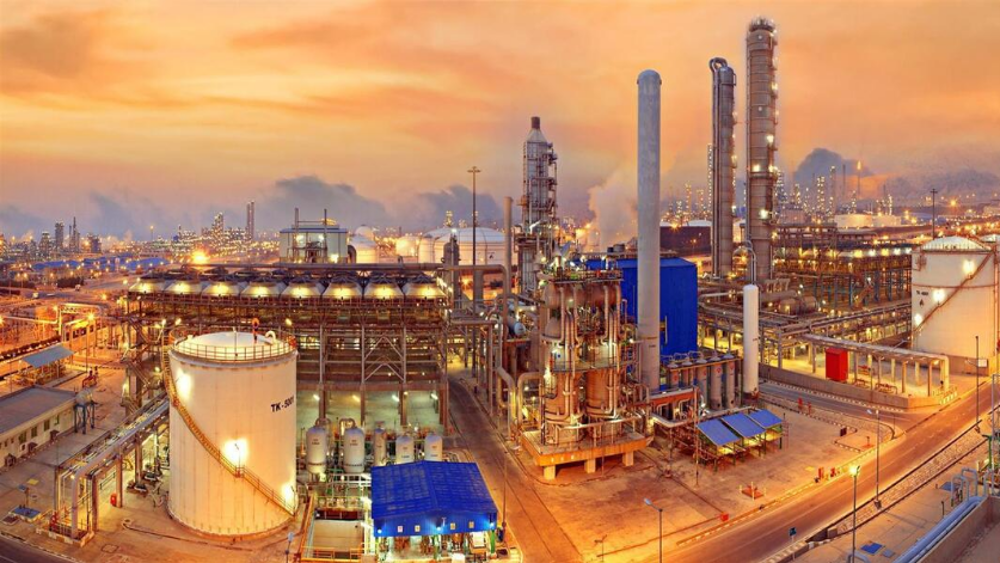
In recent years, Iran’s focus on completing the urea and ammonia value chain has made it one of the world's leading producers of the chemical compounds which have a good international market.
The most important use of ammonia is as a chemical fertilizer. Approximately 90% of the ammonia produced in the world is used in chemical fertilizers.
Ammonia is possibly the most important man-made chemical product. Its importance in agriculture cannot be underscored enough because it helps sustain food production that billions of people rely on.
Iran is currently the sixth largest producer of ammonia in the world and has a high capacity for the production of urea and ammonia. Currently, seven companies producing ammonia and its downstream products are operational in the country.
The nominal ammonia production capacity is put at 5.5 million tonnes a year. This figure for urea production stands at 8.5 million tonnes, and for other downstream products of the ammonia value chain at about 2 million tonnes.
While ammonia today is a key intermediary for industrial fertilizer production, low-carbon ammonia offers the promise of being a low-emission fuel for the power industry.
Ammonia-fired gas turbines are being developed for power generation, which is expected to stimulate demand growth in marine fuels and other markets as technology is improved. Demand for low-carbon ammonia production as a hydrogen transport vector is also expected to drive growth.
Imports of low-emission ammonia fuel have been proposed for more than a decade to meet decarbonization needs in Asia and Europe. Forecasts show demand for low carbon ammonia in Europe will grow by 6 million tonnes, and in Japan by 2 million tonnes.
In West Asia, as one of the main centers of ammonia production in the world, the chemical commodity with its long-established supply chains from production and distribution through to utilization, is expected to be given special attention as an energy source.
Especially in Iran, where energy supply challenges are impacting businesses and ordinary citizens, this source can be used as one of the suitable options.
Iran also exports about 641,000 tonnes of ammonia which it can use in downstream industries for production of valuable derivatives with attractive and profitable international markets such as caprolactam, alkylamines, and acrylonitrile.
Caprolactam is a monomer used in the textiles industry in the production of nylon-6 polyamide, a textile with a high strength-to-weight ratio and good chemical and thermal stability and durability.
Acrylonitrile is widely used in industry to produce rubber, resins, plastics, elastomers, and synthetic fibers and to manufacture carbon fibers used in aircraft, defense, and aerospace industries.
Meanwhile, as demand in countries such as China, India, Japan and South Korea for coatings and the growing pharmaceutical industry is rising, the use of alkylamines in the region is increasing.
The ammonia and urea industry has great potential in Iran, where with the right support, the country can become a hub for the production of this valuable feedstock for most chemicals, pharmaceuticals, and fertilizer products and a promising carbon-free energy source.

Iran says international flights continue despite US sanctions pressure
Iran slams US for blaming Tehran over rising fuel prices, Strait of Hormuz closure
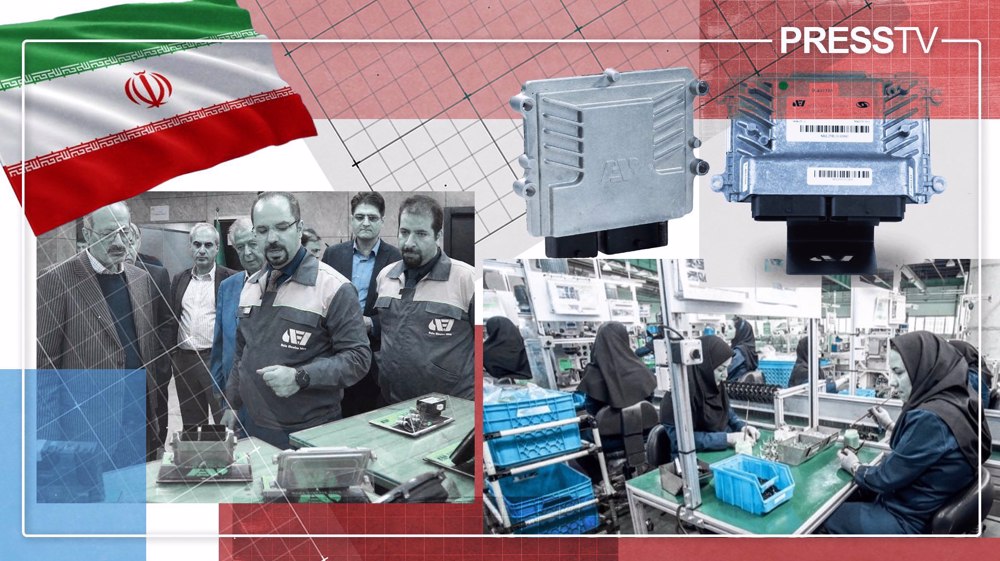
Iranian engineers develop indigenous engine control units, advancing automotive electronics



Minab’s school bell rings through grief as 168 empty desks stand as silent witnesses
Europe was part of the infrastructure of US aggression against Iran: Deputy FM
VIDEO | The pain of not being able to provide
VIDEO | US ill intentions further exposed
Araghchi in New York: Europe must confront US aggression
IRGC: Iran’s strikes force US toward dispersal, concealment, minimal presence
Netanyahu flies over France, Italy, Greece, Canada despite ICC arrest warrant
VIDEO | News Review: Iran’s president at UNGA says Islamic Republic is victim of US, Israeli terrorism


 PressTV NEWSLETTER
now
PressTV NEWSLETTER
now
 This makes it easy to access the Press TV website
