

A newly published book documenting the deadly US attack on the southern Iranian city of Lamerd has brought renewed attention to the scale of destruction and civilian casualties caused by the February 28 aggression.
Published by Nashr-e Maaref Publications, Lamerd: 720,000 Tungsten Pellets, authored by Ebrahim Safari, seeks to preserve the historical record of one of the tragic events in contemporary Iranian history.
On February 28, the first day of the US-Israeli military aggression against Iran, a crowded sports facility in Lamerd, in Fars province, was struck by a US missile, killing 21 young people and injuring approximately 130 others.
The attack involved four Precision Strike Missiles (PrSM), each carrying approximately 180,000 tungsten pellets, unleashing a total of 720,000 projectiles over Lamerd.
The devastating use of these weapons is reflected in the title of the newly released book, Lamerd: 720,000 Tungsten Pellets.
At the time of the devastating strike, the complex was hosting a girls’ volleyball practice session alongside a boys’ football training activity in adjacent areas of the facility.
Coaches and school staff were supervising regular pre-competition training activities for students preparing for provincial tournaments.
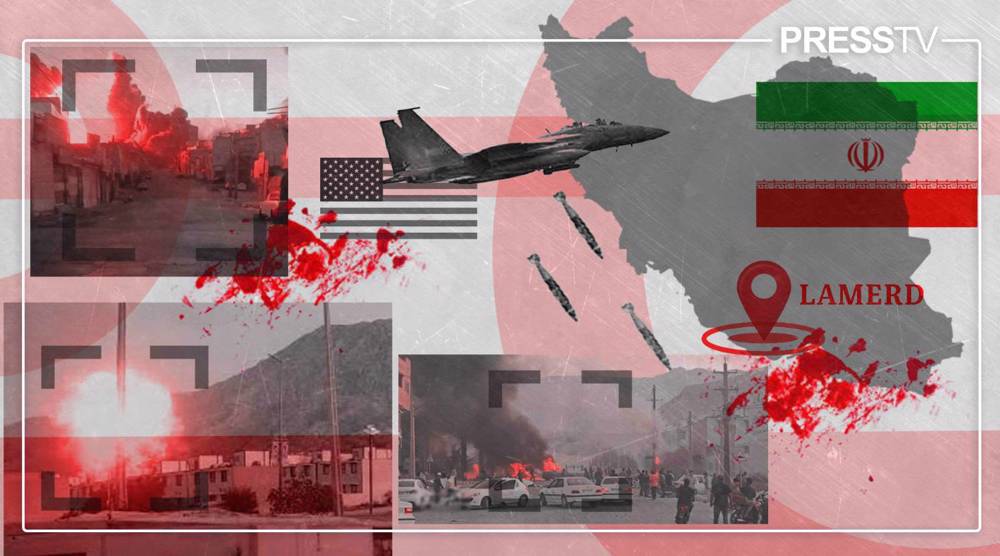
With a population of approximately 30,000, Lamerd faced an extraordinary concentration of destructive force.
The strike left widespread damage beyond the targeted sports facility, with walls, doors, and windows across the city riddled with thousands of pellet holes.
Medical and municipal authorities said the fragmentation injuries were so widespread that they affected individuals inside vehicles, outside shops, and within nearby residential courtyards.
Safari’s 12-chapter book examines the incident from multiple perspectives, including Lamerd’s geographical location, the moments of the attack, initial accounts from eyewitnesses, testimonies of victims’ families, emergency response efforts, media coverage, and related legal investigations.
The publication aims to document the human consequences of the attack, preserve eyewitness accounts, and ensure that the experiences of victims and survivors remain part of Iran’s historical record.
 This makes it easy to access the Press TV website