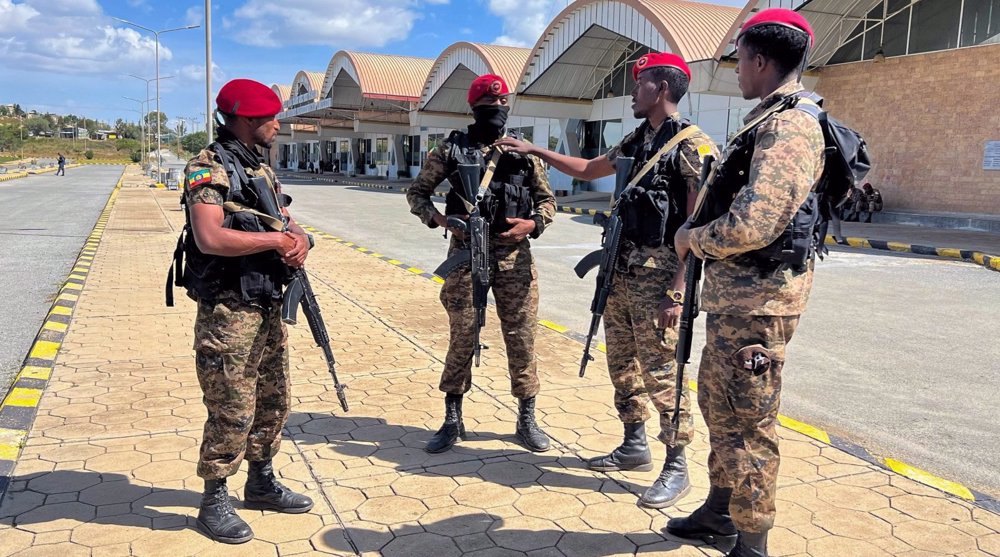
Eritrean forces have entered Ethiopia's Tigray region, a report says, as renewed fighting heralds a possible regional war while both sides accuse each other of engaging in hostile actions.
Eritrean troops are occupying the town of Adigrat in Ethiopia's northern Tigray region and that now they are pushing further south toward the city of Mekelle, AFP reported on Thursday, citing local sources.
The new wave of fighting erupted on September 23, when the rebel Tigray People's Liberation Front (TPLF) and the Ethiopian army engaged in clashes, with Ethiopia accusing Eritrea of supporting the TPLF.
Addis Ababa and Asmara cut diplomatic ties last month.
“The Eritrean army has entered Tigray in uniform, equipped with heavy weaponry,” said Gebreigziabher Beyene, the commander of a local militia that fights alongside the Ethiopian army.
Eritrea is “deliberately deploying its forces so that the fighting takes place inside Tigray rather than spilling into Eritrea,” he added.
According to the report, Eritrean forces entered Ethiopian territory in Tigray to allegedly prevent the war from spreading to Eritrea in case the TPLF be forced to retreat across the border.
“Eritrean troops, loaded onto large trucks, patrol vehicles, and other vehicles” were heading south, as “They are passing through, carrying heavy weaponry,” an eyewitness told AFP.
Furthermore, a local official told the French news agency that Eritrean troops had been in Adigrat for days and that “the population is very concerned.”
The report added that the Ethiopian troops managed to oust TPLF rebels from Mekelle, allegedly forcing them to flee without a fight.
Eritrea formally achieved independence from Ethiopia in 1993, five years before the two entered a brutal war that lasted for about two years.
Back in 2018, bilateral relations improved, paving the way for Eritrea to support its neighbor during its civil war against the TPLF, the ruling party in Ethiopia's Tigray region, in 2020–2022. Around 500,000 people are believed to have died the war.
For the past few months, however, the two sides have been at odds once again, in part because Ethiopian Prime Minister Abiy Ahmad has sought to gain access to the Red Sea, stressing that such an access is “inevitable and existential” for Ethiopia.
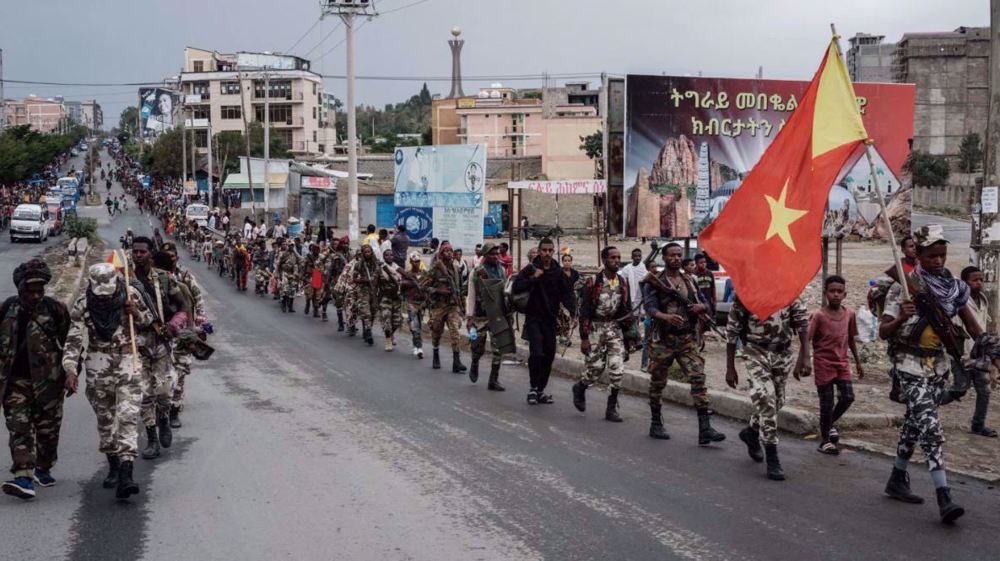
After Eritrea gained its de facto independence in 1991, Ethiopia lost control of its key port city, Assab, on the Red Sea. Since then, Addis Ababa has been conducting its international trade via neighboring Djibouti.
Regional diplomats have already warned that relations between Addis Ababa and Asmara are deteriorating fast.
Landlocked Ethiopia has claimed sovereignty over Eritrea’s Red Sea coastline and accuses Asmara of backing rebel groups such as the TPLF, claims Eritrea categorically denies.
Asmara fears that Addis Ababa will use the conflict with the rebels as a pretext to occupy Eritrean territory in an attempt to gain access to the Red Sea.
The Red Sea region already sees escalating fighting between Yemeni armed forces and Saudi-backed mercenaries along Yemen’s western coast as well as a conflict between the Sudanese Armed Forces (SAF) and the paramilitary Rapid Support Forces (RSF), which is backed by Israel’s key regional ally, the United Arab Emirates, and has training camps in Ethiopia.
The risk is that the conflict could draw in regional players, including Egypt, Turkey, Somalia, and the Persian Gulf Arab states.
The TPLF is already aligned with the Sudanese military (SAF). Eritrea is aligned with Egypt and Saudi Arabia in supporting the SAF.
 This makes it easy to access the Press TV website