China rejects US ‘long-arm jurisdiction,’ says trade ties must not face third-party coercion
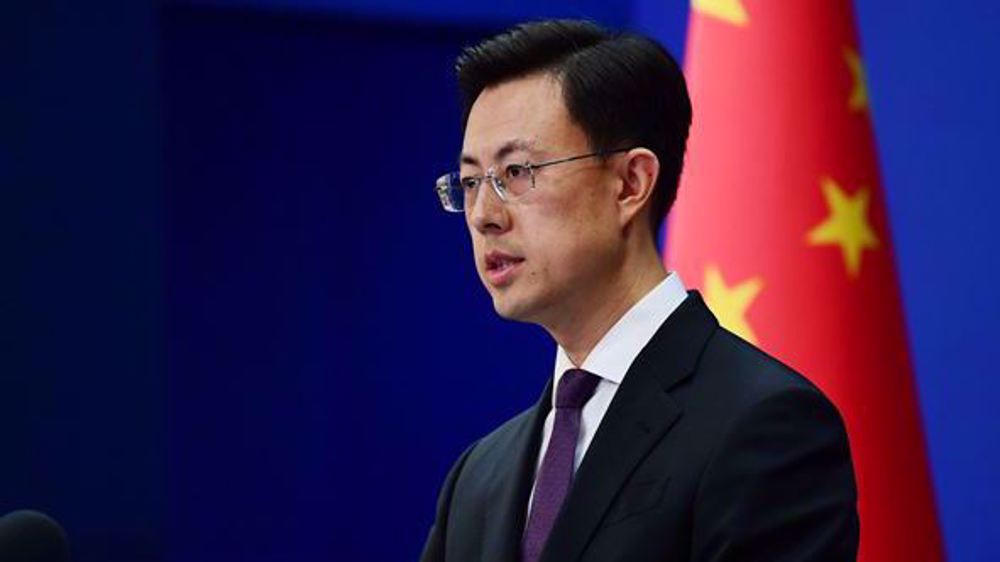
China has rejected US pressure over its economic ties with Russia, saying normal cooperation between countries should not be disrupted or coerced by third parties.
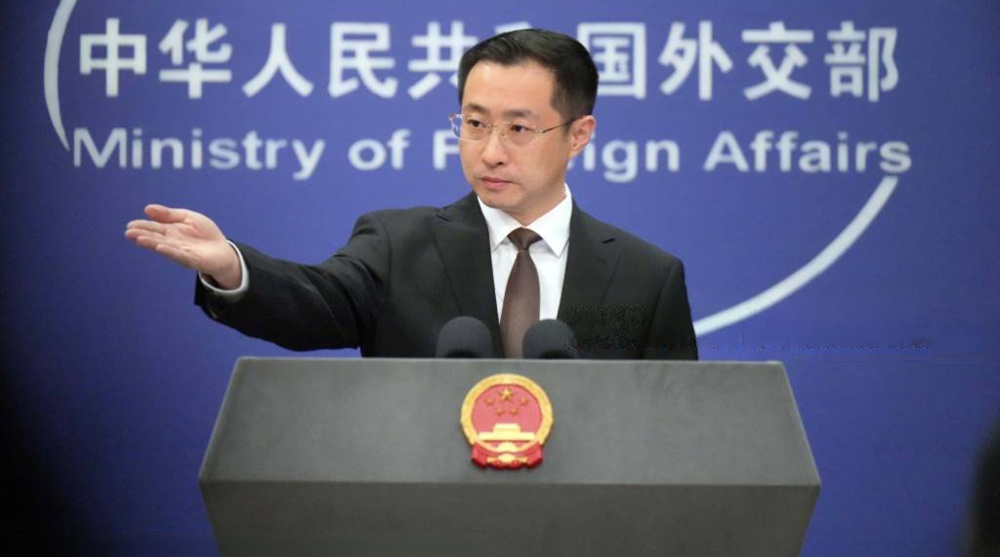
Chinese Foreign Ministry spokesman Guo Jiakun made the remarks in Beijing on Thursday in response to questions about a US Congress bill targeting Russia and authorizing the administration of President Donald Trump to impose tariffs of up to 100% on countries that purchase Russian oil and gas, potentially including China and India.
“China carries out economic and trade cooperation with countries on the basis of equality and mutual benefit," Guo told reporters.
“China’s cooperation does not target any third party and it should not be disrupted under the coercion of any third party,” he said.
“We always oppose long-arm jurisdiction that has no basis in international law or authority of UN Security Council,” Guo added.
The US House of Representatives approved the sanctions bill on Wednesday by a 262-159 vote. The measure, which had previously passed the Senate, now goes to Trump for his signature. It targets Russian officials, banks, energy and defense sectors and also gives the US president authority to impose tariffs of up to 100% on major buyers of Russian oil and gas.
China and Russia have significantly expanded bilateral trade in recent years. Trade between the two countries exceeded $240 billion in 2024, with most transactions conducted in their national currencies.
Chinese President Xi Jinping and Russian President Vladimir Putin have repeatedly described their countries’ relationship as a comprehensive strategic partnership, underscoring close political and economic ties between Beijing and Moscow.
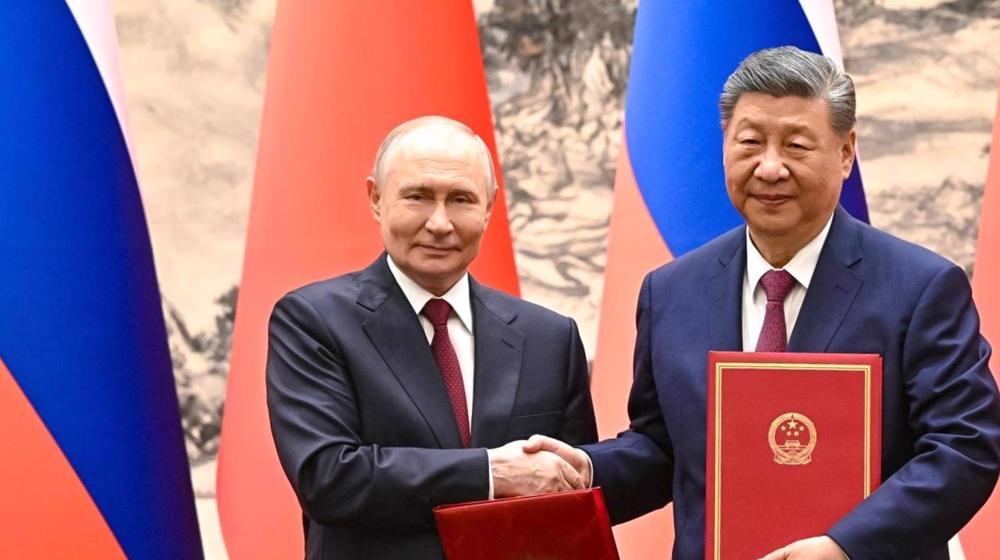
In the meantime, analysts expect China-Russia relations to deepen further despite US pressure and sanctions.
Just days ago leaders of the two countries attended the 18th BRICS summit in New Delhi under the theme of “Building for Resilience, Innovation, Cooperation and Sustainability.”
Originally established in 2006 as a cooperation forum among Russia, India, Brazil and China, the economic bloc has expanded. It added South Africa in 2011, and now comprises of 11 countries, namely, Iran, Russia, China, Brazil, Egypt, Ethiopia, India, Indonesia, Saudi Arabia, South Africa and the UAE.
BRICS countries — which collectively represent nearly half of the world’s population, around 40 percent of global GDP and 26 percent of global trade — have since broadened their scope of cooperation to cover new areas such as health, climate action and advanced technologies.
The group aims to promote the interests of the countries in the Global South, and push for greater representation in global governance while also taking steps to depart from the US dollar in trade.
US clears way for F-35 sale to Saudi Arabia amid aggression against Yemen
US lawmaker slams Trump’s $5 billion weapons sale to Saudi Arabia
Trump impeachment on the horizon post-midterms



Yemenis hold rally in Sa'ada in support of armed forces after lightning advances
Dozens killed in mosque blast, militant clashes in Pakistan’s Khyber Pakhtunkhwa
Iran: US cannot evade responsibility for war crimes by leaving UN rights council
Saudi crown prince seeks dialogue with Ansarullah after Yemeni blows: Report
IRGC intelligence forces eliminate two terrorists in southeast Iran
South Korea says will not send troops to join terrorist US war on Iran
Yemen's control of Bab al-Mandab 'deepens crisis' in Israel
Iran calls for ‘zero-tolerance’ policy on attacks against nuclear facilities at IAEA


 PressTV NEWSLETTER
now
PressTV NEWSLETTER
now
 This makes it easy to access the Press TV website
