

By Zainab Zakariyah
Does the United States possess the most advanced military technology on Earth? By almost every measure, yes. Stealth aircraft, precision-guided munitions, satellite targeting, and now, by the Pentagon’s own admission, artificial intelligence woven into the targeting process itself.
So the glaring question then is: if the targeting is this precise, why has the US war machine produced some of the highest civilian casualty tolls of any modern military? War after war, decade after decade, on every continent that has had the misfortune of US military presence.
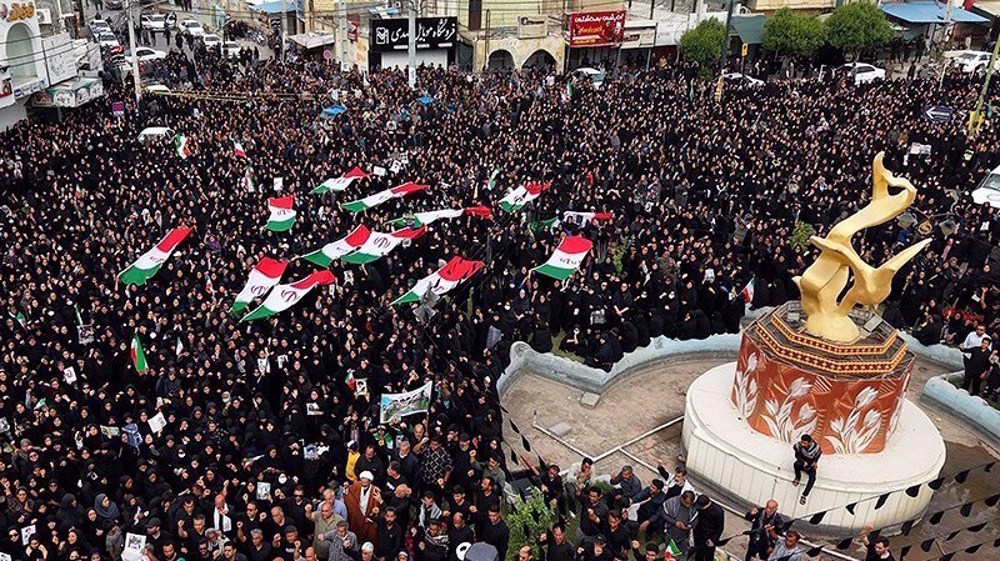
On September 2, 2026, a wedding was underway in Kuhestak, a mountain village in Sirik County, in Iran’s Hormozgan Province. Families had gathered the way families gather everywhere, with music, food and joyful children wearing colorful clothes.
Then an American airstrike hit the home hosting the wedding celebration. At least five people died. The youngest was a child who should have spent that night dancing at a family wedding and instead spent it in a cold morgue. And those who survived? Well, they must now learn how to live with the trauma and guilt of survival.
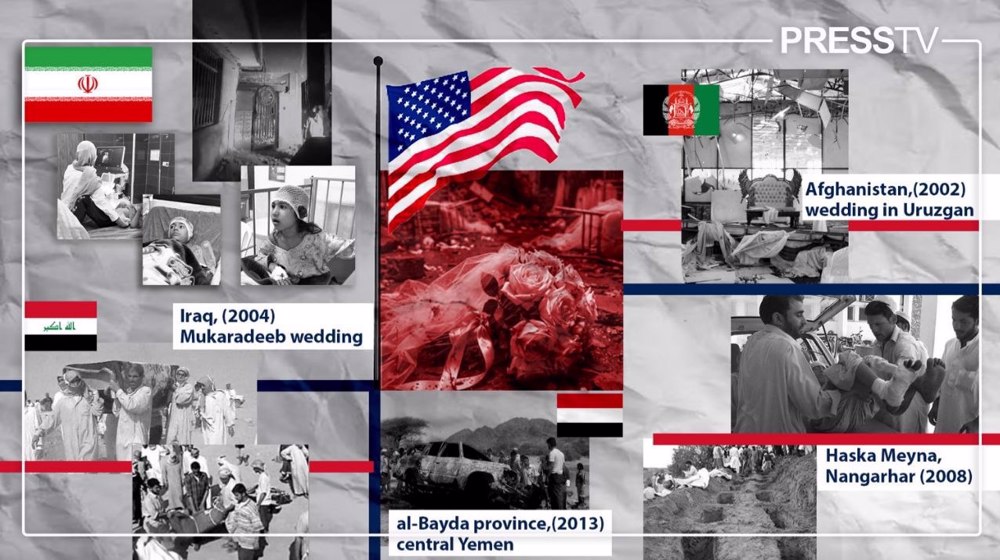
Sirik was not an aberration, though; it was the latest entry in a lengthy ledger. Since December 2001, the US has struck more than a dozen wedding parties across multiple countries, effectively turning weddings into funerals.
In July 2002, the US attacked a wedding in Uruzgan, Afghanistan; only two women survived that attack. Iraq, May 2004: another wedding, another US attack. In July, Nangarhar, Afghanistan: an airstrike on a bridal convoy killed 47 people, including the bride herself, who survived two blasts before the third one found her. Months later, in November 2008, a wedding in Wech Baghtu, Kandahar, was hit — 37 dead, 23 of them children. In December 2013, a US drone fired on an 11-vehicle wedding procession in Rada’a, Yemen, killing at least 12 people; the bride was wounded by shrapnel. Weddings, of all things, keep ending up on American target lists.
Minab, Lamerd, and a hospital named for a pacifist: this pattern shows the Sirik wedding did not happen in isolation. On the very first day of the US-Israel war of aggression on Iran, a strike on the Shahid Naimi Sports Hall in Lamerd hit a girls’ volleyball team mid-practice. At least 21 people were killed, including several children.
Independent investigators identified the weapon as a US Precision Strike Missile, a newly fielded weapons system, not some decades-old munition with the excuse of obsolescence. Hours earlier that same day, a strike on the Shajareh Tayyebeh Elementary School in Minab killed more than 160 people, most of them children, marking the single deadliest strike of the war so far.
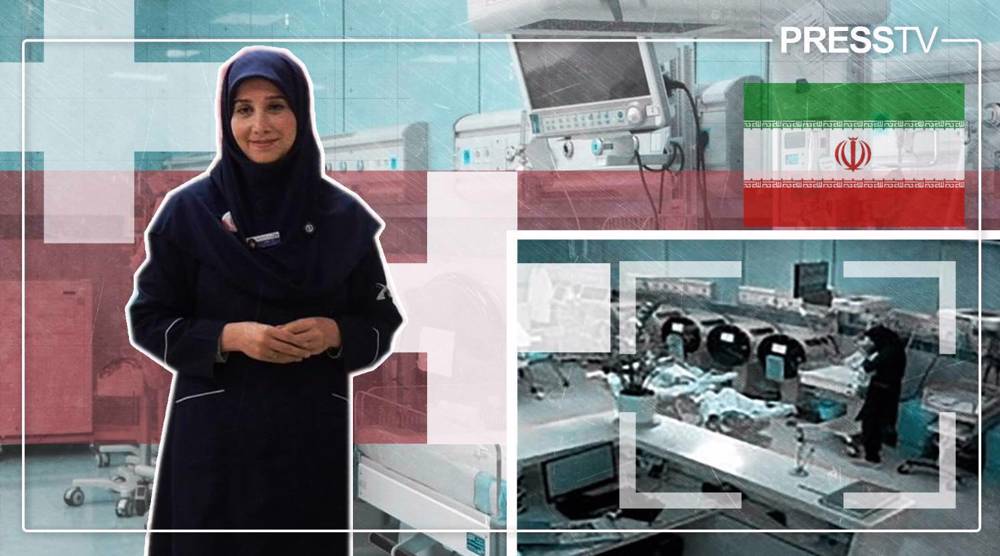
And in the midnight of March 1-2, joint US-Israeli strikes damaged Tehran’s Gandhi Hotel Hospital, destroying its in-vitro fertilization unit and forcing staff to evacuate embryos and newborns in the middle of the night. This was as the World Health Organization confirmed over 300 health facilities damaged in the weeks that followed.
Girls playing volleyball. Children in a school. An IVF clinic. War is terrible; that much is a given, and no one disputes it. But how, across so many decades and so many different wars, can civilian casualties on this scale keep being filed under “accident”?
History tends to work the way any honest observer works: it looks for patterns, and patterns generate theory. And when you lay these patterns side by side, from Kabul to Baghdad to Kandahar to Yemen and beyond, the theory that keeps presenting itself is the arrogance of imperialism. Because what has imperialism ever been known for, if not violence, brutality, and unspeakable crimes carried out against people deemed lesser?
The psychology of “the other”
But here is what makes this pattern more disturbing: psychology tells us that human beings are not instinctively evil. Hurting another person typically produces genuine emotional strain in the one doing the hurting.
Soldiers carry that strain home as nightmares, addiction, PTSD and suicide risk for the rest of their lives. So how does a system get ordinary people to kill wedding guests and schoolchildren repeatedly, across generations, without the entire apparatus collapsing under its own guilt?
It manufactures the “other.” It does this by teaching the soldier that the person on the receiving end of the weapon is somehow less than human, so that the emotional cost of killing them is muted before the trigger is ever pulled.
To be fair, Western imperialism did not invent this mechanism; “othering” has existed as long as tribes and empires have. But Western nations perfected it and paired “othering” with something more insidious: exceptionalism.
The belief that one’s own nation stands above the moral rules that govern everyone else, incorruptible by nature, so that anything it does is automatically justified. First, because it is being done to people already defined as lesser, and second, because it is being done, supposedly, for good and noble reasons.
General William Westmoreland, who commanded American forces in Vietnam, said as much on camera in the 1974 documentary Hearts and Minds, explaining why Vietnamese deaths did not weigh on him the way American deaths did.
He said: “the Oriental doesn’t put the same high price on life as does a Westerner.” A four-star general, speaking for the doctrine, perhaps without even realizing it.
Another Vietnam Marine veteran, Lloyd Lofthouse, made a smaller but equally telling admission in his essay “Cultural Differences and the Ignorant American in Vietnam”. He could not recall a single man in his unit who showed real curiosity about the culture or history of the country they were occupying. Why? Because you cannot mourn what you were never taught to see.
While death and torture are often spoken about when it comes to imperialism, there is another sinister crime less spoken of, and that is the economics of the occupied body.
The economics of the occupied body
That same logic of lesser people and justified ends extends past the battlefield into what occupying militaries build around themselves.
Between 1966 and 1969, roughly 70,000 American troops passed through Thailand on official “Rest and Recreation” leave. The Pentagon officially discouraged prostitution while its own courtesy patrols walked soldiers to the bars where women were waiting.
Economists later found five times more commercial prostitutes near former US bases than near unused Thai ones — a demand shock still shaping the economy sixty years on.
And if this sounds like ancient history, riddle me this: after 286 days at sea running strikes on Iran, where did the USS Abraham Lincoln carrier strike group make its first real port call on September 2, 2026? In Laem Chabang, an island known as the red zone, the hub of sexual tourism. Sailors were shuttled straight to hotels in Pattaya for “rest and recovery.” Same coastline. Same country. Same word. Sixty years apart.
In Korea, this culture was made official. After the Korean War, the US military and the South Korean government together built and ran “camptowns,” complete with government-run clinics to keep the system’s workers, who were mostly orphans and abandoned girls, functional for continued use.
And in Kenya, British soldiers training at the Army Training Unit near Nanyuki have, for sixty years, fathered children with local women and vanished home to England. With thousands of cases of sexual violence and hundreds of documented cases, not a single soldier was punished.
The children grow up in their villages as outcasts, living with the stigma of how they were conceived, being called “British” as an insult, visibly different, functionally fatherless, waiting on a country that has never claimed them and a father who may not even know they exist.
This same occupied-body logic doesn’t stop at the perimeter fence — it turns inward. Women serving inside these very militaries have reported sexual assault at rates that outstrip almost any civilian workplace.
In 2025 alone, the Pentagon estimated that over 20,000 US service members experienced unwanted sexual contact, with women reporting it at more than four times the rate of men.
Patriarchy, it turns out, has its own version of “the other” inside the barracks as much as outside them. A female soldier can still be treated as less entitled to bodily autonomy than the mission around her. And finally, we arrive at the lack of accountability that allows these crimes to continue perpetually.
When the whistleblower pays and the perpetrator doesn’t
In 2005, US Marines in Haditha, Iraq, killed 24 unarmed civilians, including a 76-year-old man in a wheelchair and six children, in what a subsequent investigation described as a revenge rampage after a roadside bomb.
Only one Marine was ever convicted of anything: negligent dereliction of duty. For the crime of killing dozens of people, including children, a single soldier was demoted with no jail time.
A year earlier, at Abu Ghraib prison, it was Army Reservist Joe Darby who turned in the photographs exposing the torture of Iraqi detainees. For doing so, Darby received death threats, was placed in armed protective custody for six months, and was called a traitor by his own community.
Fellow soldier Samuel Provance, who spoke to the press about the abuse, was demoted and threatened with ten years in military prison. The men who did the torturing served comparatively short sentences; the men who exposed it lost their safety, their reputations, and in some cases, their careers.
If there are rules of war, why do the people who report their violation suffer more than the people who commit it? If there are rules, why are they so rarely applied? If they are applied, why is there so little accountability? And if there is no accountability, then there is no deterrence, and without deterrence, the system is, in effect, telling every soldier, pilot, and commander underneath it: do whatever you want. In simple terms, that is how you create a terrorist organization.
In an age when the US military says it is using artificial intelligence extensively in its targeting process, how does a strike hit the same school in Minab and still get called a mistake?
How can a new US precision-strike technology be tested in Lamerd against a volleyball team of schoolgirls? How does a hospital become collateral damage, not once, but as one of over 300 damaged health facilities?
Why has no one been meaningfully punished for Abu Ghraib carnage, for the wedding massacres in Afghanistan, for the documented, decades-long pattern of sexual assault by British, American, and allied soldiers against women from Kenya to Okinawa? And why do the hundreds, if not thousands, of sexual assault reports filed by female soldiers inside these same militaries so rarely end in anything but silence?
None of this requires believing in a secret conspiracy. It requires only noticing that when the same handful of nations, generation after generation, keep producing the same categories of harm — the massacred wedding, the bombed school, the brothel built around the base, the soldier who assaulted because he knew he could, the whistleblower punished harder than the criminal — the honest explanation isn’t a string of coincidences.
It’s a doctrine, inherited from the empire, never fully unlearned. The general who called an entire people’s grief cheap, the pilot who hit a volleyball court with the newest missile in the arsenal, and the sailor bused to Pattaya after nine months of war were all, in their different ways, taught the same lesson first: that some people are the protagonists of history, and some are simply the people in the story evil was meant to happen to, always.
Zainab Zakariyah is a Tehran-based writer and journalist, originally from Nigeria.
(The views expressed in this article do not necessarily reflect those of Press TV.)
 This makes it easy to access the Press TV website