Trump’s ‘compensation’ delusion: A desperate and dying hegemon mimicking Iran’s strategic playbook
By Maryam Bashirpour
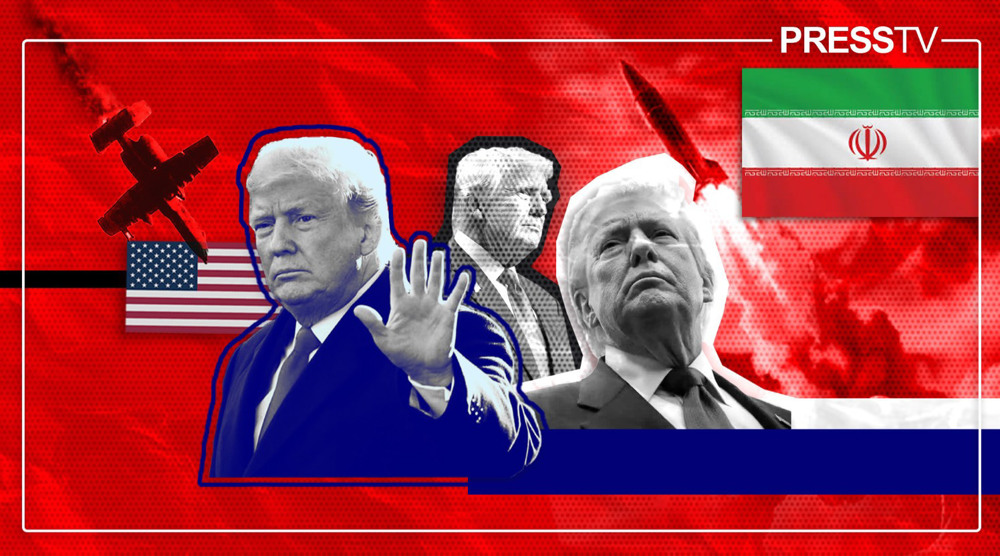
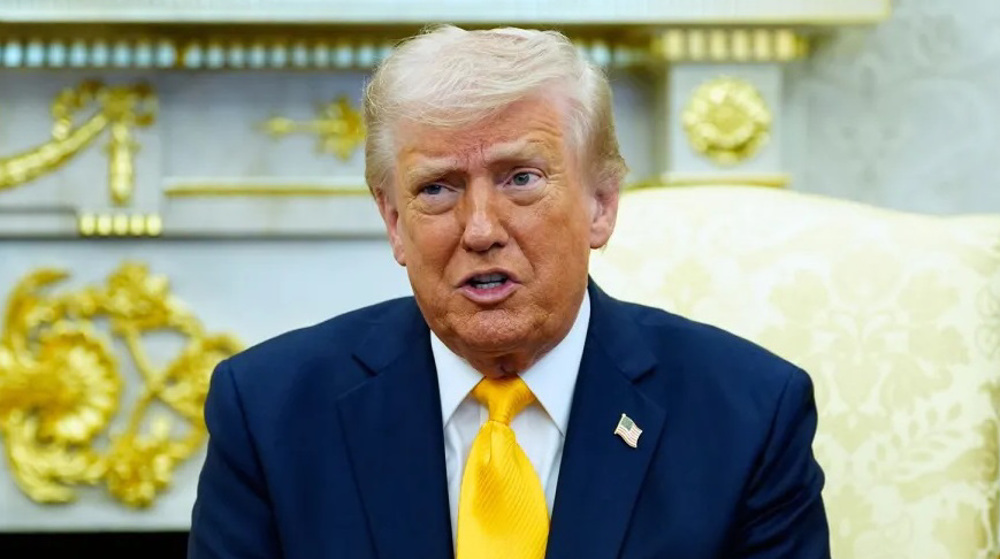
The scene is strikingly familiar: the US president stands behind the White House podium and announces that Iran owes money to America.
“We are seeking money for the damages they have caused over a period of 50 years,” Trump told reporters on August 10, 2026.
He later took to his Truth Social platform, doubling down on the preposterous claim: “I am also asking Iran for compensation, for all the people they have killed or severely wounded with roadside bombs and in the numerous conflicts they are known for.”
At first glance, it appears to be an audacious diplomatic move. But a deeper look reveals a reactive and desperate gimmick that exposes Washington’s strategic bankruptcy.
Iran recently presented a list of its conditions for reopening the Strait of Hormuz, including $300 billion in war reparations. Trump’s response was not to completely reject the demand, but to copy it. He turned Tehran’s demand into a counter-demand from Washington and claimed that Iran owed compensation for everything that ironically never happened.
To understand why Trump’s counter-demand is so hilarious, one must first understand its context.
On February 28, 2026, the United States and Israel launched a coordinated war of aggression against Iran. The illegal and unprovoked war, which has now entered its sixth month, has failed to achieve any of Trump’s stated military or strategic objectives.
Leader of the Islamic Revolution, Ayatollah Seyyed Ali Khamenei, was martyred on day one of the war as well as some top-ranking commanders, but the leadership structure remained intact and all important positions were duly filled to avoid any disruption amid the war.
Much to the chagrin of doomsayers, the Islamic Republic of Iran did not collapse or disintegrate. It also did not surrender or retreat. Rather, it resisted and responded to the aggression.
Iran’s most effective weapon was not its missiles, but its strategic and legitimate control over the Strait of Hormuz. Before the war, approximately one-fifth of the world’s crude oil and liquefied natural gas passed through this narrow waterway that lies between Iran and Oman.
After the war was imposed, Iran moved to effectively close the waterway to hostile vessels and reduced commercial shipping almost to zero. Now only a few tankers pass through the waterway each day, compared with hundreds of vessels before the war.
On August 8, 2026, Iran’s Supreme National Security Council, through its then-secretary Mohammad Bagher Zolqadr, presented six conditions for reopening the strait:
- An end to US threats and insults against Iran’s national and religious sanctities
- A permanent cessation of war and aggression against Iran and its allies in Lebanon, Palestine, Yemen and Iraq
- The lifting of the US naval blockade and the withdrawal of US naval and air forces from around Iran
- Full compensation for war-related damages, which reports estimate at $300 billion
- The complete lifting of all sanctions
- The release of Iran’s frozen assets, estimated at up to $100 billion
"Trump suffers from a lack of wisdom & prudence"
— Press TV 🔻 (@PressTV) August 3, 2026
Senior advisor to the Leader of the Islamic Revolution, Mohsen Rezaei, says US decision-making has declined, criticizing Trump's leadership & calling recent military planning against Iran imprudent, unrealistic, & unprofessional. pic.twitter.com/bGn9e0v3dv
Iranian officials stressed that these demands were non-negotiable. They declared that the Strait of Hormuz will not be reopened until the United States fulfills these demands.
The Islamic Revolution Guards Corps (IRGC) also reinforced the message: “The enemy is forced to accept Iran’s conditions for reopening the strait.”
Trump quickly responded with a theatrical counter-demand and wrote on Truth Social on August 10:
“I see that representatives of the Islamic Republic of Iran are demanding compensation for the damages of the 5-month war (which started because they would not have nuclear weapons), even though this was never brought up in any of our negotiations or meetings! But this is an interesting idea, because I am also asking Iran for compensation.”
What followed was a list of Trump’s theatrical grievances spanning 50 years:
- Compensation for the families of the 17 American sailors aboard the USS Cole in 2000, even though the FBI attributed the attack to al-Qaeda, not Iran.
- Compensation for the “hundreds of thousands of innocent protesters” whom, he claimed, Iran had killed over the past 50 years.
- Compensation for the “52,000 people who have been killed in the past 5 months.”
- Compensation for those killed and the damage inflicted on “the people of Lebanon, Syria, Yemen and Gaza.”
Trump also referred to General Qassem Soleimani, the top anti-terror commander who was assassinated on his direct orders in a 2020 drone strike.
“I have instructed my representatives to firmly include this matter in every future negotiation,” he claimed, sounding even more theatrical.
From a strategic analytical perspective, Trump’s counter-demand reveals Washington’s strategic weakness after suffering military and diplomatic defeats.
First, it is a reaction, not an initiative. Iran presented its conditions first. Trump himself acknowledged that he considered Tehran’s demand an “interesting idea” and then copied it.
It shows a power scrambling to appear responsive. As Tian Wenlin, a Chinese international relations expert, observed, the US move “looks more like a rhetorical performance than a real strategy,” an attempt to “create the appearance of initiative and toughness at the negotiating table.”
Second, the claims are baseless. Trump demanded compensation for the USS Cole attack, even though the FBI attributed it to the al-Qaeda terrorist group. He demanded compensation for armed rioters killed during recent riots in Iran, a matter about which a foreign leader has no right to comment.
He expanded the scope to the past 50 years, a timeframe so broad that it approaches the absurd. As Zhou Yongbiao, a researcher at Lanzhou University, noted, the move “appears designed to divert attention from his own failures in this year’s conflict with Tehran, while simultaneously positioning himself as a victim of the war.”
Third, the claim once again exposes the US military defeat in both recent imposed wars. After five months of aggression, which began with the assassination of Iran’s Leader, the United States has failed to break Iran’s will or its control over the Strait of Hormuz.
Trump backs out of declared attacks on Iran’s energy infrastructure after Tehran vows decisive retaliationhttps://t.co/eJrP4Mbv7w
— Press TV 🔻 (@PressTV) August 2, 2026
Trump oscillates between threats of escalation and claims of being close to a peace deal. On the one hand, he said at a rally in Las Vegas, “I’d rather make a deal,” while on the other hand he claims that the US Navy has “100 percent control” over the Strait of Hormuz. The contradiction is telling. If the United States truly controls the strait, why is it negotiating at all?
Fourth, Iran holds the strategic upper hand. Iranian negotiators have made clear that they are holding talks with Oman about managing the future of the strait and the US has no stake in it.
Markets reacted immediately. On Monday, August 10, oil prices jumped by around 5 percent. Brent crude closed at $87.72 per barrel, while US West Texas Intermediate reached $82.13. By Tuesday, Brent crude reached the $90-per-barrel mark for the first time in more than a week.
Sujin Kim, a research analyst at MUFG Bank, said: “With diplomatic positions hardening, declining global oil inventories and security risks on alternative export routes, a prolonged disruption in Hormuz is likely to maintain a significant geopolitical premium in oil prices.”
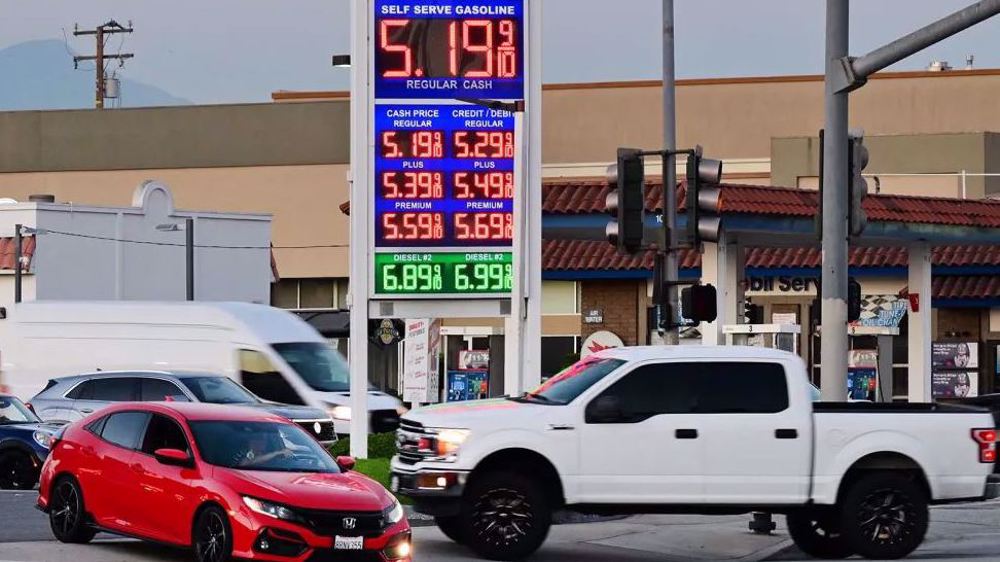
Before the war, around 130 vessels passed through the strait each day. Now only a few vessels pass through, and many of them conceal their identities to avoid detection. The average price of gasoline in the US has risen 38 percent since the start of the war, reaching $4.11 per gallon. For American voters heading toward the November midterm elections, this is a political headache Trump cannot afford.
Diplomatically, the prospects for reaching an agreement have become significantly darker. Reuters noted that Trump’s compensation demand “had not previously been raised.” The demand has now been added to Iran’s six conditions and represents yet another obstacle.
At its core, Trump’s $300 billion counter-demand is a stark admission – an admission that the US has lost, it does not hold any cards and it is desperate to mimic what Iran legitimately demands.
It admits that after five months of all-out war, the United States has failed on all fronts. It admits that Iran’s control over the Strait of Hormuz remains unbroken and unchallenged.
It admits that Washington’s only move left is to mirror Tehran’s demands and hope that it produces some results. When a so-called "superpower" is forced to copy the other side’s demand for compensation, when it must reach back 50 years to find a grievance because it cannot win the current war it launched, it smacks of frustration and desperation.
Iran, by contrast, has shown that it can outmaneuver the so-called "superpower" and all its allies. By linking the reopening of the strait to a comprehensive set of political and economic conditions, Tehran has transformed a military confrontation into a diplomatic negotiation on its own terms.
As Iranian Foreign Ministry spokesman Esmaeil Baghaei stressed: “It is the United States that must stop its illegal and destructive actions and make amends.”
The Strait of Hormuz remains effectively closed. Oil prices remain high. And Trump – who once vowed to “destroy Iranian civilization” – now finds himself in the position of asking Tehran for money.
Trump and his team should sooner accept the reality that the era of unilateralism has come to an end and that the Islamic Republic, with dignity and power, is the main player in this arena.
Maryam Bashirpour is a university researcher and writer based in Tehran.
(The views expressed in this article do not necessarily reflect those of Press TV)
New front will open if Iran is attacked again, Leader’s advisor warns
Iran, resistance forces to deliver ‘devastating’ response to any threat: Top cmdr.
From ‘How Will This End For Iran’ to ‘When America Walks Away’: A tale of two Economist covers



Iran warns regional states of Israel’s malicious intents following reports of Netanyahu UAE visit
Army spox: Saudi Arabia launches over 30 airstrikes across Yemen in 24 hours
VIDEO | News Review: Israel settlement expansion
Israel violates Gaza ceasefire over 5,100 times, kills 1,421 Palestinians: Gaza Media Office
VIDEO | Russia holds events under title of Iran’s Culture Week
Republicans distancing themselves from Trump ahead of US midterms
Pezeshkian: Expanding Iran-Azerbaijan rail, air links key to strengthening ties
Iranian engineering students hold lectures at US-bombed B1 mega-bridge


 PressTV NEWSLETTER
now
PressTV NEWSLETTER
now
 This makes it easy to access the Press TV website
