Profile: Mohsen Rezaei, pioneering IRGC commander and Iran’s new top security official
By Mina Mosallanejad
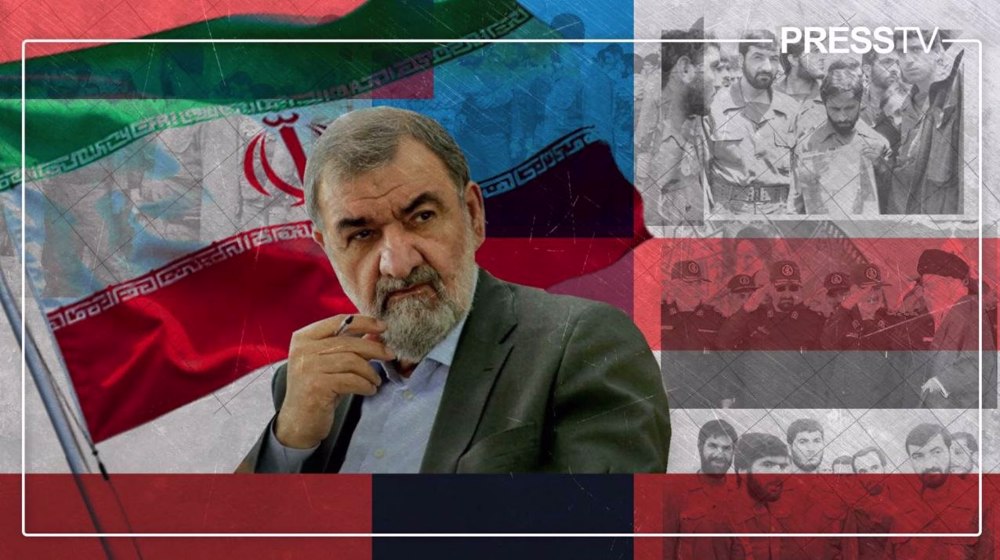
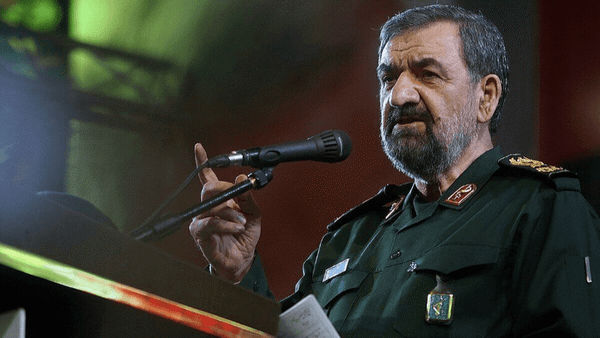
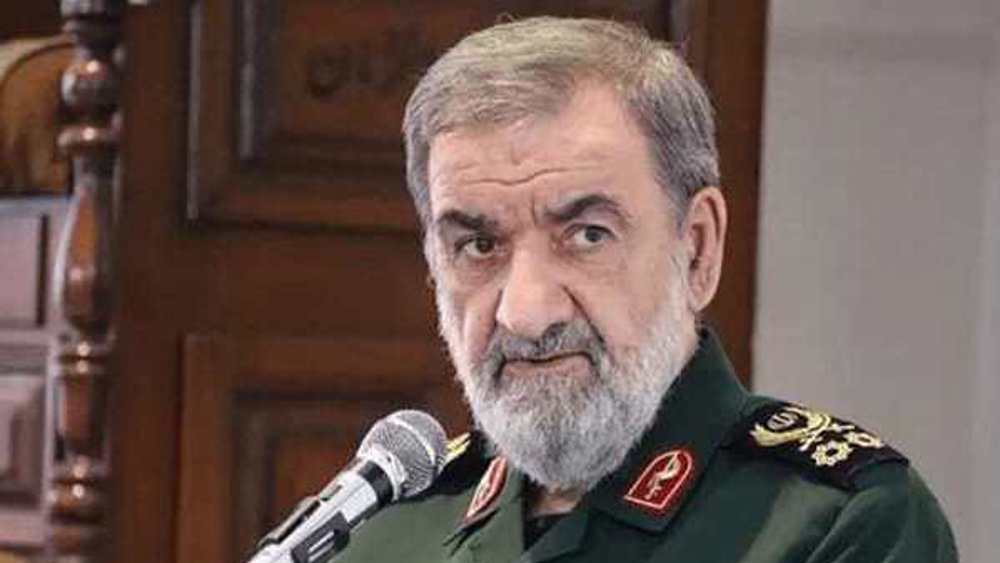
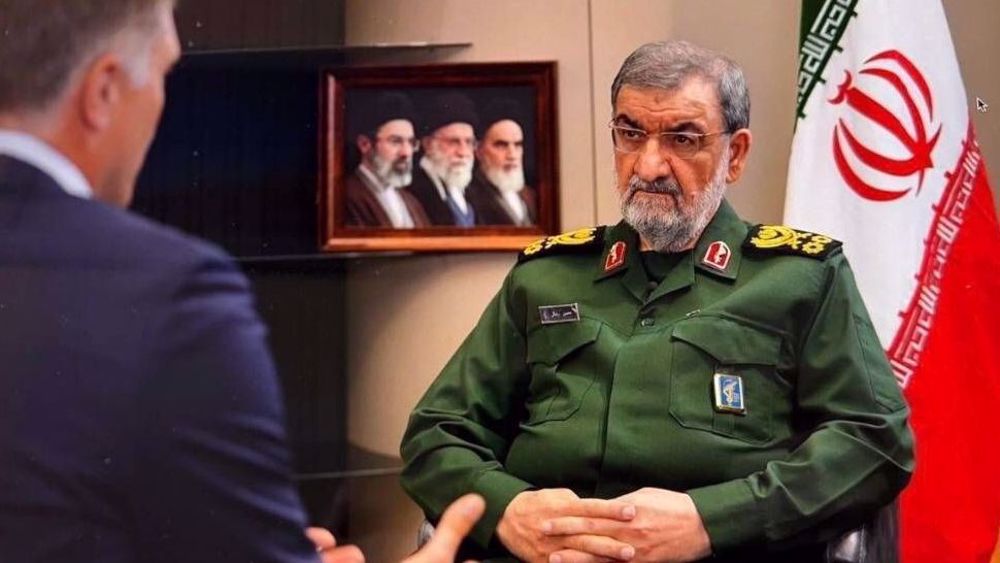
In a significant development, Major General Mohsen Rezaei, military adviser to the Leader of the Islamic Revolution Ayatollah Seyyed Mojtaba Hosseini Khamenei, has been appointed secretary of Iran’s Supreme National Security Council (SNSC).
He replaces Mohammad Bagher Zolqadr, who served in the post since March 2026.
In a decree on Sunday, President Masoud Pezeshkian appointed Rezaei as the new secretary of the Supreme National Security Council (SNSC).
Mehdi Tabatabaei, a spokesperson for the Iranian President's Office, announced the appointment, saying that Zolqadr had stepped down from the secretary position to assume a new responsibility.
Rezaei's appointment was formally announced in a decree issued by Ayatollah Khamenei on Sunday, citing Dr. Rezaei's extensive experience, particularly his role as a pioneering commander during the eight-year Sacred Defense (the Iran-Iraq War) in the 1980s.
A veteran commander of the Islamic Revolution Guards Corps (IRGC) and one of the most prominent military figures of the Islamic Republic, Rezaei has spent more than five decades at the heart of Iran’s political, security and military establishment.
From fighting against the Pahlavi regime as a young underground activist to commanding the IRGC throughout the eight-year war imposed in the 1980s and later serving as secretary of the Expediency Council, he has held some of the country’s most consequential positions.
His return to the center of Iran’s national-security apparatus marks another major chapter in his illustrious career spanning decades.
From underground activist to IRGC commander
Rezaei was born on September 1, 1954, in the village of Benehvar Baba Ahmad near Masjed Soleyman in northern Khuzestan province, as members of the Bakhtiari tribe were migrating toward their winter quarters.
In 1970, he enrolled at the Oil Industry Technical School in Ahvaz, where he became involved in religious and political activities.
He was arrested by SAVAK, the notorious secret police of the Pahlavi regime, in 1971 and spent six months in prison, including three months in solitary confinement.
During his imprisonment, Rezaei established contacts with activists from Khorramshahr and Dezful. The cooperation among these groups eventually contributed to the formation of Mansouroun, an underground organization opposed to the Shah regime.
He entered Iran’s University of Science and Technology in Tehran in 1973 to study mechanical engineering, but abandoned his studies as SAVAK intensified its crackdown on anti-regime groups.
He subsequently went underground and remained active in the anti-monarchy struggle until the 1979 Islamic Revolution.
When Imam Khomeini, the late founder of the Islamic Revolution, returned to Iran, Rezaei was among those involved in welcoming and protecting the Leader.
He was also one of 12 members tasked with drafting the founding charter of the IRGC.
In May 1979, with Imam Khomeini’s backing, Rezaei helped establish the IRGC’s intelligence organization and became its first commander, serving in that position until 1983.
The unit was established amid a wave of political violence and assassinations, including the assassination of prominent cleric Ayatollah Morteza Motahari and an unsuccessful attempt to assassinate senior official Akbar Hashemi Rafsanjani.
Wartime commander
In 1981, at the young age of 27, Rezaei was appointed commander-in-chief of the IRGC by Imam Khomeini. He remained in the position until 1997, becoming the IRGC’s longest-serving commander.
His tenure coincided with the most intense years of the 8-year imposed war on Iran by Iraq’s Ba’athist regime led by Saddam Hussein.
Under his command, Iranian forces carried out a series of major operations, including Operation Samen-ol-Aemeh, Tariq al-Quds, Fath al-Mobin and Beit-ol-Moqaddas, which resulted in the liberation of significant areas of Iranian territory occupied by Ba’athist forces.
Senior Iranian commander Major General Gholam-Ali Rashid, who was among those martyred in Israeli aggression in June, had praised Rezaei’s strategic and managerial abilities, describing his ability to understand battlefield developments, mobilize resources and break military deadlocks as among his defining characteristics.
“The young IRGC commander’s speed of understanding and power of persuasion set him apart from other commanders. Patience, composure, shrewdness, profound understanding, strategic and tactical insight into the enemy’s movements, and his strong command of the IRGC were among his distinctive and outstanding qualities,” Major General Rashid was quoted as saying.
According to Martyr Rashid, most commanders and senior officers will never match Rezaei in strategic thinking, command, crisis management, breaking deadlocks, or mobilizing forces and resources like a “devastating flood” and bringing them into the fight against the enemy.
“In the future, Mohsen Rezaei’s work and achievements will remain as a style and school of defense within the armed forces, and future commanders should proudly carry out their duties ‘in the Mohsen way.’”
During his years at the helm of the IRGC, Rezaei was also associated with the establishment and expansion of several of the force’s major institutions, including Imam Hossein University, the Khatam al-Anbiya Construction Headquarters and Baqiyatallah University of Medical Sciences.
He also played a role in the development of the IRGC’s three military branches and the establishment of the Quds Force.
From military command to economic and political power
After the war on Iran ended in 1988, Rezaei briefly returned to the University of Science and Technology but eventually abandoned mechanical engineering and began studying economics.
He later obtained a master’s degree and a Ph.D. in economics from the University of Tehran.
In 1997, following his departure from the IRGC command, he was appointed secretary of the Expediency Council by the martyred Leader of the Islamic Revolution, Ayatollah Seyyed Ali Khamenei.
In his decree appointing Rezaei as secretary of the Expediency Council, Ayatollah Khamenei wrote: “You truly devoted all your abilities during this period to building and developing an organization whose greatness, efficiency, sacrifice and revolutionary spirit had captured the attention of analysts around the world, transforming a group of young people devoted to Islam, the Revolution and the Imam into a mature and thriving institution.”
He held the position for more than two decades. During this period, he became involved in long-term economic and strategic policymaking, including work on Iran’s 20-year national vision document, foreign investment policies and the implementation of Article 44 of the Constitution.
He also entered electoral politics, running for parliament in Tehran in 1999 and later contesting Iran’s presidential elections four times. He withdrew from the 2005 presidential race shortly before voting, while remaining in the 2009, 2013 and 2021 elections.
In August 2021, then-President Ebrahim Raisi appointed Rezaei as his vice president for economic affairs, secretary of the Supreme Council of Economic Coordination and secretary of the government’s Economic Headquarters.
The United States Treasury Department sanctioned Rezaei in 2020.
Rezaei is the recipient of three Gold Fat’h Medals, making him the record holder for the highest number of Gold Fat’h 1 medals. He was also among the first commanders to receive the medal in 1989.
The Fat’h Medal is an Iranian state military decoration awarded by the Leader to military personnel for major battlefield victories or significant military achievements. It is presented in three grades: Gold (Fat’h 1), Silver (Fat’h 2), and Bronze (Fat’h 3).
In March 2026, Ayatollah Seyyed Mojtaba Khamenei, the third Leader of the Islamic Revolution, appointed Rezaei as his military adviser, bringing the veteran commander back into a prominent national-security role.
Now, with his appointment as secretary of the Supreme National Security Council, Rezaei returns to one of the Islamic Republic’s most sensitive strategic posts — bringing with him decades of experience spanning revolutionary struggle, military command, wartime strategy, intelligence, economic policymaking and the highest levels of Iran’s political establishment.
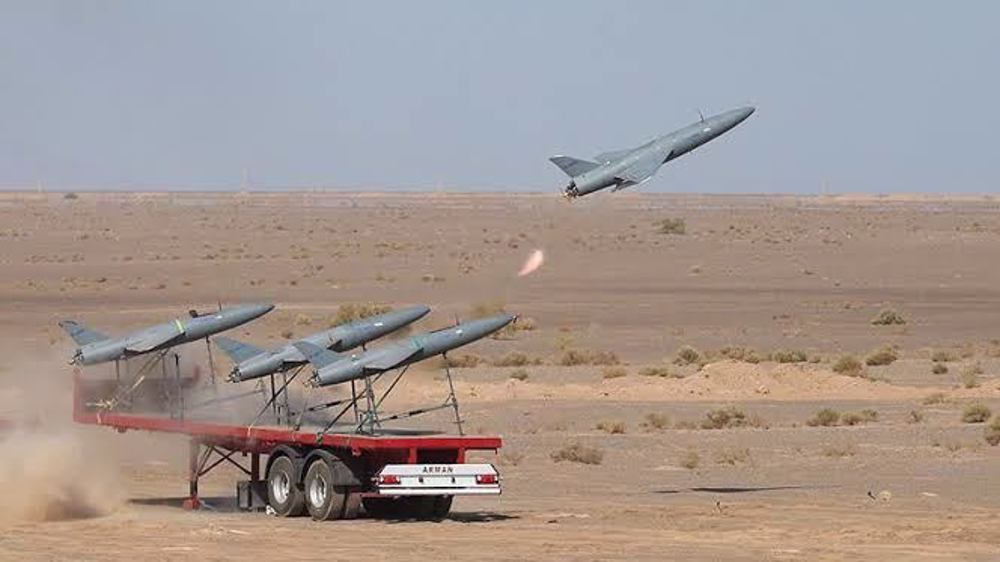
Iran reconfigures military capabilities, upgrades Arash drone for battlefield: Army
President Pezeshkian UN speech
Martyr Soleimani’s portrait confronts Gaza butcher as world walks out on Netanyahu at UN



Iran FM outlines seven-day plan for conditional reopening of Strait of Hormuz
Saudi Arabia has kept nuclear weapons option open: Report
VIDEO | 26th ICCU focuses on future of cardiovascular medicine
VIDEO | UN officials say US sanctions on Cuba are having warlike effects on locals
Gharibabadi: International law’s credibility hinges on states’ equality before the law
UN expands list of companies linked to illegal Israeli settlements
Escalating violence in Yemen displaces 71,000 children, exacerbates malnutrition: UNICEF
ECO can play greater role in regional peace, economic integration: Araghchi


 PressTV NEWSLETTER
now
PressTV NEWSLETTER
now
 This makes it easy to access the Press TV website
