‘Football for sale’: How Infantino's Trump-backed investment plan is tearing apart FIFA after World Cup fiasco
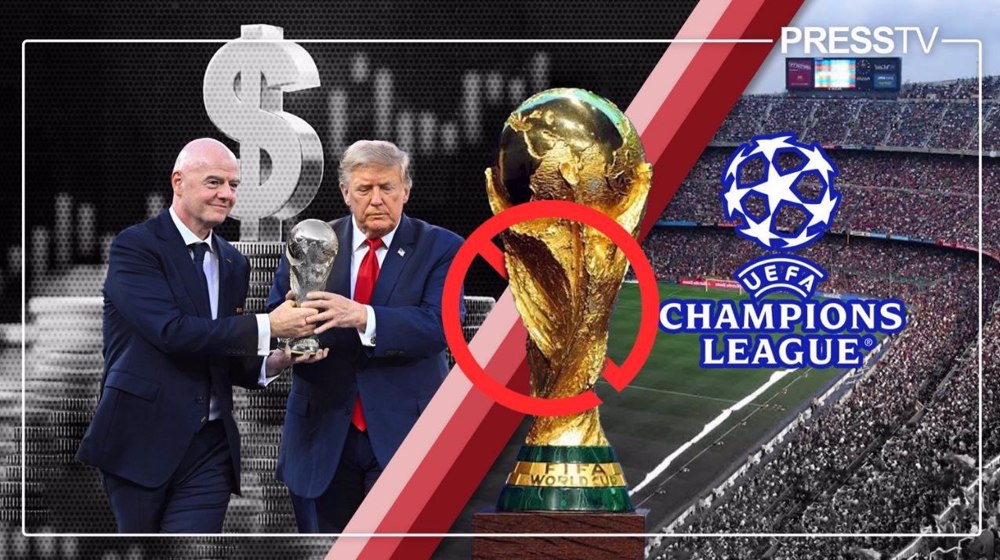
By Mohammad Ali Haqshenas
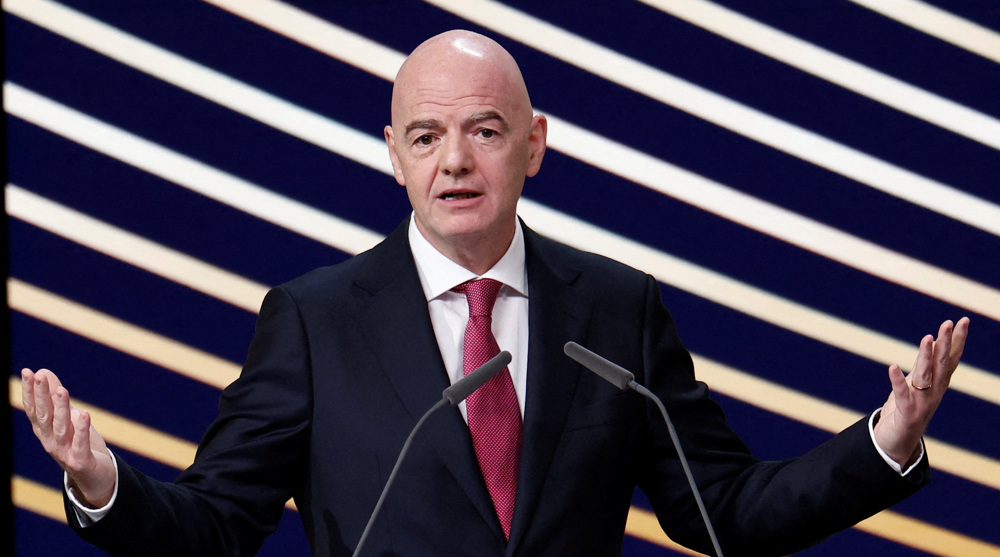
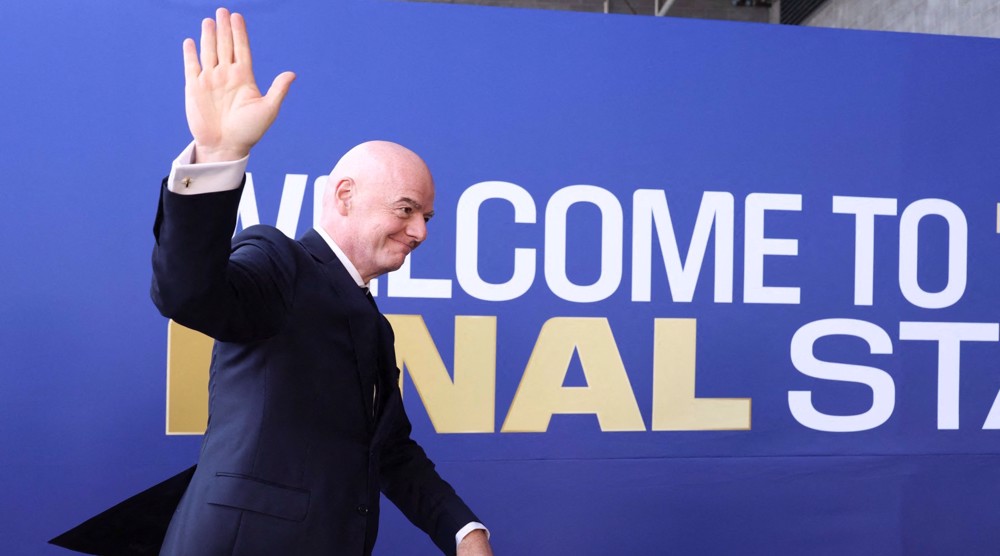
FIFA president Gianni Infantino is pushing ahead with controversial plans to sell a stake in football's biggest tournament – the World Cup – to private investors, triggering a massive backlash.
Football fans and administrators believe the World Cup was never his to sell and say his increasingly close relationship with US President Donald Trump makes the proposal deeply problematic.
For more than a decade, Infantino has led world football with an increasingly centralized style of governance, often disregarding meaningful oversight and concentrating decision-making in his own hands.
This week, that approach again became apparent with his proposal to sell a 20 percent stake in FIFA's commercial business to outside investors, led by a financier whose family has close ties to the White House.
The reaction was swift, fierce, and unusually united. Global football confederations, officials, and football fans questioned not only the substance of the deal but also the process behind it, reviving a question that has shadowed Infantino's presidency for months: whose interests is FIFA's president really serving?
The investment proposal
On Tuesday, FIFA revealed plans to create the so-called FIFA Forward Enterprise (FFE), a new commercial subsidiary that would house the governing body's most valuable revenue-generating assets, including broadcasting rights, sponsorships, ticketing, licensing, and the commercial operations of its tournaments.
Under the plan, FIFA would sell a minority, non-controlling stake worth up to $4.2 billion to private investors, valuing the new entity at around $20 billion.
Infantino coupled the announcement with a firm deadline. In a letter to FIFA's 211 member associations, first reported by the Associated Press, he told federations they had until September 19 to decide whether to participate in the scheme. Those that signed on would receive a one-time payment of $20 million as part of the transaction.
The letter described the proposal as "a singular and unique funding opportunity," with Infantino arguing that it was his responsibility as FIFA president to bring such "game-changing opportunities" before the organization's members.
The financial incentives are difficult to ignore. Federations that join the new structure would receive $20 million every four-year cycle beginning with the 2030 World Cup, amounting to as much as $86 million over twelve years. Those that decline would instead receive the previously promised $10 million per cycle – roughly $36 million over the same period.
FIFA has insisted the sale would not dilute its authority over the game. A spokesperson said the football governing body would "retain sole control over football governance, competitions, the international match calendar and all sporting and regulatory decisions," while investors would hold interests only in the commercial subsidiary.
For many critics, however, the proposal represents something very different: a multibillion-dollar deal negotiated behind closed doors, presented to football's stakeholders with little consultation and under intense time pressure.
The deadline, they argue, leaves member associations with a difficult choice – accept the deal or walk away from tens of millions of dollars. As Sky Sports News noted, the arithmetic is simple: how many federations can realistically afford to say no?
‘Not FIFA’s to sell’: UEFA revolts against FIFA’s Trump-linked $ 20bn privatization planhttps://t.co/63ipS51HZg
— PressTV Extra (@PresstvExtra) July 28, 2026
A growing alliance between Infantino and Trump
The identity of FFE's lead investor has done almost as much to inflame the controversy as the mechanics of the deal itself.
The proposal is being bankrolled by Thrive Capital, the venture capital firm founded by Joshua Kushner, the brother of Jared Kushner, Donald Trump's son-in-law. J.P. Morgan is serving as financial adviser and is expected to assemble the wider investor consortium.
The Kushner family's close ties to the president are difficult to ignore. Charles Kushner, the brothers' father, was pardoned by Trump before being appointed US ambassador to France.
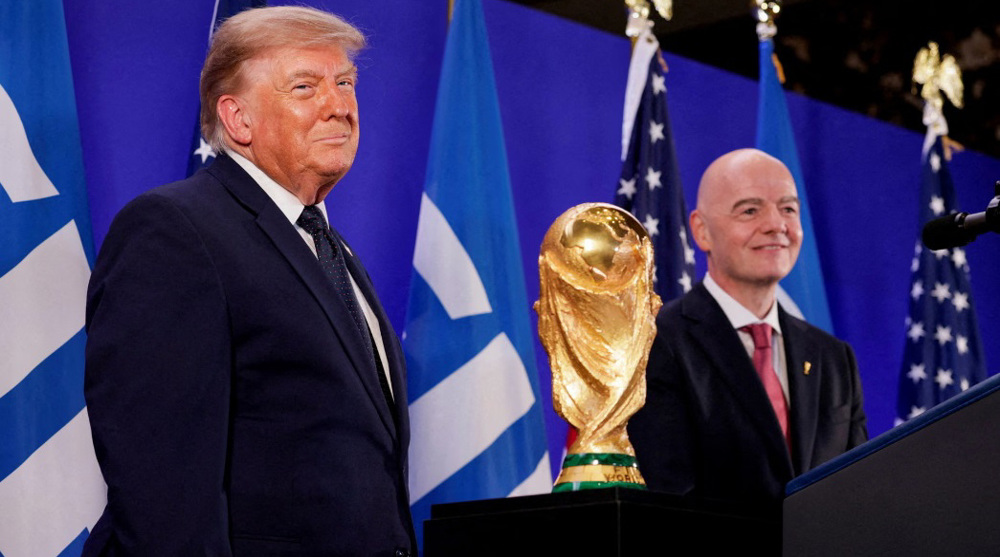
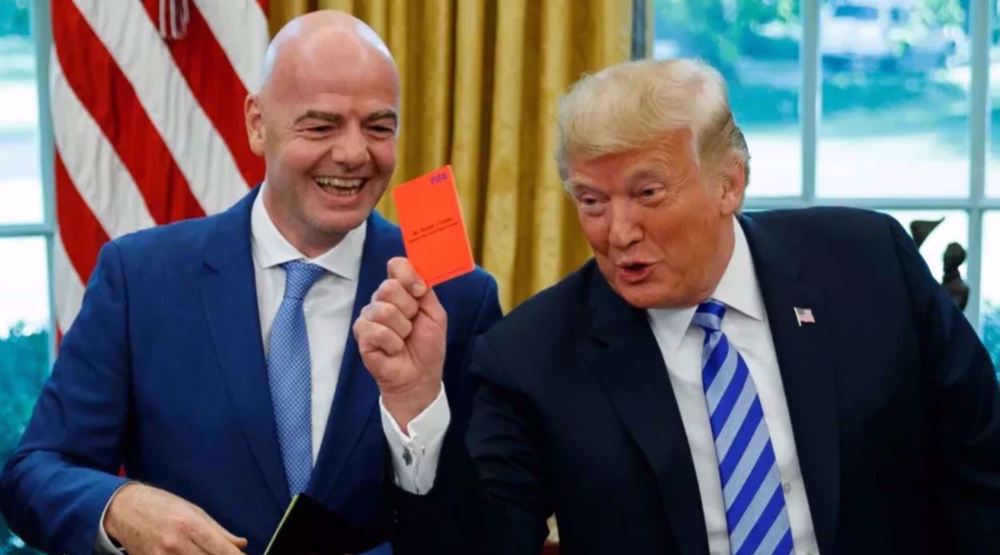
For Infantino, the investment proposal is the latest chapter in an increasingly close relationship with Trump. Over the past year, the FIFA president has emerged as one of the US president's most prominent allies in global sport: making frequent visits to the Oval Office, appearing alongside Trump at the ceremony establishing the so-called "Board of Peace," and creating a new FIFA Peace Prize, which he presented to the US president at the Kennedy Center during the 2026 World Cup draw in December.
Officially titled the "FIFA Peace Prize: Football Unites the World," the award was announced only weeks after Trump was passed over for the Nobel Peace Prize. Infantino had previously written on his personal Instagram account that Trump deserved the Nobel.
No nomination process, shortlist or judging criteria were ever made public, and senior FIFA officials said they were caught off guard by the announcement, which had not been discussed by the FIFA Council.
The award drew sharp criticism from human rights organizations. The advocacy group FairSquare filed an ethics complaint against Infantino, arguing that presenting the prize to a sitting political leader and a war criminal was "in and of itself a clear breach of FIFA's duty of neutrality." It added that if Infantino had acted unilaterally and without statutory authority, the decision should be regarded as "an egregious abuse of power."
Craig Mokhiber, a former United Nations official who has campaigned for Israel's suspension from world football, described the decision as a "truly shameful development." Football journalist Zach Lowy likened it to "giving Luis Suarez a prize for not biting people's ears off."
Infantino has remained unapologetic. Defending the award in an interview with Sky News, he said Trump "objectively" deserved the honor, adding that "whatever we can do to help peace in the world, we should be doing it."
Since then, the relationship has taken on an even more political dimension. During the World Cup, Trump personally called Infantino to request a review of American striker Folarin Balogun's suspension. FIFA subsequently overturned the ban, insisting the decision was reached independently.
During the World Cup, co-hosted by the US, many players, officials and referees faced harassment and logistical problems, including Team Melli. Still, Infantino failed to put pressure on the American authorities because of his ties with Trump.
That episode, together with FIFA's decision to lease office space in Trump Tower, is now at the center of a formal congressional inquiry, outlined below, which notes that FIFA's actions may have been "designed to induce" favorable treatment from the Trump administration.
‼️ AFC joins UEFA in criticizing FIFA: “Why weren’t we consulted?”
— Press TV Sports (@presstvsports) July 29, 2026
Opposition is growing to FIFA’s proposal to sell a stake in the World Cup to private investors. After UEFA warned that it could boycott the tournament, the AFC has also voiced its concerns.@presstvsports pic.twitter.com/XeKo2Eloi8
UEFA's and others' opposition
If Infantino hoped the proposal would pass quietly through FIFA's Council, the reaction quickly proved otherwise. UEFA, European football's governing body, issued a statement so forceful that few in the sport could recall a comparable rebuke.
"This crosses a line that football's governing institutions should never cross," UEFA said. "The soul and governance of football are not assets to trade, especially with zero transparency as to who gains financially. None of us are the owners of football. It is not FIFA's to sell."
At an emergency meeting on Thursday, UEFA's 55 member associations unanimously agreed to boycott all FIFA competitions, including the World Cup, for as long as Infantino's investment plan remains on the table.
The threat echoed the pressure campaign that derailed Infantino's 2021 proposal for a biennial World Cup, as well as the resistance that ultimately sank the European Super League – another project once backed by J.P. Morgan.
The opposition was not confined to Europe. The Confederation of North, Central America and Caribbean Association Football (CONCACAF) said it was "deeply concerned by the lack of due process," noting that the proposal had "entered the public domain" before its members had been given an opportunity to examine it. The 41-member confederation later announced that it would reject the plan.
The Asian Football Confederation (AFC) voiced similar frustration at being sidelined. It called for an "urgent review" of FIFA's governance, saying it stands in solidarity with UEFA and CONCACAF and pointing to "fundamental weaknesses in FIFA's consultation and decision-making processes that must now be addressed."
The European Club Association (ECA), which jointly manages the Champions League with UEFA, said it had "learned about this proposal in the same way as most global football stakeholders: without warning and through the media."
England's Football Association said it had been "completely unaware" of the proposal and was "deeply concerned about the lack of process and governance."
Political leaders also joined the criticism. British Prime Minister Andy Burnham said: "Football does not belong to investors. Once you have sold a piece of the World Cup, you have sold out. Football belongs to the fans."
Later on Friday, Burnham went further, calling on Infantino to resign over the proposal.
"My view is strengthening — this was an outrageous suggestion. The idea that it could even be brought forward, in my view, shows that the FIFA president is the wrong man to lead the organization," he said.
Sports governance scholar Antoine Duval warned that the deal could "incentivize FIFA to further commodify the World Cup," arguing that the pursuit of investor returns could drive more commercially driven changes, from additional hydration breaks to dynamic ticket pricing.
⚽️ UEFA and its 55 members have reiterated they will boycott the 2030 World Cup if FIFA proceeds with plans to sell a stake in its commercial rights to private investors.
— Press TV Sports (@presstvsports) July 31, 2026
It marks a major escalation in the dispute over the future governance of world football.@presstvsports pic.twitter.com/rgeaE3P5cK
A tournament overshadowed by controversy
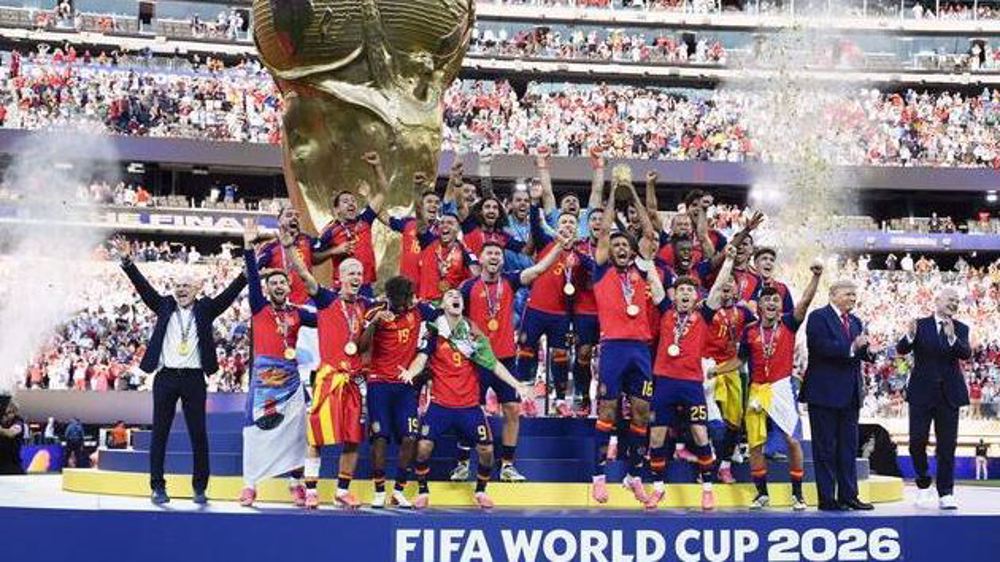
The investment proposal did not emerge in a vacuum. It came at the end of a 2026 World Cup already overshadowed by persistent questions about FIFA's independence and its increasingly close relationship with Washington.
UEFA president Aleksander Čeferin skipped the World Cup final in protest over governance failures, chief among them FIFA's handling of the Balogun case, the episode in which a phone call from Trump appeared to precede the reversal of an American player's suspension.
At the same time, several participating countries, including Iran, were affected by US travel restrictions that FIFA did little to challenge.
US authorities required Iran's squad to enter the country no more than 24 hours before each match and leave on the same day, forcing the team to base itself across the border in Mexico and commute for all three group-stage fixtures. Iran coach Amir Ghalenoei described the arrangement as making his side "the most oppressed" team at the tournament.
The travel regime deprived Iranian players of any meaningful recovery time between international travel and competition, a burden no other team was required to bear.
Iran lodged a formal complaint with FIFA, but the governing body's public response was silence. It did not immediately answer routine media requests for comment, nor did it publicly intervene on behalf of one of its member associations.
Juxtaposed with Infantino's reported willingness to personally engage with the same US administration over the disputed suspension of a single American player, FIFA's response struck many critics as markedly uneven. To them, the contrast suggested not institutional neutrality but selective advocacy, active when the issue concerned the host nation, absent when the consequences fell on a member association at odds with Washington.
⚽️ Gianni Infantino, the embattled FIFA president, has given members a 53-day deadline to back his plans to sell stakes in the World Cup or face a 75 per cent reduction in funding, reports The Telegraph.@presstvsports pic.twitter.com/tHxz9t1kud
— Press TV Sports (@presstvsports) July 29, 2026
Congress steps in
The controversy has since escalated into a formal political inquiry. Representative Jamie Raskin, the ranking Democrat on the House Judiciary Committee, has written to FIFA demanding records of anything of value provided to Donald Trump, members of his administration, or the Trump Organization.
He has also requested visitor logs from FIFA's Miami and New York offices, along with preserved communications, including messages exchanged via Signal, Telegram and WhatsApp, between FIFA personnel and anyone connected to the Trump administration or presidential transition.
Raskin's letter also questions the Department of Justice's decision to dismiss long-running indictments stemming from the 2015 FIFA corruption scandal, suggesting the timing warrants scrutiny over whether FIFA's outreach to Trump influenced the outcome.
A central focus of the inquiry is FIFA's decision to lease office space on the 17th floor of Trump Tower in Manhattan. Raskin noted that the office would ordinarily command roughly $600,000 a year in rent, although FIFA maintains it is paying the market rate.
The congressman has also revived scrutiny of FIFA's World Cup ticketing policies, which are already under investigation by several US state attorneys general after dynamic pricing drove some ticket prices far beyond what supporters had been led to expect.
Raskin described the arrangement as "unlawful" and accused FIFA of exploiting its "newfound favored status" with the administration.
Committee investigators have given FIFA until August 9 to produce the requested documents and arrange a transcribed interview with Infantino. Compelling the FIFA president to testify, however, would require bipartisan support in the Republican-controlled House.
Taken individually, each episode could be dismissed as a separate controversy: an investment proposal, a controversial award, a disputed suspension, a congressional investigation. But critics argue that viewing them individually misses the broader pattern they believe has emerged.
For those opponents, the question is no longer whether these episodes are connected, but whether they reflect a broader shift in FIFA's priorities, one in which political relationships and commercial ambition are becoming increasingly difficult to separate.

Iran tops Asian Youth Karate Championships with 31-medal haul

Iran’s Rahimi wins gold at 2026 World Archery Para Series in India
Iran adds two more gold medals at 2026 World Nomad Games



Trump bars CNN, MS NOW and Politico from White House for ‘fake news’
Discover Iran: Tabriz, where Iran’s Silk Road legacy meets industry, trade and a new economic future
Sirens blare in Riyadh, across Saudi Arabia amid amid Yemeni retaliatory strikes
New images reveal severe destruction at US base in Kuwait after Iranian strikes
Israeli strike on motorcycle kills Palestinian in Gaza City, injures child
VIDEO | Russians head to polls as 3-day parliamentary elections kick off
VIDEO | South Korean president drops Hormuz deployment plan amid protests
VIDEO | Yemenis slam Saudi claims of targeting holy city of Mecca


 PressTV NEWSLETTER
now
PressTV NEWSLETTER
now
 This makes it easy to access the Press TV website
