Iran urges SCO to take firm stance against US unilateralism, aggression
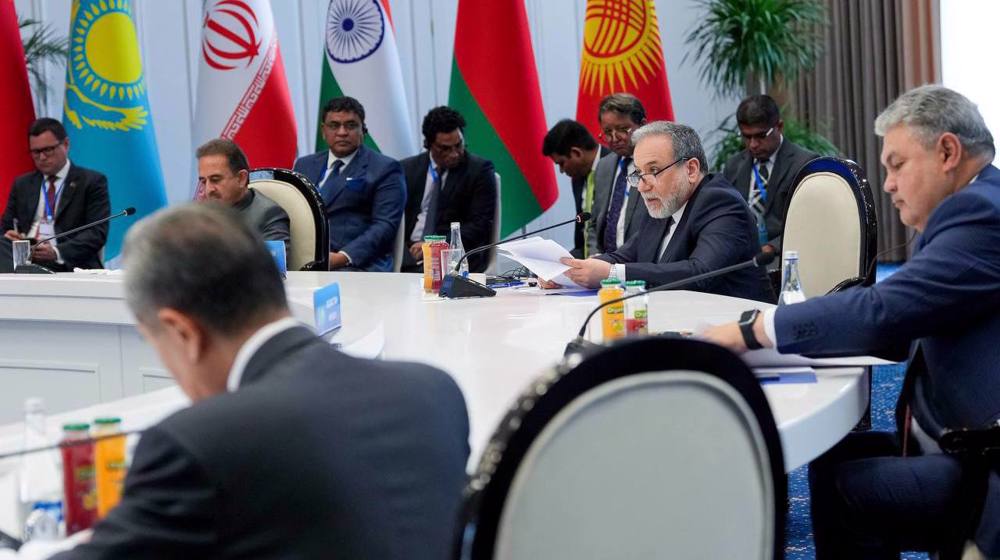
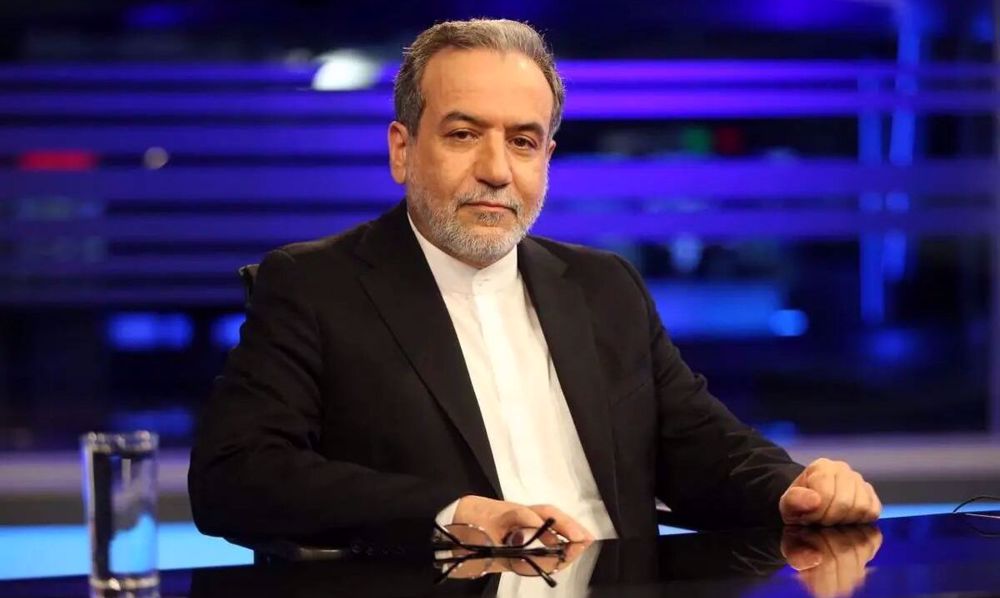
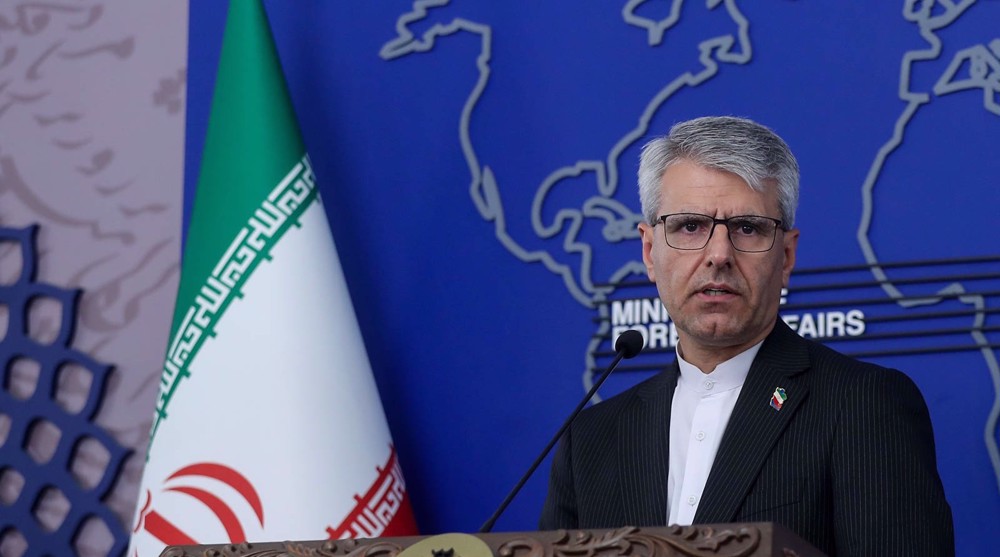
Iranian Foreign Minister Abbas Araghchi has called on the Shanghai Cooperation Organization (SCO) to take a firm stand against unilateralism and defend the principles of international law, saying the bloc should become a leading voice for multilateralism and respect for state sovereignty.
Addressing the SCO Council of Foreign Ministers meeting in Cholpon-Ata, Kyrgyzstan, on Friday, said that the bloc stands at “a decisive moment in the evolution of the international system.”
"The world is facing unprecedented challenges, including the expansion of unchecked unilateralism, the erosion of the fundamental principles of the United Nations Charter, the unlawful use of force, the imposition of unilateral and excessive sanctions, and the instrumentalization of economic and financial mechanisms to exert political pressure,” he said.
Under such circumstances, the responsibility of the Shanghai Cooperation Organization, as one of the world's most important transregional institutions encompassing a significant share of the global population, economy, energy resources and strategic capabilities, has become more important than ever, he added.
“This organization can and must become a strong voice in defense of multilateralism, respect for national sovereignty, the equality of states, and the rule of law in international relations,” Araghchi said.
🔴 Iran's FM Araghchi addresses Shanghai Cooperation Organization Council of Foreign Ministers Meeting:
— Press TV 🔻 (@PressTV) July 24, 2026
🔺 Iran has shown it is not initiator of any war; regional security depends on not using double standards pic.twitter.com/WJuIf70Cl7
Iran warns over ‘normalization’ of committing crimes
The minister said Iran had once again become the target of overt military aggression by the United States and Israel. He said attacks that began in June 2025 were followed by a renewed wave of aggression between February and April 2026, undermining not only Iran's security but also the credibility of the international legal order.
He said Iran experienced one of the “most bitter” days in its history on Feb. 28, 2026, when the late Leader of the Islamic Revolution Martyr Ayatollah Seyyed Ali Khamenei was assassinated along with members of his family during an attack on his office.
Araghchi also referred to an attack on a school in the southern city of Minab that killed 168 students, school staff and family members, as well as a strike on a stadium in Lamerd, where young female athletes were killed with weapons whose use violated the principles of international humanitarian law.
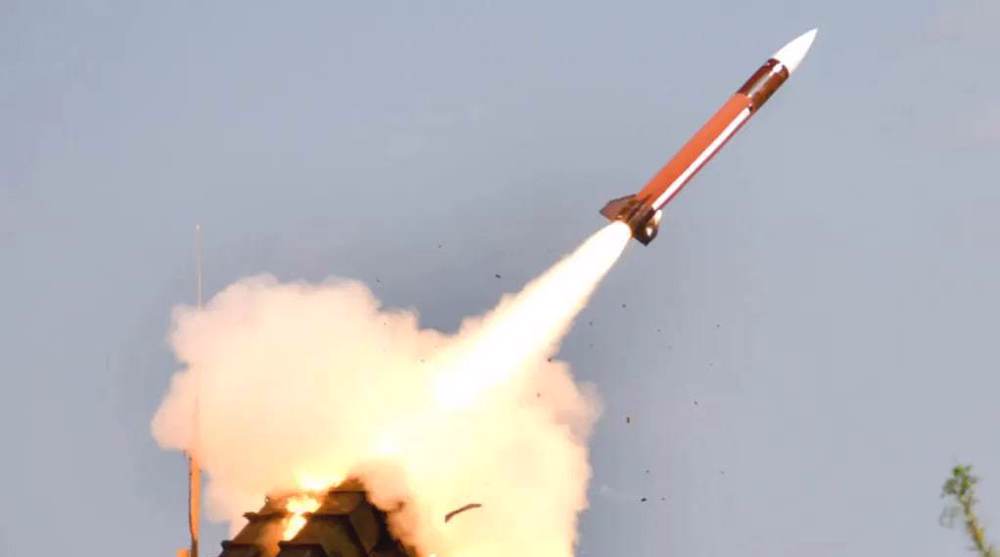
A less spoken tragedy: the deadly US strike on Lamerd, Iran, with PrSM missiles
— Press TV 🔻 (@PressTV) June 24, 2026
Follow https://t.co/B3zXG73Jym pic.twitter.com/W7nnzWwVVI
He noted that attacks on schools, hospitals, civilian infrastructure and peaceful nuclear facilities under International Atomic Energy Agency supervision, if left unanswered by the international community, would “leave no country immune from similar acts.”
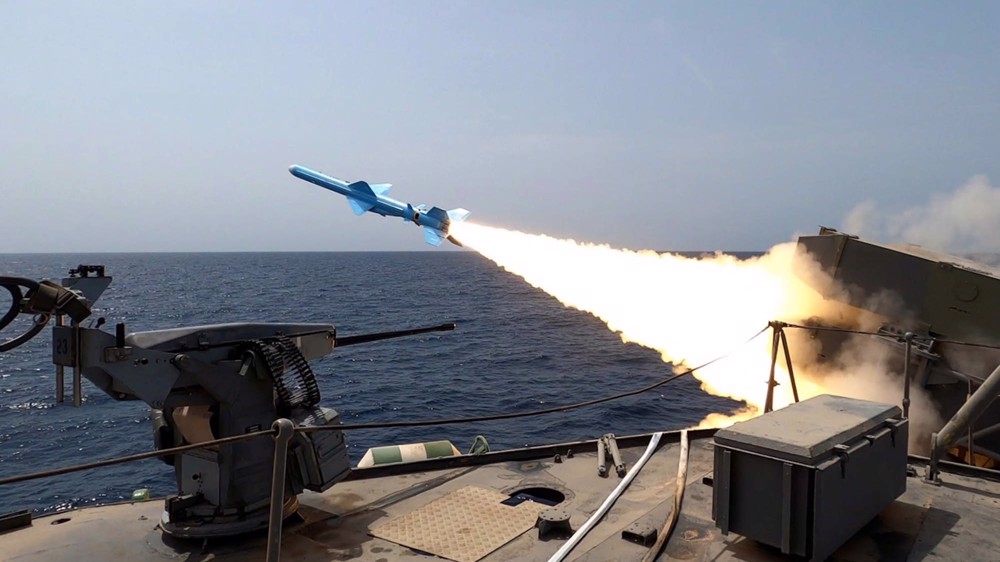
Those attacks triggered Operation True Promise 4, during which Iranian armed forces struck US and Israeli military assets across the region. The defensive operation began immediately after the February 28 attacks and was followed by Iran’s imposition of restrictions on the Strait of Hormuz.
“Perhaps the most painful development after the commission of such crimes is the attempt to normalize them. Contemporary experience has shown that crime, if met with silence, ambiguity or indifference by the international community, will not only fail to stop but will become a model for repetition,” Araghchi said.
“Responsibility for such crimes does not rest solely with their direct perpetrators,” he said, adding, “Any political, military or intelligence support for the aggressors, and even silence or ambiguous positions in the face of such blatant violations of international law, will weaken the rule of law and encourage the perpetrators to repeat such unlawful conduct."
How would you feel if they killed your children?: US veteran confronts America over Minab school massacrehttps://t.co/IifKMHjBA2
— PressTV Extra (@PresstvExtra) May 22, 2026
US violating its commitments
Araghchi said the attacks against Iran represented not merely a threat to one country's national security but a challenge to the legal principles underpinning the international order.
He said Iran exercised its inherent right to self-defense under Article 51 of the UN Charter while maintaining that the country has never initiated a war and remains committed to dialogue, diplomacy, good-neighborliness and regional cooperation.
He said sustainable peace requires replacing aggression, occupation, threats and double standards with mutual respect, impartial implementation of international law and genuine adherence to international commitments.
Just few weeks after inking the Islamabad Memorandum to end the war on June 17, the “has once again demonstrated that it does not abide by its commitments,” noted the minister.
“The blatant violation of the provisions of this memorandum, attacks on transportation infrastructure, drinking water facilities, fishing boats, local commercial vessels, meteorological centers and other civilian infrastructure constitute clear violations of international law and international humanitarian law and a vivid example of the continued policy of resorting to force and disregard for international obligations,” he added.
"Worthless & Unreliable"
— PressTV Extra (@PresstvExtra) July 19, 2026
Tehran has unveiled banners quoting the Leader's remark that the US president's signature is "worthless and unreliable," following the repeated US violations of the Islamabad MoU.
Follow https://t.co/0EMmcJs6DL pic.twitter.com/AyLGhcFqjK
Washington violated the Islamabad Memorandum soon after it entered into force. The understanding required Iran to reopen the Strait of Hormuz after restricting vessels linked to aggressors and their supporters, but the United States later attempted to undermine the arrangement by establishing an unauthorized maritime route, prompting a legitimate response.
Acts of aggression by the US military in the past two weeks against southern Iranian provinces have damaged civilian infrastructure, including bridges and water desalination facilities, and killed more than 50 people.
Araghchi maintained that “the direct intervention of the United States in implementing the security and maritime arrangements in the Strait of Hormuz and the reimposition of a naval blockade once again endangered the security of one of the world's most important strategic waterways and disrupted the normal flow of international commercial shipping.”
The experience of recent months has clearly shown that security in the Persian Gulf and the Strait of Hormuz can be guaranteed “not through the presence and intervention of extra-regional forces, but through cooperation among regional countries, mutual respect and shared responsibility,” he added.
Iran's Khatam al-Anbiya Central Headquarters says that the Strait of Hormuz remains closed, and if any vessel is to pass through the Strait, it must only do so via the designated route and in accordance with the previously announced arrangements. pic.twitter.com/DrsuRCvYvK
— PressTV Extra (@PresstvExtra) July 22, 2026
Source of threats against Iran are ‘legitimate targets’
Reiterating Iran’s determination to defend its sovereignty, Araghchi emphasized that “any participation, cooperation or assistance in committing aggression against Iran will entail international responsibility for the parties concerned.”
“In accordance with international law, the Islamic Republic of Iran reserves its right to take all necessary measures within the framework of legitimate self-defense and will regard the source of any aggression against the Iranian nation as a legitimate target of defensive measures by its armed forces,” he said.
Expanding SCO economic cooperation
Turning to the SCO's future, Araghchi praised the organization's achievements over the past 25 years and called for a broader economic agenda alongside its political and security role.
He said the bloc could strengthen independent economic cooperation, make regional supply chains more resilient, expand trade and facilitate economic connectivity among member states.
He also urged greater cooperation in banking, finance, investment, transportation and transit while making better use of members' energy and technological capabilities.
Iran, he said, is ready to contribute its strategic geographic position, transport corridors, energy resources and regional trade links to advance those goals.
Araghchi urged SCO members to stand together in defense of international law and reject the replacement of diplomacy with force.
He said the organization should be at the forefront of efforts to uphold the rule of law, sovereign equality, respect for national independence and the dignity of nations, arguing that only through such unity can a more secure, stable and just international order be achieved.
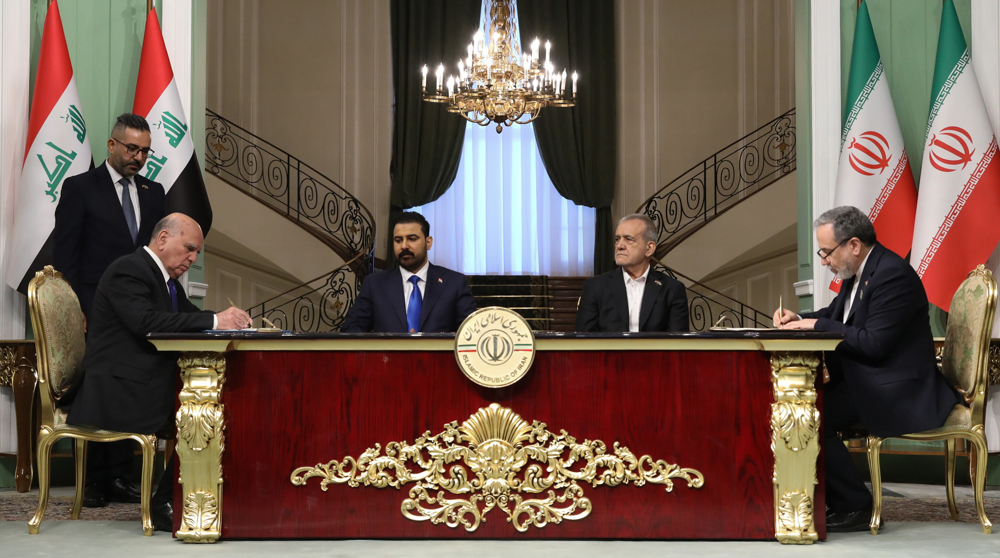
Iraq, Iran agree to deepen strategic partnership as PM Zaidi ends visit
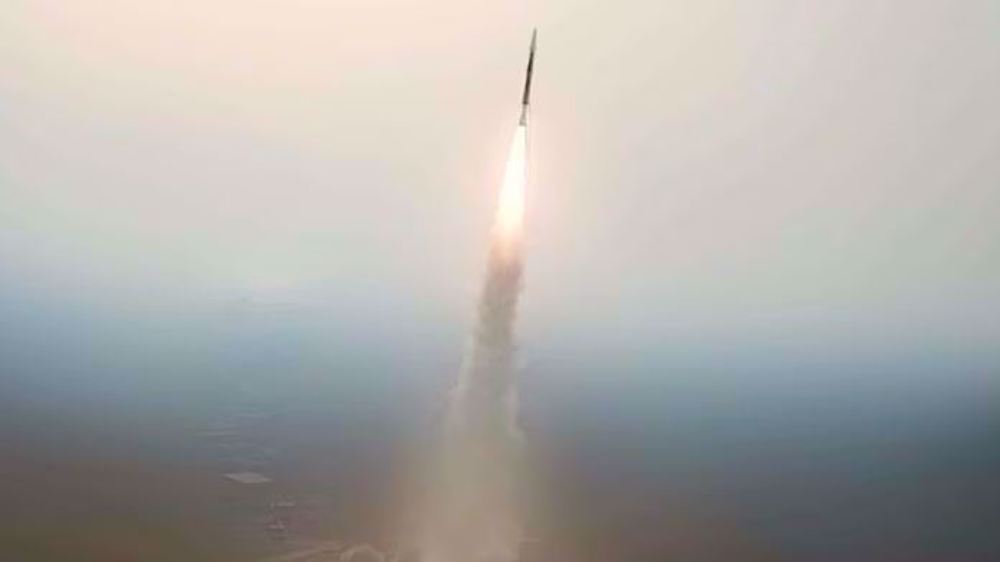
Iran demands GCC response to US claim of 'serving side by side' in aggression
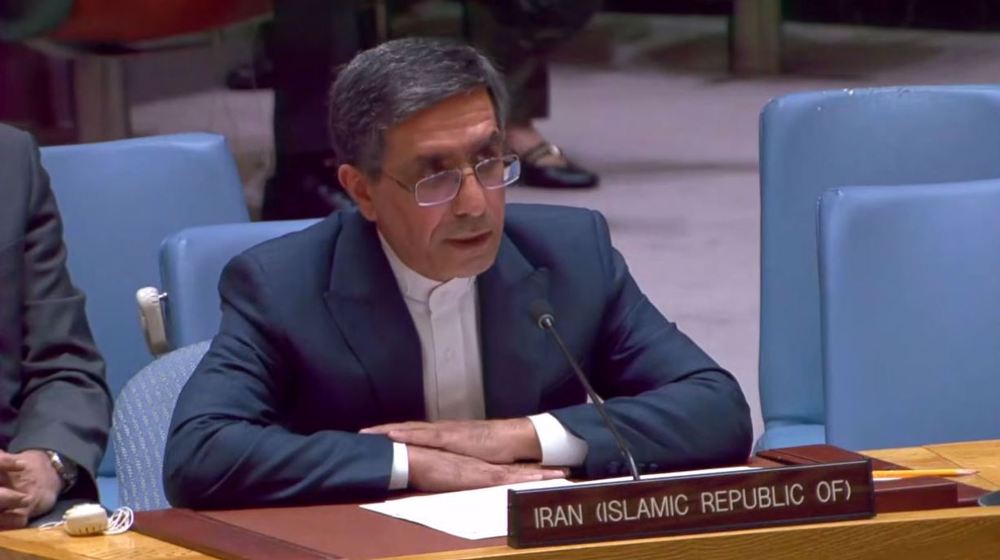
At UN, Iran defends retaliation, urges Security Council to end US aggression



VIDEO | Press TV's news headlines
Iran rejects ‘misleading’ NYT claims of US ceasefire proposal carried by Iraqi PM
Iran urges SCO to take firm stance against US unilateralism, aggression
Iran’s Army targets American bases in Bahrain, Jordan as US war continues
VIDEO | Fallout from US-Israeli war on Iran threatens EU economy
Iraq, Iran agree to deepen strategic partnership as PM Zaidi ends visit
Iranian border guards eliminate two terrorists in southeast border clash
Iran demands GCC response to US claim of 'serving side by side' in aggression



 PressTV NEWSLETTER
now
PressTV NEWSLETTER
now
 This makes it easy to access the Press TV website
