Dark nights for US radars: Iran's precision strikes cripple US air defense network across West Asia
By Yousef Ramazani
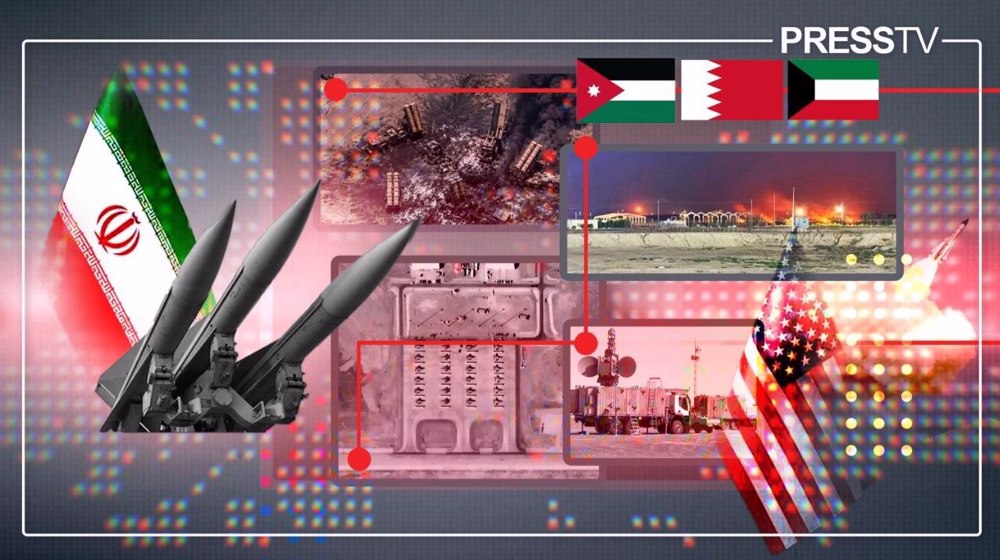
In a series of unprecedented operations this week, the Islamic Revolution Guards Corps (IRGC) and the Islamic Republic of Iran Army executed coordinated strikes that systematically dismantled American radar and air defense architecture across the West Asia region.
The high-precision and calculated strikes targeted US radar systems in Kuwait, Bahrain, Jordan, and Oman in what Iranian military officials and military analysts described as "dark nights" for US surveillance capabilities throughout the region, particularly around July 21-22.
The IRGC announced devastating strikes against American military radar and air defense installations across West Asia in response to the ongoing US military aggression against military and civilian infrastructure in southern Iran.
Conducted as part of the 24th wave of Operation Nasr-2 and coordinated with the Army's Operation Sa'eqeh, the operations targeted the foundational infrastructure of America's military footprint in the region, including some of the most prized radar systems.
From the destruction of long-range surveillance radars in Kuwait to the elimination of Patriot air defense systems in Bahrain, from the disabling of missile defense radar in Jordan to the targeting of maritime control systems in Oman, Iranian forces have systematically blinded a US military network assembled over decades.
The precision of these strikes – confirmed by satellite imagery and independent and open-source analysis – demonstrates Iran's advanced capability to identify and neutralize high-value strategic assets, fundamentally altering the regional balance of power and sending a message to the child-murdering American regime that its presence in the region is no longer tenable.
Official IRGC announcements
On July 21, the IRGC Public Relations Department issued a series of statements announcing the successful targeting of multiple American radar and air defense systems across the region.
The IRGC declared that the brave warriors, in continuation of the 24th wave of Operation Nasr‑2 and in ongoing efforts to clear the area of US radar installations, struck an early warning radar, a tactical radar complex around the Ali al‑Salem base, and another radar system on Bubiyan Island, Kuwait, destroying all three and rendering them inoperative.
The statement emphasized: "The operation to punish the aggressor continues, and victory is only with Allah, the Almighty, the Wise."
Earlier announcements had detailed the destruction of a missile defense radar system and an F‑15 aircraft inside its shelter at the Muwaffaq Salti Air Base in Jordan, which has come under a series of retaliatory strikes in the past week for being a flashpoint.
The IRGC explicitly warned that this area is no place for American aggressors, and that the child‑murdering American army must leave the region to prevent further casualties.
The IRGC further announced attacks on an early warning radar, a missile defense radar system, an FPS‑117 radar, a Patriot defense system, and a satellite communication system linked to U.S. Army air defense at the Ahmed Al‑Jaber base in Kuwait.
Dark night descends: Systemaic radar clearance in Kuwait
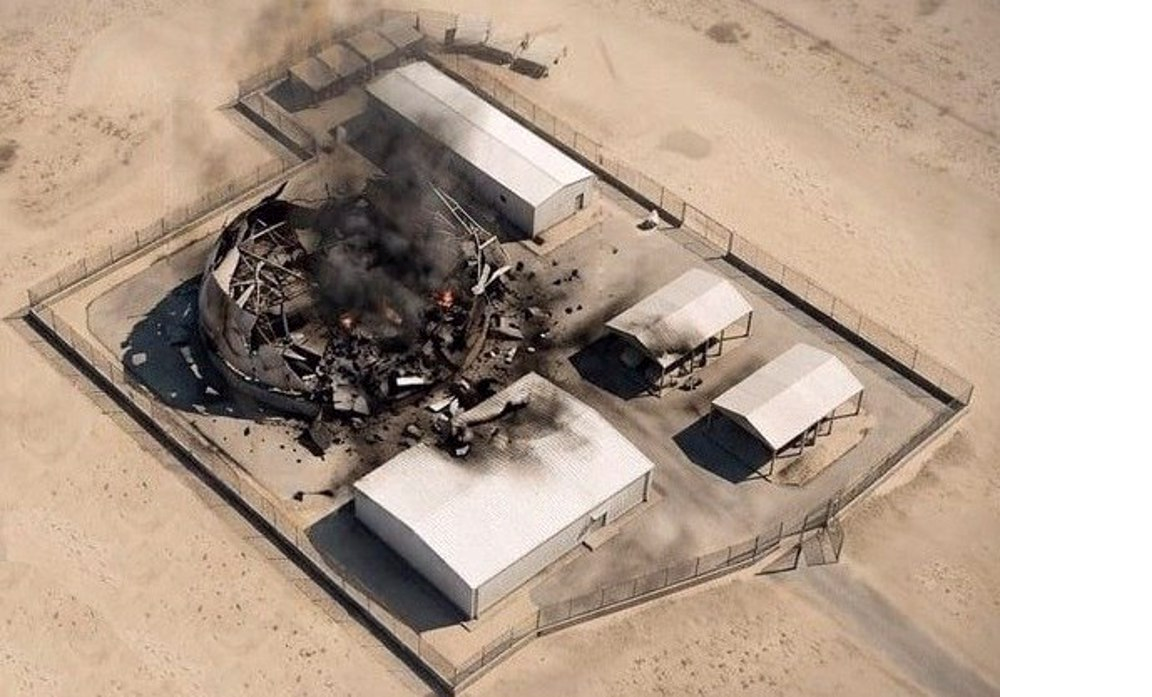
Kuwait has emerged as a primary theater for Iran's radar-clearance operations, with multiple facilities struck in a coordinated retaliatory campaign that fundamentally degraded American air defense capabilities across the northern Persian Gulf.
Iranian forces targeted the early warning US radar, missile defense radar system, FPS‑117 radar, Patriot defense system, and satellite communication equipment at Ahmad al‑Jaber Air Base.
The FPS‑117, a fixed, long‑range, three‑dimensional surveillance radar operating in the L‑band, represents a particularly significant asset, as it provides continuous long‑range air surveillance and strategic early warning over the northern Persian Gulf.
The IRGC also struck the communications center, satellite reception systems, and missile defense radar at Ali al‑Salem Base, along with an MQ‑9 drone hangar where multiple unmanned aircraft were destroyed or severely damaged.
The Corps described these actions as continuing the "black night" of American systems and radars, warning that following this suppression operation, the enemy must brace for more decisive and devastating attacks from waves of drones and missiles.
Complementing the IRGC strikes, the Islamic Republic of Iran Army, operating under Operation Sa'eqeh, launched a barrage of drones at three US military bases in Kuwait.
The nineteenth phase of the operation targeted administrative buildings and direction‑finding antennas at Camp Arifjan, helicopter parking areas at al‑Udairi Camp, and troop accommodation buildings at Ahmad al‑Jaber Air Base.
This close coordination between the IRGC and the Army has underscored the integrated nature of Iranian military planning and execution against the American aggressors.
Destruction of Patriot systems and coastal radars in Bahrain
In Bahrain, the IRGC's strikes have targeted the heart of American air defense capabilities in the Persian Gulf. The Corps announced the complete destruction of a US radar station in Muharraq, which was taken entirely out of service.
This was accompanied by a coordinated missile and drone attack on a US Patriot air defense system in Riffa, which was also destroyed. The Patriot system, one of the most advanced air defense platforms in the American arsenal, and its elimination signals a significant degradation of US defensive capabilities across the region.
The IRGC further announced that its Aerospace Force struck the central data infrastructure of the American company Amazon in Bahrain with several cruise missiles.
Targeting commercial infrastructure that supports US intelligence operations represents an expansion of operational parameters, demonstrating Iran's capability and willingness to strike at the enabling infrastructure of American military intelligence gathering.
In response, the Bahraini Interior Ministry activated alarms nationwide, urging citizens and residents to remain calm and proceed to the nearest safe locations, a confirmation of the severity of the Iranian strikes.
Precision strikes at the heart of American air power in Jordan
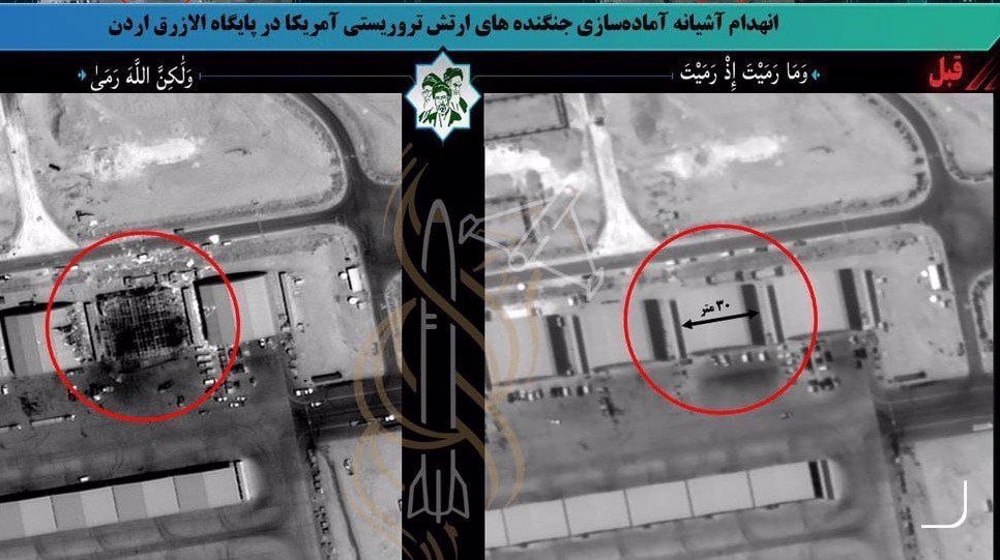
Jordan’s Muwaffaq Salti Air Base – a key logistics and deployment hub for American occupation forces in the region – sustained devastating precision strikes that destroyed both radar infrastructure and combat aircraft.
The IRGC Aerospace Force eliminated a missile defense radar system and an F‑15 fighter jet inside its hardened shelter at the base. The F‑15, one of the most advanced aircraft in the US inventory, was destroyed within a protected installation, underscoring the precision of Iranian targeting and the effectiveness of Iranian missiles against fortified positions.
The IRGC statement emphasized that this region is no place for American aggressors and demanded that the child‑murdering US military leave the area to prevent further casualties.
In an expansion of operational parameters, the IRGC also struck a compound housing American troops in Jordan’s al‑Rukban area, with the statement indicating that several American soldiers were killed. This marks a significant and notable shift from targeting equipment and infrastructure to directly engaging personnel concentrations.
Maritime and air control radars in Oman neutralized
As part of the thirteenth wave of Operation Nasr‑2, the IRGC Navy conducted strikes against American maritime control and air control radars in Oman, leading to the destruction of the maritime control radar on Salameh rocks and the US air control radar in the Ghanem area.
The operation, codenamed Mubarak (or Aba Abdullah Al‑Hussein), was dedicated to the people of the southern provinces of Khuzestan, Bushehr, Hormozgan, and Sistan and Baluchestan.
The IRGC statement emphasized that the Strait of Hormuz remains firmly under the command of the IRGC Navy's admirals, warning that as long as America's hostile actions continue, not a single drop of oil or gas will be exported from the region.
This declaration underscores the strategic significance of the radar strikes, which serve to consolidate Iranian control over the vital waterway and reinforce the message that American interference in the Strait of Hormuz will not be tolerated.
Strategic logic: targeting the eyes and ears of the American military
The Iranian campaign has reflected a sophisticated understanding of modern integrated air defense architecture. Rather than attempting to destroy entire air bases, Iranian planners have concentrated on the eyes and ears of the American regional military network: early‑warning radars, communications nodes, satellite communication terminals, radomes, command‑and‑control facilities, and air‑defense support infrastructure.
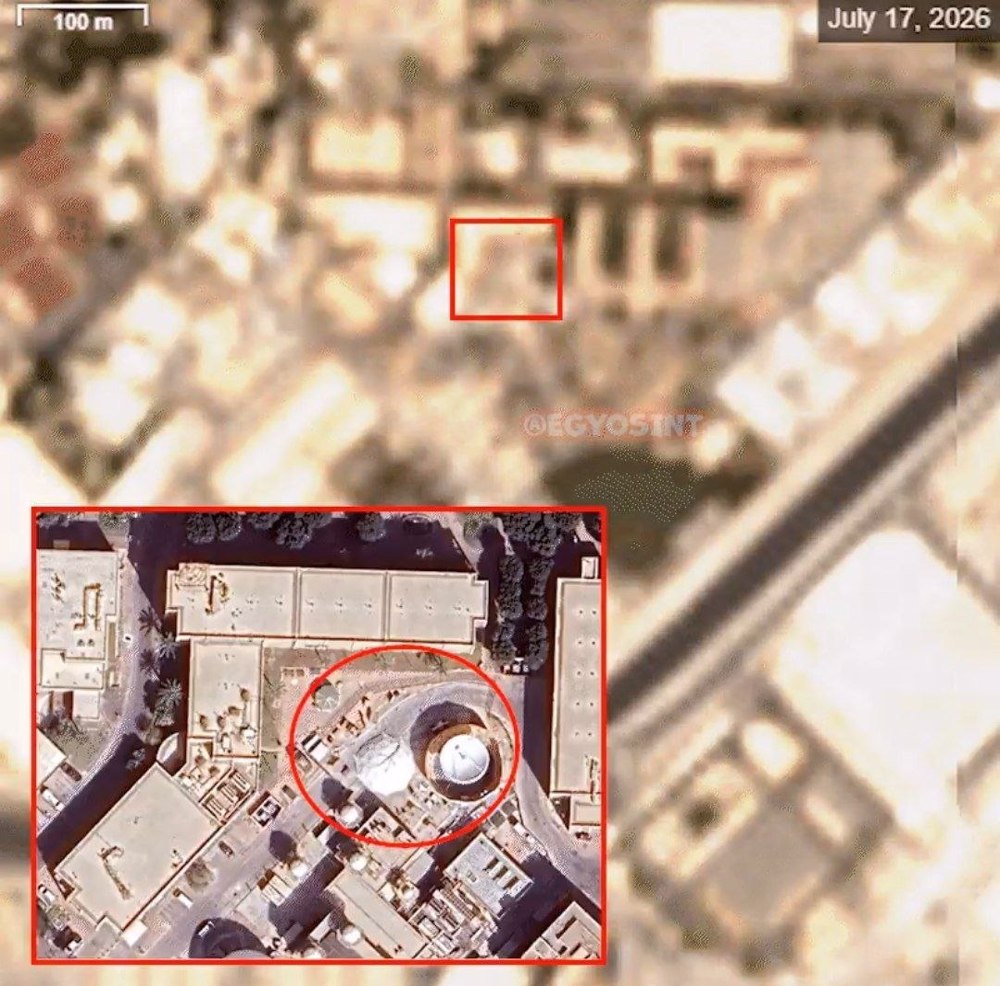
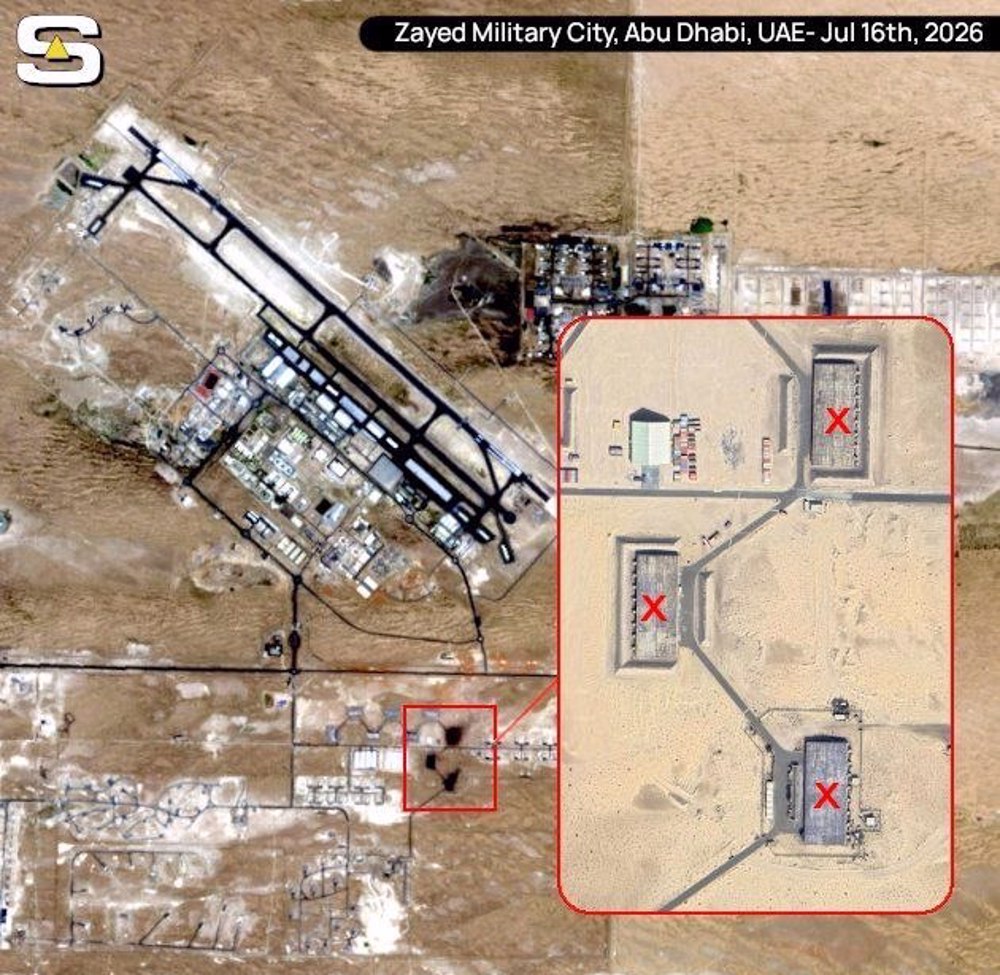
Satellite imagery has consistently shown localized impacts against radar compounds, antenna fields, and communications buildings – rather than runway cratering or widespread destruction of aircraft parking areas.
Military analysts have observed that contemporary missile‑defense systems depend less on individual interceptor batteries than on an extensive sensor network combining long‑range early‑warning radars, tactical surveillance radars, satellite communications, secure data links, and command centers. Destroying interceptor launchers alone rarely blinds an opponent; damaging the network that detects, classifies, and distributes targeting information can be equally – and sometimes more – effective.
This interpretation aligns with the observed distribution of Iran’s retaliatory strikes across multiple regional countries, rather than concentration on a single installation.
Commercial satellite imagery analyzed by various organizations confirms impacts near communications compounds and satellite antenna installations at Ali Al Salem Air Base in Kuwait, not on the main runway.
Visual investigations have concluded that structures forming part of, or adjacent to, communications and radar infrastructure at Prince Sultan Air Base in Saudi Arabia sustained damage, showing smoke, structural destruction, and impacts close to equipment believed to support long‑range communications and missile warning.
The concentration of impacts suggests precise targeting of high‑value sensor infrastructure.
Hypersonic missiles and the failure of American air defenses
The remarkable accuracy of Iranian strikes has been attributed by analysts to a combination of advanced missile technology and enhanced intelligence capabilities. Western media reports have acknowledged that Iran is deploying missiles capable of traveling at extremely high speeds while maneuvering during their terminal phase, complicating interception efforts.
Missiles such as the Kheybar‑Shekan series and the Fatah‑1 are hypersonic systems capable of performing evasive maneuvers, particularly in the final dive toward the target, making interception nearly impossible.
Military experts have raised two primary concerns regarding US defense systems against Iranian missiles: their extreme speed and their maneuverability. This combination has rendered Patriot defense systems practically ineffective, while the depletion of THAAD interceptor missiles and the destruction of THAAD radars have further degraded American defensive capabilities.
Western sources have also pointed to the role of advanced imaging satellites in enhancing Iranian precision‑targeting capabilities. Combined with imagery from the Khayyam satellite, this has allowed Iran to improve its surveillance, identification, and timely targeting capabilities.
Regional air defense architecture: fragility of the American network
The Iranian strikes have exposed the fundamental vulnerability of the American regional military presence, which relies upon an interconnected network of bases and sensors that can be systematically degraded through coordinated precision strikes.
Most US military installations in the Persian Gulf participate in a distributed command‑and‑control network linking sensors across Saudi Arabia, Kuwait, Qatar, Bahrain, Jordan, the United Arab Emirates, and naval assets at sea.
Data from one radar is fused with information from airborne early‑warning aircraft, satellites, Aegis destroyers, and Patriot or THAAD batteries to create a common operational picture. Degradation of even several radar nodes can complicate interception timelines, reduce redundancy, and increase uncertainty during large‑scale missile attacks.
The Iranian strikes have removed a significant portion of the surveillance, interception, and engagement network installed by the US in countries surrounding Iran over the past decade. As a result, the path for Iranian missiles to reach their final and primary destination – the occupied territories – is becoming more open and secure by the day.
This systematic dismantling of American radar capabilities fundamentally alters the strategic calculus, as the United States can no longer rely on the integrated air defense architecture that had been assembled to contain Iranian power projection.
The IRGC's warnings – that as long as US actions in the region continue, the Strait of Hormuz will remain closed and not a single drop of oil or gas will be exported – underscore the strategic implications of the radar strikes.
By blinding American surveillance systems, Iran has enhanced its ability to control the vital waterway and interdict shipping that does not comply with Iranian requirements, potentially affecting global energy markets and the economic interests of countries throughout the region.
The concept of the "dark nights" implies not merely temporary disruption but comprehensive and sustained degradation of American situational awareness across the region. By systematically eliminating multiple radar systems simultaneously, Iranian forces have created blind spots in US air defense coverage that cannot be easily or quickly repaired.
The destruction of radars is not an end in itself but a means to enable more extensive operations. The IRGC explicitly stated that the radar suppression operations were designed to clear the way for large‑scale air and missile operations against American targets in the region by eliminating obstacles.
The message to the enemy is clear: following this radar suppression operation, the enemy should prepare for more decisive and heavier waves of drone and missile attacks. This approach reflects a sophisticated operational concept that seeks to systematically dismantle American military capabilities through a campaign of attrition against critical enablers.
Satellite evidence and operational effectiveness
Iranian official statements regarding the destruction of American radars have been substantiated by commercial satellite imagery examined in detail by independent OSINT analysts, all of whom have identified patterns consistent with Iranian remarks.
The imagery shows localized impacts against radar compounds, communications buildings, and antenna fields – rather than widespread destruction of runways or aircraft parking areas. This pattern supports the conclusion that Iranian planners deliberately targeted high‑value technical infrastructure, rather than simply maximizing visible physical damage.
The verified damage to the AN/FPS‑117 long‑range radar at Ahmad al‑Jaber Air Base in Kuwait represents a particularly significant achievement. Unlike mobile tactical radars, the FPS‑117 is a fixed, long‑range, three‑dimensional surveillance radar that provides continuous long‑range air surveillance and strategic early warning.
The destruction of such a system would require substantial time and resources to replace or restore full capability, as calibration, integration with command networks, and system testing are all necessary.
The remarkable precision of many impacts, with missiles frequently landing within tens of meters of radar compounds, suggests improved guidance systems combined with detailed pre‑strike intelligence derived from commercial satellite imagery and other reconnaissance sources.
The consistency of impact locations across numerous bases supports the conclusion that high‑value technical infrastructure was the principal objective, and that Iranian forces have developed sophisticated intelligence capabilities to support precision targeting.

US lawmaker admits American people footing bill for Trump’s failed aggression against Iran
Iran’s Armed Forces vow to inflict further defeats on US, Israeli enemies
IRGC: Iran will change war’s geography, weapons if attacked again



VIDEO | ‘Korea gets nothing, loses everything, with Hormuz deployment’
Iran parliamentary commission approves penalties for violators of Hormuz laws
VIDEO | Trump’s war disrupts the world
Araghchi urges world to hold US accountable for ‘war crimes’ at UNGA
VIDEO | Press TV's news headlines
US F-16 fighter jet crashes at air base in Germany
Iran warns US against new attack, says Washington will gain ‘nothing but failure’
'Shameful': UK to provide refueling support for Saudi warplanes amid war on Yemen


 PressTV NEWSLETTER
now
PressTV NEWSLETTER
now
 This makes it easy to access the Press TV website
