Iran’s strikes on US bases 'transformed' regional security structure: FM Araghchi
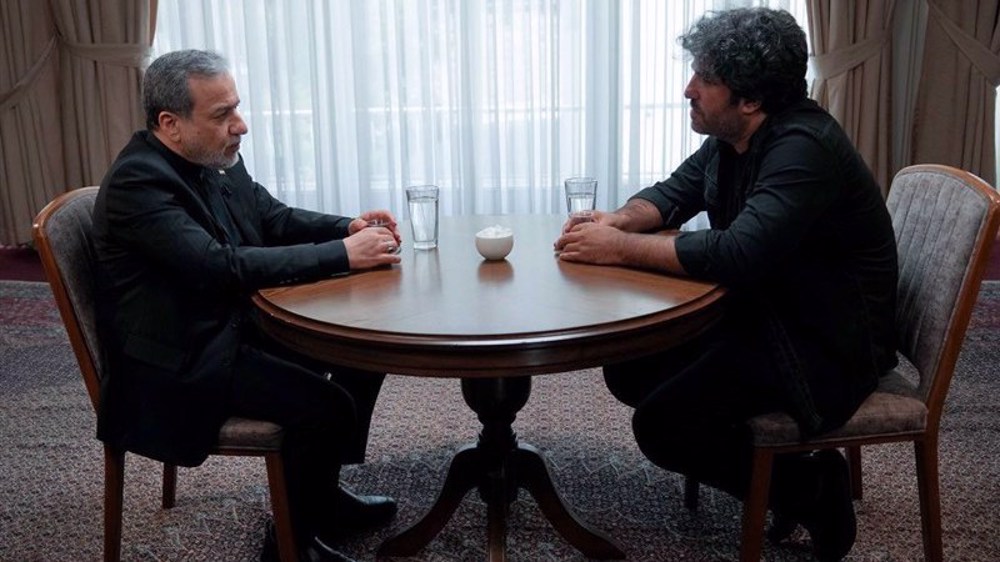
Foreign Minister Abbas Araghchi says Iran’s retaliatory military strikes against US bases in the region have fundamentally transformed the regional security structure.
In a televised interview on Sunday, Araghchi elaborated on the negotiations with the United States and the US-Israeli-imposed war, which started in late February, and Iran's response to the aggression.
He said regional countries did not anticipate that Iran would strike targets across the region in a way that they could not effectively respond.
"The region did not believe that we would strike across the entire region and that they would not be able to respond. This was a major development that occurred and transformed the region's security structure," he added.
He emphasized that Iran was “not caught off guard at all” by the US-Israeli aggression and had been prepared for all possible scenarios.
Iran's senior diplomat stated that negotiations with the United States before the war centered around the latter's persistent demand for "zero enrichment," with Washington pressing Tehran to comply or face military action.
He noted that Iranian officials finally decided to engage in negotiations with the US “so that no one could later say, 'If you had negotiated, war would not have occurred.'"
Araghchi said he and the Iranian armed forces were certain that war would happen but believed that the talks should be held so that the other side may back down from its “zero enrichment” stance or otherwise Iran would have a clear justification for its actions.
Enemy never anticipated Iran's resistance
Araghchi rejected claims that negotiations laid the groundwork for the war, saying the opposing side had already decided on a set of specific objectives regarding Iran.
"It was not my decision. There was a decision on the other side to achieve certain goals regarding Iran, and we tried to steer them toward a path other than war," he added.
Araghchi noted that the decision to negotiate was not his alone but a collective one, emphasizing that the roots of the war lay in a "perception" among Iran's enemies that the country had been weakened and had lost its regional deterrent capability following developments in Lebanon and Syria.
Enemies assumed that Iran would move toward nuclear deterrence, prompting efforts to eliminate the country’s nuclear capabilities before that could happen, the foreign minister reiterated.
The Israeli regime, he said, "had formed the perception that Iran had become weak, and the time is ripe to finish the job."
He emphasized that Iran's refusal to accept the “unlawful and unreasonable” demands for zero enrichment ultimately led its adversaries to abandon negotiations and resort to military aggression.
"When they saw they could not achieve their objective through negotiations, they started the war," Araghchi said.
The top Iranian diplomat further explained that the enemies made another miscalculation after the 12-day war in June 2025 by underestimating the country's resilience.
Instead of enhancing their preparedness, the enemies only expanded their military equipment and arsenals, he said, adding that they expected a short military aggression by Israel would destroy everything and force Iran into submission.
"All these perceptions were wrong," the minister emphasized.
According to Araghchi, the war was halted because the enemies were not prepared for a prolonged war and witnessed the Iranian people’s support for the country.
Araghchi noted that Israel convinced the United States that economic sanctions, regional pressures and other factors had left Iran in a vulnerable position.
"This wrong analysis was presented to [US President Donald] Trump," he said, noting that Trump's subsequent anger at the assessment was publicly evident.
On February 28, the United States and Israel initiated a large-scale and unprovoked war against Iran, assassinating Leader of the Islamic Revolution Ayatollah Seyyed Ali Khamenei and several high-ranking military commanders.
In response, Iranian armed forces carried out a series of retaliatory missile and drone operations against US and Israeli military assets for over 40 days, which resulted in significant damage.
No talks until Iran’s conditions are met: SNSC chief
Hormuz economic crisis direct result of US-Israeli aggression: Iran’s UN envoy
Sunni cleric assassinated by unidentified gunmen in southeast Iran



VIDEO | Ansarullah’s Red Sea gains challenge US policies
War on Iran damaged hundreds of US facilities, depleted key munitions: Pentagon
Iran downs another intruding US MQ-1 Predator drone over Strait of Hormuz
VIDEO | Press TV's news headlines
VIDEO | Austria bars Iranian nuclear chief from IAEA conference
Iran FM, Lebanese speaker discuss Zionist aggression, reaffirm support for resistance
VIDEO | Mokha residents welcome Sana'a forces after 9 years of proxy rule
Saudi regime seeks British strikes on Yemen after US refusal


 PressTV NEWSLETTER
now
PressTV NEWSLETTER
now
 This makes it easy to access the Press TV website
