Iran unveils progress on Nahid-3 satellite launch, Shahid Soleimani constellation deployment
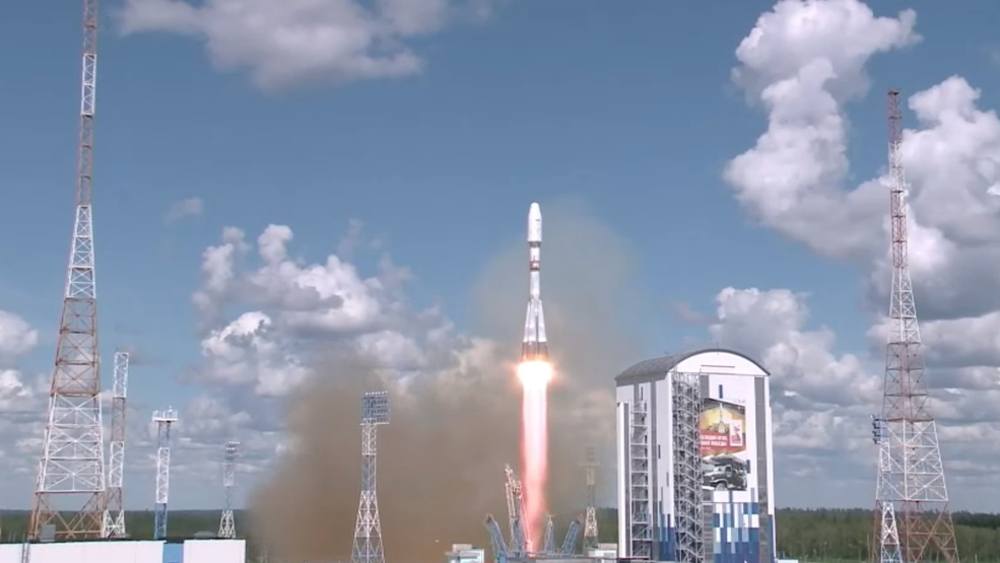
Iran has outlined plans to continue developing its space program through 2026, including the launch of the first phase of the “Shahid Soleimani” satellite constellation and the unveiling of its first domestically-built radar satellite.
Speaking at a press conference on Wednesday, Hassan Salarieh, Iran’s Deputy Minister of Information and Communications Technology (ICT) and head of the Iranian Space Agency (ISA), outlined the country's most important space programs and projects.
He announced the continued development of satellite control centers, launch sites, specialized laboratories, progress in the construction of the Nahid-2 and Nahid-3 communications satellites, as well as the advancement of the Shahid Soleimani satellite constellation during the current Iranian year which started on March 21, 2026.
“The projects we are pursuing in the space industry fall into several main categories, including infrastructure projects, satellite design and manufacturing projects, as well as data- and imagery-based service projects,” Salarieh said.
Nahid-3 satellite
Discussing the Nahid-3 satellite, he said it is another Iranian communications satellites that would enable the country to provide services in geostationary orbit (GEO).
“The project is currently in the design phase, and construction of some of its major subsystems, including those related to the thrusters and propulsion systems, is underway,” the ISA chief said.
Explaining the role of communications satellites, Salarieh said, “Most of the services provided by these satellites involve data transmission. Depending on the volume of data that needs to be transferred, different frequency bands are used. These satellites can operate either individually or as part of a satellite constellation.”
The official added that “if a satellite operates in low Earth orbit, it generally needs to function as part of a constellation. However, if it is placed in a higher orbit, the number of satellites required decreases because of the wider coverage area.”
In the 36,000-kilometer geostationary orbit, even a single satellite is capable of providing services, and Nahid-3 belongs to this family of satellites, Salarieh noted.
“These projects are not limited to the current Iranian year; they will continue in the coming years as well. However, major milestones, including the design and construction of prototypes, subsystems, and engineering models, will gradually be completed,” he stressed.
Salarieh expressed hope that significant portions of these programs would reach fruition during the current Iranian year (which ends on March 20, 2027) and that more details would be shared with the public at future meetings and events.
Shahid Soleimani satellite constellation
He also referred to the “Shahid Soleimani” satellite constellation, another major national space project, emphasizing that it is among Iran's key communications initiatives and will be implemented in several phases.
“The first phase of this constellation consists of 24 satellites, including 18 operational satellites and six backup satellites, all of which are scheduled to be placed into orbit,” Salarieh said.
The ISA chief further said that one of the major events was the unveiling of the first prototype of this satellite back in February in the presence of the minister of ICT and the minister of defense.
“As previously announced, the subsystems of this constellation have already been completed, and we are now in the integration phase for the remaining satellites,” he added.
Salarieh further noted that among the agency's major plans for the current Iranian year are the unveiling of additional prototypes of the constellation and the launch of these satellites as soon as the corresponding launch vehicle is ready.
He stressed that this would be one of the Iranian Space Agency's principal priorities during the coming year.
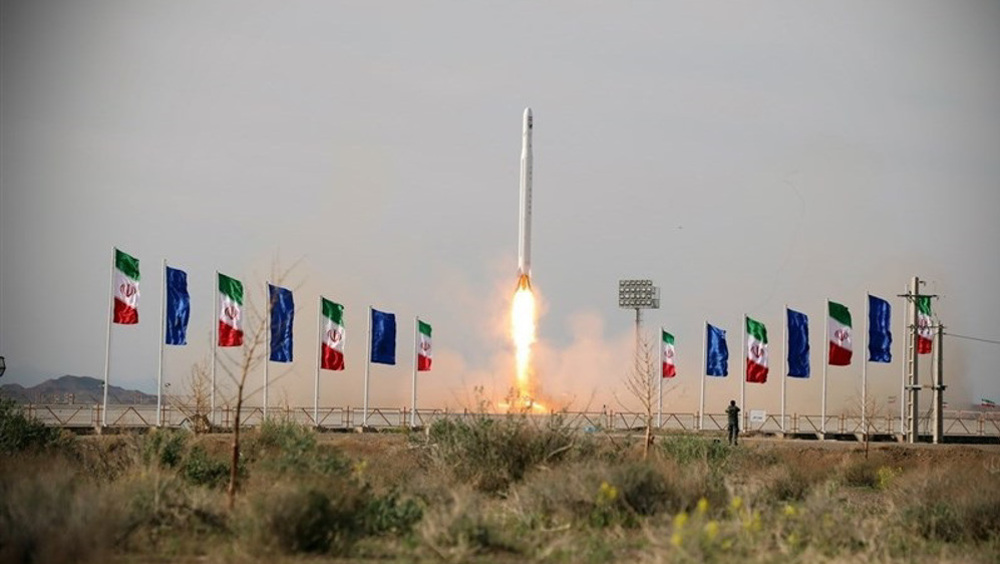
Pars-2 satellite
Elsewhere in his remarks, Salarieh said that the development of Iran's Earth observation satellites would also continue during the current year, with several important projects on the agenda.
“One of these projects is the Pars-2 satellite, which has an imaging resolution of better than three meters. The satellite was unveiled in February 2025. After completing the remaining tests, its final qualification tests have now been carried out, and it is currently in the final stages of preparation for launch,” he noted.
The ISA chief maintained that Pars-2 is one of the country's key remote sensing satellites and would expand Iran's fleet of imaging satellites.
Rad-1 satellite
Salarieh also referred to Iran's radar satellite program, saying that the country's first radar satellite, Rad-1, is one of Iran's major space projects and that its prototype would be unveiled soon.
The unveiling had originally been scheduled for winter or spring 2026, but due to certain technical considerations, which are natural and routine in projects of this kind, it has been delayed slightly, he said.
“Rad-2 is another of our major projects in this field. In terms of imaging accuracy, it belongs to a higher class than Rad-1. This satellite is also being developed by the Iranian Space Research Center under the supervision of the Ministry of Information and Communications Technology,” Salarieh noted.
Developed under the constraints of persistent international sanctions, these satellites embody Iran’s pursuit of technological self-reliance and its methodical progress toward an integrated national constellation serving both civilian needs and strategic objectives.
Iran must fight US blockade with energy blockade: Deputy speaker
Iran’s president to attend UN General Assembly in New York
Iranian lawmakers push for NPT withdrawal, submit bill to Parliament's Presiding Board



US visa ban on Iranian president’s media team is bid to hide the truth: FM spokesman
US aggression, economic warfare amount to crimes against humanity: Iran's UN envoy
Protests erupt in US as ICE agent shoots Venezuelan driver
US pressure fuels cooperation among Muslim states: Pezeshkian
Major TV networks suspend White House pool coverage after Trump ban
US visa ban on Palestinian UN delegation violates international agreements: Hamas
VIDEO | Press TV's news headlines
Iran calls on France to respect law after suspending French cultural institute in Tehran


 PressTV NEWSLETTER
now
PressTV NEWSLETTER
now
 This makes it easy to access the Press TV website
