Death of a warmonger: Lindsey Graham, hawkish US senator who plotted Iran’s fall, meets his end
By Yousef Ramazani
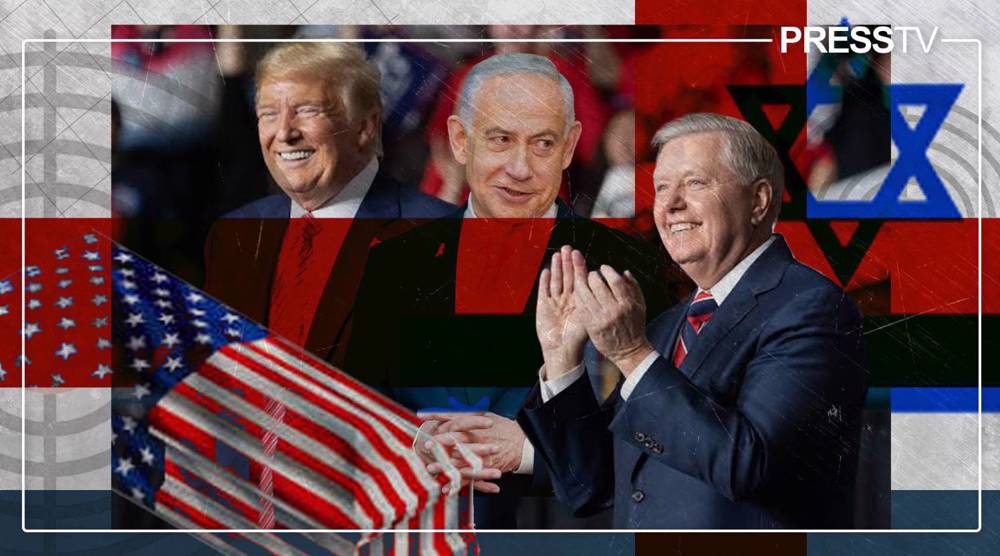
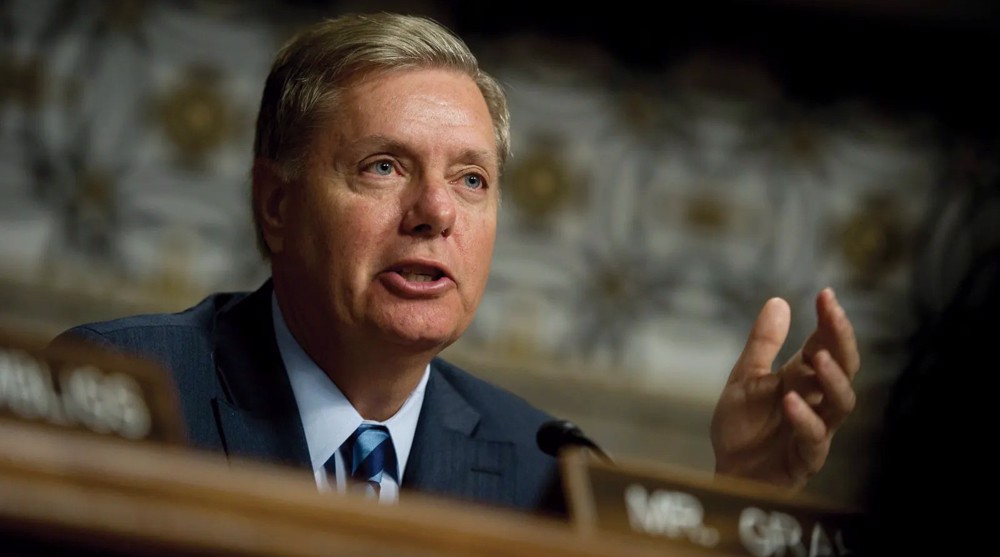
In the early hours of Sunday, Lindsey Graham, the South Carolina senator who spent decades advocating military confrontation with Iran and positioning himself among the Israeli regime's staunchest allies in Washington, died after a “sudden and brief” illness at the age of 71.
He leaves behind a political legacy defined by unwavering hostility toward the Islamic Republic of Iran, the Palestinian people and steadfast support for Israeli genocidal policies.
Graham's death marks the passing of one of the most consistently hawkish voices in American politics on Iran and the resistance axis. Throughout his decades in the Senate – and during the US-Israeli military aggression that began on February 28 – he remained steadfast in his belief that the Islamic Republic should be confronted, contained, and ultimately overthrown.
Over the years, he repeatedly called for military strikes on Iran's nuclear facilities, advocated arming anti-government groups inside the country in an effort to foment internal unrest, and urged attacks on Iran's energy infrastructure, describing it as the country's "soft underbelly."
His exceptionally close relationship with Israeli regime premier Benjamin Netanyahu, coupled with longstanding ties to pro-Israel lobby groups in the United States, helped shape a foreign policy outlook that viewed Iran as fundamentally incompatible with both American and Israeli strategic interests and an obstacle in their plans to dominate the region.
The tributes from Tel Aviv to Graham, hailing him as one of the genocidal regime’s "greatest friends," underscore the depth of that relationship and reinforce the fact that his political career was closely aligned with advancing the objectives of the apartheid regime.
Senator Graham, key Trump aide and hawkish pro-war voice, dies after ‘brief, sudden’ illnesshttps://t.co/sr8JWDJLHL
— Press TV 🔻 (@PressTV) July 12, 2026
Career forged in hostility toward Iran
Graham entered the US Senate in 2003 after serving in the House of Representatives and spending more than two decades in the US Air Force, including six years as a military lawyer.
By his own account, Graham's worldview was profoundly shaped by the September 11, 2001 attacks and the subsequent US-led invasions of Afghanistan and Iraq, military campaigns he strongly supported and viewed as central to America's national security strategy.
His staunch support for the Israeli regime was influenced by political and financial backing from pro-Israel lobbying groups, pointing to his longstanding ties to organizations that have supported his campaigns in favor of the regime and against the resistance front.
Graham's foreign policy outlook reflected a broader strain of Republican national security thinking that emerged after 9/11: the belief that countries, particularly those pursuing advanced military capabilities, should be confronted before they can alter the regional or global strategic balance and block the American hegemonic march.
Over time, Iran became the central focus of his West Asia policy as international scrutiny intensified over Tehran's nuclear program. He consistently and without any evidence claimed that Iran posed not only a regional challenge but also a threat to the global non-proliferation regime and what he described as an existential danger to Israel.
During congressional debates over sanctions legislation in the mid-2000s, Graham was among the strongest advocates of expanding economic pressure on Iran. At the same time, he maintained that sanctions would have limited value unless backed by a credible military option.
That emphasis on the use – or threat – of force became one of the defining features of his foreign policy. Graham repeatedly insisted that "all options must remain on the table," making clear that he was prepared to support military aggression against Iran's nuclear facilities, which finally happened in June last year but failed to achieve its objectives.
2026 aggression and calls for escalation
When the joint US-Israeli military aggression against Iran began on February 28, 2026, Graham quickly emerged as one of its most outspoken advocates.
According to Israeli media reports, he was among those urging President Donald Trump to "go all the way" and was the first to propose giving Tehran a 60-day ultimatum to dismantle its nuclear program. Trump ultimately adopted the proposal.
In the months that followed, Graham continued to press for a broader and more forceful military aggression against the Islamic Republic and its regional allies.
Appearing on NBC's Meet the Press in mid-May 2026, he argued that negotiations with Iran had "hit a wall" and urged Washington to target the country's energy infrastructure.
"The energy infrastructure is their soft underbelly. If you go back to the fight, I'd put energy on top of the list," he said, literally advocating war crimes under international law.
When asked to clarify whether he was advocating such strikes, Graham left little room for ambiguity: "Yeah, I'm calling to hurt this regime. Hurt them more. Maybe they'll make a deal if you hurt them enough."
He described Iran's energy sector as the country's "soft underbelly" and identified it as the foremost target should military aggression resume after the ceasefire.
Under international humanitarian law, attacks on civilian infrastructure are subject to strict legal constraints. Deliberately targeting civilian objects or indispensable infrastructure may constitute a violation of the laws of armed conflict, depending on the nature of the target, its military use, and the circumstances of the attack.
Graham also praised the naval blockade imposed on Iran as "a very smart decision" and called for additional measures to intensify economic pressure on the country.
"There's still more targets to be had. And there's things we can do to hurt," he said.
Grok reveals that over the past year, South Carolina Senator Lindsey Graham has spent more time posting about the Middle East than he has about his own state!
— Press TV 🔻 (@PressTV) January 17, 2026
Follow Press TV on Telegram: https://t.co/LWoNSpkJSh pic.twitter.com/mrSLA5N65a
Arming rioters and advocating regime change
Among Graham's most controversial proposals before the recent war against Iran was his call for the United States and Israel to arm anti-government rioters inside Iran in an effort to trigger an armed uprising against the Islamic Republic.
Speaking with Fox News host Sean Hannity, Graham argued that Washington and Tel Aviv should supply weapons directly to rioters, describing the idea as "a Second Amendment solution for the Iranian people" and presenting it as an alternative to deploying American ground forces.
"If I were President Trump and I were Israel, I would load the Iranian people up with weapons so they can go to the streets armed and turn the tide of battle inside Iran," Graham said.
He argued that the armed rioters could sustain what he described as a revolution if adequately armed. "We don't need American boots on the ground," he said. "We've got millions of boots on the ground in Iran. They just don't have any weapons."
When Hannity noted that previous efforts to arm Kurdish terrorists had raised concerns that many of the weapons had ended up in unintended hands, Graham remained undeterred.
"Do it again," he replied. "I love the idea of empowering the Iranian people with weapons."
He further contrasted the effects of external military action with those of an internal armed insurgency, remarking: "It's one thing to be bombed by America. It's another thing to have your neighbor shoot back at you."
Israeli connection
Graham's relationship with Israel was among the closest of any senior American lawmaker.
Over the course of his Senate career, he made numerous visits to the occupied territories, meeting not only political leaders but also senior military officials, intelligence personnel, and military advisers. He often spoke publicly about the value he placed on those discussions.
"They'll tell me things our own government won't tell me," Graham once said, acknowledging that he regularly consulted Israeli officials before major congressional debates on Middle East policy and relied heavily on Israeli assessments of Iran's missile and nuclear programs.
In a social media post after his death, Netanyahu described Graham as one of Israel's closest friends in Washington, not attempting to conceal the depth of their relationship.
"Lindsey understood that the security of Israel and America are inseparable. He devoted his life to defending America, strengthening our alliance and standing up for the free world. Israel has lost one of its greatest friends. America has lost a great patriot," he stated.
Israeli regime president Isaac Herzog said he was "shocked and heartbroken" by the news, describing Graham as "a beacon of moral clarity and a true leader of the US-Israel partnership."
Israel's military affairs ministry also paid tribute to Graham, saying he had stood alongside Israel during what it described as some of its most difficult moments.
Throughout his career, Graham consistently aligned himself with many of the Israeli regime’s priorities. He supported congressional funding for the regime’s layered missile defense architecture, including the Iron Dome, David's Sling, and Arrow systems, and strongly backed the Trump administration's decision to recognize occupied Jerusalem al-Quds as Israel's capital and relocate the US embassy there.
His close relationship with Israeli regime leaders and his consistently hawkish positions on Iran cemented his reputation as one of the most influential congressional advocates of a hard-line US-Israel approach toward the Islamic Republic.
US senator encourages Israel to assassinate more Iranian scientists
— Press TV 🔻 (@PressTV) March 2, 2022
US senator Lindsey Graham has encouraged Israel to assassinate more Iranian scientists. Iran has slammed Graham's "disgusting" and "hateful" remarks, urging the Intl. community to condemn such provocations. pic.twitter.com/kr6ayiv2Wu
Financial ties to pro-Israeli lobbying
Throughout his Senate career, Graham cultivated close relationships with notorious pro-Israel lobby organizations, most notably the American Israel Public Affairs Committee (AIPAC).
Campaign finance records show that he received substantial political support and funding from pro-Israel donors and political action committees over the course of his career.
Various campaign finance trackers estimate that support from pro-Israel networks amounted to roughly $1 million in direct and indirect contributions, while some lobby groups have claimed the overall level of support was considerably higher.
Between 2019 and 2024, Graham's campaign raised more than $117 million, with significant contributions coming from political action committees and donors associated with pro-Israel lobbying, including the Republican Jewish Coalition.
Graham's consistently hawkish approach toward Iran closely aligned with the policy preferences of many of his political supporters. Analysts point to these longstanding political and financial relationships as one factor underpinning his stance toward the Islamic Republic.
Munich rally and anti-Iranian rhetoric
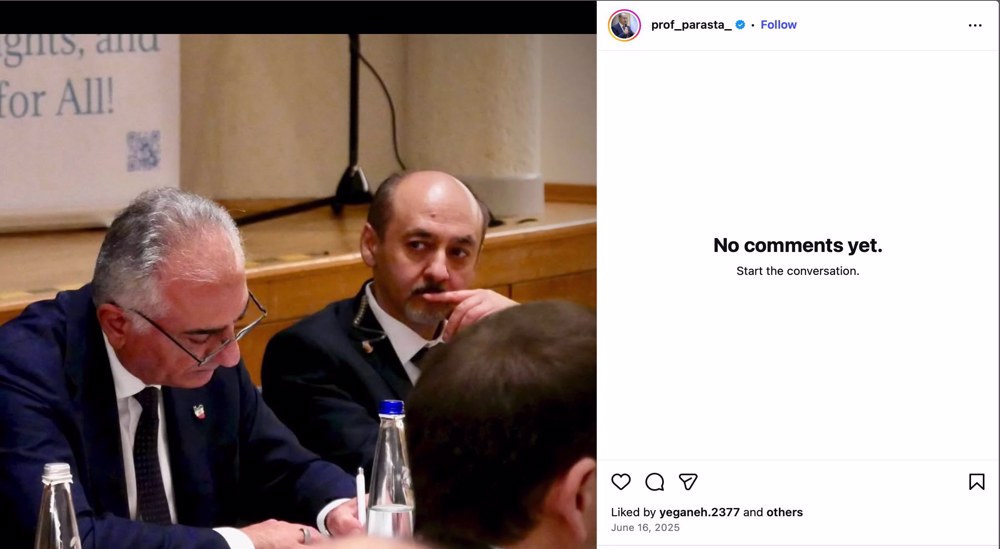
Graham's rhetoric toward Iran reached one of its most forceful expressions during the Munich Security Conference in February 2026.
Addressing a rally organized by supporters of Iran's exiled monarchist groups, he openly called for “regime change” in Tehran. "It is a time of choosing. I choose the Iranian people over the murderous ayatollah. It is time for him to go," Graham said.
Holding the discarded pre-1979 Lion and Sun flag, he told the crowd that "liberation is at hand" and predicted that a future Iran would become "a good ally of the United States."
Later, in a social media post, Graham described speaking at the demonstration as "one of the highlights of my life," affirming his support for Pahavi-allied groups.
In interviews on the sidelines of the Munich Security Conference, Graham argued that the United States should seize what he viewed as a rare strategic opportunity to increase pressure on Tehran.
"We've had it with this regime. Think big. Don't let this moment pass," he said.
Attendance at the next MIGA strategy session has already dropped by 50%.
— Press TV 🔻 (@PressTV) July 12, 2026
Applications are now open. pic.twitter.com/ThRohXLR37
Consistent record of confrontation
Graham's public statements over the years reflected a consistently hard-line approach toward Iran. He repeatedly characterized the country's leadership in highly confrontational terms, likening it to the Nazis, called for coordinated American and Israeli military action, and argued that lasting regional stability would require fundamental political change in Tehran.
Even as diplomatic efforts continued, Graham remained deeply skeptical of negotiations and advocated more military aggression against the Iranian people.
In June 2026, he remarked, "Let's try a diplomatic solution. I think it's going to fail," reiterating his long-held belief that diplomacy would not alter Iran's strategic course.
He also warned that Iran’s decision to administer the Strait of Hormuz would invite an overwhelming American military response, declaring that "we will obliterate them."
While Graham voiced support for a proposed $300 billion reconstruction package for Iran, he argued that it should be financed by Arab states and conditioned on political change in Tehran. He likened rebuilding Iran while its current leadership remained in power to implementing "a Marshall Plan for Germany with the Nazis still in charge."
Graham's legacy was that of a senator who consistently championed a muscular American foreign policy and a close strategic partnership with Israel. His uncompromising advocacy of military pressure and “regime change” ultimately failed to produce the outcomes he sought.
Despite decades of sanctions, diplomatic isolation, covert operations, and repeated military confrontations, the Islamic Republic has only become stronger, and the country has continued to advance its missile program and maintain its regional network of allies and partners.
Iran retains initiative in Strait of Hormuz despite US claims: Armed Forces
Iran’s nuclear doctrine not changed, but NPT withdrawal possible: Top security official
Iran dismisses White House accusations as ‘flight from reality,’ ‘act of projection’



Moscow intercepts massive Ukrainian drone strike amid elections; civilian casualties reported
Understanding Iran’s tourism momentum amid war and sanctions
How Yemeni retaliatory strike on Saudi East-West pipeline exposed limits of bypassing Hormuz
Israeli forces abduct eight Palestinians in West Bank amid settler violence
China rejects unilateral sanctions as Trump signs bill targeting Russia, Iran
VIDEO | Press TV's news headlines
VIDEO | Trump’s attacks on law, press reveal his support beginning to erode: Analyst
VIDEO | Islamabad marks 2nd martyrdom anniv. of resistance leader Hassan Nasrallah



 PressTV NEWSLETTER
now
PressTV NEWSLETTER
now
 This makes it easy to access the Press TV website
