
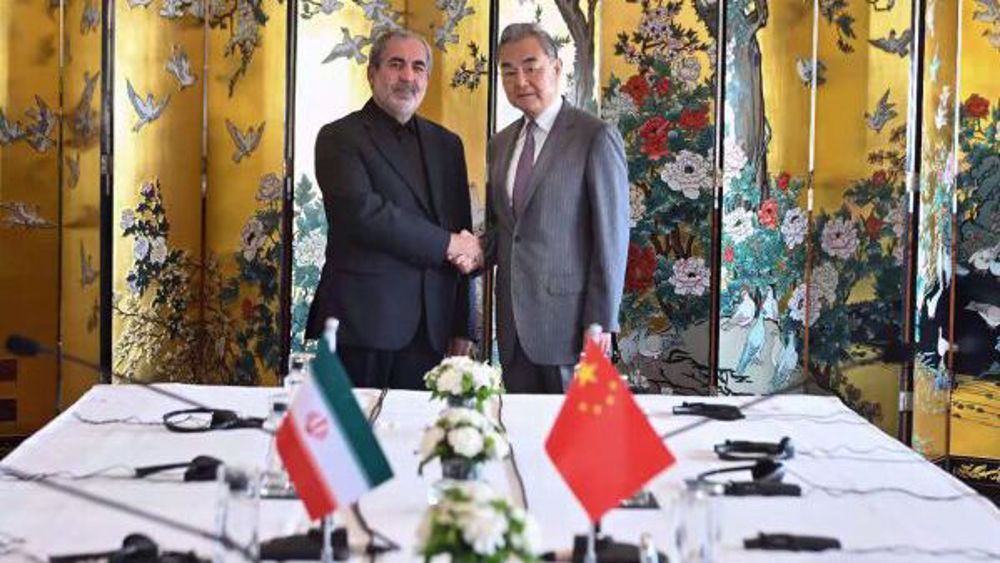
China has reaffirmed its support for Iran’s national sovereignty and dignity, as well as Tehran’s efforts to expand ties with regional countries, including those in the Persian Gulf.
Chinese Foreign Minister Wang Yi made the remarks during a meeting with Ghadir Nezamipour, Iran’s deputy secretary of the Supreme National Security Council (SNSC), on the sidelines of the BRICS National Security Advisers’ Meeting in New Delhi on Monday.
"As Iran's comprehensive strategic partner, China has always maintained a fair and objective stance, supports all efforts conducive to peace, supports Iran in safeguarding its sovereignty, security, and national dignity," Wang stated.
He referred to the ongoing Iran-US negotiations in Switzerland on the implementation of the newly signed Memorandum of Understanding (MoU) between the two countries that brings about a permanent end to the illegal American-Israeli war of aggression against the Islamic Republic.
Welcoming the talks mediated by Pakistan and Qatar, Wang stressed that maintaining and implementing the Tehran-Washington MoU would help “consolidate the hard-won ceasefire, open new prospects for Iran-US relations and contribute to restoring peace” in West Asia.
The top Chinese diplomat also said that the 14 points of the Iran-US deal embody the "spirit of equality, adhere to the purposes of the UN Charter, and are in accordance with the norms of international relations."
He also expressed Beijing’s willingness to play a constructive role in restoring regional peace and tranquillity.
Nezamipour, for his part, praised China’s consistent stance in support of peace and its opposition to war.
He expressed hope that Beijing would continue to play a constructive role and help facilitate the effective implementation of the memorandum’s first phase.
The Iranian official also underscored the importance Tehran attaches to its relations with China, describing bilateral ties as a key priority for the Islamic Republic.

The first round of talks between high-ranking Iranian and American delegations ended on Sunday, despite a tense opening marked by US President Donald Trump’s threats to restart attacks.
A joint statement issued by the mediators said the two sides had agreed on a roadmap toward a final agreement within 60 days, while technical-level talks between lower-ranking officials will continue throughout the week.
Meanwhile, Pakistani Prime Minister Shehbaz Sharif said the negotiations, which concluded "successfully" in Switzerland, resulted in an agreement to establish a high-level committee to provide political oversight of the talks as they move into a more technical phase.
 This makes it easy to access the Press TV website