
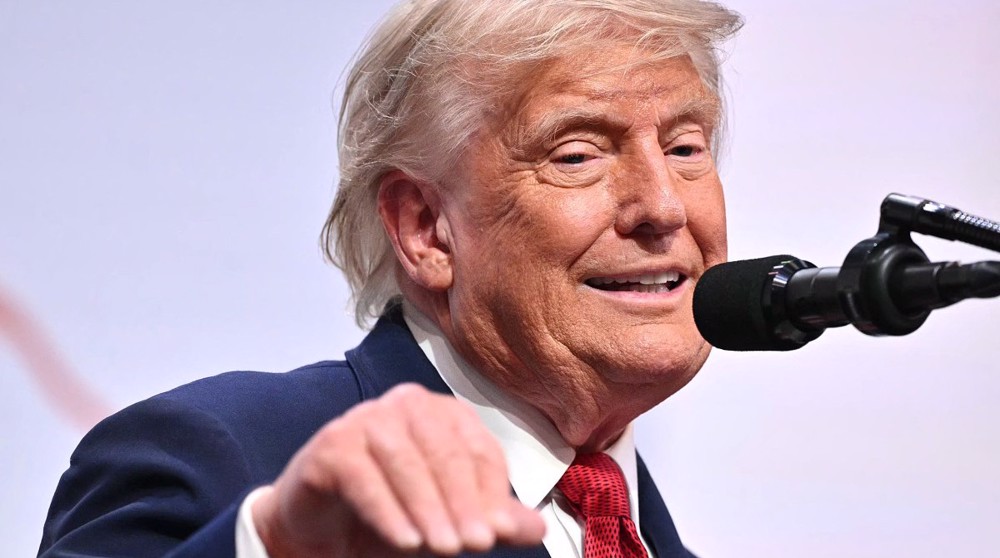
US President Donald Trump has acknowledged that global oil reserves were on the verge of exhaustion, a development that pressured Washington to accept Iran’s terms for a framework agreement to end the war and reopen the Strait of Hormuz.
Speaking at the G7 summit in France on Wednesday, Trump warned that without the deal with Iran, the world would have faced "bedlam" as oil reserves were set to run out in approximately four weeks.
"We run out of reserves at about four weeks," he told reporters. "You know, there are reserves all over the world, and we would really run out, and there'll be a time when you wouldn't be able to get it."
The US president acknowledged that continued military strikes would have kept the strait closed.
"If we keep bombing, those ships won't be going," he said, referring to the impact of the agreement with Tehran.
Trump's admission underscores the effectiveness of Iran's strategy in placing restrictions on the strategic waterway, through which approximately one-fifth of the world's oil consumption normally passes.
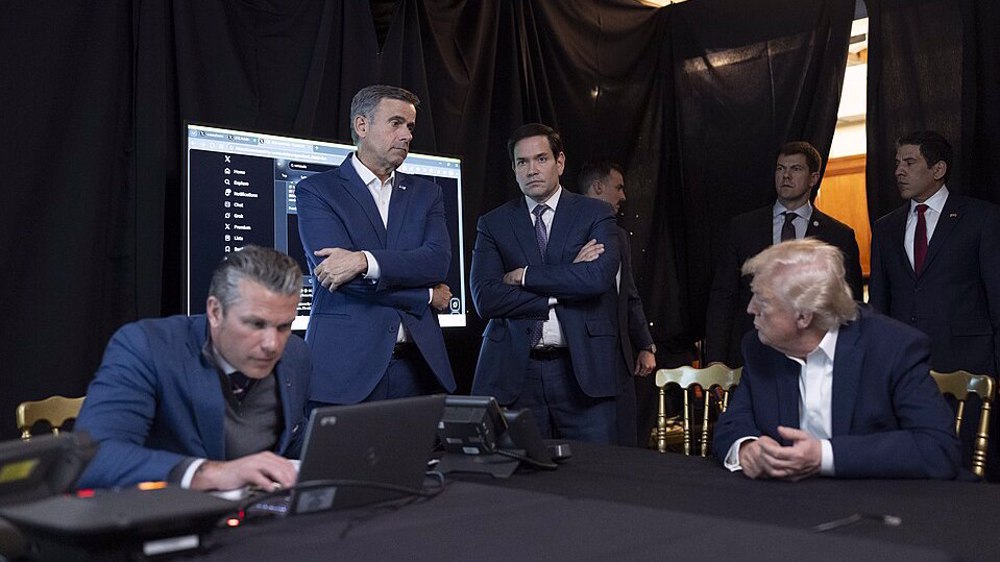
Since February 28, when the US and Israel launched their war of aggression against Iran, Tehran's control over the strait has sent oil prices soaring and drained global reserves.
The International Energy Agency (IEA) had warned in recent weeks that only a few weeks of commercial inventories remained.
The US Strategic Petroleum Reserve has hit its lowest level since 1983, standing at about 340 million barrels – down from 415 million at the start of the war.
Trump's remarks came as the US and Iran finalized a memorandum of understanding that brings an immediate end to the war and military operations on all fronts, including Lebanon.
The agreement also provides for the lifting of the US naval blockade and the reopening of the strait.
Iranian officials have consistently maintained that the strait's closure was a legitimate defensive measure in response to unprovoked aggression.
The framework agreement, set to be signed Friday in Switzerland, represents a diplomatic victory for Tehran, which has secured an end to hostilities and the removal of the blockade without compromising its sovereign rights.
 This makes it easy to access the Press TV website