Iran showcases engineering might with toughest railway project
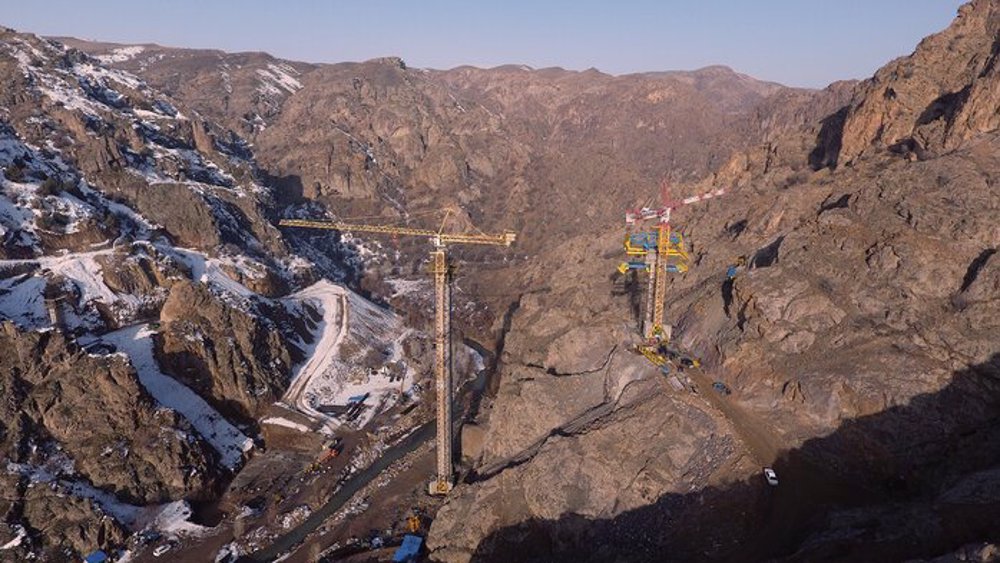
Iran on Tuesday inaugurated the Mianeh-Ardabil railway, a 174-kilometer line that is considered the country's most complicated railway project due to the mountainous terrain and engineering challenges involved in its construction.
The railway was opened in a ceremony attended by President Masoud Pezeshkian via videoconference, along with the transport minister and other national and local officials.
The project connects Ardabil province, which borders the Republic of Azerbaijan as well as the Iranian provinces of Gilan, Zanjan and East Azerbaijan, to the national railway network for the first time.
Construction of the railway began in 2005, taking more than 20 years to complete. Ardabil was one of the few provinces in Iran without access to the national rail network, where passengers and traders had to travel to neighboring provinces to access train services.
The railway is divided into 12 sections. Thirty-five percent of the route passes through mountainous and difficult terrain, 45 percent passes through hilly areas, and 20 percent runs across plains.
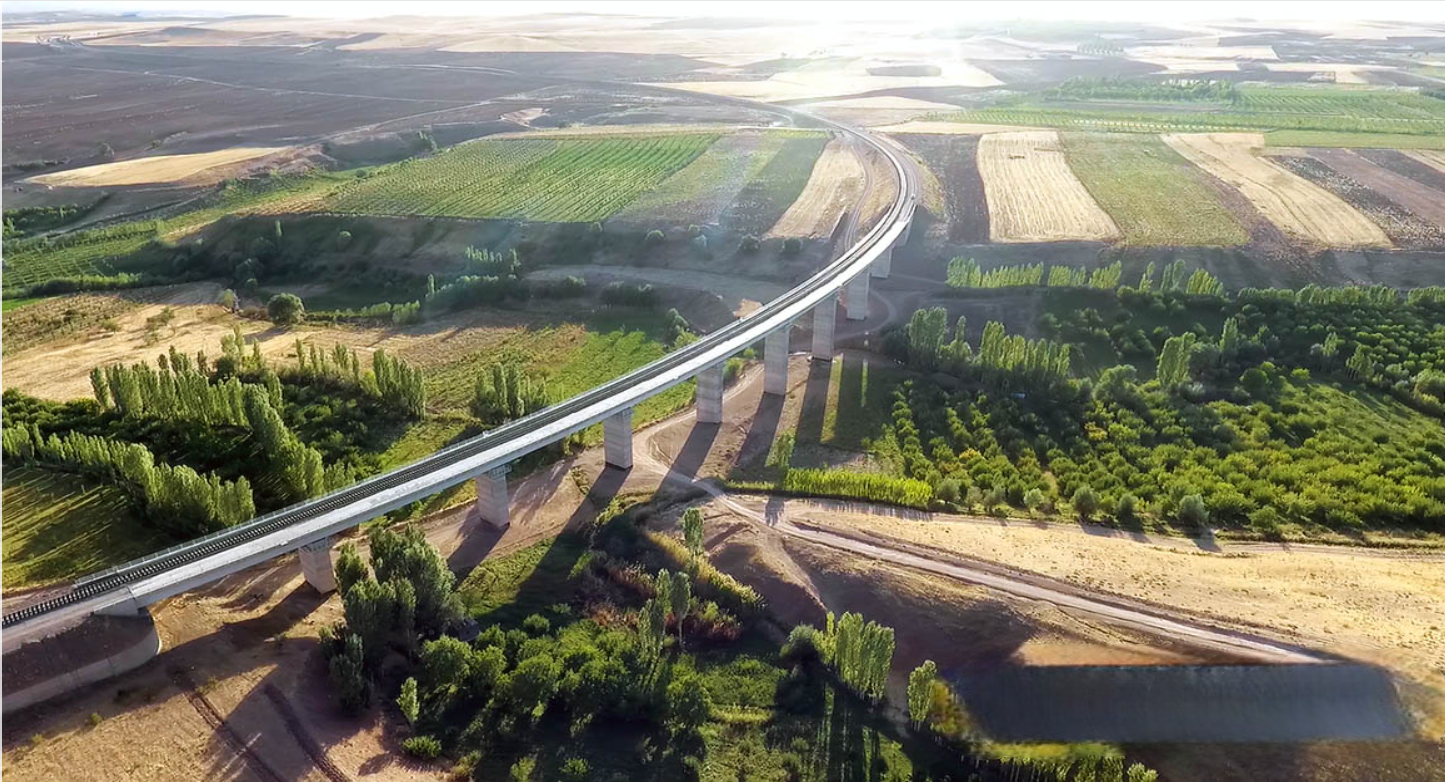
Iranian engineers built 62 tunnels along the route with a total length of 23.8 kilometers. They also built 29 large valley bridges with a total length of approximately 4,300 meters, 148 galleries extending 7,500 meters, and three kilometers of aqueduct bridges.
One of the project's technical highlights is the Arpachay railway bridge, which stands 81 meters high and is now the tallest railway bridge in Iran.
The bridge is located at an altitude of 800 meters above sea level and is designed to allow helicopters and small aircraft to pass beneath it. The Saray bridge is another major structure on the route.
Both bridges were constructed in deep valleys where access was extremely difficult. In some cases, construction materials had to be transported by helicopter because no road reached the construction sites.
Approximately 35,000 tonnes of metal materials including rails, rebar and cables were used in the construction of the railway, along with 220,000 tonnes of cement.
Each kilometer of track required approximately 60,000 concrete sleepers, with each sleeper weighing about 300 kilograms. The longest tunnel on the route is approximately 1.8 kilometers.
One of the main challenges in building the railway was the geological conditions of the region.
In some sections, engineers encountered loose soil layers and unstable ground. They used special excavation methods and injected stabilizing materials to reinforce these areas.
In the mountainous sections, tunnel boring was carried out using full-face tunnel boring machines. Advanced support systems including shotcrete and steel arches were used to prevent collapses during excavation.
The galleries built along the route are designed to protect the railway from avalanches and rockfalls. Ardabil province experiences harsh winters with heavy snowfall, and avalanches are a major risk for transportation routes in the region.
These galleries have reinforced roofs that protect the tracks from falling snow and debris. Without these galleries, the railway would be forced to shut down for months every winter.
Another major challenge was controlling the slope of the route. Trains cannot climb steep slopes like automobiles can. The maximum permissible slope for main railway lines is typically 2.5 percent. Any steeper than that and freight trains would stall on the incline.
Engineers on the project used precision leveling systems to control the slope of the route with millimeter accuracy across the entire 174 kilometers.
The railway is considered one of the missing links of the International North-South Transport Corridor, a 7,200-kilometer network that links Northern Europe to the Persian Gulf and South Asia.
With the line now open, Iran can offer a nearly seamless rail route from the Persian Gulf to the Caucasus region. The only remaining gap is the short distance from Ardabil to the Azerbaijani border, which local officials are already demanding be built.
Ardabil province produces more than four million tonnes of agricultural products annually. The province is one of Iran's hubs for potato, apple, wheat, barley, honey and legume production. Numerous food processing and agricultural industries are also active in the province.
Until the opening of this railway, all of these products were transported to other provinces by truck. Road transport involves higher fuel costs, higher vehicle depreciation and higher driver wages compared to rail transport.
With the operation of this railway, the cost of transporting basic goods from Ardabil to Tehran is expected to decrease by approximately 30 percent.
Over four million tonnes of annual production, the savings run into the trillions of rials. Passenger travel time from Ardabil to Tehran by train will be approximately eight hours, which is a significant reduction compared to the twelve-hour journey by road.
Beyond agriculture, the railway opens Ardabil to industrial development. Factories that need raw materials from the south, including steel, chemicals and machinery, can now receive them by rail.
Finished goods from Ardabil's industrial zones can reach Tehran and the Persian Gulf ports without traveling on highways. This reduces wear and tear on the province's road network and lowers transportation costs for manufacturers.
Ardabil railway station was built using local materials, including granite stone quarried in the region and steel from factories in Ardabil and Tabriz.
The station's design takes into account the region's harsh climate. The roof structure was engineered to withstand heavy snow loads, and the steel braces that reinforce the building are exposed because wind speeds in Ardabil can reach 120 kilometers per hour.
The floor of the station is covered with granite, and the darker veins in the stone are intended to recall the region's heavy rainfall.
Speaking at the inauguration ceremony, President Pezeshkian said Iran can show the world that despite all the challenges facing the country, it continues on the path of progress. He added that Iran can stand against all the bullies of the world, even when the entire world is against it.

The leader of Friday prayers in Ardabil, Ayatollah Seyyed Hassan Ameli, said the Islamic Republic has managed to compensate for 500 years of historical underdevelopment despite being under economic sanctions.
He emphasized that the enemy seeks to undermine public confidence in the country's achievements through media warfare and that these achievements must be properly explained to the people.
The Mianeh-Ardabil railway is another statement of Iran's engineering prowess. With this link, Iran has proven once again that no mountain is too high and no sanction too tight to stop its builders.
Iran says international flights continue despite US sanctions pressure
Iran slams US for blaming Tehran over rising fuel prices, Strait of Hormuz closure
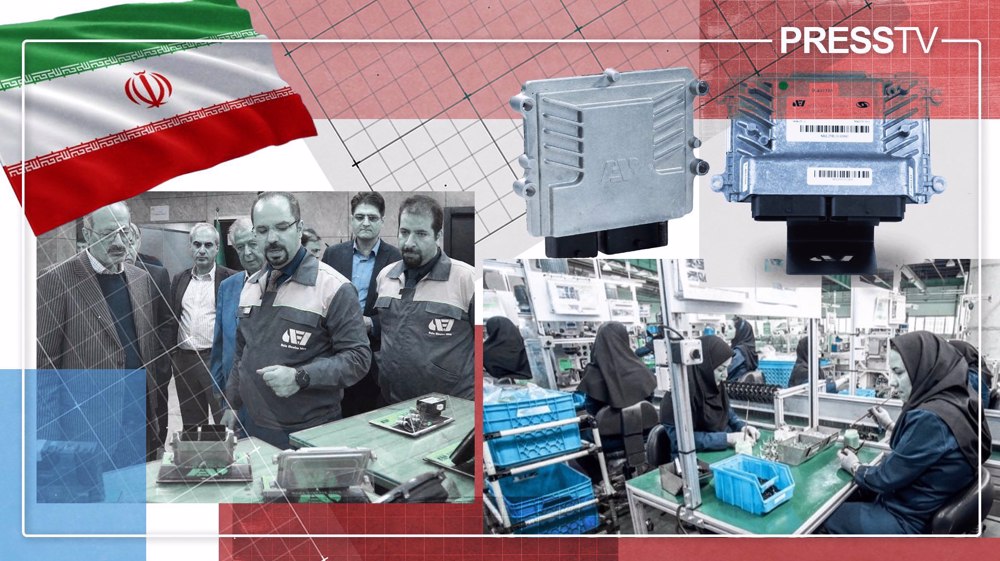
Iranian engineers develop indigenous engine control units, advancing automotive electronics



VIDEO | Press TV's news headlines
VIDEO | Pakistan executes precision strikes on 10 Afghan sites following drone incursion
VIDEO | Education in Yemen: Years of Saudi-led aggression failed to stop learning
Minab’s school bell rings through grief as 168 empty desks stand as silent witnesses
Europe was part of the infrastructure of US aggression against Iran: Deputy FM
VIDEO | The pain of not being able to provide
VIDEO | US ill intentions further exposed
Araghchi in New York: Europe must confront US aggression


 PressTV NEWSLETTER
now
PressTV NEWSLETTER
now
 This makes it easy to access the Press TV website
