Trump’s renewed threats against Iran reek of desperation as his political clock rapidly runs out
By Press TV Strategic Analysis Desk
Donald Trump is at it again. The same megalomaniac who once threatened to annihilate Iranian civilization has switched back to the tired script: demand capitulation, impose an artificial deadline, and vow cataclysmic violence if the other side refuses to bend.
His latest threat of a "harsh attack" on Iran, framed as punishment for delaying a war-ending deal, is the shrill, panicked whistle of a political machine running out of steam.
To the untrained eye, Trump's bluster resembles a return to the so-called "maximum pressure" doctrine. But a sharper reading of the strategic terrain reveals a starkly different reality: the United States, having failed to achieve any military objective in its recent illegal war against Iran, is now resorting to desperate psychological warfare.
At the core of Trump's renewed saber-rattling lies a misplaced conviction that intimidation, escalation, and apocalyptic threats can force adversaries into submission. This formula has long defined American coercive diplomacy and foreign policy, particularly toward Iran.
Tehran already knows how this ends – not with its own surrender, but with the American regime frantically searching for an exit ramp after every door has been slammed shut.
The exhausted pattern: Threats as a substitute for power
The first point to understand is that Trump's current tirade is nothing novel, but a recycled, failed algorithm that has collapsed repeatedly before. Its logic is to threaten overwhelming force to shatter an opponent's will to resist, yet history delivers a scathing rebuttal.
On the last night of the recent imposed war, Trump wielded his now-infamous rhetorical weapon – the threat to annihilate Iranian civilization – to force a ceasefire. And while a truce was accepted, it was not because Iran buckled under apocalyptic rhetoric, but because the US president begged for the pause after being pushed to the wall.
That ceasefire was a tactical interlude, not a strategic capitulation. Trump mistakes Iranian pragmatism for submission and capitulation. He clings to the belief that threatening genocide extracts favorable deals. But in geopolitics, a pattern holds only when power dynamics remain constant. Iran has weathered the storm and emerged stronger.
What we witness is the law of diminishing returns in coercive diplomacy. Each subsequent threat carries less weight because defiance has already been tested. Iran survived the so-called "maximum pressure" campaign. It also endured decapitating strikes on its scientific infrastructure. Trump is now left holding a smoking gun with no ammunition left.
✍ Analysis - ‘Unified Resistance Front’: Iran recasts region’s balance of power and security paradigm with Operation Nasr
— Press TV 🔻 (@PressTV) June 9, 2026
By Press TV Strategic Analysis Desk https://t.co/9WbT24rCHr
The image-making machine: Covering failure with fiction
Why issue these dramatic threats now? Because the United States is losing the narrative. Having failed to secure military victory on the ground, Washington has pivoted to the only battlefield where it believes it still stands a faint chance: perception management.
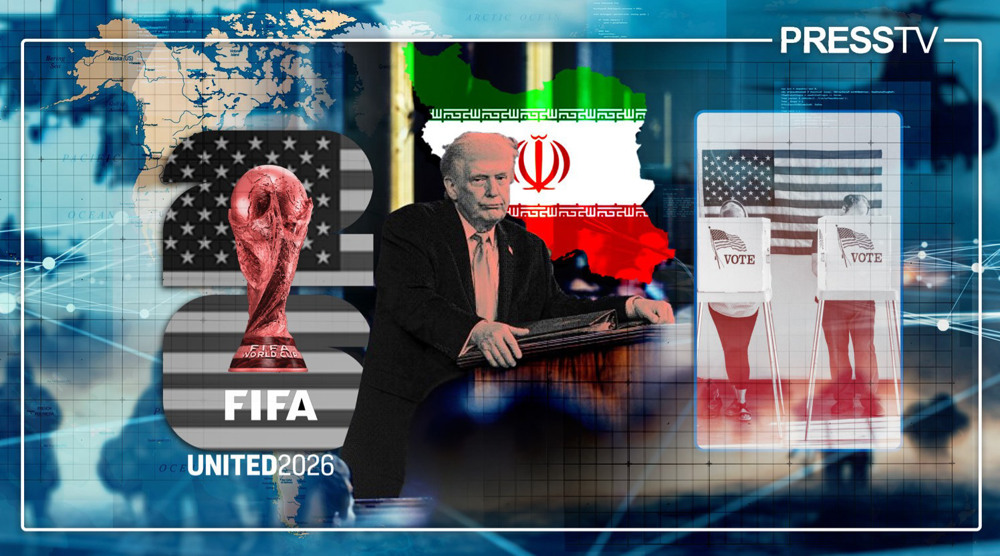
Trump needs a picture – a glossy, postcard-perfect image of manufactured triumph. He must convince the world that he defeated Iran, that his "upper hand" in the recent war forced Tehran to surrender. He also needs to woo American voters ahead of the November midterms, especially as every survey paints a doomsday scenario for his party.
The hard truth is that the recent war on Iran exposed the limits of American firepower against a determined, localized adversary. Unable to achieve a decisive win – or even a face-saving exit – the White House has resorted to looking like a winner. The threats are not about changing Iran's behavior but about rewriting the American public's memory. They are an attempt to retroactively recast a strategic stalemate as a glorious conquest.
Furthermore, deep anxiety grips the Trump administration over the impending nuclear agreement. Tehran appears poised to finalize a deal, but on terms that inflict a political defeat on the US deeper than any military loss.
If Iran secures an agreement that respects its red lines, sovereignty, and nuclear rights, Trump's entire "maximum pressure" doctrine collapses into farce. The threats, therefore, are a preemptive strike against that humiliation, which is fast approaching the US president.
Knowing a bad deal (for the US) is coming, Trump is trying to manufacture a "false achievement" through psychological operations, hoping to spin a diplomatic debacle into a victory for the home crowd, but he will fail in this attempt, too.
The World Cup deadline: The tyranny of the spectacle
Trump's impatience is driven not by strategic urgency over uranium enrichment or missile range, but by the broadcast schedule of the upcoming football spectacle.
He wants the agreement finalized before the 2026 FIFA World Cup kicks off on Thursday, because he craves a "victory" celebration before the world's cameras.
He yearns for the global audience, the billions watching the matches, to witness his manufactured "triumph" over Iran. This reduces international diplomacy to a reality television finale, his preferred arena. The security of the Persian Gulf, the nuclear threshold, and regional stability are now hostages to a television ratings stunt.
This is the hallmark of a transactional mind. The substance of the deal – centrifuges, sanctions relief, inspection regimes – matters less to Trump than the photo-op.
When that deadline passes without Iran’s surrender, his threats escalate. It is not Iran's delay that infuriates him but the ruined schedule that he banks on.
✍️ Analysis - End of 'tit-for-tat' era: Iran’s broad, asymmetric response to US attacks redraws the deterrence equation
— Press TV 🔻 (@PressTV) June 3, 2026
By Press TV Strategic Analysis Deskhttps://t.co/MVDp8qqOZQ
The ghost of Jimmy Carter: The electoral mirror
To understand the sheer existential terror driving Trump's threats, one must look not at Tehran, but at the graveyard of American presidencies. Trump is haunted by the ghost of Jimmy Carter, the 39th US president who died just two years ago.
Carter's downfall was not triggered by a lost battle, but by the crisis at the US embassy (den of espionage) in Tehran. The Iranian revolutionaries delayed at the time. They protracted negotiations. They made the American president appear weak, day after day, until the electorate ejected him and installed a Republican hawk, Ronald Reagan, in his place.
Trump views the current protracted negotiations with Iran through that same dark mirror. He fears that if Iran does not agree to the agreement the way he wants it, if the Iranian leadership drags its feet, the political consequences for him will be catastrophic.
The embattled US president does not want to become Carter. He knows that a prolonged standoff, with the Strait of Hormuz tense and American assets vulnerable, does not end with Iranian submission or retreat. It ends with further erosion of American prestige and the ascent of Democratic rivals who claim they could have done better.
Thus, the threats are as much about domestic political survival as they are about international coercion. Trump is racing against an electoral clock, and Iran, by refusing to be rushed, is laying bare the fragility of his political timeline.
The war of endurance: Iran’s invisible victory
Here lies the fatal flaw in Trump's calculus: he assumes time is an American weapon. Just last week, his administration argued that "time works in America's favor."
Yet within seven days, he was screaming about delays and threatening war. This contradiction smacks of desperation and panic. It betrays a realization that Washington has recalculated the odds and discovered that in a war of endurance, Iran wins hands down.
Consider the dynamics of the current ceasefire. The status quo – a tense, prolonged truce with the Strait of Hormuz effectively closed to hostile vessels – does not benefit the United States, but Iran. Every day that passes without full-scale war, while the US fails to reopen the strategic waterway on its own terms, is a day that consolidates Iran's position.
Following the recent Israeli attack on Dahiyeh, when Iran struck back, the US and the Israeli regime were forced to retreat from their planned aggression. They blinked, immediately. This transforms the field dynamics. It proves that the old equation, where the US could strike with impunity while Iran absorbed the blows, is effectively dead.
A new equation is being written. Any aggression, no matter how limited, will be met with a decisive, escalatory response from the Islamic Republic of Iran. This is not a deterrent built on parity but a deterrent forged from pure, unadulterated resolve.
✍️ Analysis - Hybrid warfare after military defeat: Iran and resistance axis poised to thwart all enemy plots – including psyops
— Press TV 🔻 (@PressTV) June 4, 2026
By Press TV Strategic Analysis Deskhttps://t.co/OkbdkKc66B
The unpredictability gambit
The latest American military aggression on southern Iran, launched Tuesday under the flimsy pretext of an Apache helicopter crash in the Strait of Hormuz, is a textbook case of a dying power trying to reassert a broken status quo.
The US is desperate to normalize the notion that it can strike Iranian territory without consequence. It seeks to re-establish the "absolute actor" dynamic in the region's waters.
But Iran's response was swift and powerful, hitting US bases across multiple regional countries. As it did last week, Tehran demonstrated that the "new equation" holds firm – any act of trespass will be met with severe punishment.
The US is fighting a battle for "normalization," attempting to render routine aggression acceptable. Iran is fighting a battle for "sovereignty," determined to make any violation of its territory or the Strait of Hormuz an unacceptable cost.
Washington insists that Iran cannot exercise recognized sovereignty over a strategic waterway lying practically in Iranian waters. Iran – with legal authority – is currently managing the Strait. Crucially, the burden of proof rests with the US. As the self-styled "absolute actor," America is expected to dominate. When it fails to dominate, when it is met with equal or superior resolve, the loss proves devastating to its global credibility.
The trap of the strongman
With his renewed threats, already drained of impact, Trump has painted himself into a corner. He must either attack, risking a costly and unpredictable war, or back down, admitting his threats are hollow.
He has tried to manufacture a "miscalculation" in the minds of Iranian officials, hoping fear and doubt will drive them to the table and finalize a deal.
But Iranian officials have read this script before. They see through the "enemy's deception" and recognize that the psychological operation is a failing attempt to regain control of a situation that has already slipped away irreversibly.
Iran will not break and it will not bend. It will recalculate and reassert itself with greater power and deeper resolve. And when the dust settles on this latest round of threats, the world will see that the man shouting about "greater power" was, in truth, running on empty.
Iran Army downs US Orbiter reconnaissance drone over Strait of Hormuz
Iran dismantles terrorist cells in three provinces
How Iran turned US military and economic aggression into strategic leverage to dictate terms



Iran FM: Our first task in New York is to defend the just cause of Iranian people
US lawmaker admits American people footing bill for Trump’s failed aggression against Iran
VIDEO | Trump's America is dying for Israel
US visa ban on Iranian president’s media team is bid to hide the truth: FM spokesman
VIDEO | Iran fully prepared to respond to new aggression
US aggression, economic warfare amount to crimes against humanity: Iran's UN envoy
Protests erupt in US as ICE agent shoots Venezuelan driver
US pressure fuels cooperation among Muslim states: Pezeshkian


 PressTV NEWSLETTER
now
PressTV NEWSLETTER
now
 This makes it easy to access the Press TV website
