Iran’s World Cup journey: A story of joy, heartbreak and an elusive knockout dream
By Mohammad Ali Haqshenas
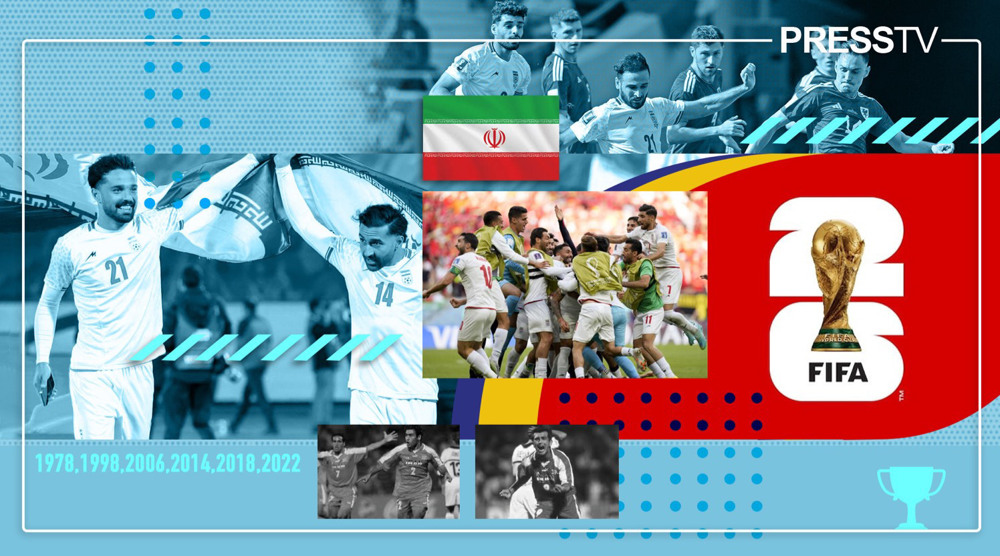
A journey through Iran’s FIFA World Cup campaigns from 1978 to 2022 reveals a story of joy and heartbreak, unforgettable performances and painful near-misses.
For Team Melli, the chase continues for the dream – to finally break through the group-stage barrier and carve out a place among the tournament’s knockout contenders.
For football-obsessed Iranians, the FIFA World Cup is far more than just a tournament. It is a global stage on which national pride, collective memory, and sporting ambition converge, uniting generations behind the red, white, and green colors.
Over the decades, Iran has cemented its status as one of Asia’s footballing heavyweights, consistently producing gifted players, humbling the continent’s formidable sides, and maintaining a prominent place in regional rankings.
Yet its World Cup journey has been a roller-coaster ride, defined by a handful of memorable victories, spirited displays against football’s giants, as well as agonizing exits, and a relentless pursuit of a historic breakthrough beyond the group phase.
Across six World Cup appearances, Team Melli has evolved into disciplined, tactically sophisticated competitors capable of going toe-to-toe with the world’s best.
Time and again, they have demonstrated resilience and flashes of brilliance, but the elusive passage to the knockout rounds remains the final frontier in Iran’s World Cup story.
1978: The pioneering debut in Argentina
Iran's first foray into the FIFA World Cup was in 1978 following a commanding qualification campaign.
Guided by head coach Heshmat Mohajerani, Team Melli successfully navigated the Asian and Oceanian qualifiers to secure the solitary berth allocated to the region.
Arriving in Argentina, Iran was largely an unknown entity to international observers, but the team carried the hopes and pride of an emerging Asian football nation eager to make its mark on the global stage.
Drawn into Group 4, Team Melli faced a daunting challenge against perennial heavyweights the Netherlands, a talented Scotland side, and South American powerhouses Peru.
Their opening fixture provided a harsh introduction to football at the highest level. A formidable Dutch side, spearheaded by Rob Rensenbrink, who struck a hat-trick, handed Iran a comprehensive 3-0 defeat.
However, the Iranians quickly responded with one of the most memorable moments of their debut campaign.
In their second match, they earned a shock result against a heavily favored Scotland side. Despite falling behind to an unfortunate own goal by Andranik Eskandarian, Iraj Danaeifard etched his name into history by scoring Iran's first-ever World Cup goal, securing a celebrated 1-1 draw.
The final group match ended in a 4-1 defeat to Peru, with Teófilo Cubillas also claiming a hat-trick for the South Americans, while Hassan Rowshan scored Iran's lone goal of the contest.
Although the debut campaign ended at the group stage, the 1978 World Cup laid a crucial foundation for the future of Iranian football and introduced Team Melli to a global audience.
Legendary figures such as goalkeeper Nasser Hejazi, midfield maestro Ali Parvin, and forward Hassan Rowshan demonstrated that Iranian players possessed the technical quality, composure, and talent to compete on football's biggest stage.
⚽ Iran’s national team is set to announce its final 26-player squad for the 2026 FIFA World Cup.
— Press TV Sports (@presstvsports) May 31, 2026
The head coach described the selection process as extremely difficult, revealing that intensive meetings were held over the past 48 hours to finalize the roster.@presstvsports pic.twitter.com/2ZoneL3MCq
1998: The 'Melbourne Epic' and a historic triumph
It took two decades and an unforgettable qualification playoff for Iran to return to the World Cup stage.
Dubbed the “Melbourne Epic,” Team Melli secured their ticket to France 1998 by overturning a 2-0 deficit against Australia to draw 2-2 on aggregate, advancing on away goals thanks to a late strike by Khodadad Azizi.
That resilient spirit carried into the main tournament, where Iran was drawn into Group F alongside Yugoslavia, the United States, and Germany.
Their opening match against a formidable Yugoslav side ended in a narrow 1-0 defeat, decided by a thunderous Sinisa Mihajlovic free-kick.
However, the defining moment of the campaign arrived in their second group fixture against the United States in Lyon. Widely described as one of the most politically charged matches in World Cup history, the encounter instead unfolded in a spirit of mutual respect and exemplary sportsmanship, with players and officials even sharing a joint pre-match group photograph.
On the pitch, Iran produced a historic performance to claim its first-ever World Cup victory.
Hamid Estili opened the scoring with a perfectly timed header, and Mehdi Mahdavikia sealed a famous 2-1 win with a blistering counterattacking finish, before Brian McBride pulled one back with a late consolation.
Although Iran lost their final match 2-0 to a clinical German side, the 1998 campaign remains eternally cherished. A golden generation featuring Ali Daei, Karim Bagheri, and goalkeeper Ahmad Reza Abedzadeh cemented their status as national icons after this World Cup.
2006: Underachievement in German Campaign
By the time the 2006 FIFA World Cup in Germany knocked, Iran had one of its most talented squads. Managed by Croatian Branko Ivanković, the team blended experienced veterans from the 1998 generation with a wave of emerging stars performing in Europe’s top leagues.
Drawn into Group D, Team Melli faced a formidable set of opponents in Mexico, Portugal, and tournament debutants Angola.
It opened its campaign with a promising first-half display against Mexico, with defender Yahya Golmohammadi leveling the score to send both sides into the break on equal terms. However, defensive lapses after halftime allowed Omar Bravo and Zinha to secure a 3-1 victory for Mexico.
In the following match against Portugal, Iran produced a disciplined defensive performance against a star-studded lineup. However, a moment of brilliance from Deco followed by a Cristiano Ronaldo penalty sealed a 2-0 defeat, confirming Iran’s elimination from contention.
Playing for pride in their final group fixture against Angola, Iran dominated possession but struggled to convert territorial control into clear-cut chances. After falling behind to an Angolan goal, Sohrab Bakhtiarizadeh rose to head home a late equalizer, ensuring a 1-1 draw.
The tournament was ultimately regarded as an underachievement given the depth of talent within the squad. Key figures such as Mehdi Mahdavikia and Vahid Hashemian showed only flashes of their true potential, while an inability to sustain intensity over the full 90 minutes left supporters disappointed.
🇮🇷 #OTD in 1998, Iran secured their first #FIFAWorldCup win! 🤩 pic.twitter.com/AssX9Pqc7X
— FIFA World Cup (@FIFAWorldCup) June 21, 2024
2014: Defensive masterclasses and Argentine heartbreak
The appointment of Carlos Queiroz ushered in a new era of tactical discipline and defensive solidity for the Iranian national team.
Qualification for the 2014 FIFA World Cup in Brazil was secured in impressive fashion, with Iran finishing top of its group ahead of regional rivals South Korea.
Drawn into Group F, Iran faced Nigeria, Argentina, and Bosnia and Herzegovina. The tactical blueprint was clear from the outset: a compact, highly organized defensive block designed to frustrate opponents and strike decisively on the counter-attack.
Their opening match against Nigeria was a gritty, hard-fought encounter that ended in a 0-0 draw, marking Iran’s first-ever clean sheet in World Cup history.
The subsequent clash against Argentina remains one of the most heartbreaking nights in Iranian football history. For 90 minutes, Team Melli executed a near-flawless defensive performance, effectively neutralizing an attacking quartet led by Lionel Messi.
Tragically, in the 91st minute, Messi found a sliver of space and curled a brilliant strike into the far corner, sealing a devastating 1-0 defeat.
Demoralized and physically drained after their heroic display against Argentina, Iran entered their final group match against Bosnia and Herzegovina needing a win to progress. Instead, they suffered a 3-1 defeat, with Reza Ghoochannejhad scoring Iran’s only goal of the tournament.
Despite the early exit, the campaign was widely praised back home. Players such as Andranik Teymourian, center-back Jalal Hosseini, and the dynamic Ashkan Dejagah embodied the team’s relentless work rate, tactical discipline, and collective resilience.
2018: Near-miss in the Group of Death
Building on the foundation laid in Brazil, Queiroz guided Iran to the 2018 FIFA World Cup in Russia with a dominant qualification campaign. The team went undefeated and did not concede a single goal across twelve consecutive qualifying matches.
However, the final draw handed Iran an exceptionally difficult assignment in Group B, widely labeled the “Group of Death,” alongside Spain, Portugal, and Morocco.
Iran’s campaign began in dramatic fashion against Morocco. After absorbing sustained early pressure, Team Melli snatched a historic 1-0 victory in the 95th minute, when Moroccan defender Aziz Bouhaddouz inadvertently headed a free-kick into his own net.
Against 2010 champions Spain in the second fixture, Iran once again executed a disciplined defensive structure, remaining compact and organized throughout.
They were unfortunate to fall 1-0, after a deflected clearance ricocheted off Diego Costa and into the net, while Saeid Ezatolahi also had a close-range equalizer controversially ruled out for offside following a VAR review.
The final group match against European champions Portugal produced a pulsating, emotionally charged 1-1 draw. The contest featured one of the tournament’s defining moments, as goalkeeper Alireza Beiranvand produced a dramatic penalty save from Cristiano Ronaldo, before Karim Ansarifard converted a 93rd-minute spot-kick to level the score.
Moments later, Mehdi Taremi narrowly missed a golden opportunity that would have eliminated Portugal and sent Iran through to the knockout stage.
Iran finished with four points, their highest-ever World Cup tally, narrowly missing qualification for the next round by a single point.
‼️ INFOGRAPHIC - FIFA World Cup 2026 draw has placed 48 teams into 12 groups, with Iran facing Group G challenge against Belgium, Egypt, and New Zealand, as world football’s biggest spectacle is set to unfold across North America in June 2026.
— Press TV 🔻 (@PressTV) December 13, 2025
Follow: https://t.co/LWoNSpkJSh pic.twitter.com/Cj4pPblDrV
2022: Late drama and familiar frustrations
The lead-up to the 2022 World Cup in Qatar was marred by administrative turbulence, resulting in the late reappointment of Queiroz just months before the tournament.
Drawn into Group B with England, Wales, and the United States, Iran possessed an experienced squad eager to finally break their group-stage curse.
The campaign began disastrously, however, as a lack of defensive cohesion led to a shocking 6-2 defeat against a ruthless England team. Star striker Mehdi Taremi provided the only bright spots by scoring twice in an otherwise bleak opening fixture. This made him the first Iranian to register a brace in World Cup history.
Demonstrating remarkable psychological resilience, Team Melli rebounded spectacularly in their second match against Wales. Dominating possession and creating numerous chances, they struck the post twice before finally breaking the deadlock in stoppage time.
Roozbeh Cheshmi unleashed a spectacular long-range strike in the 98th minute to open the scoring. A composed finish from Ramin Rezaeian in the 101st minute then secured a jubilant 2-0 victory for Iran.
The stage was set for a decisive, winner-takes-all clash against the United States. Needing only a draw to secure a historic progression to the knockout rounds, Iran adopted an overly cautious approach and were punished when Christian Pulisic scored from close range.
Despite a frantic, attacking push in the final twenty minutes, Iran could not find an equalizer, losing 1-0 and bowing out of the tournament once again.
Key players like Taremi, Rezaeian, and holding midfielder Saeid Ezatolahi gave their all, but the familiar heartbreak of a narrow group-stage exit endured.
Looking ahead: The 2026 ambition in North America
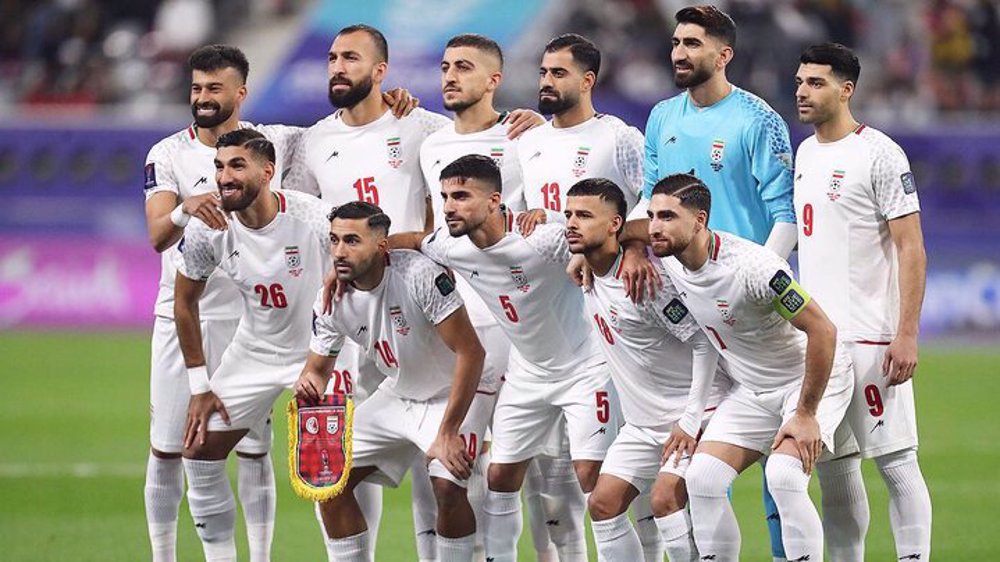
As the footballing world turns its attention to the expanded 2026 FIFA World Cup in North America, Team Melli is positioned to write a new chapter.
The recent group stage draw has placed Iran in Group G, where they are scheduled to face Belgium, Egypt, and New Zealand.
This intriguing mix of European tactical prowess, African physicality, and Oceanian resilience presents a multifaceted challenge for the Iranian squad.
With an expanded format allowing the top two teams and the eight best third-place finishers to advance, the mathematical odds have shifted favorably.
For Iran, the primary ambition remains crystalline: to finally shatter the group stage barrier that has confined them for six previous tournaments.
With a mix of veterans and a new generation of tactical talent, Team Melli will arrive in North America determined to transform decades of near-misses into a historic achievement.

Iran tops Asian Youth Karate Championships with 31-medal haul

Iran’s Rahimi wins gold at 2026 World Archery Para Series in India
Iran adds two more gold medals at 2026 World Nomad Games



Iran retains initiative in Strait of Hormuz despite US claims: Armed Forces
Yemeni army targets sensitive sites in Saudi capital, Aramco facilities in Yanbu
Barzegari’s silver lifts Iran to five medals at 2026 World Poomsae Championships
VIDEO | Pakistan, China co-chair historic SCO bank framework talks
VIDEO | Press TV's news headlines
VIDEO | News Review: US accused of understating troop deaths in war on Iran
Trump’s ‘war of choice’ against Iran ‘a disaster’: House Democratic leader
Iran’s nuclear doctrine not changed, but NPT withdrawal possible: Top security official


 PressTV NEWSLETTER
now
PressTV NEWSLETTER
now
 This makes it easy to access the Press TV website
