
By Press TV Strategic Analysis Desk
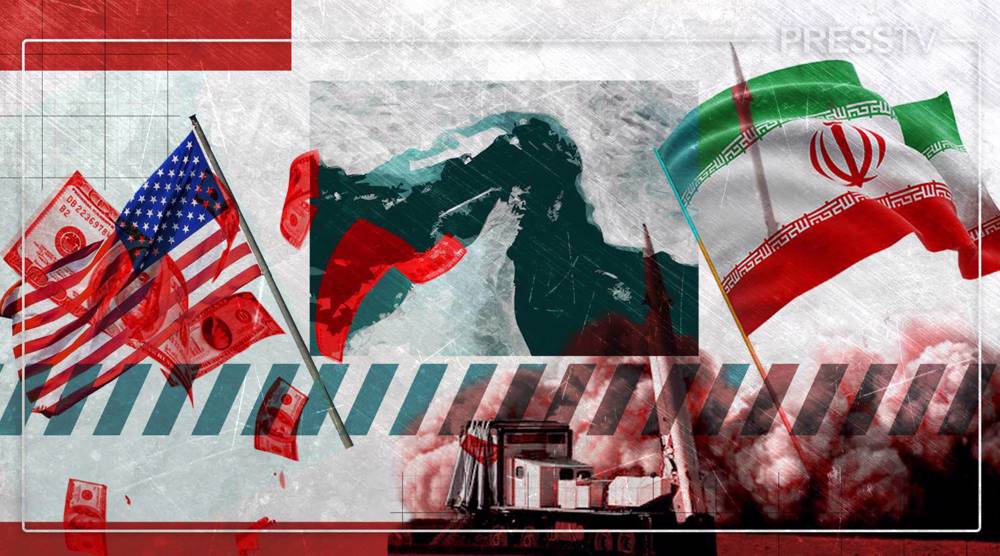
The third war imposed by the United States and its Zionist proxy on the Islamic Republic of Iran on February 28 is drawing to a close under conditions that unequivocally signify a comprehensive strategic failure for the aggressors.
Not a single one of the publicly declared objectives of the American-Israeli war alliance – the demand for "regime change," the insistence on unconditional surrender, or the explicit threat to physically dismantle Iran's military and civilizational fabric – has been achieved.
On the contrary, the Islamic Republic has not only survived the unprovoked and illegal military aggression but has emerged from it demonstrably strong and more resilient.
The enemy's miscalculations regarding Iran's true military capabilities, its social resilience, and its regional influence have backfired catastrophically.
The end of this war marks nothing less than a historic turning point: the dawn of Iran's era as a new superpower and the definitive beginning of American hegemonic decline.
Anatomy of a failure - Enemy's unachieved objectives
From the outset, the US and the Zionist regime operated under a profound miscalculation of Iran's national power. Convinced that a lethal cocktail of military pressure, economic strangulation, and internal subversion would suffice, they launched the third imposed war with a singular, delusional objective: the complete annihilation of the Islamic Republic.
This was never a limited engagement aimed at extracting concessions but an existential offensive built entirely on the assumption that Iran was brittle, isolated, and ripe for collapse. Every day of the 40-day war proved that assumption catastrophically wrong.
The enemy's propaganda machine, operating with an uncharacteristic transparency born of sheer arrogance, publicly advertised a litany of war aims that have since become historical artifacts of hubris, something acknowledged by both friends and foes of Iran.
From the very first day, American and Israeli regime officials explicitly declared that the war's purpose was nothing less than the destruction of the Islamic Republic. They sketched vivid scenarios of a partitioned Iran, demanded unconditional surrender, and announced the imminent annihilation of Iran's air and naval forces.
President Donald Trump himself speculated openly about designating a new leadership in Tehran. The boasts only escalated – Iranians would soon beg for a ceasefire, the job left unfinished 47 years prior would finally be completed, all of Iran's oil would be seized, Iranian civilization would be reduced to rubble, Iran itself would be wiped off the map.
These were not casual offhand remarks. They were repeated, recorded, and broadcast to the world throughout the 40 days of war and well beyond. Now, they stand as a permanent, irrefutable record of the enemy’s overreach and miscalculation. Notably, this pattern of pre-war grandiosity was not without precedent. During the 12-day war in June last year, the US had already claimed the complete destruction of Iran's nuclear industry, a boast that proved equally hollow. The repetition of such claims only deepens the humiliation of their failure.
Nowhere was the enemy's strategic confusion more starkly on display than in the confrontation over the Strait of Hormuz. Faced with Iran's decisive and entirely lawful action to block the waterway, a sovereign right exercised in legitimate self-defense, Americans cycled frantically through a series of incoherent and self-contradictory postures.
First, it claimed it would reopen the Strait immediately. Then, it declared it would simply abandon the Strait, absurdly asserting that it had no interests there and that others, who supposedly did have interests, should bear the burden.
Next, it called on NATO and its European allies for military assistance, without any favorable response. It then launched a naval armada to force the Strait open by raw military power, only to see that operation collapse in failure in less than 48 hours.
It resorted to a series of propaganda stunts, seeking souvenir photographs near the Strait and exploiting a ceasefire and the Islamabad negotiations to sneak two vessels through deceitfully. It threatened to attack and occupy Kharg Island. Finally, it attempted to line up 30 commercial vessels for an escorted exit from the Strait – an operation that failed disastrously, with serious damage inflicted upon the escorting naval assets.
Each of these maneuvers, from bluster to retreat, exposed a central, undeniable truth: the American war machine lacked both the strategic coherence and the operational capability to challenge Iran's legitimate and unopposed control over its sovereign waters.
✍️ Analysis - Empire at its nadir: Trump’s hollow threats mask America’s descent as Iran stamps its authority
— Press TV 🔻 (@PressTV) May 23, 2026
By Press TV Strategic Analysis Deskhttps://t.co/czqWG1A8LM
The twin miscalculations – Hubris meets reality
The entirety of the enemy's failure can be traced to two fundamental miscalculations, each compounding and reinforcing the other in a deadly spiral of strategic blindness.
The first error was America's intoxication with its own crude propaganda. It grew dangerously arrogant about its capabilities across multiple domains. In domestic politics, it assumed it could sustain a prolonged war without triggering internal backlash. In its internal economy, it believed its financial power could simply outlast Iran's resilience. In international politics, it took for granted that it could maintain a unified coalition.
In military, strategic, and intelligence affairs, it assumed that technological superiority would automatically translate into decisive military victory. This was pure delusion and a classic case of a declining hegemon mistaking its fading legacy for living reality.
The second error – far larger and more consequential – was the enemy's systematic underestimation of Iran's actual capabilities. The US and its Zionist proxy failed catastrophically to assess the full spectrum of Iranian power.
It didn’t take into account Iran’s military and strategic strength, including advanced missile forces and asymmetric warfare doctrines; its deep regional influence and network of allies, chief among them the resistance front; its domestic political cohesion and popular legitimacy, including people’s remarkable resilience and unwavering willingness to defend the nation; its economic and social endurance under maximum pressure; and the extraordinary adaptive capacity of Iranian institutions in wartime.
This double miscalculation, inflating one's own power while deflating the adversary's, is the classic formula for strategic disaster. The enemy marched into this war expecting a walkover and found itself trapped in a deep quagmire with no easy or dignified exit.
This miscalculation wasn’t limited to Iran alone. The Zionist regime repeated the identical error regarding Hezbollah's capabilities, resources, and strategic leverage.
Having profoundly underestimated the Resistance's battlefield competence, logistical depth, and staying power, the regime now finds itself ensnared in southern Lebanon, caught in Hezbollah's strategic net, with no viable path forward and no honorable retreat.
This parallel failure across two fronts underscores a systemic intelligence and strategic deficit running deep through the entire enemy camp, from Tel Aviv to Washington and beyond.
The end of the war – Imposed defeat on America
The war is ending not through an American victory, nor even through a negotiated compromise, but through the outright imposition of a ceasefire upon the United States.
Whether formalized as a memorandum of understanding or a final agreement, this ceasefire has been forced on Washington and its proxies without the achievement of a single one of Trump's declared objectives or boasts. By merely agreeing to end hostilities under such terms, the American side has implicitly admitted the totality of its miscalculations and initiated a disgraceful, headlong retreat from every demand and threat it once made.
For the US, the outcome is a ledger of absolute zeros: no fall of the Islamic Republic, no “regime change,” no strategic realignment of Iranian policy, no weakening of Iran's nuclear or missile capabilities (let alone their destruction), no degradation of the resistance front, and, most critically, no uprising or internal collapse.
Every scenario the enemy had scripted played out instead as a humiliating debunking.
For Iran, by contrast, the gains are substantial and irreversible. Sovereignty over the Strait of Hormuz is now a fact on the water, not a legal abstraction. Iran's power projection in the Persian Gulf has been dramatically enhanced, with its role and standing elevated beyond any pre-war measure. Designated terrorist groups operating against Iranian interests have been destroyed or seriously weakened. Iran's international image, severely damaged by the January coup attempt, has been restored and even enhanced.
And on the domestic front, the war has forged unprecedented unity, marked by the continuous, historic presence of the Iranian people on the scene, actively and visibly supporting the Islamic Republic and the country's armed forces.
Even in the purely hypothetical – indeed impossible – scenario where Iran received no material compensation for the destruction caused by the enemy during the war, the mere fact of American failure would still constitute an unequivocal Iranian victory.
America's failure in the third imposed war must be understood as the final act of a trilogy. In less than ten months, Iran has emerged victorious from three distinct wars: the 12-day war, the January coup attempt, and now the 40-day imposed war. Two military campaigns and one covert regime-change operation – all failed consecutively and disastrously.
This is no coincidence but an unmistakable pattern of systemic Iranian resilience on one side and systematic American incompetence on the other.
✍️ Analysis - With strategic upper hand, Iran conditions nuclear talks on war's definitive end – on its terms
— Press TV 🔻 (@PressTV) May 21, 2026
By Press TV Strategic Analysis Deskhttps://t.co/7IkQA1le2u
The geopolitical earthquake – Iran's superpower emergence and American decline
Even if secondary issues remain unresolved, such as the precise mechanism for lifting illegal sanctions, the question of war reparations, or formal American recognition of Iran's sovereignty over the Strait of Hormuz, the central, undeniable fact stands immutable: the United States deployed its most advanced military, economic, and technological arsenal to bring Iran to its knees, and it failed utterly and humiliatingly.
Consider the magnitude of this moment. For at least a full century, this was the superpower that dominated global wars and conflicts, a superpower whose mere deployment of aircraft carriers would topple governments and redraw regional maps at will.
That same superpower has now failed against the Iranian nation, a nation materially and economically less powerful by any conventional metric. This is not a minor setback or a tactical inconvenience but a seismic event with far-reaching consequences. It stands as the single most visible evidence of American decline since the end of the Cold War.
The failure of the third imposed war marks not merely a decisive Iranian victory, but the beginning of an entirely new era: Iran's emergence as a superpower in its own right.
This is not hyperbole but a structural shift in the global balance of power. A nation that successfully defends its sovereignty against a full-spectrum and unprovoked aggression, imposes its terms on the defeated aggressor, expands its regional influence, and demonstrates strategic patience and civilizational resilience – such a nation has unequivocally earned its place at the table of great powers.
Iran has accomplished all of this while operating under the most severe sanctions regime in modern history, which continued even during the recent war.
At a minimum, this outcome has radically and permanently altered the cost-benefit calculations of any future aggressor. The decision to impose another war on Iran – should any enemy be foolish enough to contemplate such madness again – is now exponentially harder, more complex, and more perilous than the decision the enemy made on February 28. Iran's deterrent capability has been elevated from a regional asset to a strategic global reality and the war planners in Washington fully know it.
The unending struggle – Hostility with no end
Despite the impending end of the third imposed war, several critical issues within the agreement desired by Iran remain deliberately ambiguous. The US has conspicuously failed to provide clear answers on key clauses. Therefore, from Iran's perspective, no final agreement exists – and no such agreement will be recognized – until every element, component, and clause of it is fully realized and unambiguously clarified.
Moreover, even if an agreement were to be finalized, the potential for American treachery is not a mere possibility but a feature encoded deep in the enemy's political DNA.
The American war machine twice launched wars in the very midst of negotiations. An enemy that resorts to aggression while talking cannot be trusted to honor commitments once the ceasefire takes hold. Past behavior is not merely a warning but a predictor of future conduct.
The enmity and hostility of the US and other arrogant powers toward the Islamic Republic is not a temporary policy disagreement, nor a conflict over this or that administration's priorities. It is a structural feature of the international system itself, and it will remain so as long as Iran maintains its independence, upholds the basic rights of its people, and adheres unwaveringly to its revolutionary Islamic principles and identity.
This struggle will not end with any single agreement, memorandum, or ceasefire. It will persist, relentlessly, albeit on shifting battlefields and through evolving tactics.
Even at this late stage, the enemy retains its full capacity for deception. The heavy offensive military deployment currently arrayed around Iran's borders – troops, naval assets, and air power in overwhelming concentration – is not defensive posturing by any definition. It is a clear signal of potential renewed betrayal.
Iran must therefore remain vigilant, operating always under the expectation that the enemy may once again violate both the spirit and the letter of any dialogue and any agreement. Vigilance is not paranoia but a strategic necessity against an enemy like the US.
✍️ Analysis - The geometry of power: Trump’s repeated retreats prove US systemic paralysis, Iran’s strategic ascent
— Press TV 🔻 (@PressTV) May 19, 2026
By Press TV Strategic Analysis Deskhttps://t.co/UnwD4fPA0U pic.twitter.com/FSqXwtMg9w
Strait of Hormuz – A sovereignty neither negotiated nor dependent on recognition
Iran does not require – and has never sought – American recognition of its legal sovereignty over the Strait of Hormuz. The strategic waterway in the Persian Gulf is under Iran's effective control, a fait accompli carved not from negotiation but from action, a right achieved and exercised, not a favor to be begged for at the negotiating table.
To expect Americans to formally admit this reality would be to expect the enemy to officially certify its own superpower decline and decay. American global hegemony was built upon two pillars above all others: uncontested naval power and the freedom of movement across every waterway on the planet. Formal recognition of Iranian control over one of the world's most vital chokepoints would be nothing less than a public, ceremonial admission that those pillars have crumbled and that era has ended.
Iran's presence in the Strait of Hormuz is not an act of extortion, as enemy propaganda endlessly claims, but an act of responsible stewardship.
The services Iran provides, ensuring maritime security against piracy and aggression, protecting the fragile marine environment from pollution and disaster, offering necessary navigational aid and emergency response to vessels in distress, actively facilitating the free flow of trade and economic prosperity for the entire region and the world at large.
Therefore, any fees Iran receives or will receive for these services are not arbitrary "tolls" or "taxes" levied on international commerce. They are legitimate service charges for vessels transiting the waterway. This framing is no mere semantic distinction but the legal, operational, and moral basis for Iran's continued administration of the waterway.
And unlike the hegemon's unfounded claims, it rests not on boasts but on boots on the ground – or rather, ships on the water.
 This makes it easy to access the Press TV website