Iranians never bow to pressure, says Araghchi after US ceasefire violations
Iran’s Foreign Minister Abbas Araghchi has warned that the United States tends to resort to military adventurism precisely when a diplomatic solution appears imminent, while stressing that the Islamic Republic will never yield to pressure.
“Every time a diplomatic solution is on the table, the US opts for a reckless military adventure. Is it a crude pressure tactic? Or the result of a spoiler once again duping POTUS into another quagmire?” Araghchi wrote on the social media platform X on Friday.
“Whatever the cause, the outcome is the same: Iranians never bow to pressure, and diplomacy is always the victim,” he added.
The foreign minister’s remarks came after the Bahman Pier on Iran’s Qeshm Island was attacked late Thursday night during a fierce exchange of fire between Iranian armed forces and hostile units operating near the Strait of Hormuz.
According to Iran's Fars News Agency, portions of the commercial area at the vital Bahman pier on Qeshm Island were struck and partially damaged amid the confrontation.
This came as Iranian soldiers responded decisively to hostile actions in the strategic waterway, forcing the aggressors to retreat after sustaining losses.
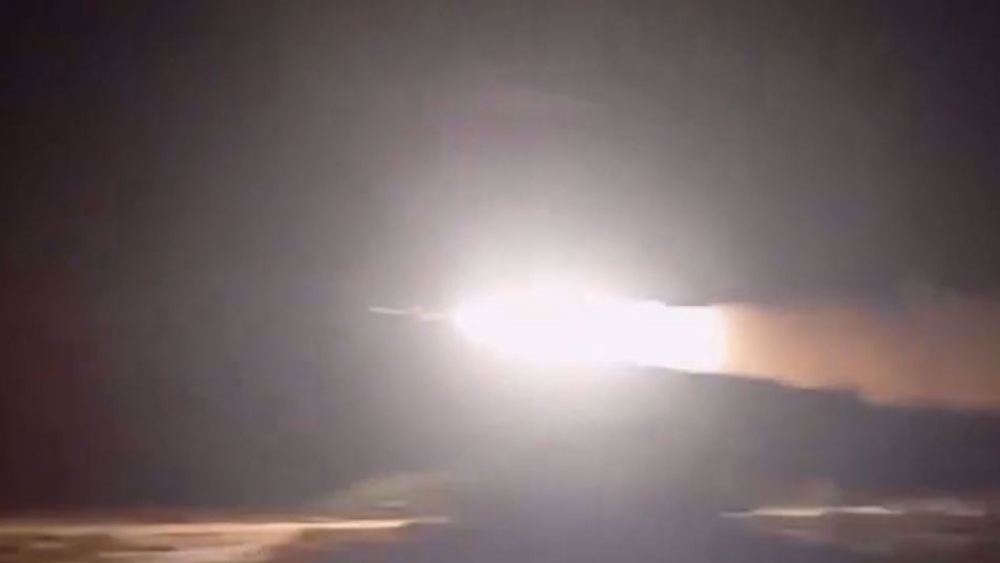
Several explosion sounds were also heard near the southern Iranian city of Bandar Abbas.
Fox News reported that the US military carried out attacks on the ports of Qeshm and Bandar Abbas, but claimed that these attacks do not mean the start of war.
While the Israeli regime’s i24NEWS network rushed to quote an Israeli source claiming “Israel has no connection whatsoever to tonight’s events in Iran,” other reports, including from sources within the regime itself, have pointed directly to UAE fighter jets carrying out the bombing.
Iran’s Tasnim News Agency highlighted clear indications of hostile involvement by the UAE, describing the UAE government as acting as a mere proxy and tool in the hands of the Zionist regime.
No casualties have been reported from the strike on the civilian-oriented commercial pier, underscoring the precision of Iranian defensive measures even under direct provocation.
Elsewhere in his remarks, Araghchi dismissed media reports citing a US official as saying that Iran retains “about 75% of its prewar inventories of mobile launchers and about 70% of its prewar stockpiles of missiles.”
“The CIA is wrong. Our missile inventory and launcher capacity are not at 75% compare to February 28. The correct figure is 120%.”
“As for our readiness to defend our people 1,000%,” he underscored.
The US and Israel started a fresh round of aerial aggression on Iran on February 28, some eight months after they carried out unprovoked attacks on the country.
The aggression was launched as Tehran and Washington had held three rounds of indirect negotiations in the Omani capital of Muscat and the Swiss city of Geneva and planned to open technical talks in Vienna, Austria.
Iran began to swiftly retaliate against the strikes by launching barrages of missiles and drone attacks on the Israeli-occupied territories as well as on US bases and interests in regional countries.
A Pakistani-mediated two-week ceasefire was brokered on April 8, allowing for negotiations in Islamabad, where Iran proposed a ten-point plan calling for US troop withdrawal and the lifting of sanctions.
Despite 21 hours of intensive talks on April 11 and 12, the Iranian delegation returned to Tehran without an agreement, citing deep mistrust that Washington would honor its commitments.
Iran has stated that any return to ceasefire negotiations is contingent on the lifting of the illegal US naval blockade against Iran, which officials argue constitutes a violation of the truce.
Leader’s advisor says West Asia not 'backyard of West'

Iran paid high price for dignity, won't bow to bullying: Acting defense minister
Pezeshkian stresses ‘all-out readiness’ as he congratulates six new commanders



VIDEO | Spain checks Italy arrivals as migration row intensifies
VIDEO | Italy, Germany continue to shield Israeli regime at EU level
VIDEO | Press TV's news headlines
IRGC vows to fulfill Leader’s demands, exemplify resistance against Zionist-American arrogance
VIDEO | Gaza’s dialysis lifeline under strain as kidney patients struggle for care
VIDEO | Israeli expansionism in West Bank
Iran’s ballistic missile, drone production levels exceed deployment rate: IRGC chief cmdr.’s advisor
VIDEO | Israeli forces blow up family home of slain Palestinian in West Bank


 PressTV NEWSLETTER
now
PressTV NEWSLETTER
now
 This makes it easy to access the Press TV website
