

As April 21 dawned, the fragile ceasefire between Iran and the United States stood on the edge of collapse; in Washington, Donald Trump rejected certainty and power, declaring he had no intention of extending the truce.
The message was stark. Trump claimed Tehran had little time left before the United States would unleash what he alleged to be a huge attack on Iranian infrastructure.
It was a familiar posture, maximum pressure, maximum threat, designed to force a decisive concession. Yet within hours that posture unraveled in a sudden and striking reversal, Trump announced that the ceasefire would, in fact, be extended.
The justification came quickly; Pakistani mediators, he claimed, had urged Washington to allow more time for diplomacy. The same administration that had signaled imminent escalation now spoke the language of delay and reconsideration.
In a social media post the embattled president wrote, "I have therefore directed our military to continue the blockade and in all other respects, remain ready and able and will therefore extend the ceasefire until such time as their proposal is submitted and discussions are concluded one way or the other."
The contrast could not have been sharper. Only hours earlier an extension had been off the table. Now it was policy.
The abrupt shift reverberated far beyond Washington, particularly in Islamabad, where a new round of negotiations had been scheduled.
Iranian officials, already condemning the US naval blockade of their ports, began to question whether talks could proceed at all under such conditions.
A unilateral ceasefire from the United States signals more than restraint. It hints at a deep concern about the cost of re-entering a war with Iran.
From Washington's vantage point, a renewed conflict risks shifting the strategic balance in Tehran's favor, especially in critical chokeholds such as the Strait of Hormuz.
In that scenario, the United States might find itself negotiating from a weaker position and potentially forcing even a figure like Trump to offer greater concessions just to bring the conflict to a close.
What Washington presented as strategic flexibility, Tehran framed as inconsistency, Trump had not merely adjusted course, he had reversed course after having issued explicit threats.
The ceasefire, once portrayed as a final opportunity for Iran to accept US terms or face renewed bombardment, was now extended without those conditions being met.
The result was immediate criticism in the United States, skepticism among allies, and, perhaps most importantly, a perception that Iran's firm stance had stabilized its position.
Former Iranian parliamentarian Shahryar Heidari asserts that Trump is the victim of his own hubris and his administration's miscalculations.
What were some of the factors that led to Donald Trump's unilateral announcement of an extension to the two week ceasefire with Iran?
Trump initially aimed to overthrow the Islamic Republic in two weeks, but because of his misjudgment of Iran's power and resilience, he had to unilaterally declare a ceasefire and retreat.
If things had gone as he had hoped, he never would have backed down.
Shahryar Heidari, National Security and Foreign Policy Advisor, Iranian Parliament
Axios journalist Barak Ravid captured the contradiction succinctly, saying "the extension of the ceasefire contradicts Trump's statement on Tuesday morning when he said he did not want to extend the ceasefire, yet this move shows that he is not prepared to resume the war", an interpretation shared by many observers.
The United States, despite its rhetoric, appeared reluctant to escalate. Behind this hesitation lay a convergence of pressure from various quarters.
Domestically, the political cost of war was rising with the FIFA World Cup 2026 approaching, an event the United States was preparing to host, and midterm congressional elections looming in November, the appetite for prolonged conflict was waning.
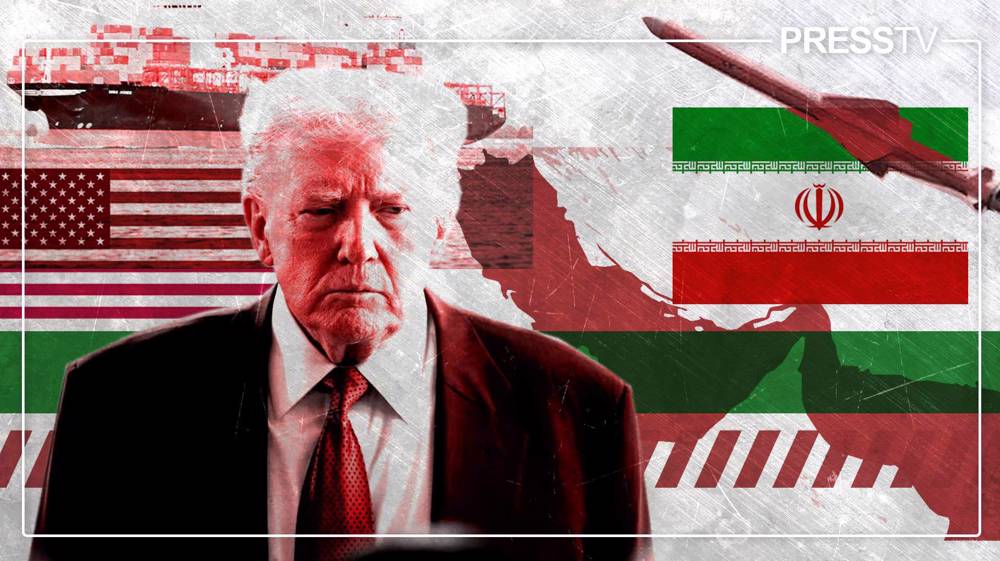
Public opinion had shifted dramatically. Support for Trump once reported at over 75% at the onset of the war had fallen to just 36%.
Civil protests, elite dissent, and, growing unease within political circles combined to create an environment in which escalation carried significant risk.
Morteza Simiari, a political analyst based in Tehran, concludes that division runs deep within the US military and intelligence agencies over the Iran war.
Now there are major disagreements among US commanders.
The US Navy chief has been dismissed, eight high ranking generals have been replaced, and many US soldiers are unwilling to fight.
We saw American soldiers say they were fighting for Israel.
And even a former anti-terrorism official stated that "this war was not securing America's safety, but rather undermining it, as Iran was never a security threat to the US, our strategy was to gradually assert control and stabilize the situation."
Morteza Simiari, Political Analyst
Internationallyو the picture was no less challenging. Energy markets reacted nervously to the crisis, with fears of supply disruption pushing prices upward.
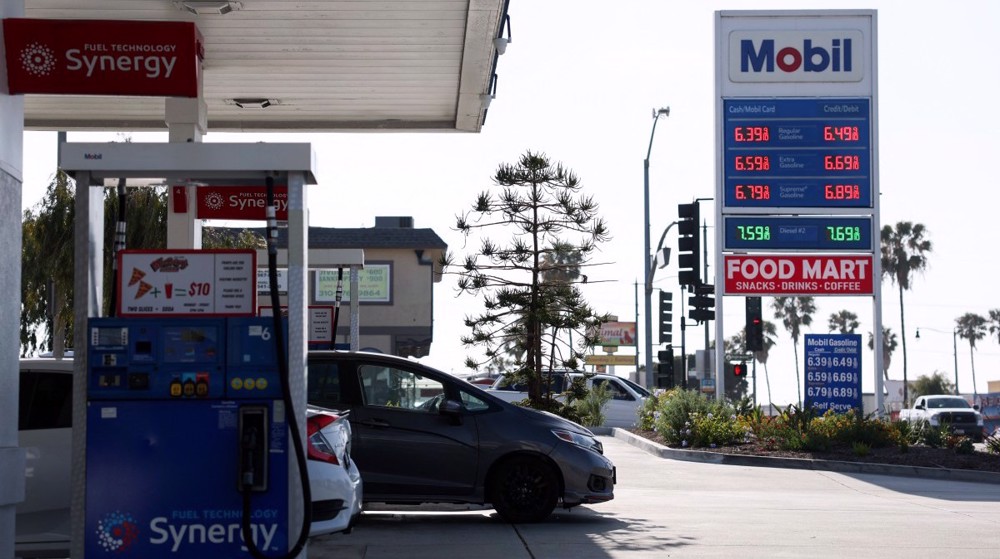
While Washington sought to isolate Iran economically, Tehran continued exporting oil at record levels, the unintended consequence was clear; pressure on Iran did not translate neatly into leverage, but instead contributed to global instability that complicated Washington's own position.
Since the Islamic Republic has entered negotiations from a position of strength, Trump has been playing with words daily, trying to reach his minimal goals while also convincing public opinion.
We know part of Trump's personality is shaped by psychological operations, because it's tough for him to persuade the public, especially with all the criticism he's facing now.
He's trying to secure some kind of achievement in negotiations that allows him to avoid war while also justifying his actions to the public.
Shahryar Heidari, National Security and Foreign Policy Advisor, Iranian Parliament
Analyst Trita Parsi offered a blunt assessment, saying "Trump backed down and agreed to extend the ceasefire. Importantly, he extended the ceasefire indefinitely while Iran continues to control the strait."
Control over geography, over timing, over escalation, had become the central theme of the conflict.
Washington's hesitation toward another confrontation with Iran is rooted in more than caution. It reflects recognition of Iran's demonstrated battlefield resilience and authority in the current political and strategic landscape, a renewed war could possibly end with Iran proving itself as the decisive victor in the third imposed conflict.
To what extent do you think that Trump's unilateral extension of the ceasefire with Iran was actually due to his realization of the heavy costs that possibly would be inflicted in case the war continues?
Before the war the US had a flawed strategy. Trump believed he could implement quick and cheap wars under the Monroe Doctrine, increasing America's advantage.
He thought this would avoid the long-term engagements like those in Iraq and Afghanistan, allowing them to meddle in country's political structures and exploit them.
This strategy worked to some extent in Venezuela, but in Iran, they misunderstood the internal dynamics.
They didn't grasp the true nature of Iran.
Morteza Simiari, Political Analyst
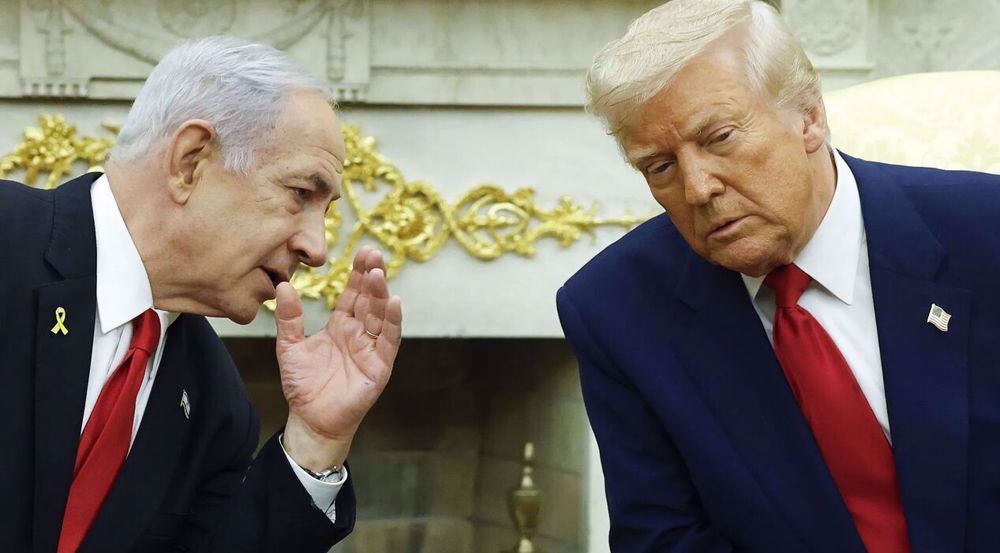
US strategy during the two week ceasefire had been built around coercion; a naval blockade was imposed on Iranian ports and vessels were seized in an effort to restrict Tehran's economic lifelines.
The expectation was that such pressure would force the Iranian negotiating team to arrive in Islamabad, ready to concede. However, it had the exact opposite effect.
Tehran responded with clarity and firmness that until the blockade was lifted and the seized ships released, there would be no participation in negotiations, no delegation, no talks, no symbolic engagement.
Even reports that US Vice President JD Vance might be absent from the American delegation, was interpreted as a test of Iran's resolve.
The response was unwavering, without tangible changes on the ground, diplomacy would not proceed.
On the eve of the talks, Iran made its position official. It would not send any delegation to Islamabad.
The decision officials emphasized was not impulsive, but rooted in a pattern, what they described as repeated US violations of the ceasefire combined with escalating economic and military pressure.
How can one talk about honest negotiations when political, security, military and economic pressure is applied by one side of the equation?
Trump had clear objectives, regime change, unconditional surrender, dismantling Iran's air and naval forces and gaining control over enriched uranium.
But which of these did he actually achieve?
On our side, we said we would regionalize the war, and we did. We said it would have global consequences, and it did.
We said we would not relinquish the Strait of Hormuz, and we did not.
Now look at who is setting preconditions for negotiations and who is unilaterally extending ceasefires.
These are all indicators of who came out on top in this war.
Naser Torabi, Political Analyst
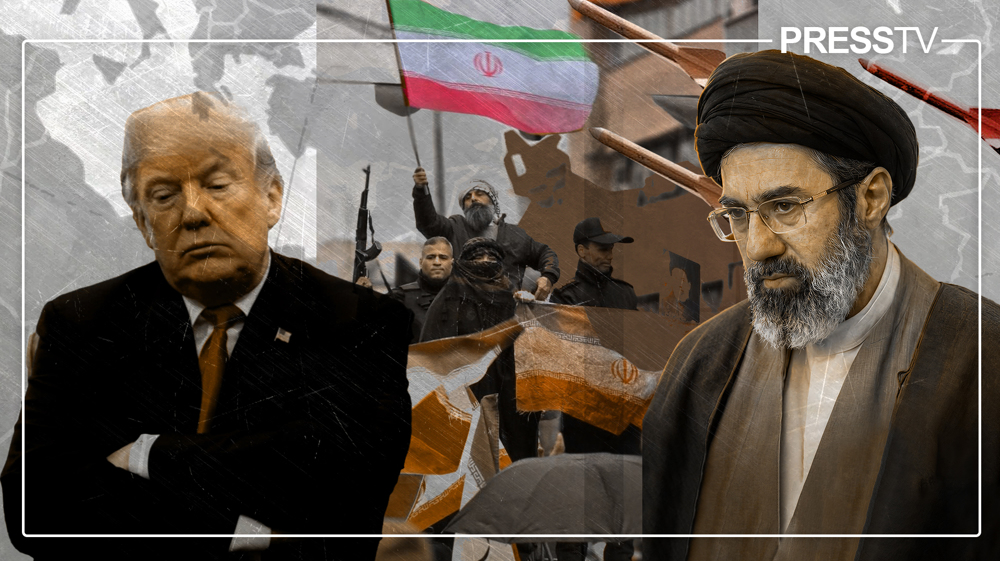
While diplomacy stalled, the battlefield told a parallel story.
Despite the technological superiority often attributed to US forces, American bases across the region came under sustained attack.
Reports indicated that even advanced air defense systems failed to prevent strikes, including those involving Iranian aircraft.
The damage was extensive, warehouses, command centers, aircraft, hangars, satellite communication systems, runways, radar installations and dozens of aircraft were hit.
During operation True Promise 4 and throughout 100 waves of attacks, the situation evolved to the point where the Americans had to face the realities of war with Iran.
From wave one to wave 40, we brought the war to a balance, responding with an eye for an eye.
From wave 40 to 70, we consolidated our position, and from wave 70 to 100 Iran gained full control over the course of the war.
Morteza Simiari, Political Analyst
According to NBC News, the scale of the damage was far worse than publicly acknowledged, with repair costs expected to reach billions of dollars.
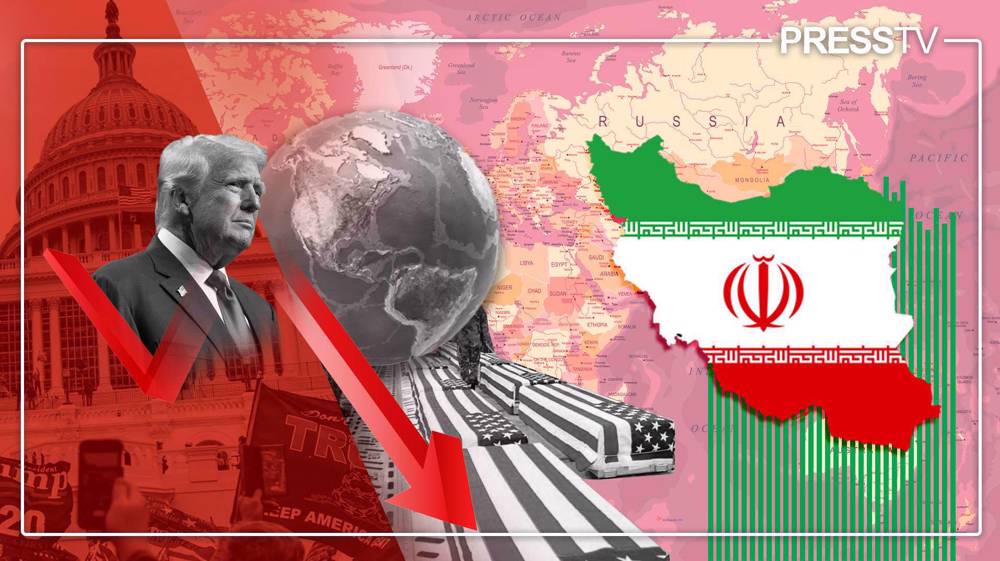
Yet the United States Central Command, CENTCOM, declined to provide detailed assessments, fueling speculation about the true extent of the damage.
The Khatam al-Anbiya Central Headquarters (KCHQ) had been preparing for years before the war.
Right after it began, the first move was to target enemy radar systems in the region, which was critical.
The enemy's munitions supply quickly ran low because they lacked a coherent strategy.
They had expected a three day war.
In contrast, Iran had planned for a prolonged midterm conflict, even if some US weapons performed well tactically, the broader picture shows they lacked a solid military strategy.
Naser Torabi, Political Analyst
A naval blockade may project strength, but in the case of Iran, it is unlikely to deliver meaningful leverage; the country's expansive land and maritime borders, combined with decades of adaptation to pressures from sanctions, blunt the effectiveness of such tactics.
Rather than coercion, a blockade may risk becoming a costly display with limited strategic return.
In the short term, a naval blockade, especially when combined with Western media and psychological operations, could impact both the global economy and Iran's economy, and that makes it risky.
In fact, the risk is greater for the US than for Iran, since Iran is already accustomed to sanctions.
In the medium term, it could have some effect on Iran, though that's unlikely to last.
In the long term, sustaining such a blockade isn't feasible, and it's unlikely to continue or have a lasting impact.
Naser Torabi, Political Analyst
At sea, the confrontation took on even greater significance. Beginning on April 13, US forces announced they would intercept or turn back vessels traveling to or from Iran's coast.
The goal was clear, to choke off Tehran's ability to profit from oil exports.
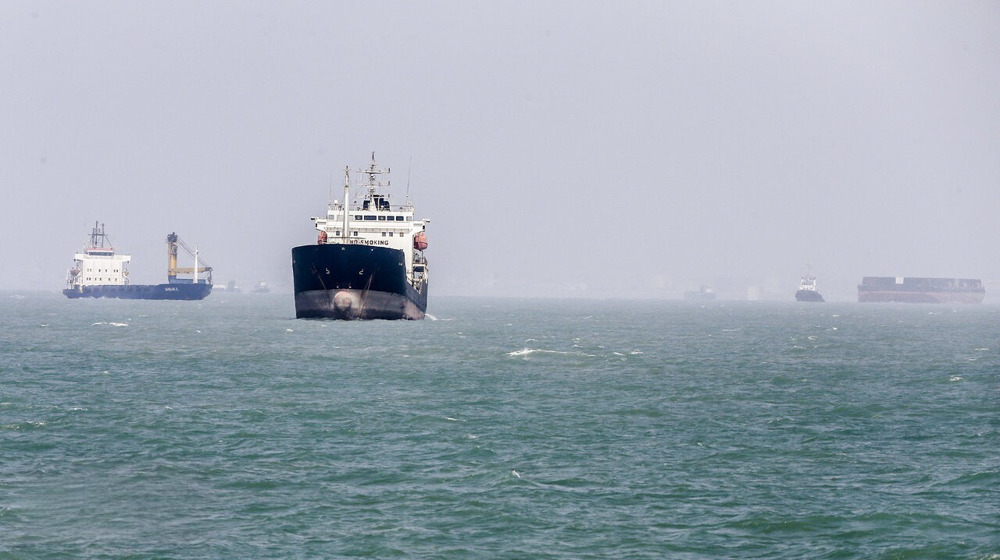
But the outcome, once again, defied expectations. Despite the blockade, Iran continued to move oil. Tanker trackers and media reports indicated that at least 4.6 million barrels, worth nearly $400 million, had been loaded at export terminals in recent days.
The effort to strangle Iran's energy lifeline had not succeeded, instead, it exposed the limitations of maritime enforcement against a country with both geographic advantages and adaptive strategies.
The US has shifted towards an economic pressure campaign against Iran, in this case, imposing a blockade on the Strait of Hormuz.
Do you think that this is an indication that the military option failed to deliver the expected result?
Under international law, what's referred to as a naval blockade is itself a military Act, and the Geneva Conventions clearly consider it a violation of a ceasefire.
Typically, a blockade precedes military action, but in this case, the US reversed that order.
They attacked first, and only after failing to achieve results and seeing their credibility damaged did they turn to a naval blockade.
Naser Torabi, Political Analyst
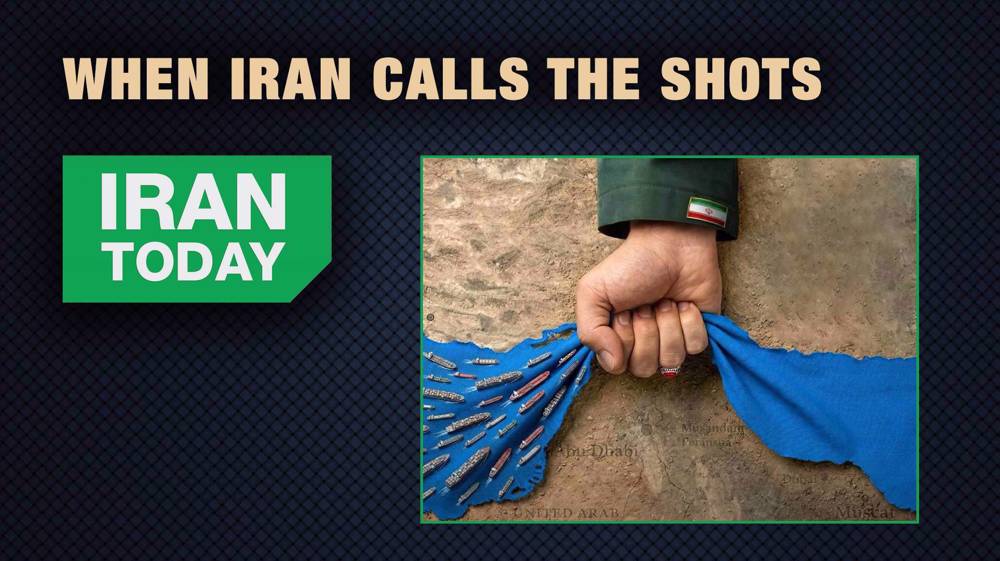
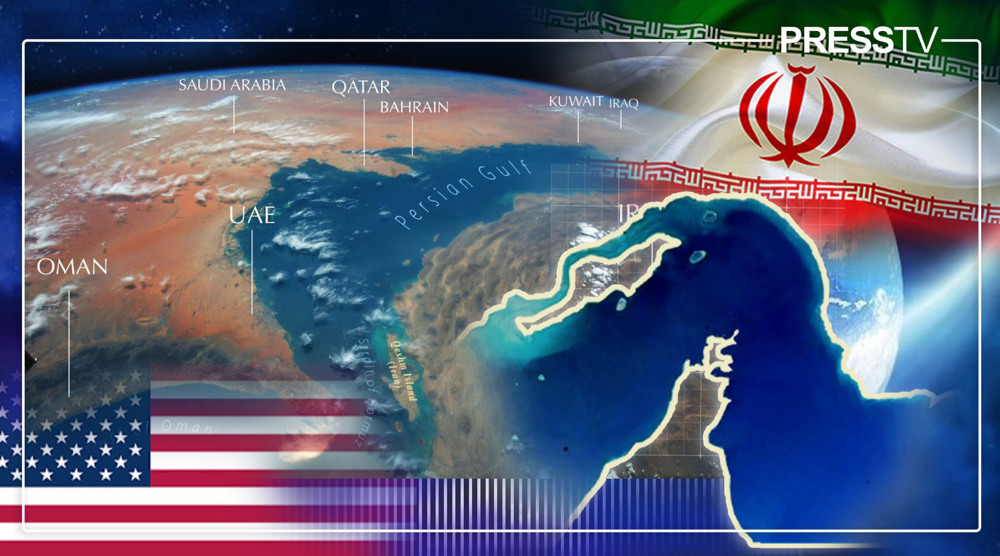
Those advantages are rooted in a single critical location, the Strait of Hormuz.
Narrow, heavily trafficked, and, geopolitically vital, the strait has long been recognized as one of the most important choke points in the global economy.
For Iran, situated along its northern coast, it is both shield and sword.
Before the war began, we had already planned for the people's economic and military needs. Iran has such extensive reserves in various sectors that a naval blockade wouldn't disrupt the country.
Moreover, under international law and maritime regulations, the US has no right to impose such a blockade.
Today, under the pretext of this blockade, the US has stopped many countries in the sea, but Iran still believes in its right to use its maritime boundaries and the conventions we have signed, which clearly define our rights.
Shahryar Heidari, National Security and Foreign Policy Advisor, Iranian Parliament
What sets this moment apart is that Iran is no longer a target of economic pressure, and is also an active wielder of it.
Control over the Strait of Hormuz provides Tehran with a powerful lever over global energy flow, transforming it into a potential source of counter pressure against the United States and its allies, and, unlike in the past, Iran now holds a tool that can impose real economic consequences far beyond its borders.
Approximately 88% of Saudi Arabia's oil exports, 90% of Iran's, 98% of Iraq's, 99% of the United Arab Emirates, and all exports from Kuwait and Qatar move through this narrow corridor.
In total, around 90% of Persian Gulf exports and a significant share of global supply depend on its security. Beyond oil, roughly 50% of the region's trade with the world also flows through these waters.
How has the strategic role of the Strait of Hormuz in the power equation impacted Iran's more active stance compared to the past?
If we close the Strait of Hormuz to hostile countries, including the US and its allies, we're simply exercising our legal right.
Until now, we have avoided creating any disruptions in the strait because we have prioritized good, neighborly relations with the Persian Gulf States, we cooperated easily with other countries while maintaining oversight and benefiting from the waterway.
However, the war has led Iran to reassess its stance on its maritime rights.
Shahryar Heidari, National Security and Foreign Policy Advisor, Iranian Parliament
Control of such a passage is not merely a tactical advantage, it is a strategic determinant.
Since the Islamic Revolution, the United States has sought to constrain Iran through sanctions and isolation, yet geography has consistently provided Tehran with a counterweight.
Today, that counterweight has evolved into a pillar of deterrence alongside missile capabilities, nuclear potential and regional alliances, control over the Strait of Hormuz represents a fourth dimension of Iranian power, one that blends hard power with economic leverage and strategic depth.
What was once a defensive asset has taken on an aggressive dimension, enabling Iran not only to deter adversaries, but to shape the broader environment in which they operate.
Some believe that the new means of economic pressure against Iran, such as the recent naval blockade on the Strait of Hormuz, will prove ineffective.
The project of isolating Iran has now turned into a project of isolating America.
Persian Gulf countries are now pressuring the US to find ways to get their oil tankers through the Strait of Hormuz, to maintain their trade balances and secure essential goods.
The tables have turned.
Morteza Simiari, Political Analyst
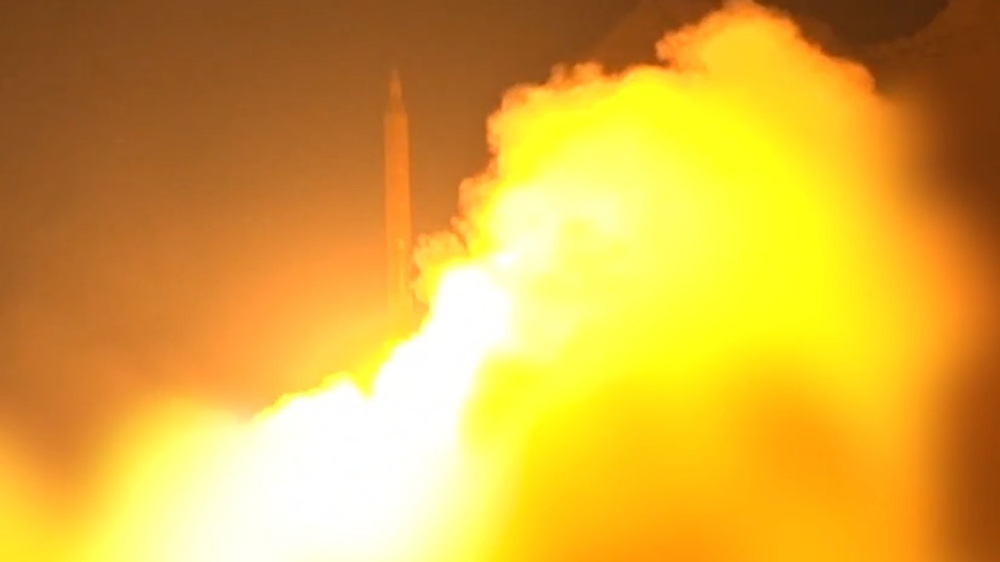
Majority of US bases in West Asia damaged in retaliatory strikes by Iran, allies
One of the key reasons for our success, alongside political cohesion and internal unity, is Iran's geopolitical advantage.
The Americans initially viewed the war with Iran as a vertical conflict, attack and response, but when the war began, they realized it was a horizontal regional war.
Out of 17 US bases in the region, 14 have been completely destroyed. American reports now question whether rebuilding Al Udeid is even worth it.
They have lost their bases, the regional war, and their cheap war strategy has completely failed.
Morteza Simiari, Political Analyst
And so the narrative returns to where it began, a ceasefire extended not from strength, but from constraint.
What was intended as a demonstration of over overwhelming power has instead revealed the complexity of modern conflict where military might alone cannot dictate outcomes, and where geography, resilience, and, strategic patience, can shift the balance.
 This makes it easy to access the Press TV website