Trump’s pyrrhic gamble with blockade on Strait of Hormuz
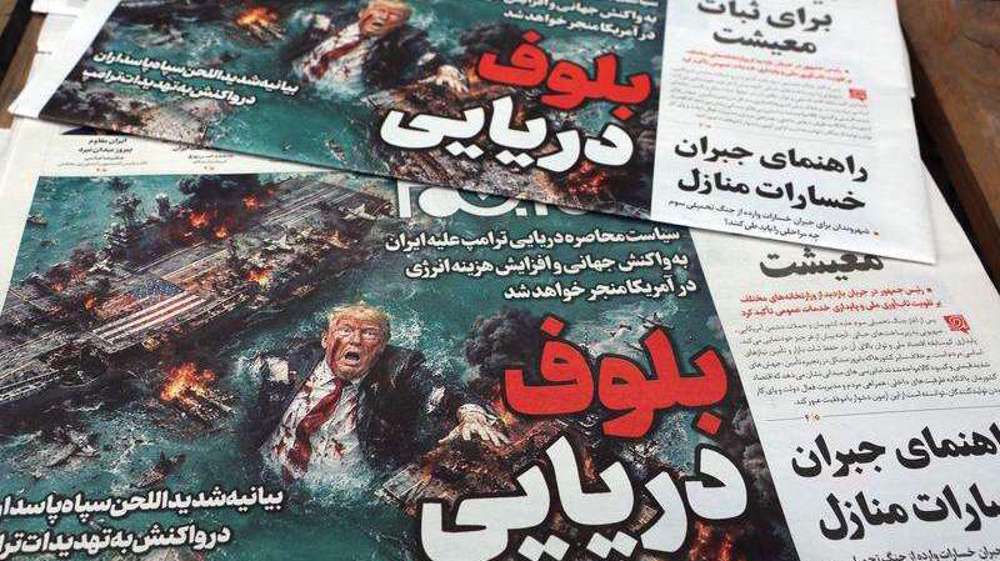
On Sunday, US President Donald Trump declared that after the failure of lengthy ceasefire negotiations with Iran, the US would pursue a naval blockade in the Strait of Hormuz.
The announcement has been met with skepticism and mockery both within the US and abroad, where critics view it as yet another example of the Trump administration’s erratic foreign policy and its inability to deal with the situation in the strait.
American consumers are still feeling the effects of previous energy crises, particularly the inflationary pressures of rising gas prices, which could worsen if tensions in the Persian Gulf are aggravated.
Any serious disruption in such a vital chokepoint would provoke global backlash, particularly from European and East Asian powers that depend heavily on the stability of global energy markets.
The impacts of a naval blockade extend far beyond oil; they reverberate through every layer of supply chains, from raw materials to finished goods, as goods are increasingly transported via sea routes that pass through the region.
One of the most significant effects of any disruption in the strait is the immediate rise in energy prices. Indeed, following Trump’s declaration, global energy prices began to rise immediately, with European natural gas futures increasing by 18 percent in just one day.
At the heart of this issue lies the United States’ fragile economic position. Over the years, Washington has relied on the dominance of the petrodollar system to bolster the dollar’s standing as the world’s reserve currency.
The petrodollar system, which ties the global sale of oil to the dollar, has been integral to maintaining the strength of the US currency. However, any disruption to the flow of oil, particularly from the Persian Gulf, undermines this system.
The US Treasury, already facing substantial debt, could find itself at the mercy of countries willing to shift away from using the dollar in global transactions. This, in turn, could trigger a wave of sell-offs in US debt, leading to a broader financial crisis.
Despite this, the US continues to act aggressively in the region. Yet, the experience of the Yemen war highlights the difficulties involved in trying to enforce a naval blockade.
The US and its allies, including NATO forces, Australia, Canada, Japan and the Saudis were unable to secure the Bab el-Mandeb Strait despite a massive military presence.
That conflict proved that, even with superior military power, strategic chokepoints like the Strait of Hormuz and Bab el-Mandeb cannot be controlled indefinitely without significant costs.
And even if the US were to successfully blockade the Strait of Hormuz, the same fate could await them as in Yemen marked by prolonged conflict with little strategic advantage.
The American strategy faces additional hurdles due to the complex geopolitical realities in the region. Unlike smaller, isolated countries, Iran has extensive land borders with neighbors such as Iraq, Pakistan, and Turkey, in addition to access to the Caspian Sea.
Iran’s relationships with key global players like China, which are increasingly seeking alternative trade routes through Central Asia and Russia, further complicate any efforts to isolate the country.
This broad network of trade partners allows Iran to mitigate the impact of any disruption in its energy exports.
Even in the face of a blockade, Iran could shift trade routes to bypass the Strait of Hormuz. If the US continues its policy of maximalist pressure, it may end up inadvertently strengthening Iran’s position in the region.
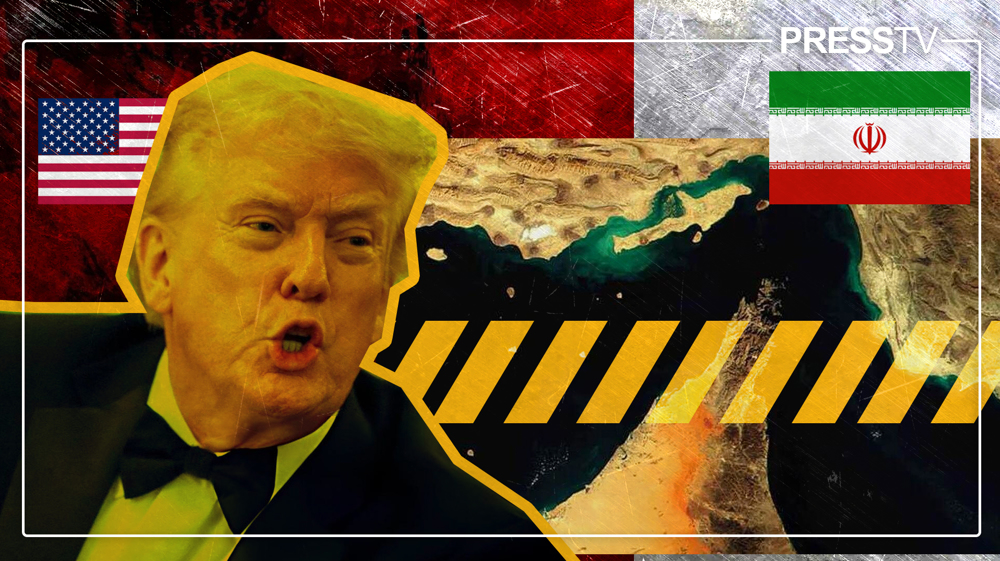
In fact, history suggests that such confrontations have little effect on Iran’s ability to continue its operations, particularly in its ability to access alternative trade routes.
Even during past sanctions, Iran managed to adapt and find ways to maintain trade with partners. It is notable that while Iran’s energy exports from the Persian Gulf have been curtailed at times, they have not stopped altogether.
Similarly, the country has invested heavily in infrastructure projects such as the Goreh-Jask pipeline, which allows it to bypass the Strait of Hormuz for oil exports. If push comes to shove, Iran could continue to export oil via this route.
This would still generate significant revenue for the country, particularly given that global oil prices are likely to rise due to the overall disruption.
Furthermore, any attempt to implement a maritime blockade on Iran could provoke regional instability. Iran has developed a robust set of tools to retaliate against any foreign aggression.
The use of drones, small boats, and other low-cost military tools against hostile forces in the strait would have an immediate psychological effect on shipping companies, forcing them to divert their operations and increasing insurance costs.
The cost of operating in the region would rise, and global shipping companies would likely be forced to reroute their vessels, further straining the already overburdened global supply chain.
The increasing cost of shipping, along with higher energy prices, would further fuel inflationary pressures around the world.
In addition to this, the Bab-el-Mandeb Strait presents another point of leverage for Iran. Located between Yemen and the Horn of Africa, it is another key maritime chokepoint, linking the Red Sea to the Gulf of Aden and, by extension, the Arabian Sea.
While the US and its allies may struggle to secure these waterways, Yemen forces have proven adept at influencing the flow of maritime traffic in the region.
The Bab-el-Mandeb also holds strategic significance beyond energy exports. It is home to critical underwater communications cables that carry vast quantities of data between East and West.
These cables are essential to global communications, including internet traffic, financial transactions, and data transfers. An attack on these cables would be catastrophic for the global economy, crippling everything from banking systems to military operations.
Even in the unlikely event that the US successfully blocks the Strait of Hormuz, Iran would endure a reduction in oil exports from the Persian Gulf, but at higher prices. The global economy, including US allies, would bear the brunt of the fallout.
The heart of the global economy beats in the Persian Gulf, and America's lifeblood is tied to the oil and straits of the region. Should Iran and the Arabian Peninsula slip from US control, the structure of Washington's empire would face collapse.
The situation signals the US's strategic desperation and political failure, an implicit admission of its inability to confront Iran directly, highlighting its shift to maximum pressure tactics and psychological warfare in a bid to compensate for past setbacks.
Arab states call US sanctions on Iran unrealistic: Report

Iran’s new food security milestone: Chicken self-sufficiency
Iranian researchers develop dual-purpose electrodes for storage of renewable energy



Araghchi reaffirms Iran’s firm support for Palestine
Iran says strikes on US bases ‘legitimate self-defense’ after wedding massacre
Iran space agency says readying Pars 2 satellite, Martyr Soleimani constellation for launch
Iran's Gheitasi wins gold in mas-wrestling at 2026 World Nomad Games
VIDEO | Israeli politicians exploit Palestinians’ suffering for electoral gain
Iran vows much stronger response to any provocative move by enemy
VIDEO | Press TV's news headlines
Resistance won’t give up weapons as long as US troops stay in Iraq: Badr Organization


 PressTV NEWSLETTER
now
PressTV NEWSLETTER
now
 This makes it easy to access the Press TV website
