US-Israeli aggression on Iran: What happened on 34th day of the imposed war
By Press TV Website Staff
Thirty-four days into the US-Israeli war on Iran, launched on February 28 with the assassination of the Leader of the Islamic Revolution, Ayatollah Seyyed Ali Khamenei, the military aggression continues to target civilian and industrial infrastructure across the country.
US-Israeli airstrikes on Thursday hit a wide range of sites nationwide, including the B1 Bridge in Alborz, the Pasteur Institute, Kashan passenger airport, locations in Khuzestan, and a site outside Qom. Explosions were also reported in Tehran, Karaj, and Mashhad.
Iran's Red Crescent Society (ICRS) released its latest damage assessment: 117,239 civilian units were struck by the US and Israel, including 93,544 residential units across the provinces.
On the diplomatic front, Iran’s Foreign Minister Abbas Araghchi confirmed that Iran has provided safe passage facilities for non-hostile vessels through the Strait of Hormuz.
French President Emmanuel Macron insisted the strait can only be reopened in coordination with Iran, calling any military option unrealistic.
Meanwhile, the London meeting on the Strait ended without producing any practical solution.
The Wall Street Journal reported that Washington is ready for a ceasefire under certain conditions; however, Iran maintains that it wants a permanent end to the unprovoked war as well as guarantees that the aggressors will not renew their aggression.
Key developments from Day 33 of the imposed war:
- The US and Israel stepped up attacks on civilian infrastructure in Iran, hitting the B1 bridge near Tehran and a century-old Pasteur medical research centre.
- Trump boasted of the destruction of the bridge, which connects Tehran to the city of Karaj. “The biggest bridge in Iran comes tumbling down, never to be used again — Much more to follow!" he wrote on his Truth Social platform.
- China’s Foreign Minister Wang Yi said US and Israeli attacks on Iran were a violation of international law.
- In a speech, the US President Donald Trump said the war's main strategic objectives are nearly achieved. Threatening Iran, he said that if no agreement is reached, the US will strike all of Iran's electrical facilities and send “Iran back to the Stone Age.”
- ICRS released its final damage assessment of civilian infrastructure hit by US and Israeli airstrikes up to Thursday. 117,239 civilian units in total — 93,544 residential units across the provinces, 46,437 residential and commercial units in Tehran alone. The healthcare sector lost 316 facilities, including treatment centres and emergency bases. Education suffered 763 schools being struck. The Red Crescent itself saw 18 of its centres damaged, 48 operational vehicles destroyed, and three rescue helicopters, belonging to both the Red Crescent and emergency services, knocked out of service.
- The US and Israel attacked a civilian airport in Kashan.
- The US and Israel attacked several locations in Tehran, Mashhad, Qom, Hormozgan and Khuzestan.
- The Innovation Factory and Creative Industries of Alborz Province, a private-sector hub for knowledge-based enterprises, was attacked by US-Israel airstrikes.
- The International Atomic Energy Agency (IAEA) stated that an attack on Iran's Bushehr nuclear power plant would constitute a war crime.
No a single enemy soldier to survive in case of ground invasion: Iran's Army chief https://t.co/ZCZXsdNYSl
— Press TV 🔻 (@PressTV) April 2, 2026
- UN chief Antonio Guterres warned that the West Asia conflict risked spiralling into a wider war, and called for an immediate halt to US-Israeli strikes on Iran.
- A UK-led meeting of some 40 countries on the Strait of Hormuz, convened under British direction, concluded without producing any practical or immediate solution for reopening the strategic waterway.
- US Secretary of State Marco Rubio said Washington may need to reconsider its relationship with NATO after the war on Iran ends.
- Araghchi said that despite the imposed insecurity on the region and the Strait of Hormuz, the Islamic Republic of Iran has adopted a responsible approach and, through coordination with relevant Iranian authorities, has provided the necessary facilities for the safe passage of non-hostile vessels and ships.
- Kazem Gharibabadi, Iran's deputy foreign minister, speaking to Sputnik, addressed the issue of imposing tolls on ships passing through the Strait of Hormuz. He stressed that it is still far too early to discuss the exact amount of these tolls, as the matter remains under review.
- Russian Foreign Ministry spokeswoman Maria Zakharova said the current situation cannot change without normalising relations with Iran, which has constructively agreed to allow the passage of ships from non-belligerent nations. "Without considering Iran's position and its direct participation, it is hardly possible to discuss the practicality of any plans for the strait," Zakharova said, adding that Moscow knows of no legal mechanism that would allow waters within a country's territorial sea to be placed under foreign control without Iran's explicit consent.
- The Philippine foreign minister said a positive understanding had been reached with Iran regarding the security of the Philippines' energy supply.
- French President Emmanuel Macron said that while some defend (US) the idea of forcibly reopening the Strait of Hormuz through military operations, he believes such an approach is unrealistic.
- Kaja Kallas, the European Union's foreign policy chief, suggested that Donald Trump's criticism of NATO might be part of a deliberate plan to weaken the alliance from within.
- Spain's El Mundo, citing NATO sources, reports that the alliance is experiencing one of its deepest crises in the wake of the West Asian conflict and escalating threats from Trump and may never fully recover.
- Foreign Affairs magazine argued that the costs of a war with Iran will ultimately outweigh its benefits for the US.
In the US, petrol averages over $4 a gallon for the first time since 2022, as a war launched by Washington and Tel Aviv against Iran has triggered a global oil crisis; now American citizens are feeling the pain. pic.twitter.com/UHwKCRWNto
— Press TV 🔻 (@PressTV) April 2, 2026
- Bloomberg reported that oil prices rose by five percent following Donald Trump's remarks on Iran.
- Kamala Harris, former US vice president and Donald Trump's 2024 election rival, said she had predicted Trump would try to project an image of victory in his recent address to the nation, but insisted that Americans are watching his actions, not his words.
- The US Embassy in Baghdad urged American citizens to leave Iraq immediately, citing security developments and the possibility of attacks in the city center within the next 48 hours. The warning reflects Washington's growing fear of resistance forces in Iraq.
- Axios reported that Trump's threat to target Iran's energy infrastructure stems from frustration that Iranian officials “do not believe they are losing the war,” and therefore see no incentive to reach an agreement on his terms. A Trump confidant told the outlet that while Iran's military command has “suffered heavy losses, they still don't feel pain," adding that the question now is how much pressure they can absorb. Axios also noted that Trump's claim of an "imminent threat" from Iran has been widely doubted.
- Joe Kent, former director of the US National Counterterrorism Centre, responding to Trump's speech on X, wrote: "Learning from the past, we honour our fallen only by spilling American blood in defence of our own nation. The best time to exit this chosen war is now, before we lose more lives." He added that the United States can declare “victory” whenever it wants, but only if Trump reins in the Israelis.
- The South Korean President said the war in West Asia poses the greatest threat to global energy security.
- A senior World Bank official has expressed deep alarm over the war’s potential to drive inflation, shatter jobs, and unravel food security, adding that the institution is now consulting with member states on how to address the most urgent needs of the crisis.
- Italy's foreign minister has sounded the alarm over a looming food catastrophe, calling for the creation of a "humanitarian corridor" through the Strait of Hormuz to allow the passage of fertiliser and other essential supplies, a move aimed at averting disaster, particularly for vulnerable nations across Africa.
- Panicked selling sent oil prices higher. US stock futures fell one percent, while European stock futures tumbled more than 1.5 percent. Asian equities also plunged, with Japan's Nikkei dropping 1.8 percent and South Korea's Kospi falling 3.6 percent.
The spokesman of Iran's Khatam al Anbiya Central Headquarters says the United States and Israel have a miscalculated and incomplete understanding of Iran's military capabilities, warning that the enemy should expect more retaliatory strikes. pic.twitter.com/S4zEWX05Sc
— Press TV 🔻 (@PressTV) April 2, 2026
- Israel's Yedioth Ahronoth, citing a senior Israeli military official, reported that the Israeli air force on Wednesday completed its planned strikes on Iran's military industries and nuclear-related facilities. The official said nearly all pre-designated "vital and strategic" targets have been disabled, and the “damage inflicted on Iran's military and nuclear infrastructure” is expected to keep Tehran from rebuilding its ballistic and nuclear capabilities for an extended period.
- The Wall Street Journal reported that Washington is ready for a ceasefire with Tehran. The US informed mediators that it is prepared to agree to a ceasefire under certain conditions, including the reopening of the Strait of Hormuz. A White House official also told the Daily that NATO Secretary General Mark Rutte will visit Washington next week to meet with President Trump.
- The Guardian reported that Trump, continuing his characteristic contradictions, called on other nations to help reopen the Strait of Hormuz. Following his remarks, Brent crude rose more than four percent to $105.55 a barrel, while West Texas Intermediate gained three percent to reach $103.16. Both benchmarks had been falling before the US president's address.
- Global gold and silver prices fell after Trump's address to the American people on the Iran war. Cryptocurrency markets also turned bearish following the speech and fresh political signals, with Bitcoin and most altcoins trading in negative territory as selling pressure mounted.
- Citing multiple reports, US Senator Chris Coons said Israel assassinated Iran’s former National Security Advisor Ali Larijani because the United States wanted to negotiate with him.
- Saudi Arabia's Sadara Chemical Company temporarily shut down its petrochemical complex in the port city of Jubail in the Eastern Province. The facility, a roughly $20 billion joint venture between Aramco and Dow Chemical, has not announced when production will resume.
- The New York Times reported that Kamal Kharrazi, head of Iran’s Strategic Council on Foreign Relations, was tasked with overseeing coordination with Pakistan to lay the “groundwork for a potential meeting with US Vice President J.D Vance.” The newspaper said the targeting of Kharrazi was seen as an attempt to disrupt diplomatic efforts.
- Iran has said that Washington’s demands were “maximalist and irrational” and denied any negotiations were underway on a ceasefire to end the war.
- Vietnamese Foreign Minister Le Hoai Trung expressed condolences over the martyrdom of the Leader of the Islamic Revolution Ayatollah Sayeed Ali Khamenei and several senior officials and citizens.
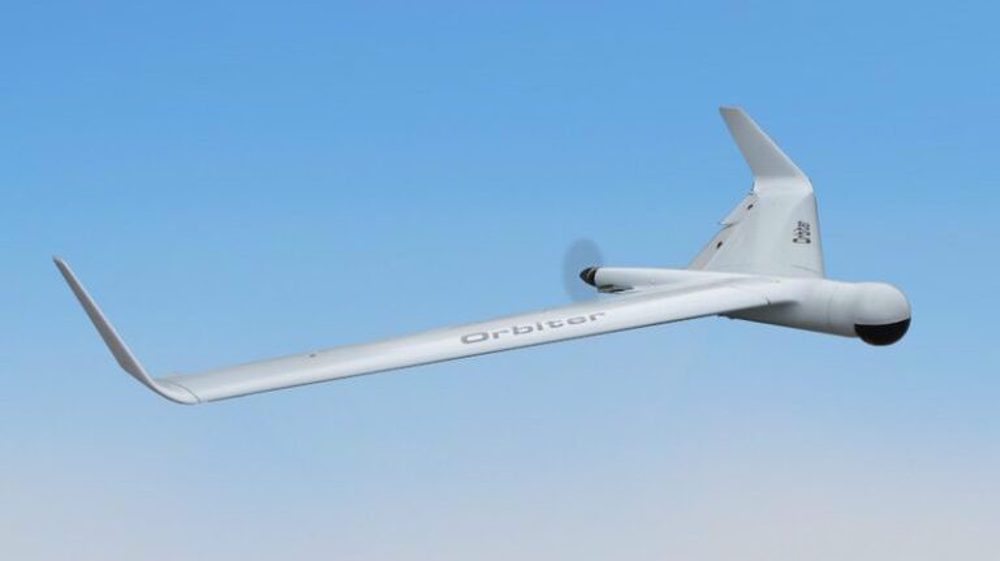
Iran Army downs US Orbiter reconnaissance drone over Strait of Hormuz
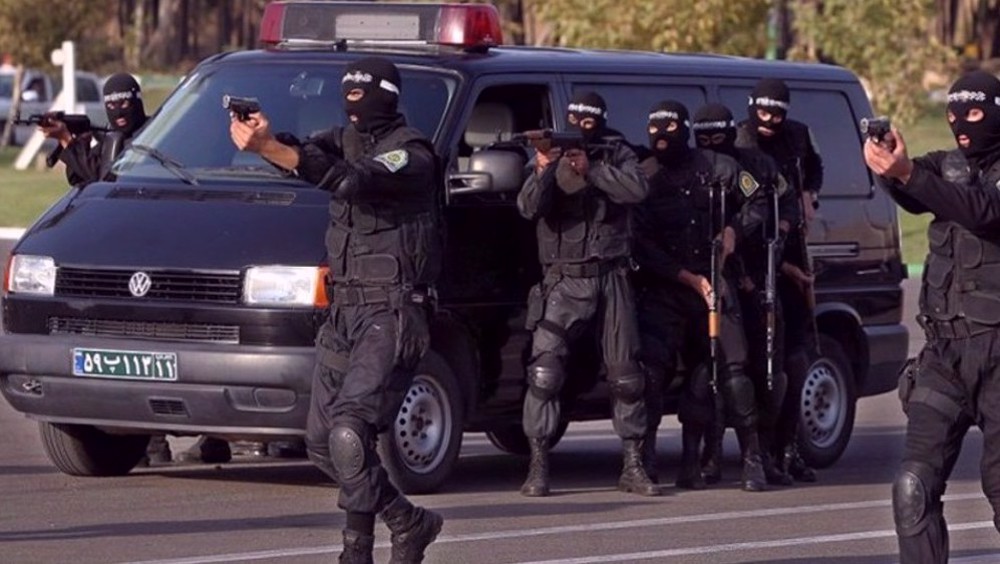
Iran dismantles terrorist cells in three provinces
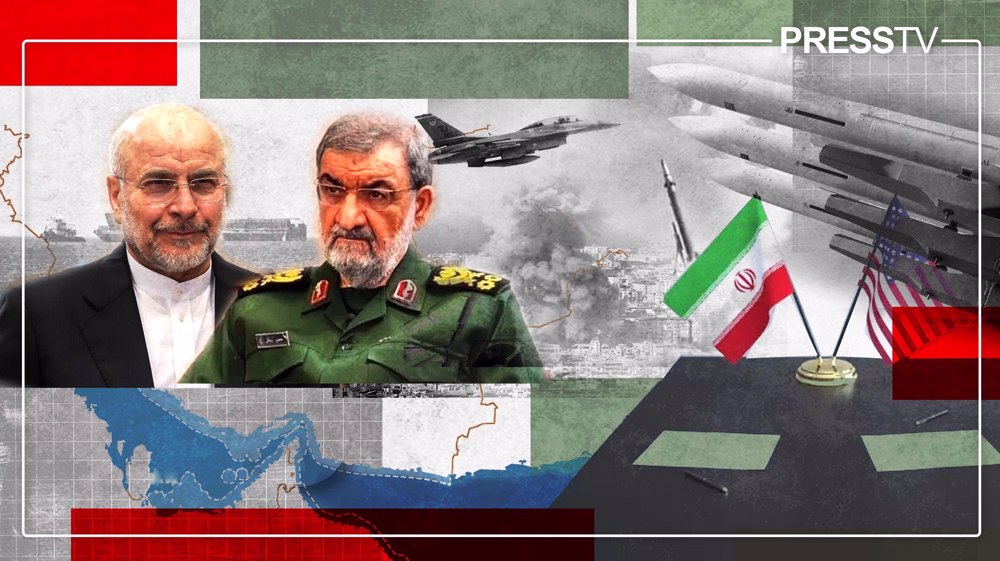
How Iran turned US military and economic aggression into strategic leverage to dictate terms



VIDEO | Israeli siege forces Gaza hospitals to cut services
Grand Ayatollah Shobeiri Zanjani passes away at age of 98
Yemen pledges to escalate campaign to break Saudi blockade
VIDEO | Iran's warning to US, regional allies
Gaza health system nears collapse amid shortages and fuel crisis
Saudi Arabia bombs Yemen 760 times since escalating aggression
VIDEO | Press TV's news headlines
VIDEO | Saudi Arabia, UAE helping US, Israelis to fulfill their mission in region: Analyst


 PressTV NEWSLETTER
now
PressTV NEWSLETTER
now
 This makes it easy to access the Press TV website
