US-Israeli aggression on Iran: What happened on 30th day of the imposed war
By Press TV Website Staff
Thirty days into the US-Israeli war against Iran, which began with the assassination of the Leader of the Islamic Revolution, Ayatollah Seyyed Ali Khamenei, on February 28, the military aggression has escalated across multiple fronts, primarily targeting Iran’s civilian and industrial infrastructure.
Overnight and daytime strikes on Sunday struck Tehran, Isfahan, Karaj, Shahriar, Zanjan, Minab, Haftkel, Bandar Abbas, and other provinces, resulting in civilian casualties, including women and children, as well as infrastructure damage.
In response, Iran continued its powerful retaliatory operations, deploying missiles, drones, and precision strikes against US and Israeli positions across the Persian Gulf and the occupied territories, including military bases, industrial sites, and strategic assets.
Regional diplomatic and economic developments unfolded in parallel. Senior officials from Pakistan, Saudi Arabia, Turkey, and Egypt convened in Islamabad to explore de-escalation measures between Tehran and Washington.
Iran approved the transit of Pakistan-flagged ships through the Strait of Hormuz, which was welcomed by the Pakistani government, including Foreign Minister Ishaq Dar.
Meanwhile, global protests against the war on Iran continued, including massive demonstrations across all 50 US states under the “No Kings” banner, opposing President Donald Trump and his US military aggression against Iran and domestic policies.
According to Axios, Iran’s military remains operationally robust. The IRGC and supporting forces retain mobility, command, and retaliatory capacity, while strategic missile and drone reserves are conserved. Underground missile and naval infrastructure remains intact, and Iran continues to control the Strait of Hormuz, influencing global energy markets.
The following are the key developments from Day 30 of the imposed war:
US-Israeli attacks on Iran and resistance groups
- The Islamic Revolution Guards Corps (IRGC) declared that American and Israeli-affiliated universities in West Asia will now be considered legitimate targets, warning staff, students, and nearby residents to maintain at least a one-kilometre distance for their safety.
- Tehran gave Washington an ultimatum to condemn its bombings of Iranian academic institutions by Monday, March 30, or face additional strikes on US-linked universities across the West Asia region.
- Explosions were heard overnight in north-east and west Tehran, with at least two major blasts reported around 6:53 am, targeting industrial and civilian sites.
- Multiple Iranian cities and provinces came under US-Israeli attacks, including Tehran, Isfahan, Karaj, Shahriar, Zanjan, Minab, Haftkel, and others.
- In Bandar Abbas city, America and Israel attacked Bandarpol, killing at least five civilians and injuring four others.
- A US-Israeli strike targeted a workshop in Shahriar, killing at least two workers and injuring four others.
- In northern Gilan province, a US-Israeli airstrike hit a residential building in the village of Osmawandan, killing one civilian and wounding five others.
- Several locations in Tehran were attacked by the US and Israel, including Tehran-Sar, Shahriar, Sadr Bridge, Parchin, Chitgar, Mehrabad Airport, Saadat Abad, Ekbatan, Afsariyeh, Masoudieh, and Kouhak.
- The Al Arabi news network office in Tehran was struck by US- Israeli missiles, causing structural damage and interrupting broadcasts.
- US airstrikes targeted Popular Mobilisation Forces (PMF) sites in Mosul and Tuz Khurmatu (Salah ad-Din province) in Iraq.
- Powerful explosions shook the Rashidieh district in Mosul amid reports of unconfirmed US strikes on Hashd al-Shaabi positions.
Iran’s retaliatory strikes
- Iran launched fresh rounds of retaliatory attacks across the region, targeting US-linked military, industrial, and intelligence assets.
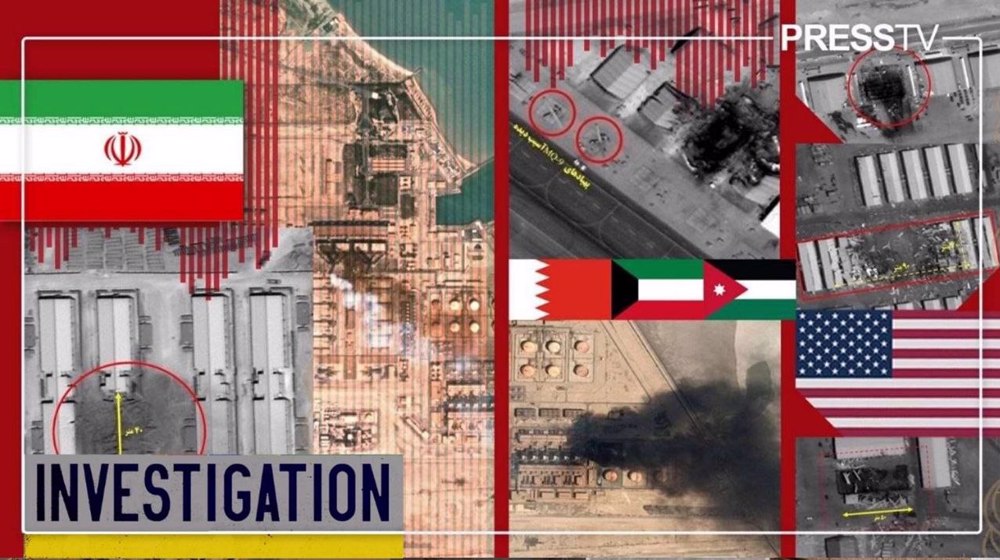
- The IRGC launched a multi-stage missile and drone operation targeting US and Israeli positions across the region, including bases in Victoria, Arifjan, Al-Kharj, Tel Aviv, Erbil, and the Fifth Fleet in Al Dhafra. Visual evidence confirmed damage to US military aircraft and infrastructure.
- IRGC announced that a $20,000 Shahed-136 drone damaged a $700 million Airborne Early Warning and Central System (AWACS) surveillance aircraft in a US-run military base in Saudi Arabia.
- Iran’s air defence forces shot down yet another MQ-9 drone in the eastern vicinity of the Strait of Hormuz.
- Iran’s retaliatory attack hit Emirates Global Aluminium, inflicting significant damage on one of its sites in Abu Dhabi.
- Aluminium Bahrain, one of the world’s largest aluminium producers, also suffered significant damage in an Iranian retaliatory strike.
- In a statement, the IRGC confirmed both sites were “industries affiliated with and connected to the US military and aerospace sectors in the region”.
- A chemical plant in southern Israel was struck by an Iranian missile in a retaliatory attack following US and Israeli strikes on Iranian nuclear sites and industrial facilities.
- The Iranian Army announced that it carried out drone strikes against logistics depots, support equipment storage facilities, and accommodation sites used by US troops at al-Azraq Air Base in eastern Jordan.
Axis of Resistance operations
- Hezbollah fired rockets toward Galilee and southern Haifa, escalating operations throughout the day, and struck both the Regavim military base (Golani Brigade training area) and the Ein Shemer military air base near the Lebanese border with advanced missiles.
- The group also used explosive drones against the Biriya base near Safad, engaged an Israeli military helicopter over Al‑Adisa, forcing it to withdraw, and artillery units hit Israeli armoured forces attempting recovery operations in Deir Seryan, southern Lebanon.
Regional diplomatic and military developments
- Pakistan’s foreign minister said Iran approved transit for 20 Pakistan‑flagged ships through the Strait of Hormuz, averaging two vessels per day.
- Senior officials from regional countries are participating in a diplomatic meeting that opened in Islamabad on Sunday, convening foreign ministers and senior diplomats from nations including Pakistan, Saudi Arabia, Turkey, and Egypt to explore ways to reduce tensions and encourage de‑escalation in the US‑Israel military aggression on Iran.
- The US warship USS Tripoli entered the Persian Gulf region, adding to the military presence amid the ongoing war of aggression against Iran.
- In Jordan, hundreds of Israelis were stranded at Aqaba airport after substitute flights from Ben Gurion were cancelled following Iranian missile activity.
- Qatar and Ukraine signed a military agreement to share expertise on countering missile and drone threats while regional tensions persist.
US protests and global opposition to war
- Millions of people across all 50 US states participated in more than 3,300 coordinated demonstrations under the “No Kings” banner, protesting US war against Iran and other policies of the Trump administration. Organisers described it as the largest coordinated protest in US history.
Western and strategic media analysis
- The Wall Street Journal reported that Israel is rationing advanced missile interceptors, including upgraded David’s Sling systems, due to inconsistent performance against larger threats.
- The Washington Post, citing US officials, said the Pentagon is preparing for possible ground operations in Iran, including plans such as seizing Khark Island or striking coastal areas near the Strait of Hormuz, potentially lasting up to two months.
- Persian Gulf Arab states reportedly warned Washington they might pull tens of billions of dollars in investments if the war continues, causing concern in US financial circles.
- Some Israeli analysts characterised the US-Israeli war on Iran as serving the regime’s strategic objectives and not always aligning with broader US interests.
- The Hanzala cyber group said it accessed private communications of former Israeli war minister Yoav Galant, revealing locations of 11 secret military bases that Iran has said it will target with precision attacks.
Iran’s current military capabilities (Axios Summary)
- Axios reported that Iran’s ground forces, including the IRGC with over 150,000 personnel supported by Basij and other army units, have maintained operational command, mobility, and retaliatory capacity despite losses.
- The reduction in missile and drone strikes is seen as strategic conservation rather than depletion, and Iran continues to control the Strait of Hormuz, exerting significant influence over global oil and gas markets.
- The country’s underground missile and naval infrastructure remain intact, bolstering long‑term defensive readiness.
Economic impact
- Fuel prices in the US, especially for diesel and jet fuel, have nearly doubled, a development directly linked to disruptions in oil exports and strategic conditions in the Strait of Hormuz.
- The Aspides, a key naval mission based in Greece, stated that all shipping companies with vessels in the region seeking to sail in the Red Sea and the Gulf of Aden must exercise particular caution.
- It added that ships with connections to the Israeli regime or the United States should avoid passage through the waterway.
How Iran’s two-week retaliatory strikes exposed cracks in US military architecture in Persian Gulf

IRGC shoots down US MQ-9 Reaper drone over Strait of Hormuz
Iraq rejects claims of US aircraft landing at Ain al-Asad Air Base



Iran FM discusses regional developments in phone talks with Pakistani, Omani counterparts
VIDEO | Trump's never-ending Iran deal claims
Iran defeated US in 'Trump’s third war' midway: Leader's advisor
Araghchi: Arbaeen is grand display of Iran-Iraq national unity
Iran has ‘total intelligence superiority’ in northwest, two officials warn enemies
US military asks for ‘new’ ideas to deal with Iran after its crushing defeat: Report
VIDEO | Israel seeks to instill fear among Palestinians: Analyst
1.4 million Palestinians face acute food insecurity in Gaza as medicine shortages deepen


 PressTV NEWSLETTER
now
PressTV NEWSLETTER
now
 This makes it easy to access the Press TV website
