Back to SAVAK days: Pahlavi monarchist violence surges against diaspora opponents
By Yousef Ramazani
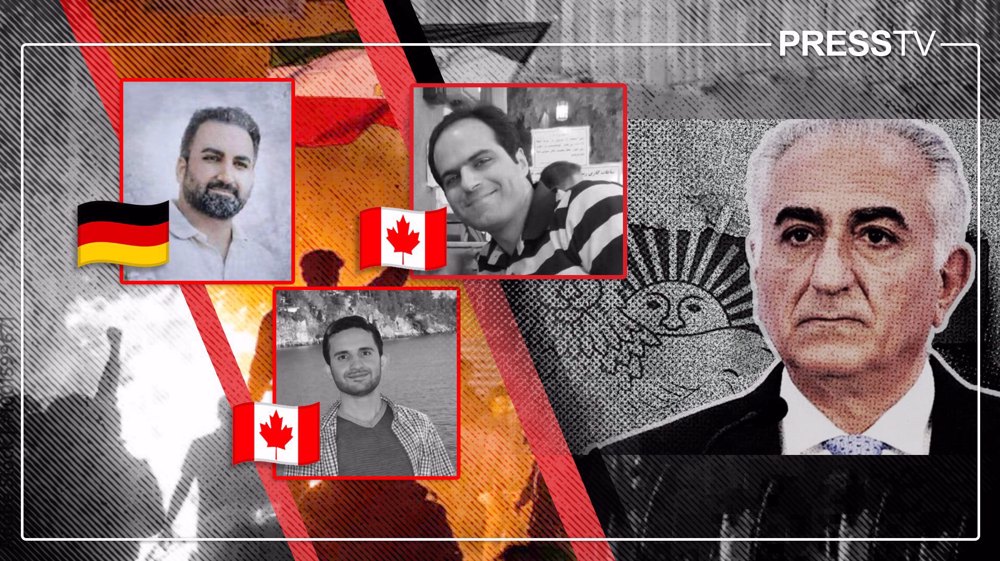
Across major Western cities – from the quieter neighborhoods of Europe to the crowded boulevards of Los Angeles – reports have surfaced of the campaigns of violence and intimidation linked to pro-Pahlavi monarchist groups targeting critics within the diaspora.
The most recent cases involve the killing of an Iranian national in Canada and the fatal stabbing of an Afghan businessman in Germany – incidents directly linked to Pahlavi monarchist supporters.
These cases have reignited debate online about the conduct of hardline monarchist circles, who advocate “regime change” in the Islamic Republic of Iran and have grown increasingly intolerant of dissent, responding aggressively to voices critical of their rhetoric or political activities.
For decades, the Iranian diaspora in North America and Europe has been a space marked by virulent political debate and ideological division following the 1979 Islamic Revolution.
In recent years, however, some activists and community members say that political rivalry has, at times, escalated into harassment and physical violence.
Reports from several Western countries describe incidents involving supporters of Reza Pahlavi, the exiled son of Iran’s deposed monarch, engaging in aggressive and very often violent tactics against those perceived as critics or dissenters.
Documented cases include physical altercations at protests, confrontations outside community events, and coordinated online harassment campaigns. Some business owners and students have also reported threats or pressure linked to their political positions.
Observers who spoke to the Press TV website noted that the pattern suggests more than spontaneous clashes between rival demonstrators.
They contend that certain groups with the so-called Iranian “opposition” operate in an organized manner, seeking to suppress and isolate those who show signs of disillusionment with their movement, which has increasingly turned violent and unpopular over the years.
Some frame these incidents as part of broader tensions surrounding West Asian politics, particularly in the wake of the Gaza genocide, which has sharply polarized communities worldwide.
Following the outbreak of the Gaza war, monarchist groups became increasingly visible at pro-Israel rallies in several Western capitals, which suggests the involvement of Israeli spy agencies in the violent activities of pro-Pahlavi groups in the West.
Documenting the pattern
Incidents cited by community members span multiple countries.
In London, a video circulated online showing a verbal altercation between a young monarchist supporter and an elderly Iranian woman attending a pro-Palestine rally. The footage drew widespread criticism, particularly after the exchange was amplified across social media platforms.
In Southern California, clashes erupted near a UCLA encampment during pro-Palestine demonstrations. Witnesses described confrontations between opposing groups that resulted in injuries and prompted a law enforcement response. Some Iranian-American students later reported receiving threatening messages online.
In Paris and Brussels in early 2023, protests related to Iranian political developments saw scuffles between monarchist supporters and their opponents. Similar clashes were reported in Washington, DC, and Munich, where disputes over slogans and symbols – including Iran’s pre-revolution lion-and-sun flag – contributed to heated exchanges.
While the full scope and coordination of these incidents is open to debate, what is clear is that political divisions within the Iranian diaspora have intensified.
For many community members, the concern is not only ideological disagreement but whether spaces intended for political expression and cultural connection can remain safe amid rising polarization, according to observers.
In an old speech, Leader of the Islamic Revolution highlighted motives to distort history, whitewashing the image of the Pahlavi era's rulers.
— Press TV 🔻 (@PressTV) February 4, 2026
Follow: https://t.co/mLGcUTS2ei pic.twitter.com/YH32glFDyj
Hamburg stabbing and the flag controversy
One of the most serious incidents occurred in Hamburg, Germany, on February 12, 2026.
Morteza Sadeghi, a 43-year-old Afghan citizen and owner of the Sepideh restaurant – one of the city’s oldest and best-known Afghan-Iranian establishments – was fatally stabbed following a dispute reportedly linked to the display of the Pahlavi monarchist lion-and-sun flag.
According to witness accounts reported in local media, an Iranian-born customer attempted to pressure Sadeghi to display the monarchist flag inside the restaurant.
When Sadeghi refused, the exchange escalated from a verbal argument inside the premises to a confrontation in the parking area behind the building.
The suspect produced a knife and stabbed Sadeghi multiple times before fleeing.
Despite being transported to a Hamburg hospital and receiving emergency treatment, Sadeghi died roughly an hour later from his injuries.
The suspect remains at large, and local media outlets reported heightened security around the hospital following the incident amid concerns about potential unrest.
Canadian killings: a pattern of lethal force
In early 2026, two killings in Canada intensified already heated debates within segments of the Iranian diaspora.
Masoud Masjoudi, an Iranian-Canadian political activist, was reported missing on February 4. Approximately twenty-six hours later, his body was discovered in the emergency stairwell of a residential high-rise in Vancouver.
Prior to his death, Masjoudi had initiated legal proceedings in the Supreme Court of British Columbia related to online harassment campaigns that he said were connected to individuals within monarchist circles.
According to associates and social media posts attributed to him, Masjoudi had reported receiving threatening messages in the weeks before his death.
He had stated that he shared these messages with the authorities. Canadian law enforcement agencies have not publicly confirmed any political motive, and investigations remain ongoing.
Less than two weeks later, Mohsen Ahmadipour was killed in Toronto. Most commentators online have described the two deaths as linked and politically motivated, even though Canadian authorities remain tight-lipped about the motive, possibly to avoid the wrath of monarchists.
As investigations continue, the cases have become flashpoints in a wider debate about polarization, online radicalization, and the limits of political activism abroad.
✍️ Exposed: How Israel-MKO gangs colluded to harass Iranians abroad on election day
— Press TV 🔻 (@PressTV) July 15, 2024
By Ivan Kesic#IranVotes2024https://t.co/Cn3bHeHJvx pic.twitter.com/pVR4NxzCvg
Election Day tensions
Tensions were clearly visible in Germany and other European countries during Iran’s July 2024 presidential election, when voting stations became flashpoints for confrontation within the diaspora.
At polling locations in countries including Germany, Australia, New Zealand, France, Sweden, the United Kingdom, and the United States, groups of demonstrators gathered outside Iranian embassies and consulates. Videos circulating online showed heated verbal exchanges, scuffles, and confrontations between monarchist supporters and individuals attempting to vote.
In London, demonstrators carrying monarchist symbols assembled near the Iranian embassy. Footage widely shared on social media captured incidents of shouting, harassment, and physical jostling. British authorities later confirmed arrests related to public order disturbances.
In one case, a woman identified in online posts as Bahar Mahroo physically confronted an elderly voter during the demonstrations. British police opened an investigation into reported assaults connected to the protests but stopped short of taking concrete action.
Niyak Ghorbani, another Iranian-origin woman, was detained following confrontations at the polling site that required police intervention.
In the United States, similarly tense scenes were reported outside certain voting locations. Social media posts from individuals claiming monarchist affiliation described efforts to discourage participation, drawing condemnation from other diaspora members who argued that political opposition should not translate into intimidation.
While law enforcement agencies in host countries have treated these episodes primarily as public order issues, the incidents underscore the deep polarization within the Iranian diaspora, where debates over Iran’s political future increasingly spill into physical spaces abroad.
Israeli link in the puzzle
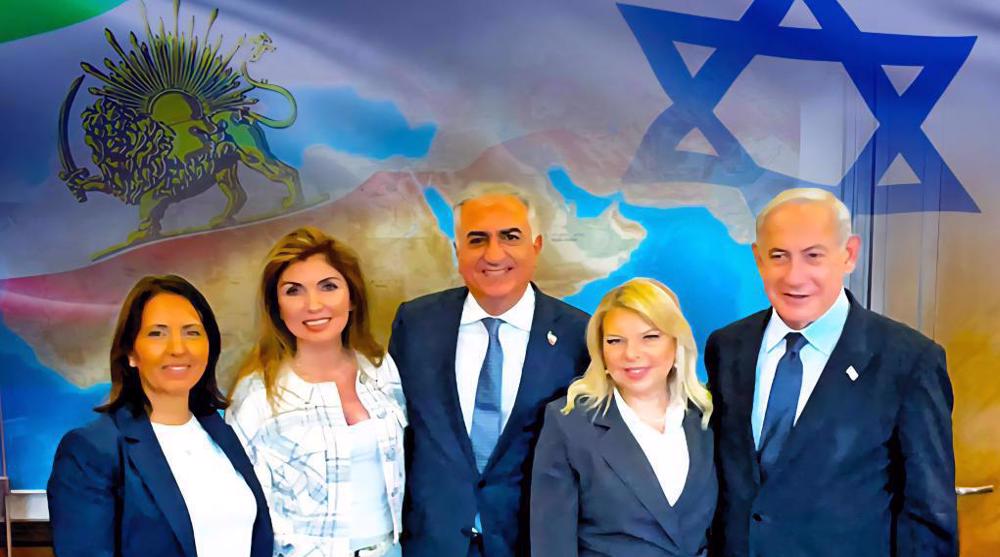
Some analysts and activists maintain that the alignment between certain anti-Iran monarchist groups and pro-Israel lobby networks provides important context for understanding recent political tensions and violent incidents within segments of the Iranian diaspora.
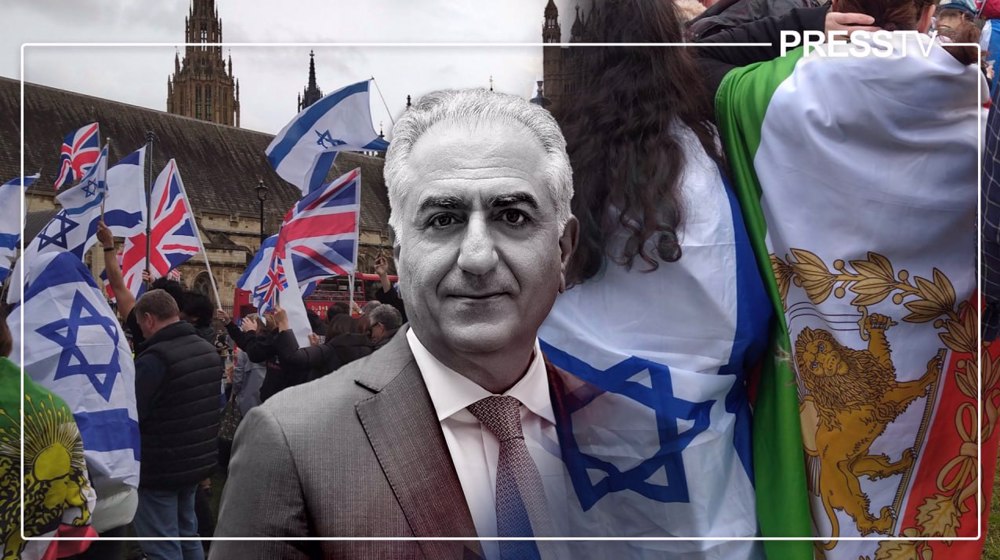
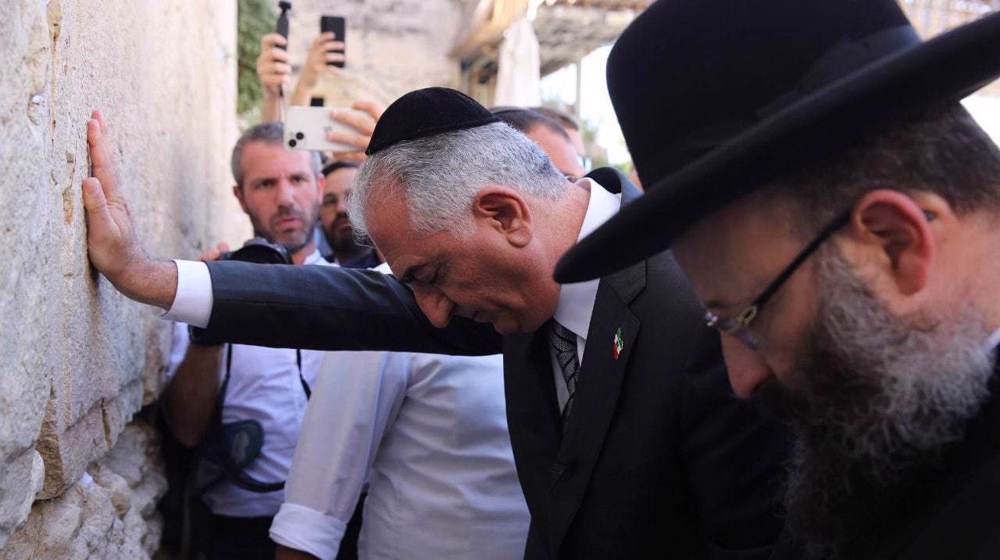
During the Gaza war, monarchist supporters were visible at several pro-Israel demonstrations in Western capitals. Supporters describe their participation as rooted in shared opposition to the Islamic Republic, and some contend that this alignment has strengthened political networks and amplified confrontational approaches within diaspora spaces.
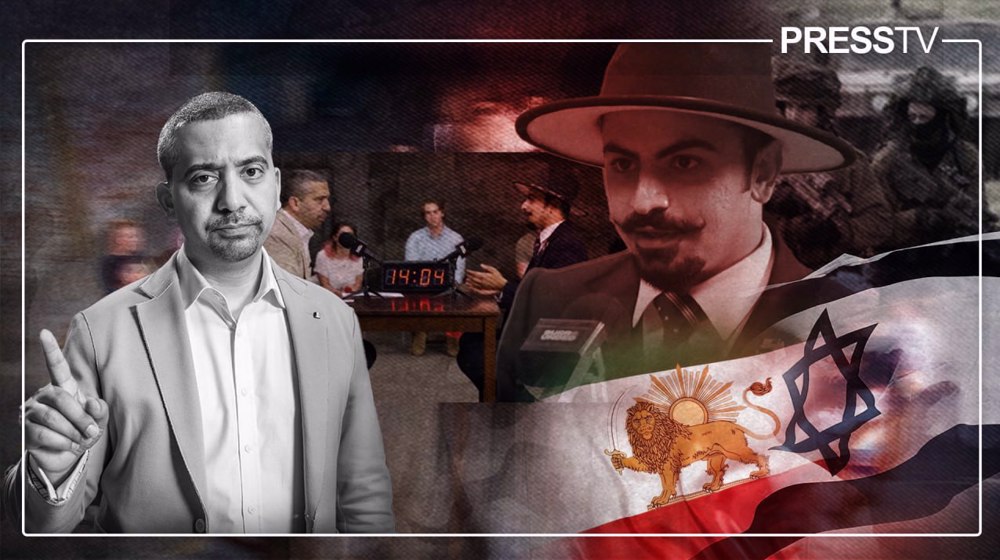
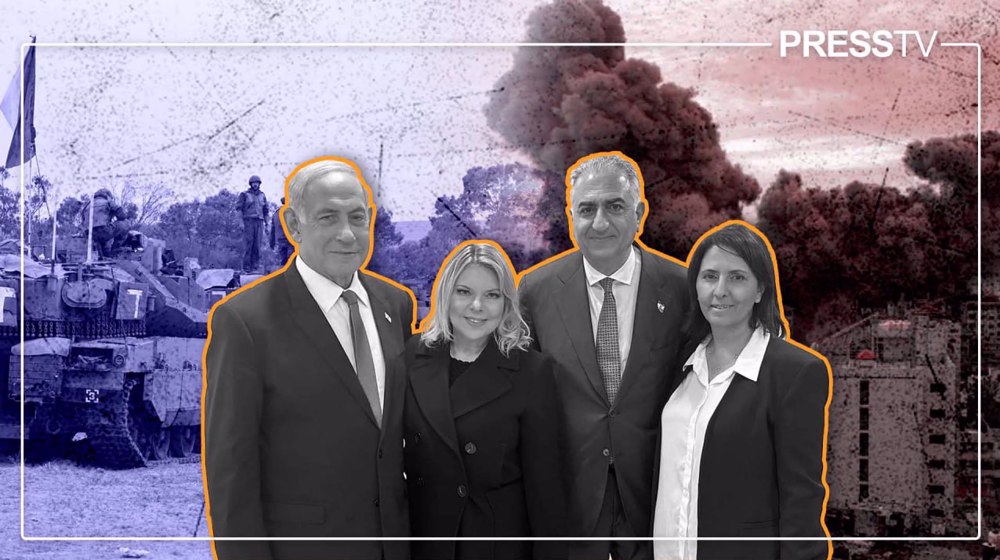
In London, social media footage showed monarchist activists appearing alongside pro-Israel propagandists and war-mongers such as Emily Schrader, Yoseph Haddad, and Hananya Naftali, a close media aide to Benjamin Netanyahu.
Observers interpreted these appearances as evidence of political coordination between the two fronts – both opposed to the Islamic Republic of Iran and the Axis of Resistance.
Bahar Mahroo, who faced investigation in the United Kingdom following an altercation outside a polling station, later traveled to the occupied territories. Her social media posts included expressions of support for Netanyahu as well as European right-wing figures such as Tommy Robinson and Geert Wilders, alongside strongly anti-Islam and anti-Iran rhetoric.
The Mujahedin-e-Khalq (MKO) terror cult, historically at odds with monarchist factions, has, in some instances, appeared on shared media platforms or circulated similar messaging during periods of unrest – a development that commentators interpret in different ways, ranging from tactical convergence to broader opposition alignment.
Meanwhile, former CIA Director Mike Pompeo publicly stated during the recent foreign-engineered riots that Israeli intelligence services had been active inside Iran, remarks that further fueled debate over the extent of foreign involvement in “opposition” movements.
The visible overlap between Pahlavi monarchists and pro-Israel networks has intensified scrutiny and deepened divisions within diaspora political discourse.
✍️ Feature - Behind the riots: Israel-Pahlavi nexus and the delusion of ‘regime change’ in Iranhttps://t.co/ws0vTnSxN4 pic.twitter.com/Ngm14Qi7Dp
— Press TV 🔻 (@PressTV) January 21, 2026
Business intimidation and economic warfare
Alongside reports of physical intimidation, monarchist activists have also engaged in coordinated economic and reputational pressure campaigns targeting members of the Iranian diaspora who decline to endorse their vitriolic and hate-centric political agenda.
In Vienna, several Iranian restaurant owners reported being approached by Pahlavi agents urging them to display images of Reza Pahlavi and the lion-and-sun flag associated with Iran’s pre-1979 monarchy. Those who refused described facing organized attempts to discourage customers from entering their establishments, including demonstrations and violence outside their premises.
Similar accounts have emerged from Los Angeles, home to one of the largest Iranian communities outside Iran. Some business owners say the political polarization has created an atmosphere in which remaining publicly neutral is increasingly difficult. A number of them said they feel increasingly under pressure to signal alignment with monarchist causes to avoid online backlash or organized boycotts.
Prominent cultural figures have also found themselves drawn into the controversy. Veteran singer Shahram Shabpareh issued a public statement after facing an online backlash from monarchist supporters over a media appearance perceived as insufficiently aligned with their views. In Canada, business owners have similarly reported coordinated social media campaigns following political statements deemed critical of monarchist leadership.
Digital campaigns and reputational warfare
Parallel to these offline tensions, observers describe a highly active online ecosystem centered on defending Pahlavi and promoting monarchist narratives. They say networks of coordinated social media accounts amplify attacks on dissenting voices, sometimes engaging in harassment, doxxing, and sustained reputational campaigns.
Actress Golshifteh Farahani, long known for her critical stance toward both the Islamic Republic and the former monarchy, faced intense online backlash after questioning the idea of foreign military intervention in Iran. The scale of the reaction sparked debate within diaspora circles about the tone and tactics of so-called “political activism” online.
Individuals targeted by such campaigns describe a recurring pattern: waves of coordinated social media attacks; pressure on employers, collaborators, or venues; and the circulation of edited or decontextualized material intended to undermine credibility.
The issue surfaced publicly at the 2026 Munich Security Conference, where CNN journalist Christiane Amanpour meekly questioned Pahlavi about the behavior of some of his supporters online. The exchange drew widespread attention, and in its aftermath, Amanpour herself became the subject of hostile commentary across social platforms.
Supporters of monarchist activities claim that online mobilization is a legitimate political tool in a highly polarized environment.
As tensions persist, the struggle over narrative, loyalty, and dissent increasingly plays out not only in the streets of Western cities but across digital platforms – reshaping the contours of political engagement far beyond Iran’s borders.
“May you die!” — the slogan of some pro-Pahlavi monarchists, who chose to harass and verbally attack @amanpour simply for asking a few softball questions of Reza Pahlavi.
— Frontline (@frontlineiran) February 18, 2026
These are, of course, the same people who insist they’re here to deliver ‘democracy’ and ‘freedom’ to Iran. pic.twitter.com/QJDWFgNNlE
Historical roots of monarchist violence
Supporters of the Islamic Republic and some independent analysts note that the confrontational tactics employed by monarchists echo elements of repression associated with the pre-1979 era.
Under the rule of Mohammad Reza Pahlavi, Iran’s intelligence service, SAVAK, was synonymous for many with political surveillance, detention, and coercive interrogation.
Historical accounts and memoirs from former political prisoners describe harsh treatment and psychological pressure, including the use of torture to suppress opponents.
Within today’s monarchist fringe, observers point to the open glorification of SAVAK symbolism as a troubling sign. At demonstrations in Munich and elsewhere, participants invoked SAVAK-era imagery or slogans, framing it as defiance rather than repression.
Such gestures, observers and eyewitnesses told the Press TV website, amount to normalizing authoritarian nostalgia rather than fostering democratic pluralism.
One slogan frequently heard at monarchist rallies – “Javid Shah” (“Long live the Shah”) – has drawn scrutiny from European observers who view its chant-like repetition as evocative of personality cult politics.
Gendered intimidation and sexualized rhetoric
Another dimension of the issue centers on the use of sexualized insults and virulent threats in political confrontations between the members of the anti-Iran “opposition.”
Activist Shadi Amin has criticized what she describes as the normalization of vulgar, gendered slogans at some monarchist rallies, saying that such rhetoric reinforces broader patterns of misogyny and intimidation in their spaces.
Videos circulated from demonstrations in Vancouver and several European cities show participants chanting sexually explicit phrases – imagery that has generated discomfort even among elements of the wider Iranian “opposition.”
Incidents during Iran’s 2024 presidential election abroad further intensified this debate. In London and parts of France, confrontations between monarchist activists and voters included verbal abuse framed in sexual terms.
In one widely shared case, an elderly woman was physically harassed after casting her ballot, prompting condemnation from across the political spectrum.
Observers note that the use of rape threats and gender-based insults reflects a deliberate strategy of psychological intimidation toward anyone seen as not aligned with their cause. Monarchist supporters reject the characterization of these incidents as systemic, instead describing them as isolated acts by individuals in highly charged political settings. But, victims don’t agree.
✍️ Feature - Black Friday massacre: Pahlavi regime’s textbook tyranny that paved way to Islamic Revolution
— Press TV 🔻 (@PressTV) September 8, 2025
By Yousef Ramazanihttps://t.co/OgEshr51FP
Far-right alliance
Monarchist groups have also increasingly aligned themselves with far-right movements in Europe and North America, sharing platforms with anti-immigrant voices and Islamophobic provocateurs.
In London, monarchist provocateurs were documented associating with Tommy Robinson and elements of the English Defence League.
Their social media activity reveals support for Geert Wilders, the Dutch far-right politician who called for the expulsion of hundreds of thousands of Muslims from the Netherlands.
This alliance with the far right provides monarchists with additional street-level capacity for violence while aligning them with movements that share their hostility to Muslim communities.
The symbolic clothing adopted by some monarchist demonstrators, including armbands and military-style hats reminiscent of neo-Nazi aesthetics, reinforces the visual connection to far-right movements.
Question of impunity
A striking feature of monarchist violence in Western countries is the impunity enjoyed by perpetrators.
Despite documented assaults, death threats, and now two killings in Canada and another in Germany, few perpetrators have faced meaningful legal consequences.
Mahroo, whose assault on elderly voters was captured on video and widely circulated, was able to flee to the Zionist entity without interference from British authorities.
The perpetrators of the Hamburg stabbing remain at large. The organized mobs that harassed voters across seven countries faced minimal police intervention at the time, with officers observed standing by while assaults occurred.
According to experts, this pattern of impunity suggests either a failure of Western law enforcement to take these crimes seriously or a deliberate policy of non-interference with groups perceived as serving strategic objectives against Iran.
The killings in Canada, occurring in a Five Eyes nation with sophisticated intelligence capabilities, raise particularly troubling questions about the level of protection afforded to monarchist operatives.

Zionist-monarchist nexus
The alliance between monarchist groups and the Zionist movement provides both ideological justification and operational support for the campaign of violence.
Monarchists frame their support for Israel as part of a shared struggle against what they term "Islamist terrorism," adopting the language and analytical frameworks of Israeli propaganda outlets.
In London, monarchist provocateurs were documented receiving guidance from individuals with established ties to Israeli regime agencies.
Mahroo's flight after committing assaulat in Britain illustrates the sanctuary that the Zionist regime provides to individuals who carry out violence on its behalf.
The Israeli propaganda apparatus, including outlets like The Jewish Chronicle, has consistently portrayed monarchist provocateurs as heroic dissidents while ignoring their violent actions.
This media support provides political cover for violence and contributes to the climate of impunity.
The systematic nature of the monarchist campaign to eliminate internal dissent has drawn the attention of analysts who discern a distinct pattern in its methods.
Experts examining the killings in Canada note that the targets were individuals who had either broken with the monarchist movement or aligned with competing factions, suggesting a calculated strategy to neutralize any challenge to Reza Pahlavi's leadership.
Masoud Masjoudi was in the process of pursuing legal action against monarchist figures in Canadian courts when he was killed; his death effectively ended the cases he had initiated.
Political observers have pointed to the operational methodology displayed in these liquidations, drawing parallels to techniques historically associated with Israeli intelligence services.
The precision targeting, the ability to operate within a Five Eyes nation with impunity, and the swift elimination of individuals pursuing legal remedies against monarchist figures all bear the hallmarks of methods perfected by Mossad over decades.
The immunity from prosecution that perpetrators enjoy further suggests to analysts that these operations proceed with either the active protection or willful blindness of host country authorities, a level of operational freedom characteristically extended to assets operating on behalf of strategic allies.
Oman meeting a 'key step' toward regional stability and security: Iran
Iran working to remove obstacles to joining BRICS New Development Bank: Araghchi
Pezeshkian: US seeks to turn brotherly Muslim nations against each other



VIDEO | News Review: Yemen’s Armed Forces make rapid coastal advance
Yemen stages large-scale missile-and-drone strikes against Saudi base in retaliation for aggression
BRICS declaration reflects Iran’s principled positions on major intl. issues: Senior diplomat
VIDEO | BRICS Summit: No to unilateralism, sanctions
Israeli police officer found dead on Haifa beach
Yemen warns Saudi airstrikes will not go unanswered
Israeli forces raid West Bank communities as settler attacks intensify
VIDEO | Press TV's news headlines


 PressTV NEWSLETTER
now
PressTV NEWSLETTER
now
 This makes it easy to access the Press TV website
