

The US Secretary of the Treasury has acknowledged that Washington engineered a US dollar shortage in Iran, a move that led to the sharp fall of the rial and the economic pressures that set the stage for the December riots.
Speaking during a Senate hearing on Friday, Senator Katie Elizabeth Boyd Britt questioned Treasury Secretary Scott Kenneth Homer Bessent on steps taken by the administration of US President Donald Trump to intensify the policy of so-called “maximum pressure” on Iran.
“What we have done is create a dollar shortage in the country … It came to a swift and, I would say, grand culmination in December, when one of the largest banks in Iran went under,” Bessent responded.
“The central bank had to print money, the Iranian currency went into free fall, inflation exploded,” he added.
Beyond manufacturing a dollar shortage, Washington also pushed Iran’s oil exports “down to zero” as part of the same pressure campaign, tightening economic constraints on ordinary Iranians while openly pursuing financial destabilization.
On January 20, the Treasury secretary said in an interview that US sanctions were designed to weaken Iran’s currency.
“This is economic statecraft, no shots fired,” he added, underscoring the deliberate use of economic warfare.
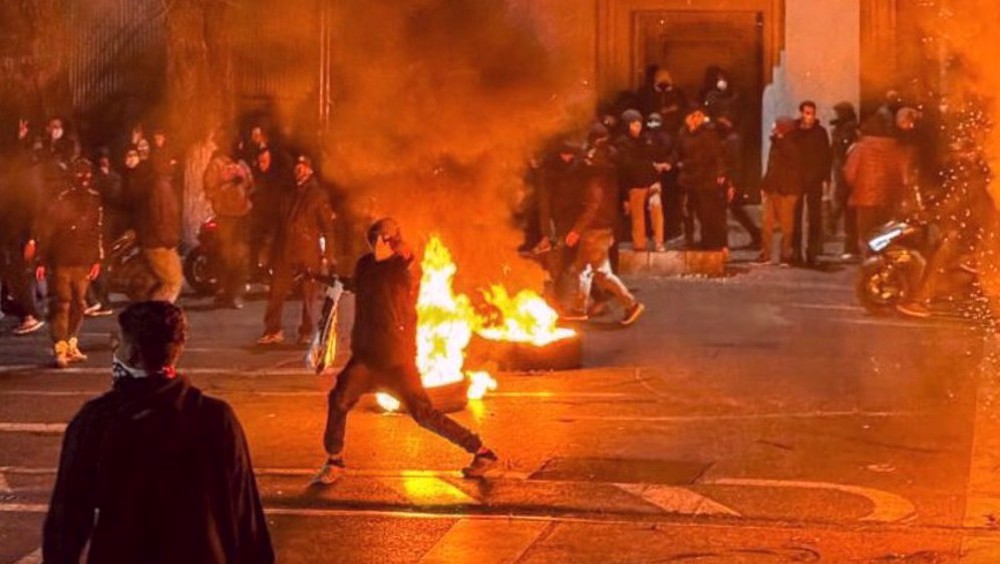
When peaceful protests began in December over the currency devaluation, organized gangs linked to Israel’s Mossad moved in, targeting demonstrators, security forces, government buildings, and mosques, turning economic grievances into coordinated violence.
Iranian police detained rioters and their organizers, including individuals receiving funds from abroad and others carrying weapons and explosives.
Iranian Chief of Police Ahmad Reza Radan explained that the gatherings at first “were legitimate economic protests by market traders,” but “later turned into riots.”
He noted that several detainees confessed to receiving payments in dollars, pointing to backing from foreign NGOs and spy services.
Israeli media later confirmed the presence of Mossad-linked elements in the riots and the anti-governmental attacks.
Militants tied to Kurdish separatist groups based in northern Iraq also crossed into Iran to join the violence.
For years, Iran has endured cross-border attacks by armed Kurdish groups, including the Kurdistan Democratic Party of Iran (KDPI) and similar factions, often operating with foreign support.
Trump and his Israeli partners have repeatedly used manufactured narratives about Iran’s crackdowns against protesters as a justification to push toward renewed confrontation and war against Iran.
 This makes it easy to access the Press TV website