#IR47: How Iran’s Islamic Revolution continues to inspire anti-imperialist currents worldwide
By Shabbir Rizvi
Modern history has been shaped by the imperial-colonialist plunder of the global majority by a global minority of capitalist exploiters. But history is not written by exploiters alone.
Beyond the oppressor's narrative lies a history shaped by resistance. The history the exploiters wish to bury, or worse, demonize. By challenging dominant powers and inspiring worldwide solidarity, liberation movements document their journey through profound sacrifice and unwavering principle - despite the costs that may come.
In the 47th year of the Islamic Revolution of Iran, the steadfast Islamic Republic continues to resist imperialist domination, standing firm even as imperialist warships threaten to approach its shores.
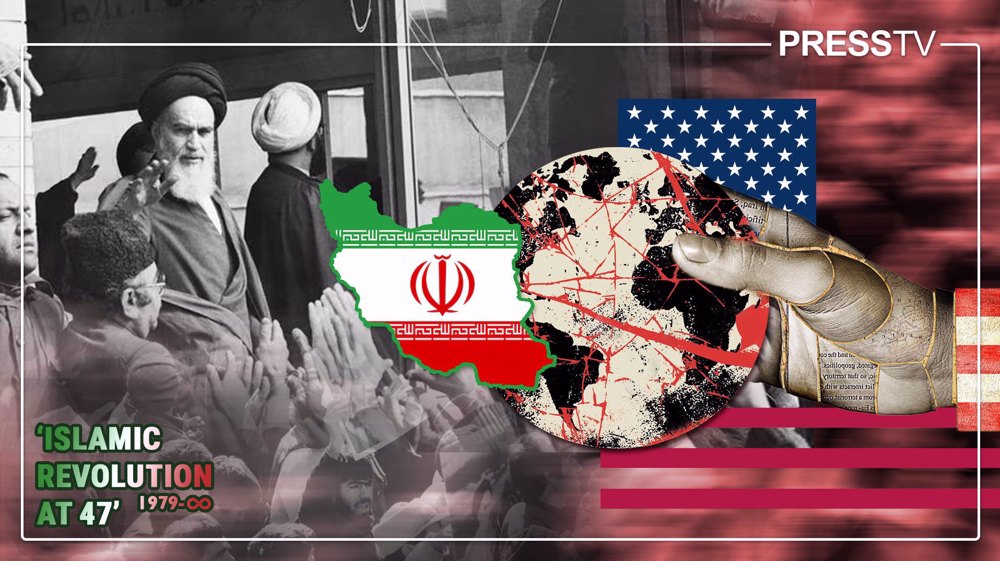
Under the leadership of Ayatollah Ruhollah Khomeini, the Islamic Revolution of Iran in 1979 surpassed mere political change; it sparked a revolutionary renaissance that shook not just the region but the Islamic world itself.
Grounded in Islamic principles, the Ayatollah Khomeini’s movement prioritized Islam, anti-imperialism, and an approach to social justice not centered in imperialist ideological thought.
47 years later, the revolution’s echoes are still felt across the globe, inspiring movements from the defiant neighborhoods of Gaza to the resilient fronts of Yemen and Lebanon to the streets of the imperial core itself.
The revolution's legacy exposes the weakness of empires built on exploitation and corruption, indicating that true liberation emerges from faith, principled unity, and determined resistance.
At its core, the Islamic Revolution embodied an uncompromising stance against imperialism, a doctrine Imam Khomeini articulated as a divine imperative to confront the "Great Satan" – the United States and its Zionist proxy, the Israeli occupation.
It was not an easy task to stand firmly in the face of imperialist arrogance and neocolonial tyranny.
Under the Pahlavi regime, Iran was reduced to a neocolonial vassal state, its resources plundered by US-British corporations while its people languished under cultural alienation and economic subjugation.
Iran’s oil was being used to fuel the Zionist occupation entity in its early days as it ethnically cleansed the Palestinian people and conducted terror operations against its neighbors. In Iran, the Israeli occupation even trained the bloodthirsty SAVAK secret police to torture Iranians.
🎥 The Stories of the Revolution: The Welcoming Committee - Part 1
— Press TV Documentary (@presstvdoc) February 1, 2026
🔻 Iranians overthrow pro-West Shah in 1979 under Imam Khomeini.
📺 Tune into Press TV
🗓 Monday, February 2nd
🕧 00:30 | 05:30 | 11:30 | 16:30 | 21:30 GMT pic.twitter.com/KGIzXcICMf
It took years, multiple exiles, and smuggling of sermons via cassette into Iran and loyal followers to disseminate the message of the revolution to the masses. Ultimately, through a massive uprising, Imam Khomeini's call to arms dismantled the Shah’s neocolonial regime, establishing the Islamic Republic as a citadel of sovereignty and resistance to imperialism.
This resistance was not limited to Iran itself. Imam Khomeini understood that resistance alone is futile, and that genuine resistance means standing up for the oppressed - wherever they may be.
"It is our duty to save the oppressed and deprived... It is an Islamic duty incumbent on all Muslims to help anyone who is oppressed.”
Thus, the Islamic Republic of Iran, since day one of its conception, vowed total support for Palestine and the restoration of its total sovereignty by the dismantlement of the Israeli occupation. This support was also carried into Lebanon, even during the days leading up to the overthrow of the Shah.
Even in the midst of his own country’s struggle against imperialism, a “make it or break it” moment, Imam Khomeini supported sending fighters into Lebanon to expel the invading Israeli regime forces.
His iconic teachings and speeches, such as those that exposed and challenged American interference, galvanized the masses across the Muslim world from Nigeria to Kashmir.
A reclaiming of Islamic purpose was taking place across the Muslim world, where resistance was once defined only by secular struggle, erasing deep history and spiritual roots. It was obvious, therefore, why the United States fueled Saddam Hussein’s war machine in his aggression against Iran - the Islamic Republic’s Revolution had revived the purpose of the Muslim world after centuries of colonial rule.
Imam Khomeini’s anti-imperialist revolution continues to fuel global resistance today, long after his passing in 1989.
Consider the Axis of Resistance, architected in part through Iran's post-revolution support for liberation movements. From its early days in the context of Hezbollah's triumphs against Israeli invasions in 1982 and 2006 to Yemen's Ansarullah thwarting Saudi-American aggression since 2015, Iran's model inspires opposition to imperialist military might.
The martyrdom of General Qassem Soleimani in 2020, who was the architect of the Axis of Resistance, demonstrates this inspiration: his Quds Force strategies, drawn from Imam Khomeini's vision, unified Sunni and Shia fighters against Takfiri terrorists like Daesh, whom Western powers covertly armed and trained to destabilize the region (ie, Operation Timber Sycamore).
Indeed, Imam Khomeini’s doctrine of Islamic resistance is not limited to a particular community of nation alone. Perhaps the best person to articulate this is the founder of Palestinian Islamic Jihad, Fathi Shaqaqi.
🎥 The Revolution's Flight
— Press TV Documentary (@presstvdoc) February 1, 2026
🔻 The Revolution’s Flight recounts the memories of the captain who flew Imam Khomeini from France to Tehran in 1979 after years in exile.
📺 Tune into Press TV
🗓 Sunday, February 1st
🕧 00:30 | 05:30 | 11:30 | 16:30 | 21:30 GMT pic.twitter.com/eAa42h8gIt
In his book “Khomeini: The Islamic Solution and the Alternative,” Shaqaqi praised the Islamic Revolution in Iran and claimed it to be an excellent model for revolution in Palestine and the Arab world.
In a terrain plagued with sectarian division, Shaqaqi bravely called for Islamic unity as well as applauded the Islamic Republic of Iran for all of its support to the Palestinian cause, not just in politics but in material training, arming, and logistics.
This principled unity in Islamic thought and resistance can still be observed today. In Palestine, where Zionist settler-colonialism perpetrates genocide in Gaza, Iranian solidarity remains firm – via diplomatic advocacy, strategic aid, and now, as of 2024, open armed struggle.
With Operation True Promise I and II in 2024, as well as the 12 Day War in June 2025, Iran's missile barrages disproving the myth of Israeli invincibility directly stems from this revolutionary spirit, reminding imperialists that their "Iron Dome" is as fragile as their moral “superiority.”
Just as significant is the revolution's pledge to social justice, a pillar Imam Khomeini wove into the fabric of Islamic governance. Drawing from Quranic injunctions against oppression – "O you who have believed, Stand firm for justice as witnesses for Allah..." (4:135) – he envisioned a society in which wealth redistribution and equity supplanted the capitalist excesses of the Shah's era.
This can be observed in the Islamic Republic's stress on education and job creation, as literacy rates shot up from 36-37% in 1976 under the Shah’s rule to over 88% by the early 2020’s. After all, a knowledgeable and educated population is capable of defending its sovereignty.
Furthermore, post-revolution, Iran introduced policies such as land reforms, universal healthcare, and housing, lifting millions out of poverty despite crippling US sanctions that followed immediately after the revolution. In particular, the 1982 Urban Land Law redistributed land and pushed for a mass housing project.
In taking on these initiatives, Iran was simultaneously showing the world that under neocolonial law, the colonial subject does not share the wealth of its imperialist masters; it is bleeding itself dry for their greed.
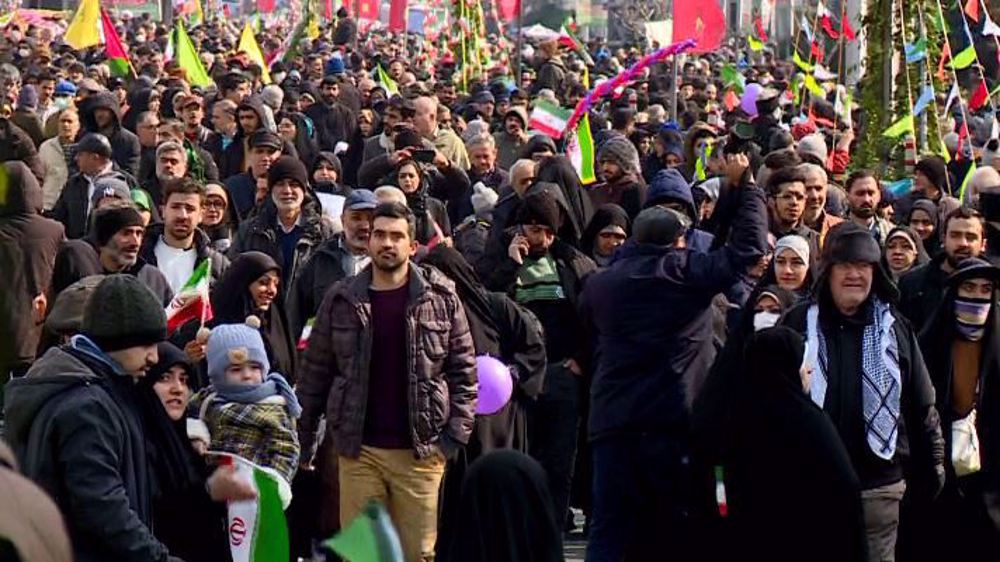
Iranians begin 10-Day Dawn celebrations marking the 47th anniversary of the victory of the Islamic Revolution.
— Press TV 🔻 (@PressTV) February 1, 2026
Follow: https://t.co/mLGcUTS2ei pic.twitter.com/uvOlulPM5a
Countries that once experienced the same subjugation by imperialism-colonialism, such as those in Latin America, therefore view Iran as an ideologically aligned friend. States like Venezuela and Cuba, long subject to American blockades, have developed alliances with Iran in the context of various resource and trade agreements that subvert dollar hegemony.
The revolution's emphasis on mustazafin (the oppressed) resonates in global movements against neoliberalism, such as the Bolivarian Revolution or South Africa's post-apartheid reforms.
Iran's 2023 entry into BRICS, alongside its SCO membership, accelerates de-dollarization, challenging the IMF's debt traps that ensnare Global South-Periphery nations. By pursuing mutual benefit over exploitative relationships, Iran embodies Imam Khomeini's vision: a world where principled social justice confronts the structures of imperial domination.
In an era of escalating Zionist aggression and Western hypocrisy – where UN resolutions on Gaza are vetoed while billions of Western taxpayer dollars continue to fund Israeli bombs – the Islamic Revolution and Imam Khomeini remain as an inspiring model for what it means to reclaim sovereignty in the face of all-encompassing encroachment.
They teach that empires crumble not through compromise but through principled resistance, where anti-imperialism, social justice, and Islamic values converge.
Iran's steadfastness proves Imam Khomeini's resolve: "America cannot do a damn thing."
This inspiration endures, urging the global ummah and oppressed peoples to forge a just world, free from the shadows of hegemony. The revolution lives, not in relics, but in the resolve of those who dare to resist and dare to struggle.
Shabbir Rizvi is an anti-war activist and an editor at Vox Ummah
(The views expressed in this article do not necessarily reflect those of Press TV.)

Iran's Intelligence Ministry hails journalists for thwarting enemy's war of narratives

No ‘miscalculation’ against Iran will go unanswered amid Mecca defense pact: MP

Pezeshkian congratulates Iran’s AI Olympiad team on medal haul at IOAI 2026



Fire at factory in Riyadh kills16 Bangladeshi migrant workers
Israeli forces, settlers carried out 108 attacks on Palestinian journalists in July
Rights group urges disclosure of Gaza detainees’ fate, probe into Israeli abuses
Judiciary chief congratulates new secretary of Supreme National Security Council
One year on, Gaza journalist Anas Al-Sharif remembered as brave chronicler of Israel’s genocidal war
Mecca defense pact not directed against any country, open to others: Pakistan
Greenland escalates warning to Trump-linked oil firm over unauthorized drilling equipment
Haj Qassem boosters meet Kheybar Shekan, Fattah warheads: Iran’s new hybrid missile configuration





 PressTV NEWSLETTER now
  This makes it easy to access the Press TV website