Iran cementing ‘green gold’ legacy against US sabotage
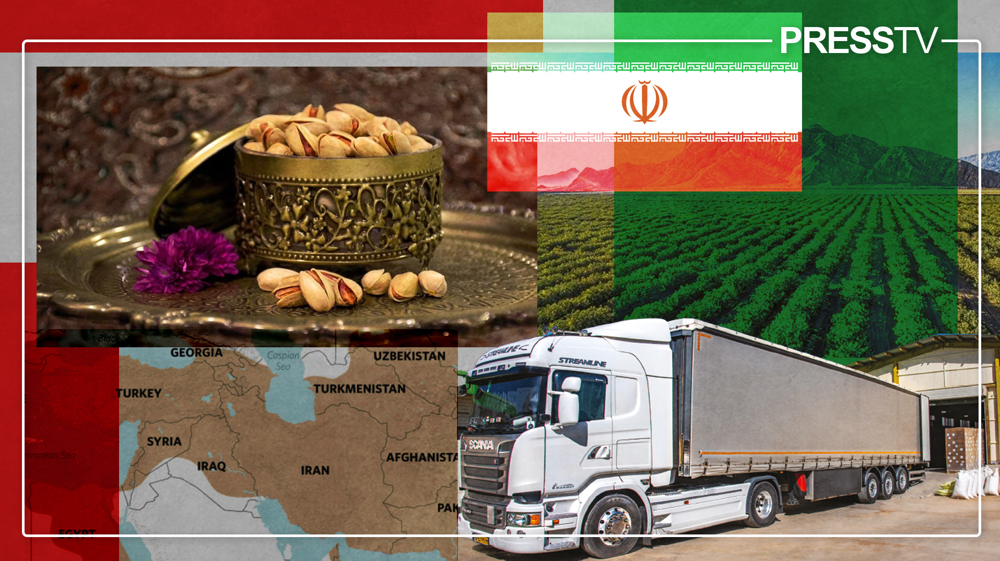
Iran’s pistachio industry has long been a cornerstone of its agricultural exports, deeply embedded in the country’s economy and culture.
According to the latest figures from the United Nations’ Food and Agriculture Organization, Iran’s pistachio exports soared by 80 percent in 2024, propelling the nation into second place globally behind the United States.
During this period, Iran shipped out 316,000 tonnes of pistachios, marking a significant leap. In comparison, the US managed a modest 5 percent increase in exports, while Turkey expanded its market share by 40 percent.
Pistachios, often referred to as "green gold" in Iran, represent a crucial export product in a country that has long been known for its agricultural prowess. Iran’s pistachios are seen as one of the most prized non-oil exports, and for good reason.
From the historic role of pistachios in ancient trade routes like the Silk Road to their deep-rooted cultivation in regions such as Kerman, Rafsanjan, and Yazd, the pistachio is integral to Iran’s identity.
However, the global pistachio market is now a battleground where competition is fierce, with the United States having employed a variety of low-handed tactics to solidify its position while undermining Iran’s historic dominance.
In the mid-20th century, Iran was the uncontested leader in pistachio production, controlling 75 percent of the world’s pistachio exports by 1970. At the time, Turkey was the only competitor, with a mere 25 percent market share.
But the geopolitical landscape changed dramatically after the Islamic Revolution of 1979. Political shifts in Iran, combined with the US push to support pistachio production in California, would set the stage for a new era in the pistachio trade.
The US strategy began in the 1970s with the importation of Iranian pistachio cultivars. The Kerman variety, widely regarded as the world’s finest pistachio cultivar, was illegally shipped to California's Central Valley and became the foundation of US pistachio production.
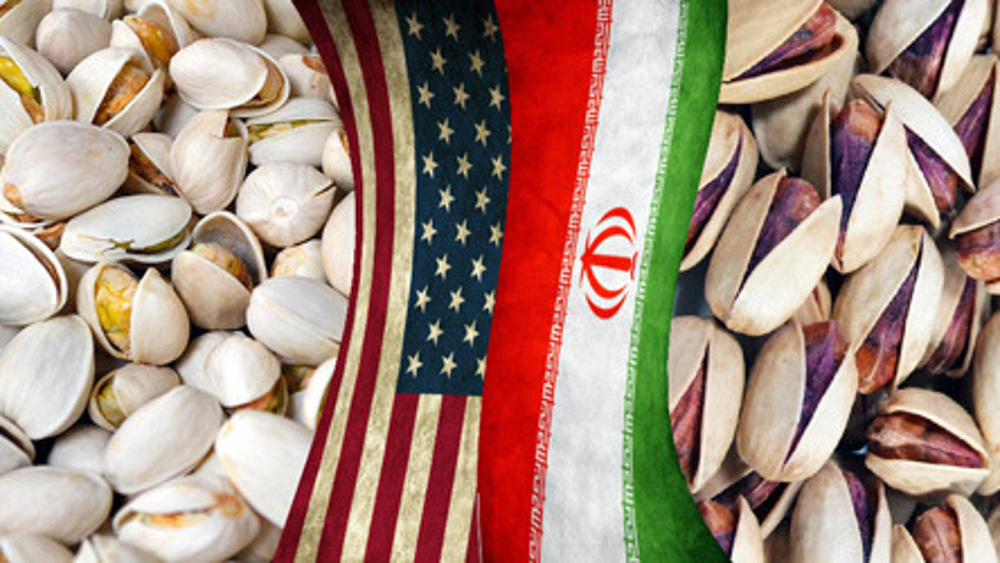
Over the next 50 years, California would go on to produce nearly all of the US’s pistachios, with the crop originating from the very seeds Iran had cultivated for millennia.
What followed was a quiet yet significant form of intellectual property theft. While the world marveled at California’s booming pistachio industry, few recognized the intricate history behind the orchards that relied heavily on cultivars sourced from Iran, the birthplace of the pistachio.
In a calculated move, the US not only imported the seeds but also created an entire industry around them and concocted a malicious maze of tariffs and regulatory hurdles, all designed to suppress Iranian exports and consolidate its own dominance in the global pistachio market.
In 1990, the United States imposed tariffs on Iranian pistachios, including anti-dumping duties and countervailing duties designed to effectively block Iranian pistachios from entering the American market, citing issues related to currency manipulation in Iran.
These tariffs, which amounted to over 300 percent, were a clear effort to protect California’s fledgling pistachio industry while limiting competition from its long-standing rival.
But the US didn’t stop at tariffs. Beyond mere economic pressure, there were also non-tariff barriers, particularly in the form of sanitary regulations.
These measures, ostensibly introduced for health and safety concerns, were widely seen as a disguised attempt to keep Iranian pistachios out of lucrative European and North American markets.
The European Union, which had once been a key export destination for Iranian pistachios, was increasingly influenced by these regulatory restrictions, further constraining Iran’s access to international markets.
The loss of the American market was a significant blow to Iran's pistachio industry, but it was only the beginning. The US also aggressively sought to expand its pistachio exports to other regions, including Europe and Asia.
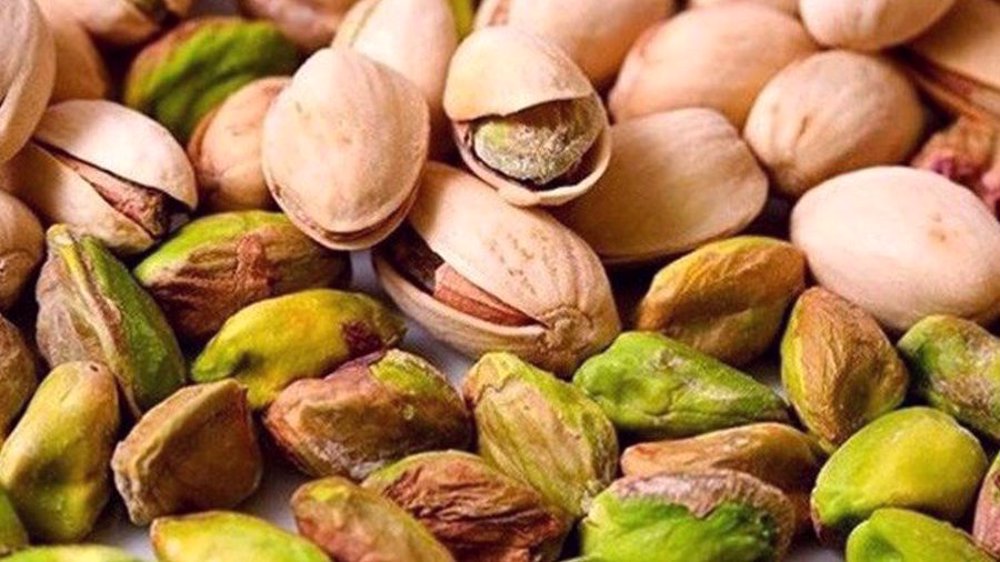
California’s pistachio industry quickly became a serious rival in markets where Iranian pistachios had long been dominant, competing head-to-head with Iran in markets such as Japan, Southeast Asia, and Europe.
Iran, however, continues to hold on to significant portions of the global market, particularly in Asia. China, India, and Russia have become key markets for Iranian pistachios, even as the US attempts to assert its dominance.
In 2023, exports to China grew by 25 percent, a clear sign that demand for Iranian pistachios remains strong despite external pressures. This is a testament to the product’s superior quality and the enduring loyalty of its customer base.
Iran’s pistachio producers have also found ways to adapt, innovating in processing and packaging techniques to meet international standards.
For example, the packaging of pistachios has evolved significantly, with Iranian companies increasingly investing in modern packaging that appeals to discerning consumers in global markets.
Moreover, Iranian agricultural research institutes have focused on developing drought-resistant varieties of pistachio trees, which can thrive even in the country’s arid climate.
Efforts to expand production into new regions, such as the expansion of pistachio farming in the provinces of Khorasan, Yazd, and Sistan and Baluchestan, have further boosted the country's capacity.
Iran's climatic conditions, with fertile soils and long, sunny summers, make the pistachio uniquely suited to its environment. The long days during spring and summer ensure that the pistachios can absorb essential nutrients from the soil, contributing to their rich flavor and texture.
These conditions give Iranian pistachios a distinct edge in terms of taste and quality over other global competitors, such as those from the United States.
ECO can play greater role in regional peace, economic integration: Araghchi
Iran says international flights continue despite US sanctions pressure
Iran slams US for blaming Tehran over rising fuel prices, Strait of Hormuz closure



Disarmament without dealing with Israel’s nukes is meaningless: Iran's deputy FM
VIDEO | UN says Gaza struggling with most severe economic crisis on record
At UN, Russia condemns US assassination of Iran’s Leader as ‘unacceptable’
Yemeni military says Saudi warplanes carry out 27 airstrikes in past 24 hours
Israel establishes new illegal settlement outpost in occupied West Bank
VIDEO | Press TV's news headlines
VIDEO | News Review: Iran slams US ‘economic terrorism’
VIDEO | Yemeni army releases video showing strikes on Saudi military buildups, vehicles


 PressTV NEWSLETTER
now
PressTV NEWSLETTER
now
 This makes it easy to access the Press TV website
