State of emergency across US as monster storm hits 200 million Americans
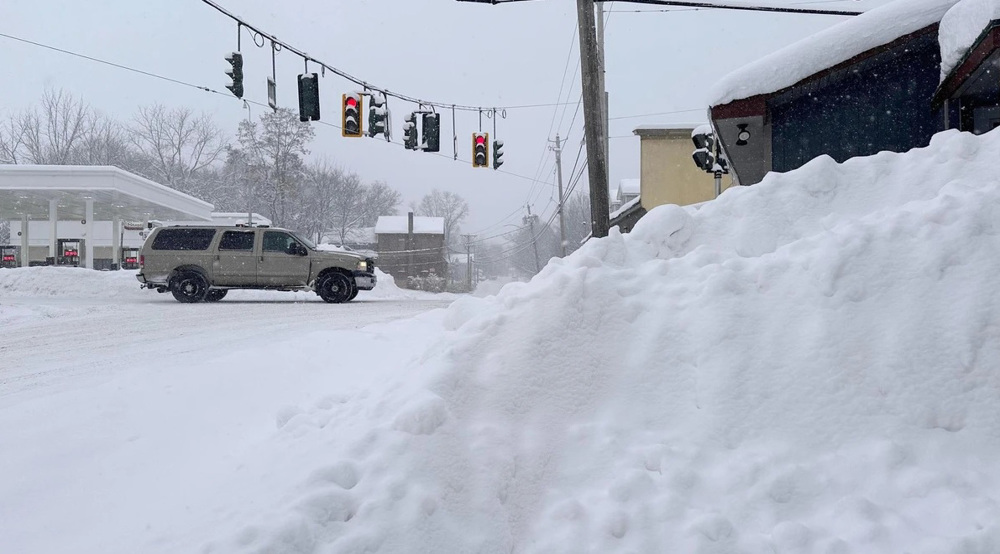
A dangerous, monstrous winter storm sweeping across the United States has plunged much of the country into chaos, leaving at least seven people dead, more than one million without power, and nearly 200 million Americans affected by extreme cold, ice, and heavy snow.
The sprawling system, described by forecasters as historic, stretches from the Gulf Coast to New England, paralyzing travel, overwhelming power grids, and exposing the deadly risks of prolonged freezing temperatures.
In the South, where severe winter weather is less common, the storm has been especially devastating. Louisiana health officials confirmed two deaths from hypothermia in Caddo Parish, where two men were found dead amid bitter cold. In Texas, authorities reported one person found dead in Austin, with hypothermia the presumed cause.
New York City Mayor Zohran Mamdani said at least five people were found dead outdoors across the city before snowfall intensified, underscoring the vulnerability of unhoused residents as temperatures plunged to their lowest levels in nearly a decade.
“This storm is a brutal reminder of how dangerous extreme cold can be,” Mamdani said, warning that New York is experiencing colder conditions for a sustained period than it has seen in eight years.
The National Weather Service warned that the storm’s scope and duration are unusual, forecasting up to 18 inches of snow in parts of New England, half an inch or more of freezing rain across the Mid-Atlantic and Ohio and Tennessee Valleys, and crippling ice accumulation in the Southeast.
Forecasters cautioned that the aftermath may be just as dangerous, with bitter cold and life-threatening wind chills expected to linger across much of the country.
The storm has battered the nation’s infrastructure. As of early Monday, more than 900,000 customers in at least 11 states were without electricity, many facing freezing temperatures without heat.
Tennessee, Mississippi, Louisiana, and Texas were among the hardest-hit states. Utility crews raced to restore service, but officials warned that icy roads and downed power lines were slowing progress.
To prevent a broader grid collapse, the Department of Energy issued emergency orders allowing grid operators in Texas and the Mid-Atlantic to deploy backup power resources, overriding some environmental and operational limits.
Grid operators warned the storm could rank among the most severe winter events they have ever faced.
Travel across the country has ground to a halt. More than 11,000 flights were canceled in a single day, making it one of the worst weather-related aviation disruptions in US history.
Major airports, including Washington, D.C.’s Reagan National and Philadelphia International, shut down almost entirely. Airlines scrambled to reposition aircraft and crews, while passengers faced days of delays and uncertainty.
Snowfall totals were staggering: 15 inches in parts of Pennsylvania, 13 inches in Connecticut, 12 inches in New Jersey, and double-digit totals across the Midwest, while ice accumulations exceeding one inch were reported in parts of South Carolina, Mississippi, and Louisiana—areas rarely hit by such conditions.
In response, 17 states and the District of Columbia declared states of emergency, unlocking federal aid and emergency resources. President Donald Trump approved disaster declarations across a wide swath of states, urging residents to stay indoors and prepare for prolonged cold.
Homeless advocates and emergency responders warned that the storm has exposed deep desperation, especially in cities where shelters are strained and power outages persist.
With temperatures plunging below zero in some regions and wind chills reaching dangerous extremes, officials urged people to conserve heat, check on neighbors, and avoid travel unless absolutely necessary.
As the storm continues its march eastward, communities across the US are bracing for more snow, more ice, and more hardship—hoping that power is restored and lives are spared before the deep freeze finally loosens its grip.

Protests erupt in US as ICE agent shoots Venezuelan driver
Poll: Over half of US Jews say Netanyahu fueling American anti-Semitism
US man standing trial for shooting three Palestinian students says CIA, Mossad instructed him



Iran parliamentary commission approves penalties for violators of Hormuz laws
VIDEO | Trump’s war disrupts the world
Araghchi urges world to hold US accountable for ‘war crimes’ at UNGA
VIDEO | Press TV's news headlines
US F-16 fighter jet crashes at air base in Germany
Iran warns US against new attack, says Washington will gain ‘nothing but failure’
'Shameful': UK to provide refueling support for Saudi warplanes amid war on Yemen
‘Iron shield’: Knowledge, morality will ‘cut off’ hands of aggressors, Leader tells students





 PressTV NEWSLETTER
now
PressTV NEWSLETTER
now
 This makes it easy to access the Press TV website
