China hits US with economic counteroffensive after Maduro’s abduction: Report
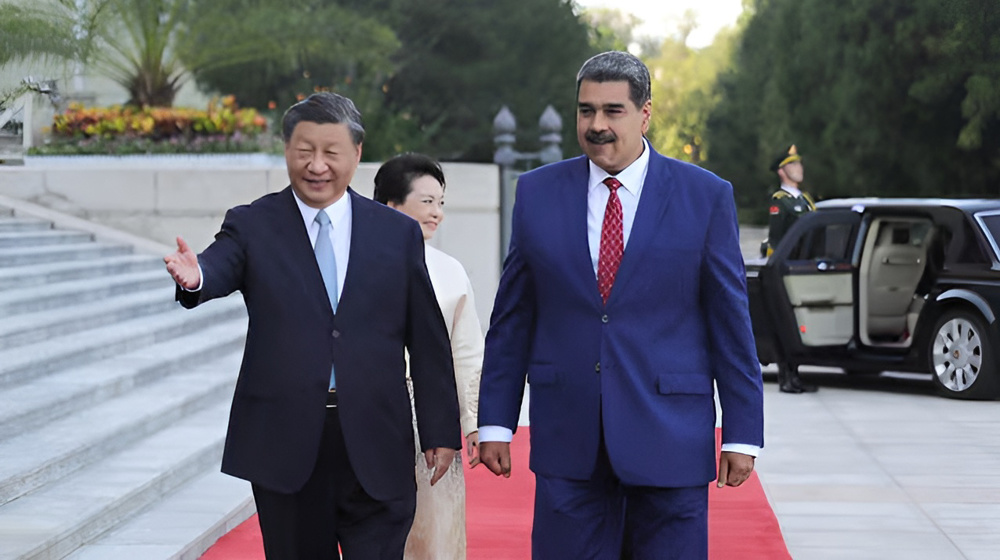
China has responded to the abduction of Venezuelan President Nicolas Maduro by the United States with coordinated economic force, delivering a direct blow to US power and signaling a decisive shift toward a multipolar world order, a report says.
China sharply condemned the January 3 abduction of Maduro and the violation of Venezuela’s sovereignty, concluding that Washington was attempting to weaponize control over Venezuelan oil to curb China’s presence in South America and obstruct its long-term development, the German-language service of Russian broadcaster RT said in a report.
According to the report, Beijing treated the aggression against Venezuela as an attack on the BRICS countries and on the very idea of a multipolar world, and within hours of the news of the kidnapping, President Xi Jinping convened an emergency meeting of the Politburo Standing Committee that lasted 120 minutes, with no public statements afterwards.
Instead, China activated what its strategists call an “integrated asymmetric response,” designed to counter the aggression against its partners in the Western Hemisphere, including Venezuela, viewed as China’s strategic gateway to Latin America, which Washington considers its own backyard.
The first phase began on January 4, when the People’s Bank of China discreetly suspended all US dollar transactions with companies linked to the US defense sector, with Boeing, Lockheed Martin, Raytheon, and General Dynamics seeing their China-related transactions frozen without warning.
Later that day, State Grid Corporation of China (SGCC) announced technical reviews of contracts with US suppliers of electrical equipment, signaling a deliberate decoupling from American technology as China National Petroleum Corporation reorganized its global supply routes, canceling oil delivery contracts to US refineries worth $47 billion annually and redirecting supplies to India, Brazil, South Africa, and other Global South partners.
As a result, oil prices surged 23 percent in a single trading session, underscoring the message that China can strangle US energy security without firing a shot.
China then targeted global logistics, with China Ocean Shipping Company, which controls roughly 40 percent of global shipping capacity, rerouting operations away from US ports, causing Long Beach, Los Angeles, New York, and Miami to lose 35 percent of their container traffic almost instantly.
The disruption rippled through US retail giants such as Walmart, Amazon, and Target, whose China-dependent supply chains partially collapsed within hours. The synchronized timing of these measures produced a systemic shock, overwhelming Washington’s ability to respond.
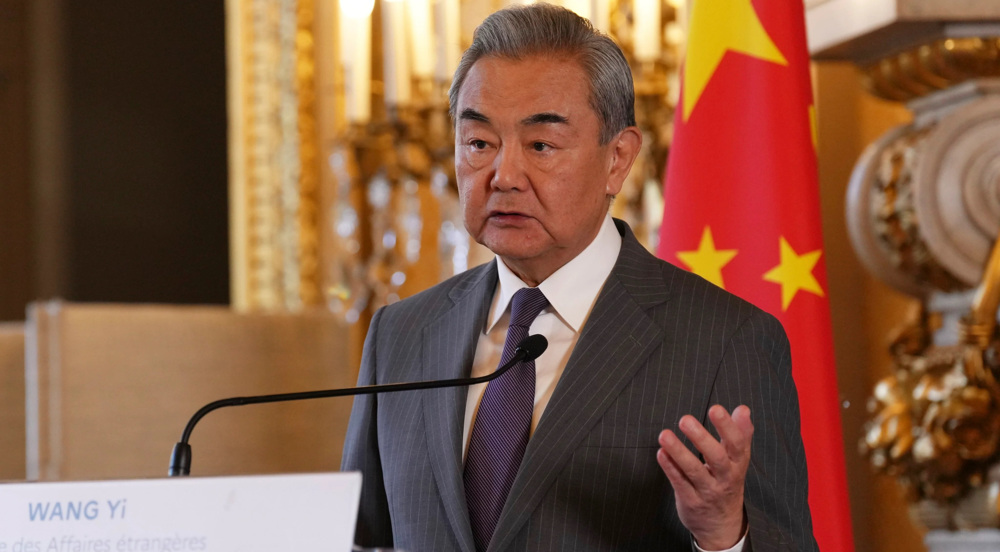
That same day, Chinese Foreign Minister Wang Yi offered immediate preferential trade terms to dozens of countries willing to refuse recognition of any Venezuelan government installed by US coercion. Within 24 hours, 19 countries - including Brazil, India, South Africa, and Mexico -accepted, forming an instant anti-US bloc driven by economic incentives.
The final escalation came on January 5, when China expanded its cross-border interbank payment system to fully accommodate transactions seeking to bypass the US-controlled SWIFT network. This created a functional alternative to the Western financial system that is 97 percent cheaper and faster.
In the first 48 hours, $89 billion in transactions were processed, and central banks from 34 countries opened operational accounts, accelerating de-dollarization and weakening a key pillar of US power.
Simultaneously, China imposed temporary export restrictions on rare earths on countries that supported Maduro’s abduction, alarming US tech giants such as Apple, Microsoft, Google, and Intel. China is the largest producer of these rare-earth metals, as it accounts for at least 60 percent of them globally.
Rare earth materials are essential for semiconductors and electronic components.
As the report asks, “What is China doing for Venezuela?” The answer, it concludes, is that China is acting without declaring war.
Every step China has taken strikes at the economic heart of the US empire, the report concluded.
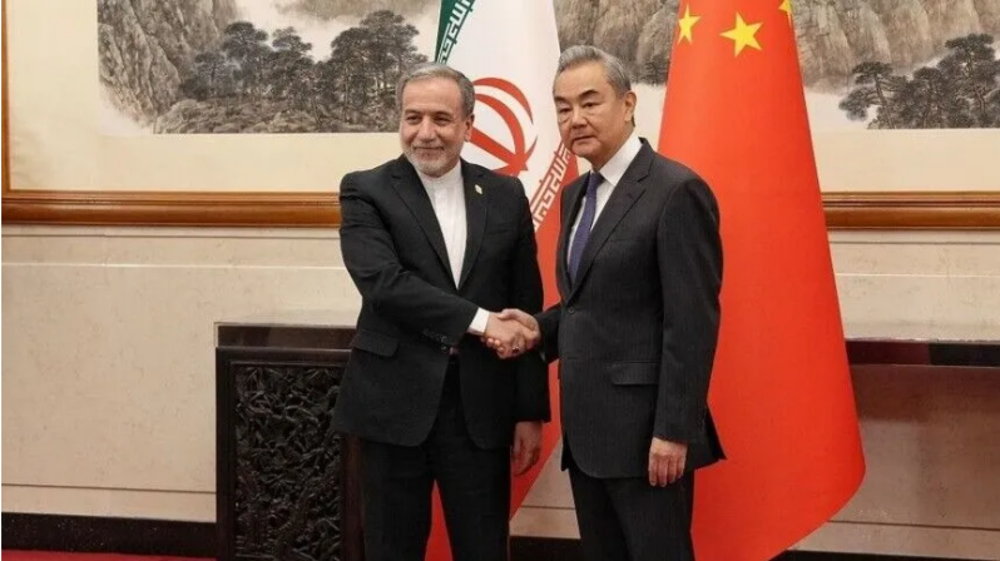
Araghchi welcomes Xi’s initiatives, hails China-Iran strategic partnership
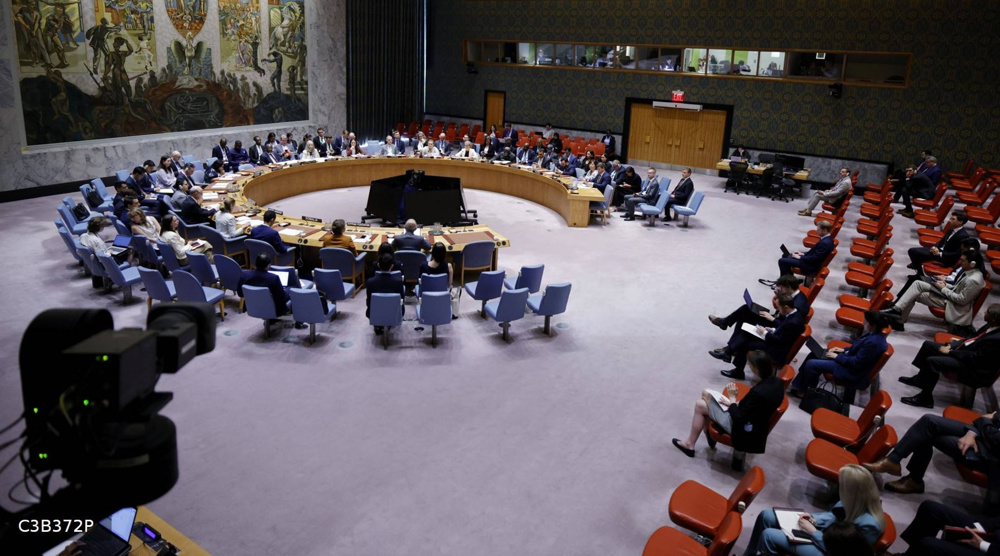
Russia, China veto US backed anti-Iran resolution at UN Security Council
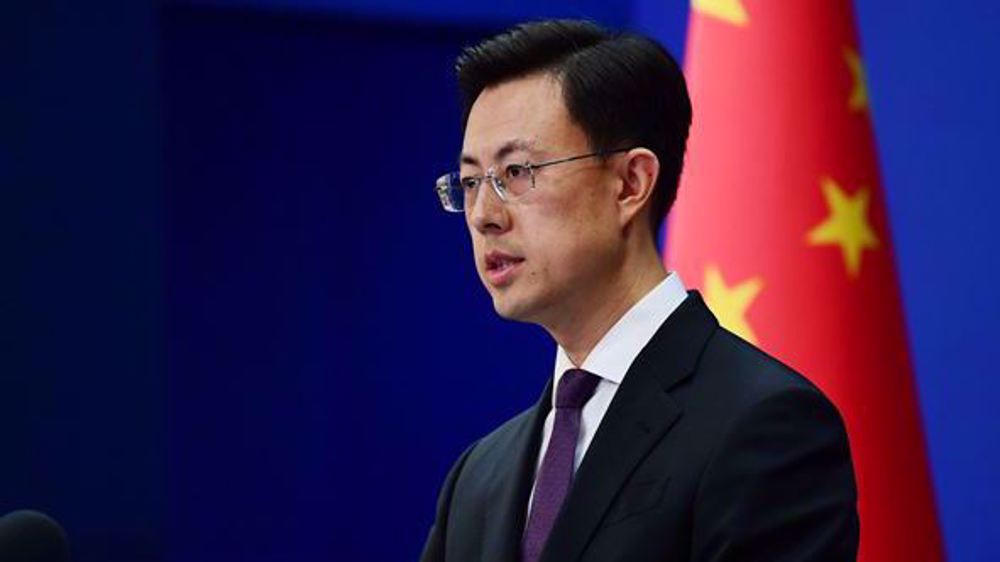
China rejects US ‘long-arm jurisdiction,’ says trade ties must not face third-party coercion



Iran claim basketball bronze at 2026 Asian Games, win delegation’s first medal
Yemen warns Saudi escalation will draw stronger response
Iraqi MP: Resistance weapons aimed at enemies, terrorist groups
South Korea rejects Hormuz deployment plan
VIDEO | News Review: US accused of understating troop deaths in war on Iran
Qalibaf: No reopening of Hormuz until US meets Iran’s conditions
Top Iranian MP mocks US claims of fuel crisis, warns against miscalculation
Israel has carried out 1,068 incursions into Syria since Assad’s fall: Report


 PressTV NEWSLETTER
now
PressTV NEWSLETTER
now
 This makes it easy to access the Press TV website
