West-funded body conspired against EU anti-fraud office after corruption findings: Report
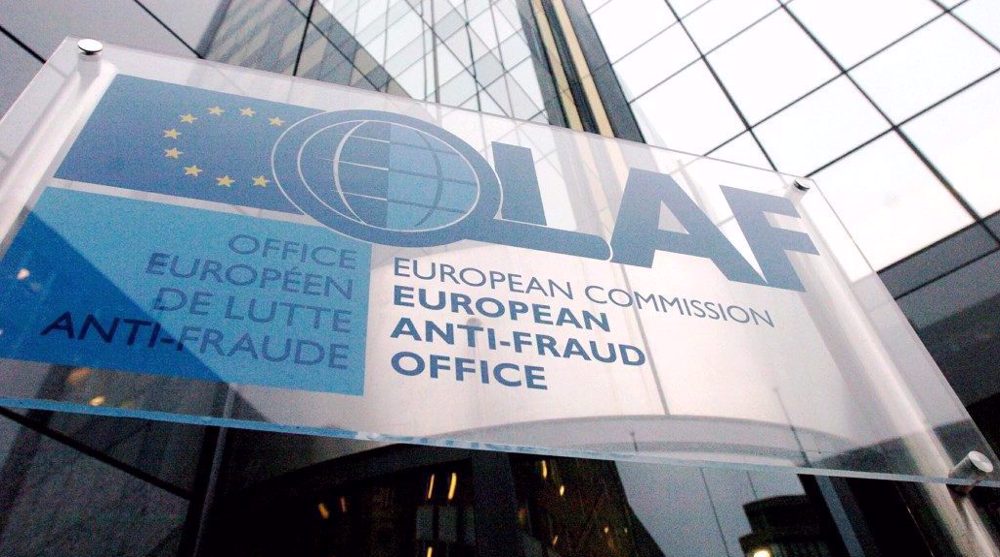
Leaked documents have indicated that the so-called Commission for International Justice and Accountability (CIJA), a Western government–funded organization active during the Syria crisis, pursued a covert campaign aimed at undermining and intimidating the European Union’s financial regulators after they found it culpable of corruption.
The Grayzone, an investigative outlet, reviewed the documents and published a report concerning them on Sunday.
According to the documents, CIJA’s founder and executive director, William “Bill” Wiley, sought to infiltrate and discredit officials at the European Union’s Anti-Fraud Office (OLAF (from the French Office européen de lutte antifraude)) and the European Commission following OLAF findings that determined that CIJA and its sister company, Tsamota, had been engaging in unethical and fraudulent practices.
The effort reportedly included plans to collect internal communications, gather compromising information on EU officials, and pressure regulators into removing CIJA from an EU blacklist.
CIJA, established in 2011 by former Western intelligence and military figures, describes itself as a non-governmental organization focused on collecting evidence for “criminal justice efforts” worldwide.
Throughout the crisis that began engulfing Syria in 2011, during which Western-informed riots and then militancy and Takfiri terrorism wrought havoc on the Arab country, the organization’s work on what it would call “abuses” by the Syrian government earned praise from senior American officials and extensive positive coverage in major Western media outlets.
The organization itself has acknowledged receiving funding from Western governments, including the United States State Department.
OLAF has placed CIJA on an EU blacklist following investigations dating back to at least 2015 – a development that has gone unreported in much of the English-language media.
In that year, OLAF raided CIJA’s registered headquarters and found no evidence that the organization was operating there.
Subsequent OLAF rulings in 2017 and 2020 concluded that CIJA and Tsamota had engaged in serious financial irregularities, including falsified documents, irregular invoices, and misuse of EU funds tied to EU-backed rule-of-law projects.
Leaked internal CIJA papers show Wiley responded by organizing what he described as an “ongoing operation” against OLAF.
The documents outline plans to gather human intelligence, obtain internal OLAF emails, and collect information that senior European Commission officials could be “intimidated by,” with the aim of securing a “discrete settlement” and ending OLAF scrutiny.
The files also reveal that Wiley solicited assistance from Ian Baharie, a veteran of Britain’s MI6 intelligence service, seeking advice on approaching targets and conducting interviews. Baharie expressed confusion and skepticism about the plans, questioning the absence of a clear operational strategy and pressing Wiley to clarify his objectives.
Central to CIJA’s efforts was a proposed sting operation against a former Tsamota employee, Cinzia Verzeletti, whom Wiley accused of acting as an OLAF source. Under a pseudonym, Wiley contacted Verzeletti repeatedly, alleging she had ties to foreign intelligence and warning of potential legal and reputational consequences if she failed to cooperate. The leaked notes describe plans to pressure her into an in-person meeting and extract information that could be used against OLAF officials.
The documents further show that Wiley explored hiring private cyber firms to obtain sensitive data on OLAF staff and speculated about recruiting sources inside EU institutions to access confidential files. He argued that the European Commission was vulnerable to reputational damage and could be compelled to reach a quiet settlement if allegations of internal wrongdoing were raised.
Despite these efforts, OLAF’s press releases detailing fraud findings related to CIJA and Tsamota remain online, and there is no indication that the EU blacklist has been lifted or that regulators have agreed to any settlement.
Separately, CIJA’s methods have come under renewed scrutiny following a May 2024 ruling by a Swedish court that acquitted a Syrian man accused of war crimes in a case built largely on CIJA-provided evidence. Judges found the organization’s dossier to have extremely limited probative value and raised concerns about inconsistencies and changes in witness testimony. An EU-funded investigation later reported that CIJA investigators had elicited testimony with inducements and tampered with statements.
CIJA has played a prominent role in so-called war crimes investigations targeting Syria and has supported prosecutions in multiple countries.
The leaked files, however, depict an organization that, when faced with EU fraud findings, sought to counter regulators through covert pressure tactics rather than legal appeals.

EU slams US over visa ban on officials regulating 'online censorship rules'

US weighs sanctions against Spanish ships over blocked arms shipment to Israel
EU grants €90 billion loan to Ukraine



Iran Armed Forces pledge firm response to any hostile act
General Soleimani was 'architect of Axis of Resistance’ in region: Iran FM
VIDEO | Somalis protest against Israel's recognition of Somaliland
UN rapporteur says Georgetown cut ties over exposing Israel’s genocide in Gaza
VIDEO | Press TV's news headlines
West-funded body conspired against EU anti-fraud office after corruption findings: Report
Iran heralds clean energy future with landmark geothermal power plant at Mount Sabalan
Iran warns Israel’s recognition of Somaliland aims at destabilizing entire region


 PressTV NEWSLETTER
now
PressTV NEWSLETTER
now

 This makes it easy to access the Press TV website
