The Year That Was: 'Newsmakers' who shaped headlines in 2025 – for good or bad
By Mohammad Ali Haqshenas
While some figures wielded their influence to escape war crimes and profit from chaos, others risked everything to expose those war crimes and media lies, making 2025 a year defined as much by systemic failure as by individual courage.
Those who followed the news witnessed the “impossible”: a dead man’s skeleton tumbling out of the cupboard and igniting a storm in US politics, and a young climate change activist trading picket lines for an Israeli prison cell.
The year also saw a UN official standing firm against illegal US sanctions to lay bare genocide, even as a tech billionaire quietly amassed media outlets to silence that very truth.
An academic was arrested in the so-called “land of liberty” for condemning genocide, while the FIFA boss played politics in the Oval Office, turning a blind eye to American war crimes.
The year also held a slew of other gripping stories: a young socialist rising to power in New York City, a militia leader terrorizing Gaza under Israeli watch, and a UN official who looked the other way as illegal attacks targeted the facilities his agency was meant to protect.
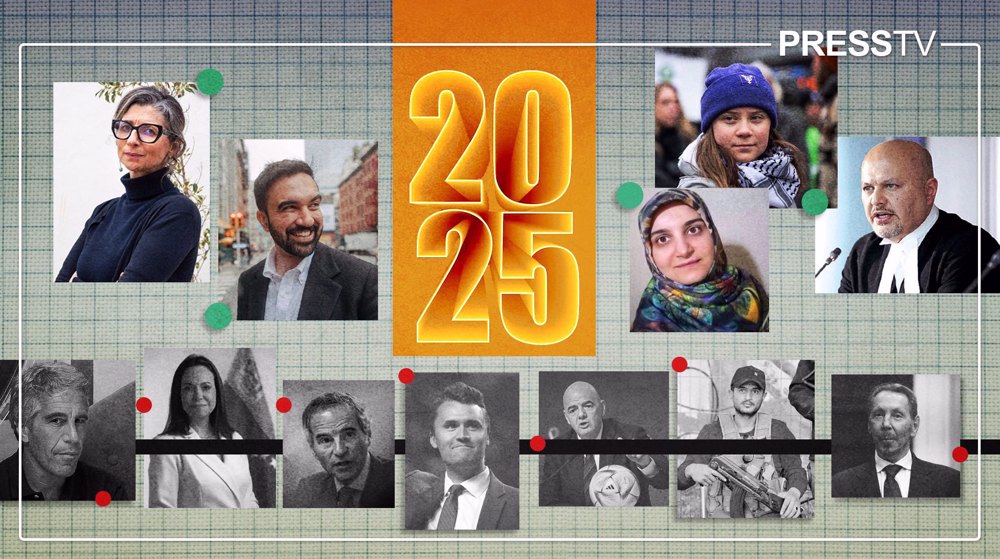
Here are the twelve ‘newsmakers’ who defined this turbulent year 2025.
Jeffrey Epstein
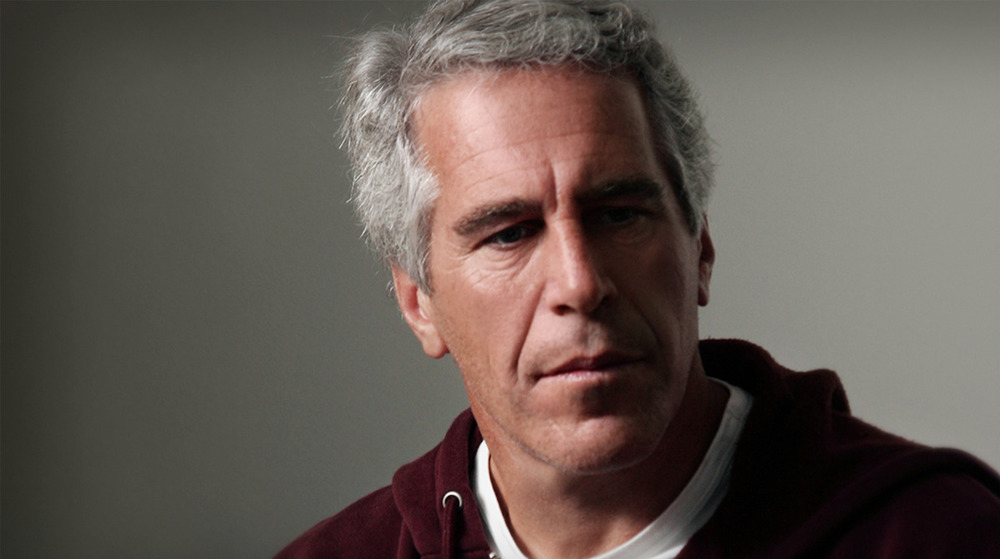
It has been years since US authorities declared Jeffrey Epstein dead in what they officially labeled a suicide; yet the case of the convicted sex trafficker resurfaced as a major news story in 2025, driven by new legal action and the release of long-sealed material.
The administration of US President Donald Trump allowed, rather reluctantly, the release of documents linked to Epstein after facing mounting pressure from both the public and the lawmakers.
Several survivors testified and spoke publicly in 2025, especially during congressional hearings, prompting fresh questions about accountability, institutional failures, and the role of wealth and access in delaying justice.
Tens of thousands of records and photographs were eventually released earlier in December.
The new data has brought the names of prominent political figures such as Trump and Bill Clinton, further intensifying scrutiny of how his operations endured for years with almost no intervention.
Western media coverage focused more on Epstein himself and his contacts than on the systems that allowed his influence to persist.
María Corina Machado
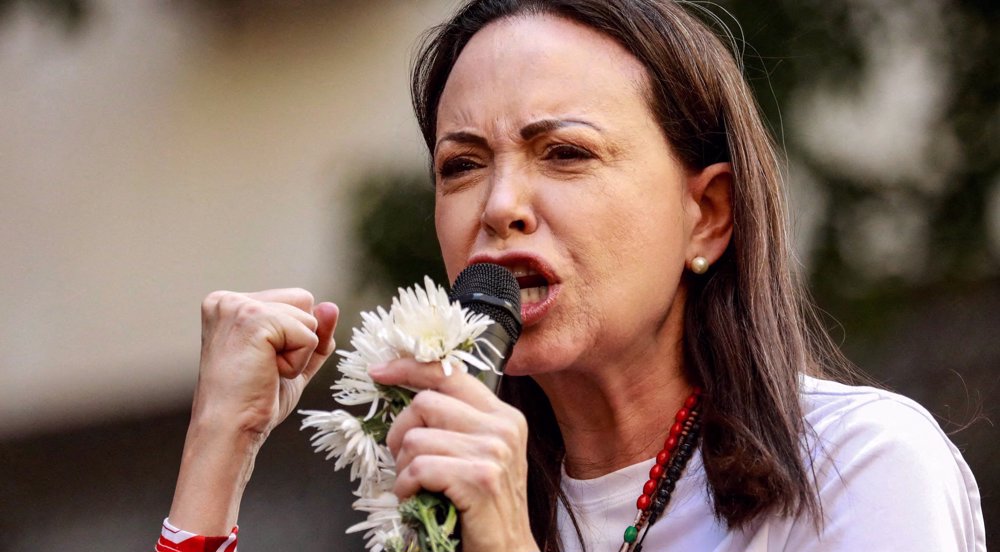
María Corina Machado emerged in 2025 as one of Venezuela’s most visible — and divisive — political figures whose "regime change" spectacle ironically earned her the Nobel Peace Prize.
A founder of theVente Venezuela party, Machado prioritized external pressure as a core political tool, going as far as pleading to Israeli Prime Minister Benjamin Netanyahu — wanted by the International Criminal Court for genocide in Gaza — to help topple the government of Nicolas Maduro.
She ruined Trump’s dream of winning the 2025 Nobel Peace Prize after the Norwegian committee praised her “tireless work promoting democratic rights” and gave the political award to her.
But she was quick to symbolically dedicate the same prize to Trump in a move seen by observers as a celebration of subversion and an attempt to appease the "master."
Awarding a “piece prize” to a US-backed coup plotter and advocate of genocide in Gaza yet again exposed the Noble Committee’s transformation into a geopolitical tool of Western countries.
Francesca Albanese
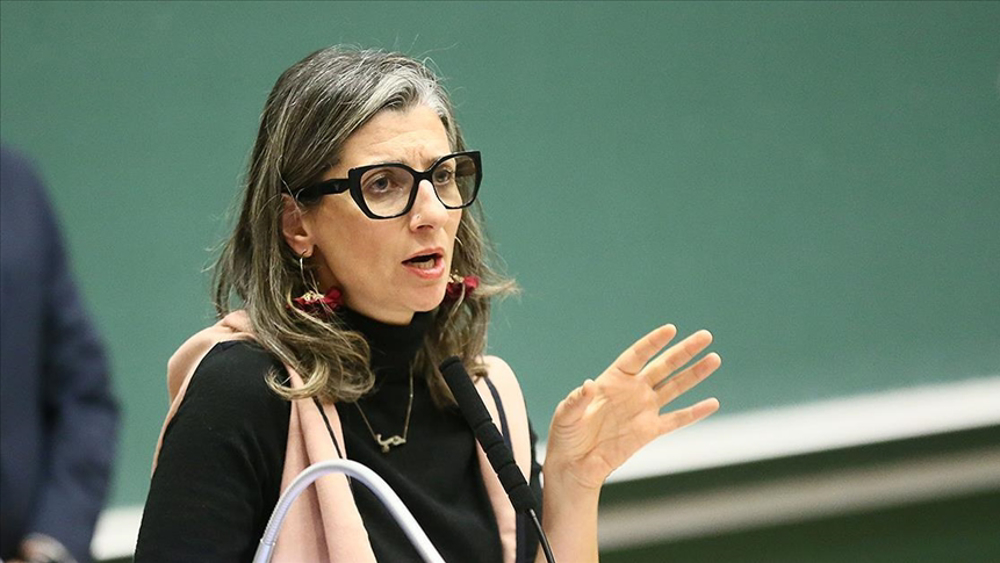
In a year marked by relentless violations of international law by the US and Israel, Francesca Albanese was praised for her courageous stance, her well-researched reports and her advocacy work.
The UN Special Rapporteur on Palestine came under heavy pressure and intimidation, including sanctions from the Trump administration. However, she refused to be silenced.
In a September report, she exposed the Israeli genocidal campaign against Gaza, describing it as “the shame of our time” to help strip away the diplomatic euphemisms often used to cloak genocide.
She emerged as an outspoken critic of Israeli occupation policies at the UN with several reports, one of which highlighted that the Israeli war demonstrated "prima facie evidence of an intention to systematically destroy Palestinians as a group."
While Western governments did not shy away from conspiring to normalize the slaughter of Palestinians, Albanese invited the world to look into the abyss by documenting the systematic erasure of Palestinians.
She was even sanctioned by the US for her latest report, but she refused to be cowed down and continues to be one of the most fearless voices against the Israeli-American genocide in Gaza.
Rafael Grossi
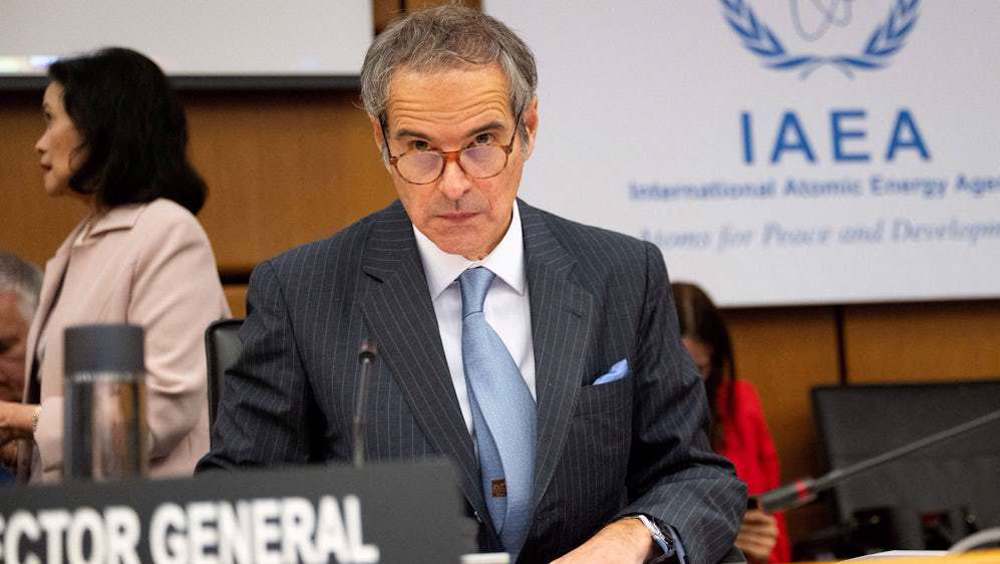
In 2025, the International Atomic Energy Agency director general revealed more than before how he followed US and Israeli leads and allowed the UN nuclear agency to be politicized.
Rafael Grossi pushed and ratified a resolution at the IAEA Board to give Washington and Tel Aviv the paperwork to launch illegal and unjustified attacks on Iran’s nuclear facilities in June.
Following the aggression, which also targeted nuclear scientists, Grossi refused to condemn the attacks, saying it is “not his responsibility” to slam attacks on centers that he is supposed to safeguard.
Instead, he echoed Western countries’ claims of threats in Iran’s nuclear program, pressuring Tehran following the attacks to allow inspectors in report on the whereabouts of the enriched uranium material that, according to Iranian officials have been dumped deep in the facilities bombed by the US.
Analysts say Grossi’s measures have laid bare the politicized nature of the IAEA, which functions less as a technical watchdog and more as a body that takes dictations from Western powers.
His inability to act as a neutral arbiter has eroded the agency’s credibility in the eyes of the world.
Zohran Mamdani
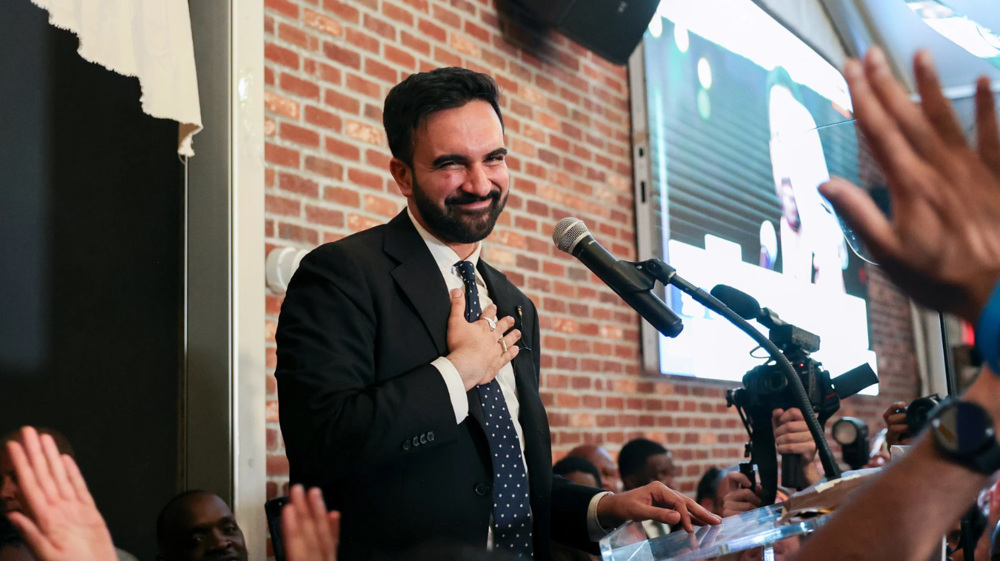
Zohran Mamdani became one of the most closely watched US political figures of 2025 after winning the New York City mayor election, capping a rapid ascent from politics to the leadership of the country’s largest and richest city.
Running as a Democratic socialist, Mamdani campaigned on an ambitious urban agenda centered on housing affordability, expanded tenant protections, free public transit, and universal childcare, mobilizing unusually high turnout among younger and working-class voters.
His victory was historic on several levels, becoming the city’s first Muslim mayor and its youngest.
A defining feature of Mamdani’s rise was his pro-Palestinian stance and explicit rejection of Zionism, positions he articulated consistently during the campaign despite their sensitivity in New York politics.
Mamdani’s victory came despite the Zionists’ Islamophobic campaign to undermine his candidacy.
Analysts believe his willingness to slam Israeli occupation, oppose unconditional US military aid, and challenge the influence of pro-Israel lobbying groups marked a significant departure from long-standing political norms in the city and across the country.
Charlie Kirk

During his lifetime, Charlie Kirk was a polarizing figure in US conservative politics and his murder under mysterious circumstances in 2025 placed him among the year’s top newsmakers.
Kirk co-founded Turning Point USA in 2012. His influence expanded dramatically after 2016, as he became one of Trump’s most visible and loyal surrogates, leveraging media appearances and a large social media following to amplify the ideological priorities of the MAGA movement.
By the time of his death at age 31, Kirk was no longer just an activist organizer but a full-fledged political commentator whose rhetoric extended beyond domestic culture wars into foreign policy.
Analysts note that his unwavering support for Israel, hardline opposition to Iran, and dismissive framing of Palestinian claims defined much of his international outlook.
He consistently rejected Israeli war crimes in Gaza, denied the existence of genocide, and portrayed Palestinian suffering primarily through the lens of militancy and terrorism.
However, in his final days, according to some reports, his political leanings had changed.
Kirk was fatally shot on September 10 in broad daylight while speaking at Utah Valley University.
Greta Thunberg
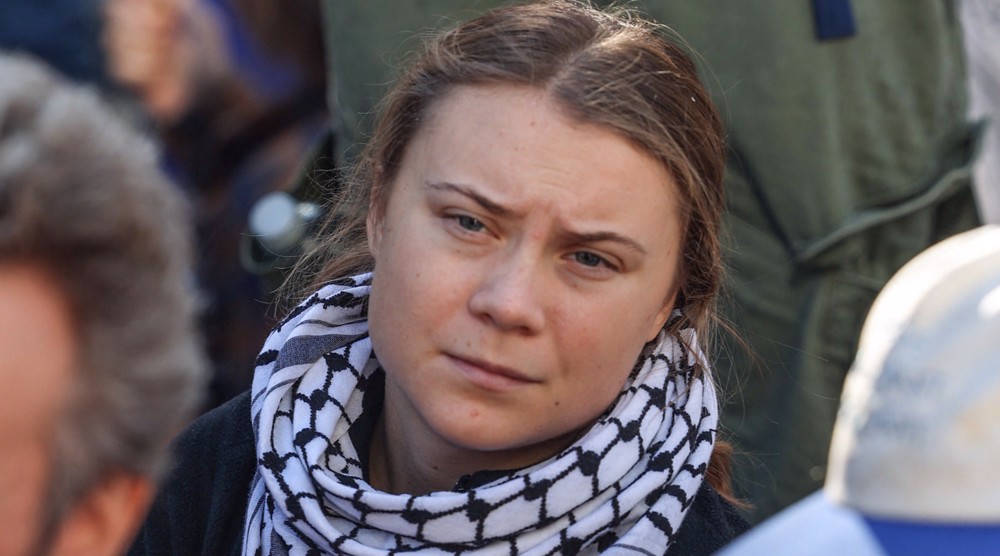
Once cheered by Western liberals for her climate activism, Greta Thunberg became a political prisoner in 2025 for her activism on the rights of Palestinians and against the genocide in Gaza.
Her detention by Israeli regime forces in October, following the interception of the Global Sumud Flotilla, and her subsequent mistreatment in Israeli prison, exposed the selective morality of Western "human rights" champions, as many Western leaders who had previously praised her activism gave muted responses to her detention.
The episode highlighted the political costs of her explicit pro-Palestinian stance and opposition to Israeli policies, which positioned her outside the comfort zone of mainstream Western liberal support.
In 2025, Thunberg rose from a climate activist to a voice for oppressed Palestinians who have been suffering from more than 2 years of Israeli war.
She, along with other members of the flotilla, also showed that supporting the oppressed needs not just words but putting their bodies in line against the Israeli blockade.
Gianni Infantino
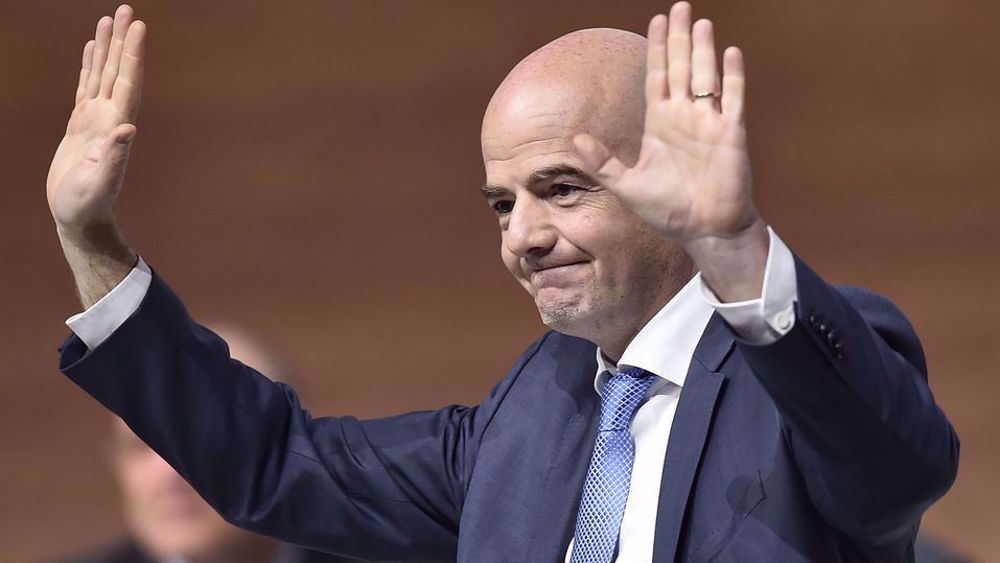
Gianni Infantino remained one of the most controversial figures in global sport in 2025, presiding over FIFA at a time when football’s commercial ambitions have collided openly with ethical, political, and grave human rights concerns.
As FIFA president, Infantino pushed for an extended Club World Cup in the United States despite sustained opposition from player unions and medical experts. Critics warned that the calendar reduced the sport to a vehicle for television revenue and sponsorship growth.
Beyond football administration, Infantino’s political positioning drew increasing scrutiny. Analysts noted his unusually close relationship with Trump, demonstrated in the Oval Office and beyond.
That proximity became more conspicuous when Infantino invented a so-called “peace prize” under FIFA-linked auspices and bestowed it on Trump during the World Cup 2026 draw ceremony.
Infantino’s leadership also faced mounting criticism over his failure to respond to Israel’s genocidal war on Gaza. Throughout 2025, human rights organizations, players’ groups, and legal experts called on FIFA to ban Israel just like what the body did against Russia.
Mahdieh Esfandiari
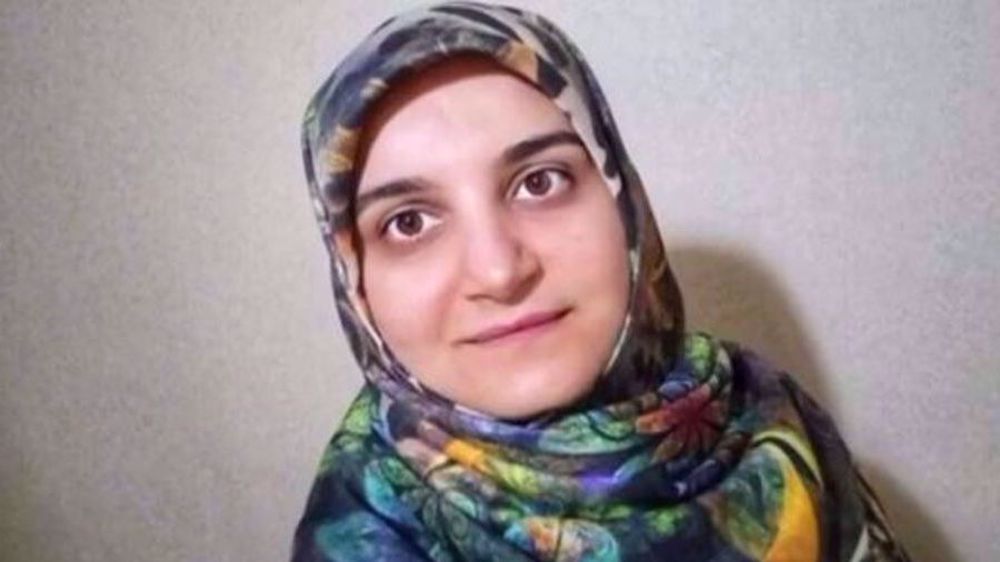
Iranian academic and activist Mahdieh Esfandiari’s illegal detention in France became a major human rights story in 2025, even though it received little attention in the Western press.
She was arrested in March 2024 after her online activism against Israel’s genocide in Gaza. The arrest was announced a month later and came in a country that claims to be a bastion of “liberty.”
According to her family, Mahdieh was denied hijab and his right to access a phone for 50 days.
She spent months in solidarity confinement on unsubstantiated charges of “apology of terrorism.” This is while any detention beyond 48 hours without a judicial warrant is deemed illegal in France.
In October, Tehran announced that Esfandiari had been put in a prisoner exchange plan with Deputy Foreign Minister Vahid Jalalzadeh, saying that she had been taken hostage by Paris.
In late October, the foreign ministry said a French judge had granted conditional release to Esfandiari.
Yasser Abu Shabab
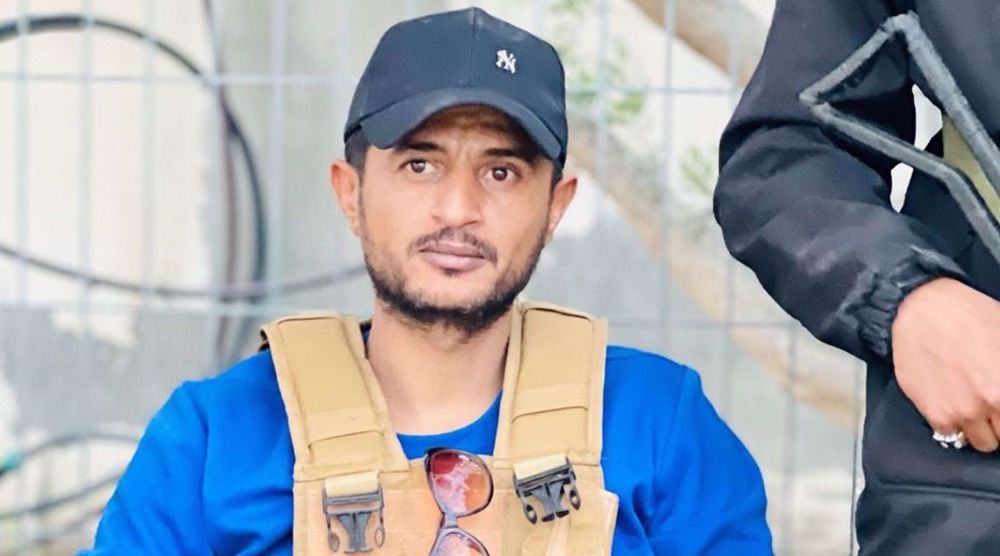
Styling himself as the head of the so-called Popular Forces, Abu Shabab emerged amid Gaza’s devastation not as a protector of civilians, but as a predator feeding on chaos.
He was killed on December 4 in Rafah in what many described as an internal gang dispute.
His gang reportedly looted humanitarian aid, terrorised desperate families, and kidnapped or killed Palestinians, all while operating comfortably under Israeli military indulgence.
By his own account, his militia moved “with ease” in Israeli-controlled areas, coordinating operations and enjoying a freedom of movement unavailable to the ordinary people.
Even Israeli commentators later conceded that his death was a setback—not for Gaza, but for Israel.
Palestinian factions, clans and families were united in their rejection of the likes of Abu Shabab.
Hamas said in a statement that the Israeli regime had failed to protect its agents, emphasizing that the fate of anyone who tampers with the security of his people and serves their enemy is “to fall into the dustbin of history and lose any respect or status.”
Karim Khan
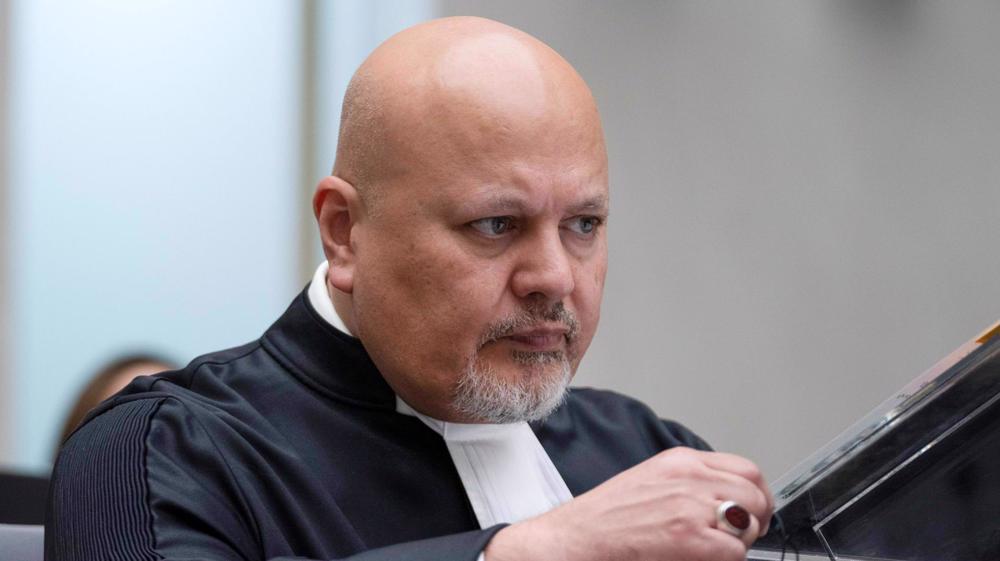
Few international civil servants entered 2025 under heavier scrutiny than Karim Khan, the British chief prosecutor of the International Criminal Court (ICC).
A seasoned barrister and former UN investigator, Khan has insisted that his decision — seeking arrest warrants for Netanyahu and his former minister of military affairs, Yoav Gallant, over crimes against humanity in Gaza — followed the court’s statute and the evidence before it.
The response was swift and punitive. The Trump administration imposed personal sanctions on Khan in February, revoking his US visa, freezing his assets and barring his family from entering the country.
In June, Washington extended sanctions to four ICC judges who approved the warrants, part of a broader effort, critics say, to deter the court from scrutinizing Israel.
Amid that campaign, Khan’s tenure has been rocked by sexual misconduct allegations, which he has categorically denied. The claims — now the subject of a United Nations inquiry — have prompted Khan to take a leave of absence.
Observers note that the accusations surfaced in a climate of intimidation and may form part of a coordinated effort to discredit him after the Israeli warrants.
Larry Ellison
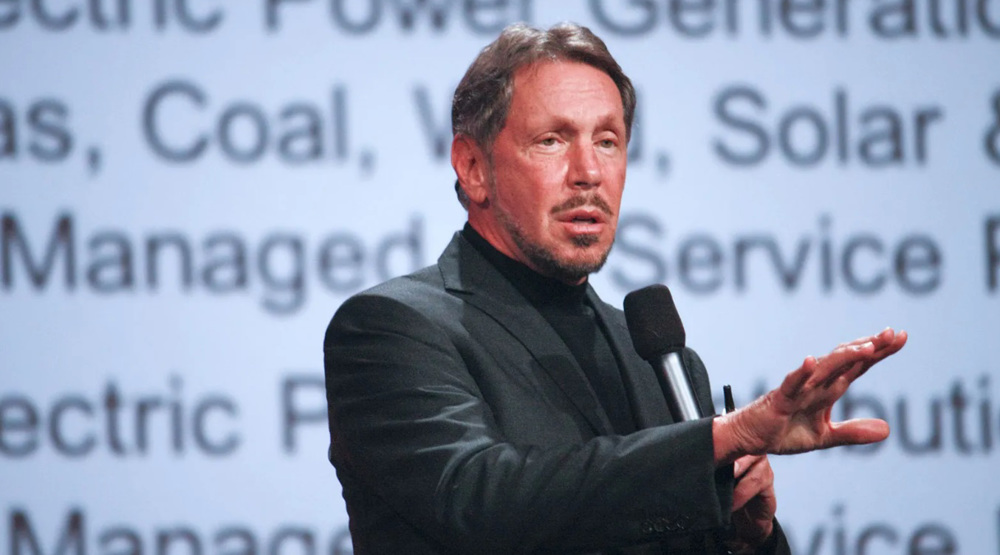
Larry Ellison entered 2025 less as a conventional technology billionaire than as a central figure in the media power and support for the Israeli regime in the US.
The Oracle founder, long known for cultivating influence in Washington and Silicon Valley, has moved decisively into the infrastructure that shapes what Americans see and say online — and he has done so while openly aligning himself with Israel as the regime launched a genocide in Gaza.
Ellison is a leading investor in the Trump-brokered restructuring of TikTok’s US operations, a deal that places Oracle at the center of the platform’s data storage and algorithmic oversight.
At the same time, Ellison’s expanding media footprint — through Paramount, CBS, and a pending bid for Warner Bros. Discovery — has raised questions about how political commitments translate into editorial posture. Under the Ellison family leadership, Paramount publicly opposed cultural boycotts of Israeli institutions and instead put entertainment figures who criticize Israel on a blacklist.
Ellison’s investments reflect a coherent strategy: control of data, platforms and narratives at a time when public opinion has grown sharply more critical of Israeli crimes in Gaza and beyond.

Pentagon pushes military contractors to accelerate production amid shortages

US immigration arrests hit record monthly high as Trump administration expands enforcement campaign

Proposed US bill ties military funding for Lebanon to Hezbollah disarmament



VIDEO | Press TV's news headlines
US war on Iran depletes American arsenal, emboldens global rivals: Report
VIDEO | US backs Israel, arms market amid regional turmoil: Analyst
US 'investment' project in Iraq is cover for plundering national wealth: Resistance leader
‘Trump lost this war’: US senator warns America gets weaker as war on Iran drags on
Parliament speaker Qalibaf congratulates Mohsen Rezaei on appointment as SNSC Secretary
VIDEO | Iran's demands for re-opening Srait of Hormuz
Israeli restrictions on Gaza aid network threaten to deepen famine: Euro-Med


 PressTV NEWSLETTER
now
PressTV NEWSLETTER
now
 This makes it easy to access the Press TV website
