Hands off Iran: Iranian workers protest, but refuse to fall into US 'regime change' trap
By Nahid Poureisa
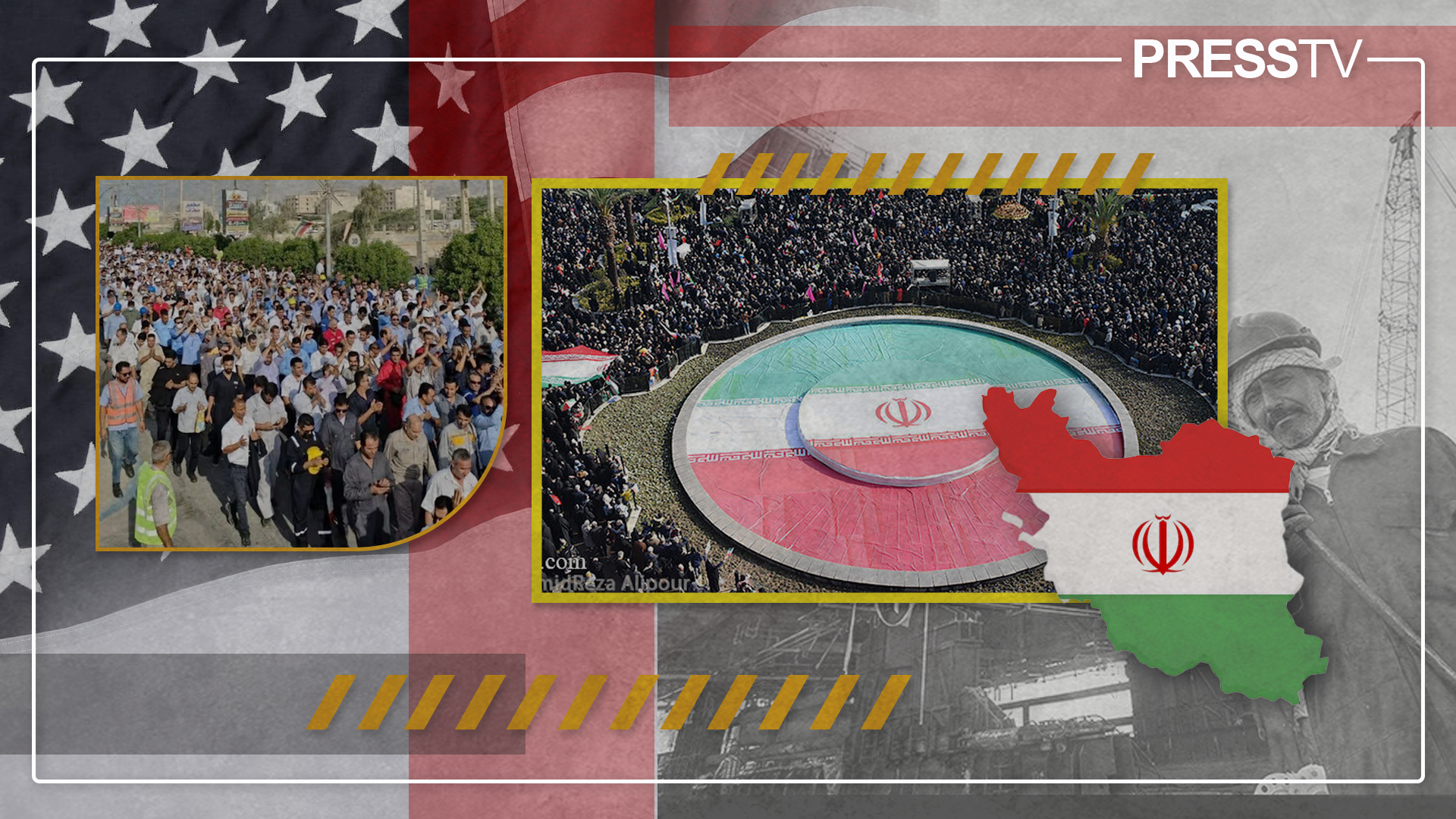
The protest by South Pars contract workers on December 8 (18 Azar), during which more than five thousand workers gathered peacefully in front of the governor’s office in Asaluyeh, Bushehr province, was one of the largest labor mobilizations in Iran in recent years.
It marked the third and final phase of a two-month campaign carried out in an orderly, peaceful, and civilized manner, demonstrating the dignity, discipline, and sense of responsibility that workers in this country consistently display.
The Association of Trade Unions of Bushehr Refinery Workers outlined the objectives of this round of protests, which included reforming the job classification system, standardizing wages, clarifying the employment status of drivers, regulating the conditions of safety and support personnel, and ensuring full compliance with labor laws.
These demands reflect some structural grievances raised by workers, particularly in the energy sector, which constitutes the backbone of Iran’s economy.
One especially notable aspect of the December 8 protest, widely visible on social media, was the presence of women and children. Their participation underscored a strong sense of public safety and community involvement. Participants expressed appreciation to the police for ensuring the security of families, including the many children accompanying their parents.
The admirable level of civic discipline and mutual respect stands in stark contrast to the stereotypes frequently promoted by Western media about Iran, which often portray protests in the country as inherently “violent” and police as “unruly.”
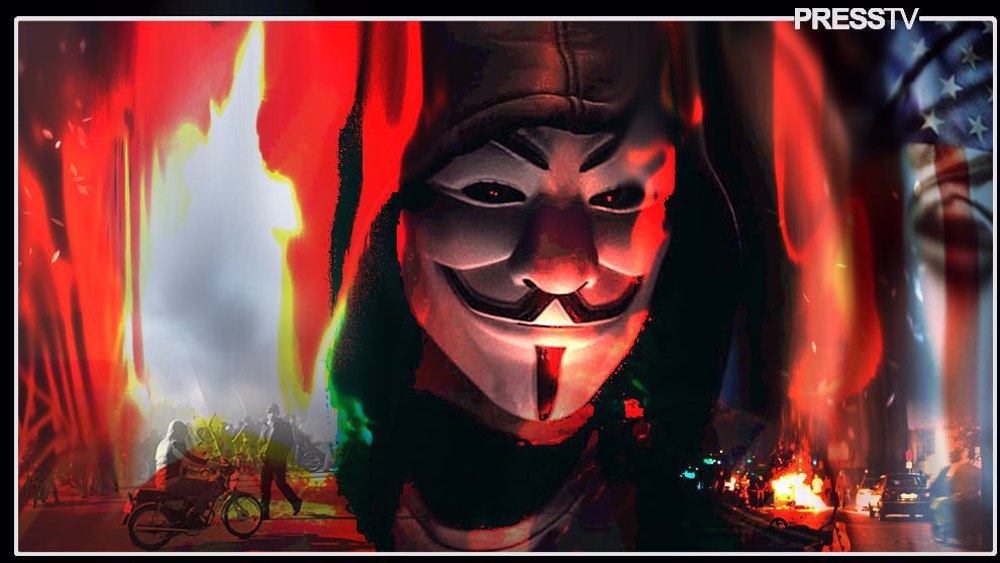
Yet it is precisely such images of social cohesion and civic maturity that Western narratives tend to obscure or distort. As has often been the case, there are persistent efforts not only to conceal these realities but also to misinterpret or hijack genuine grassroots movements and repurpose them in service of so-called “regime-change” agendas.
The reality is that in the Islamic Republic, workers enjoy the same democratic rights and their voices are heard. Such protests and peaceful demonstrations have a place within the country’s democratic system, unlike many Western countries, including the US.
It is well understood among Iranian workers, including those who took part in these protests, that foreigners, particularly the United States, have no genuine concern for the Iranian people, their livelihoods, women’s rights, inflation, housing, or environmental challenges.
Instead, they seek to weaponize social issues as tools in a broader campaign to discredit the state.
This pattern resurfaced once again when the Persian-language page of the US State Department attempted to insert itself into the workers’ movement, framing the protests in ways that aligned with Washington’s political objectives.
✍🏻 Viewpoint - US ‘regime change’ gambits in Iran have backfired – even Trump’s envoy admits it https://t.co/noZk36C3Hg
— Press TV 🔻 (@PressTV) December 11, 2025
By Hamid Javadi pic.twitter.com/yUURxiD53y
Yet Iran’s workers’ movement has long been grounded in a deeply rooted, anti-imperialist revolutionary tradition, something the hawks in Washington still don’t understand.
The memory of the oil workers’ decisive action in 1978 – coordinated with discipline and carried out under the guidance of Imam Khomeini – still resonates strongly.
When they shut off the oil valves, halting exports to the West and delivering a final blow to the West-backed dictator’s chances of survival, they restored a profound sense of dignity to the Iranian nation after years of subservience.
When Imam Khomeini returned home on February 1, 1979, and the Islamic Revolution triumphed ten days later, it was those same workers who reopened the valves, this time as free citizens of an independent democratic country.
This episode remains a cornerstone of Iranian labor history and tradition, and it continues to play a substantial role in safeguarding the workers’ movement from external manipulation and foreign interference.
Mirghafari, one of the leaders of the South Pars workers’ union, responded firmly to the US government statement, reminding them that outsiders have no right to interfere in local issues.
“The term ‘regime’ befits that savage American state, not a government that has arisen from the heart of a popular revolution. We have not the slightest need for the support of your cannibalistic government. Do not appropriate our voice,” he said.
Leader of the Islamic Revolution, Ayatollah Seyyed Ali Khamenei, has repeatedly warned of the interaction between internal shortcomings and foreign interference.
✍️ Feature - 72 years of Iran ‘regime change’ project: From 1953 coup to post-1979 failed plots
— Press TV 🔻 (@PressTV) August 21, 2025
Read More: https://t.co/IE4e1U8C8I pic.twitter.com/dDpvkegs8N
“It is not the case that we have no faults and that only the foreign enemy is causing problems,” he said in one of his speeches, emphasizing that Iranian issues have Iranian solutions.
“No—a fly lands on a wound; heal the wound, do not allow the wound to form. If we have no internal problems, neither these [foreign] networks can have any effect, nor can America do anything at all.”
Foreign adversaries routinely exploit Iran’s socio-economic challenges, often amplifying them through outlets such as the Tel Aviv-funded Iran International TV.
For this reason, maintaining an organic, nationally grounded workers’ movement, one that both safeguards national security and persistently demands legitimate rights, is essential.
Ahmad Naderi, a member of the parliament and representative of Tehran, also highlighted the protest’s civic maturity:
“The admirable discipline of the workers in organizing a 5,000-person gathering was more than a protest; it was a display of civic maturity and a negation of the project to securitize their demands. When, in the midst of a protest, children are safe and slogans praise the police, it means we are witnessing a genuine and dignified movement that cries out for bread and dignity, not chaos,” he said.
“Sustainable security in the country’s economic arteries is ensured by listening to workers, not by blocking their path. Traditional wage formulas are obsolete under rampant inflation; wages must be raised in proportion to real inflation, even revised twice a year. The government must understand the message of this historic gathering.”
US-led sanctions on Iran have inflicted profound damage on the economy and the Iranian people. They are a fundamental driver of inflation and the hardships workers endure.
These sanctions are deliberately designed to target ordinary citizens, exhaust them, and create frustration, conditions that foster social unrest, deepen societal divisions, and pave the way for imperialist regime-change agendas.
✍🏻 Investigation - Narges Mohammadi: A Nobel Prize-winning pawn in West’s ‘regime change’ game
— Press TV 🔻 (@PressTV) December 16, 2025
By Yousef Ramazanihttps://t.co/7NiuTiflLq
Yet it is the very same US government that fakes concern for Iranian workers, even as those workers protest with direct support from Ayatollah Khamenei.
Leader of the Islamic Revolution has made it clear in his speeches and remarks many times.
“Our working-class society is truly and honestly a noble community… For many years, there were those who wanted to set the working class against the Islamic system. However, the country’s working-class society, with complete resilience and steadfastness, has endured these difficulties and remained loyal,” he said once.
“This is truly valuable. Officials must appreciate this great working-class community… The reward for this nobility is that everyone should strive, God willing, to resolve these problems.”
His views on workers’ rights have also been strong and unambiguous.
“If someone wrongs a worker, if they commit an injustice regarding that worker’s wages, then all their good deeds are nullified. And if, beyond wages, you fail to provide insurance, healthcare, family well-being, and job security for the worker, you have committed an injustice against them,” he said.
It must also be noted that ordinary US citizens are themselves experiencing profound social and economic crises, which stem from the same imperialist, expansionist, and militaristic ideology Washington promotes abroad.
Even as it lectures the world on “human rights,” the United States continues to grapple with chronic homelessness, widespread job insecurity, and a prison system that incarcerates more women than any other country on earth. With an estimated 180,000-200,000 women behind bars, the US accounts for roughly one quarter of the world’s incarcerated female population.
Yet this same system, incapable of meeting the basic needs of its own people, continues to posture as a global moral authority and demand compliance from others, including Iranian workers.
Nahid Poureisa is an Iranian analyst and academic researcher focused on West Asia and China.
(The views expressed in this article do not necessarily reflect those of Press TV.)
Iraq’s long, dark night ends: 23 years of American lies, occupation, abuse end in humiliating ouster
Why Oct. 7 cannot be divorced from decades of occupation, subjugation, dispossession of Palestinians
Sayyed Hasan Nasrallah: The voice, presence, and legacy that shaped resistance for decades



‘Cut off funding’: US lawmakers lash out at Trump for war on Iran, price increases
VIDEO | Press TV's news headlines
VIDEO | Hudaydah residents vow resistance, back Yemeni army
VIDEO | France school protests rage on as students decry police repression
Zionist settlers murder 19-year-old in West Bank amid record surge in violence
Saudi airstrikes intensify as Yemeni army advances toward Taiz
VIDEO | On Non-Violence Day, Gazans still suffer Israeli brutality
Iraqi resistance official hails public defiance that broke US siege on Najaf-Iran flights


 PressTV NEWSLETTER
now
PressTV NEWSLETTER
now
 This makes it easy to access the Press TV website
