How American-Israeli ‘regime change’ plot for Iran ended in costly failure in 12 days
By Kit Klarenberg
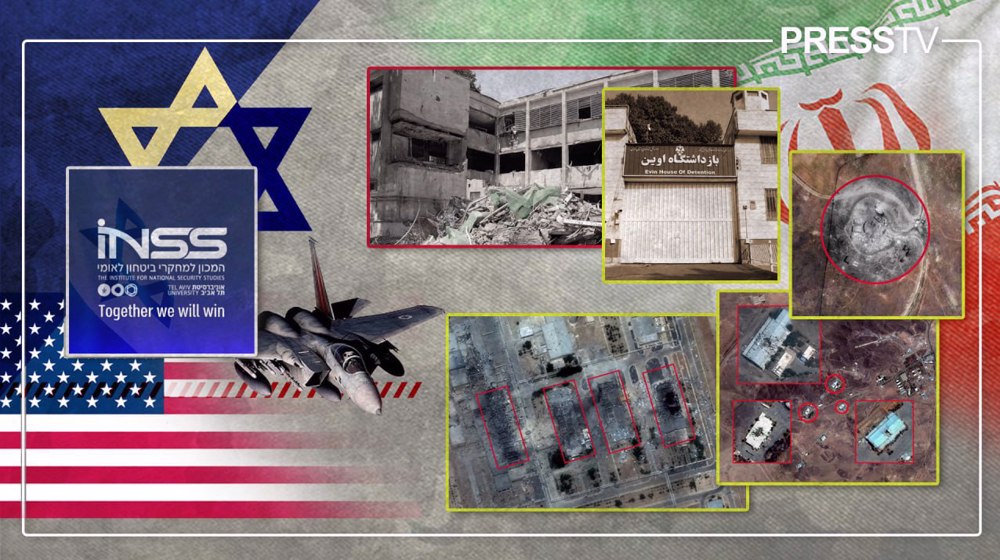
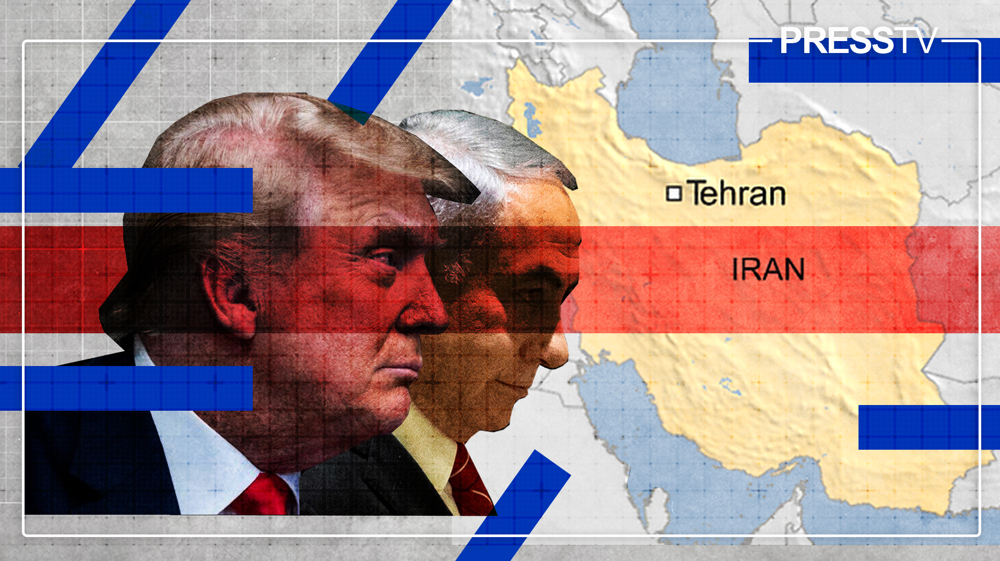
On July 29, the Tel Aviv-based ‘Institute for National Security Studies’, a think tank that is enormously influential on the Zionist entity's military and security policy, published a document advocating for “regime change” in Iran, setting out potential methods to achieve that.
In a bitter irony, much of the report’s content not only attests to the implausibility of achieving such a goal but also lays bare how Prime Minister Benjamin Netanyahu’s calamitous 12-day war of aggression against the Islamic Republic made this objective all the more unfeasible.
A flagrant deceit lies at the document’s core – “Israel did not set the overthrow of the regime in Iran as a goal in the war.” In reality, on June 15, Netanyahu menacingly declared the entity’s unprovoked attack on the Islamic Republic “could certainly” produce “regime change.”
He claimed the Iranian government was “very weak” and “80 percent of the people” would throw it out. Such bold pronouncements were quickly silenced by an unprecedented and devastating missile barrage from Tehran, which Tel Aviv couldn’t repel.
Since then, the mainstream media has reported senior Zionist entity officials were preparing for their grand attack on June 13 since March this year, seeking to strike before Iran “rebuilt its air defenses by the latter half of the year.”
The underlying plan to militarily cripple Tehran and incite a “revolution” was, in turn, “carefully laid months and years in advance,” having been specifically wargamed in conjunction with the Biden administration.
Still, major news outlets have overlooked the obvious import of these disclosures – the 12-day war was a US/Israeli “regime change” operation targeting Tehran, which was long-planned and failed miserably.
This interpretation is reinforced by reports indicating the US had, in the months leading up to the war, been specifically seeking to address the Zionist entity’s “capacity problems”, by “augmenting Israel’s defenses with systems on the ground, at sea and in the air.”
In other words, the US was arming Tel Aviv for June 13 well in advance. However, this belligerent windfall wasn’t sufficient to achieve any of the war’s objectives.
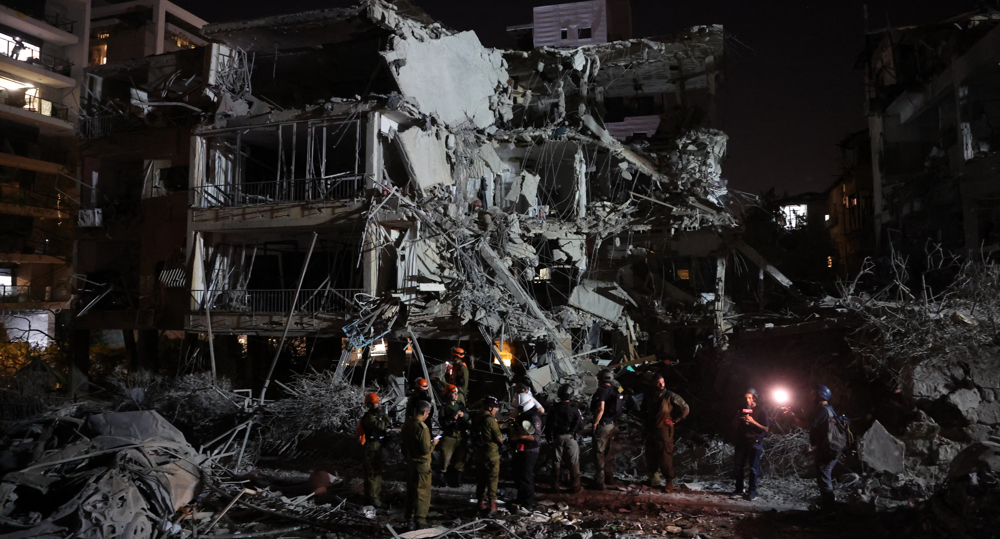
Israel was quickly in dire trouble, as Tehran launched waves of devastating missile barrages, which couldn’t be repelled. The much-vaunted defense systems were not only consistently outmaneuvered, but were running dangerously low on interceptors within just five days.
Washington was thus forced to send further missile defence assets to the region.
An extraordinary amount of munitions was spent intercepting Iranian attacks, with little success. The expense was astronomical. A former financial adviser to the Israeli chief of staff has estimated the abortive campaign’s first 48 hours alone cost $1.45 billion, with almost $1 billion spent on defensive measures alone.
Economists place the daily cost of military operations at $725 million. Haaretz calculates that civilian and domestic financial damage could run to many billions. This, while the Zionist entity’s economy is already barely functioning.
The long-term ramifications of the Zionist entity’s flaccid interceptor blitz are laid bare in a July report from its lobby group JINSA. It warns, “after burning through a large portion of their available interceptors,” Washington and Israel both face an urgent need to replenish stockpiles and sharply increase production rates.”
Grave questions abound over the pair’s ability to do either. Independent analysis indicates the US fired off over 150 THAAD anti-ballistic missiles during the 12-day war of aggression, roughly a quarter of Washington’s entire stockpile.
For context, the Pentagon will acquire 12 interceptors by the end of 2025, and 11 in 2024.
JINSA estimates that, "at current production rates”, THAADs spent protecting Israel throughout the brief war could take up to eight years to replenish. And that’s without factoring in how the US provided 60 percent of the entity’s air defence, due to “shortfalls” in Israel’s own arsenal.
JINSA suggests the US is now forced “to choose between replenishing its own stockpile and fulfilling deliveries to foreign partners” - such as Tel Aviv.
✍️ Analysis - How a 46-year American-Israeli ‘regime change’ project in Iran crumbled in 12 days
— Press TV 🔻 (@PressTV) July 14, 2025
By @kesic_ivan https://t.co/eW1IR3HkcB
Outright hostility
That INSS report didn’t consider the financial, material and political costs of the Zionist entity’s offensive military operations targeting Iran during the 12-day war.
As the report acknowledges, “some” of these efforts were explicitly “intended to undermine the foundations” of the Islamic Republic, and ignite mass public protests. Yet, the Institute admits “not only is there no evidence Israel’s actions advanced this goal, but at least some of them had the opposite effect.”
The “clearest example” of this failure, per INSS, was Tel Aviv’s blitzkrieg of Evin prison on June 23rd - a “symbolic blow…intended to encourage public mobilization.”
Western media and major rights groups condemned the action, with one of them calling it a “serious violation of international humanitarian law” that “must be investigated as a war crime.”
As it was, scores of civilians, including prisoners and their family members, medical professionals, administrative staff, and lawyers were killed, which “aroused harsh criticism of Israel” even among “critics and opponents” of the Iranian government “inside and outside” the country, the Israeli think tank report admits.
Direct military strikes on the Islamic Republic were a single component of a much wider US/Israeli “regime change” project. Mossad-controlled internal networks, cultivated over many years, carried out assassinations and sabotage, while attempting to foment public upheaval.
Whatever successes they achieved in the war’s initial stages, these Fifth Columnists similarly failed to trigger mass Iranian mobilization against their government. Their actions also allowed security services to effectively identify, locate and liquidate them, leaving Tel Aviv with no in-country human wrecking assets left.
Another was a chorus of calls for “regime change” in Tehran emanating from a small but voluble cluster of Iranian exiles, tied to Western-funded ‘think tanks’ and other organizations, many of whom are associated with Reza Pahlavi, son of the former Iranian dictator.
On June 23, as the war neared its end, he gave an address in Paris declaring the Islamic Republic was on the verge of collapse. Dubbing the 12-day war Iran’s “Berlin Wall moment”, he called for Israel to finish the job.
As the INSS report records, the few people in diaspora who demanded “regime change” repulsed the overwhelming majority of Iranians within and outside the country.
Resultantly, “large segments of the Iranian public” perceive them as “having betrayed Iran in its time of need.” Even the mainstream media has admitted Pahlavi’s “pitch” provoked “wariness and outright hostility among Iranians.”
Coincidentally, it is not the first time exiles personally endorsing insurrection in Tehran have backfired spectacularly for Israel and its Anglo-American puppet-masters.
In September 2022, rioters gathered under the banner of “Women, Life, Freedom” across Iran. As Press TV exposed at the time, a shadowy network of Western-sponsored off- and online actors seized the opportunity, ensuring that overseas audiences received blanket coverage.
Pahlavi, and close allies such as Masih Alinejad, a prominent veteran of US-funded propaganda efforts targeting Tehran, who has called for Zionist entity attacks on the Islamic Republic and assassination of its leaders, quickly proclaimed themselves to be leading the “movement”.
Protests quickly fizzled before being completely forgotten. In a post-mortem of why the so-called 'women life freedom' project failed, Zionist lobby-connected Mariam Memarsadeghi, who promotes “regime change” in the Islamic Republic, explicitly blamed Pahlavi for the debacle.
She noted how “his most visible associates” regularly endorse “retributive violence”, and “summary executions”, of Iranian citizens. No wonder they rejected Pahlavi’s brazen attempts to exploit the protests to seize power.
According to Charlotte Kates, Israel had hoped its attack on Iran would lead to regime change, but instead, it brought together Iranians from diverse perspectives in a show of national unity.
— Press TV 🔻 (@PressTV) June 26, 2025
Follow: https://t.co/B3zXG73Jym pic.twitter.com/uxAyOtyATd
Failed plots
The 12-day war’s failure to produce the so-called “regime change” in Iran is all the more remarkable given that Washington has for decades been planning to dismantle the Islamic Republic. In 2002, then-US President George W. Bush made a number of public statements indicating he considered overthrowing Tehran’s popular government a priority.
For example, in July that year, Bush actively called for Iranian citizens to rise up, pledging they would “have no better friend than the United States of America” in such a rebellion.
Those entreaties have gone unheeded ever since, but strategising for such an eventuality has remained ongoing. In 2009, the Brookings Institution published a lengthy document outlining “options for a new American strategy toward Iran”.
It explored achieving “regime change” via supporting opposition elements, promoting internal unrest and divisions, and conducting covert operations to destabilize the government.
The proposal also mooted a route eerily referred to as “Leave it to Bibi” - using Israel as a proxy. Handily, Tel Aviv was purportedly already preparing to strike:
“It is clear from discussions with Israeli military and intelligence officials and from numerous press leaks and reports that Israel is well underway in planning for a military operation.”
Nonetheless, the Brookings Institution considered both options fraught with enormous risks and a high likelihood of grave, unintended consequences.
Civil war, regional instability, humanitarian crises, and the government’s position strengthening in the event of failure were all cited as hazardous eventualities that could arise.
The 12-day war amply underlines that cognizance of these dangers was no deterrent to the US and Israel pushing ahead with “regime change” attempts against Tehran anyway, just over a decade-and-a-half later, with predictably - indeed, predicted - disastrous results.
The recent INSS report strikes a similarly discordant tone. Despite repeatedly acknowledging the war of aggression was a counterproductive catastrophe that achieved the “opposite” of what Tel Aviv and Washington intended in every regard, INSS still concludes “regime change” in Tehran remains “a possible solution” and “worthy goal” - not just for the Zionist entity, but “the region, and the West.”
The report also sets out four “different strategies for overthrowing” Iran’s government.
It, however, acknowledges that each approach would almost inevitably boomerang. The report begrudgingly concludes that even if toppling Iran’s government were plausible, this “depends mainly on factors beyond Israel’s control.”
In other words, the Zionist entity has no good options available, only scope for triggering far worse consequences for itself. But evidently, from the perspective of Tel Aviv and its Western sponsors, the “regime change” coast isn’t clear in Tehran. It is therefore imperative that Iranian authorities and citizens alike stay ever-vigilant of foreign-borne threats, seen and unseen.
Remembering Sabra and Shatila massacre: Why memory is the ultimate shield against erasure
200 nights, one resilient nation: Iranian people’s epic in defense of homeland and Revolution
Iran’s nuclear industry will survive war and strikes as knowledge cannot be obliterated by force



VIDEO | Saudi Arabia, UAE helping US, Israelis to fulfill their mission in region: Analyst
VIDEO | Israel’s targeting of Palestinian journalists part of broader campaign to control narrative: Analyst
Iran Army downs US Orbiter reconnaissance drone over Strait of Hormuz
Iran must fight US blockade with energy blockade: Deputy speaker
North Korea launches 2 ballistic missiles, dials up pressure on US
Iran’s president to attend UN General Assembly in New York
Hamas condemns Netanyahu’s illegal entry into Al-Aqsa Mosque
Iran dismantles terrorist cells in three provinces



 PressTV NEWSLETTER
now
PressTV NEWSLETTER
now
 This makes it easy to access the Press TV website
