IRGC-led Sahand-2025 drill positions Iran as key player in Eurasian security architecture
By Nahid Poureisa
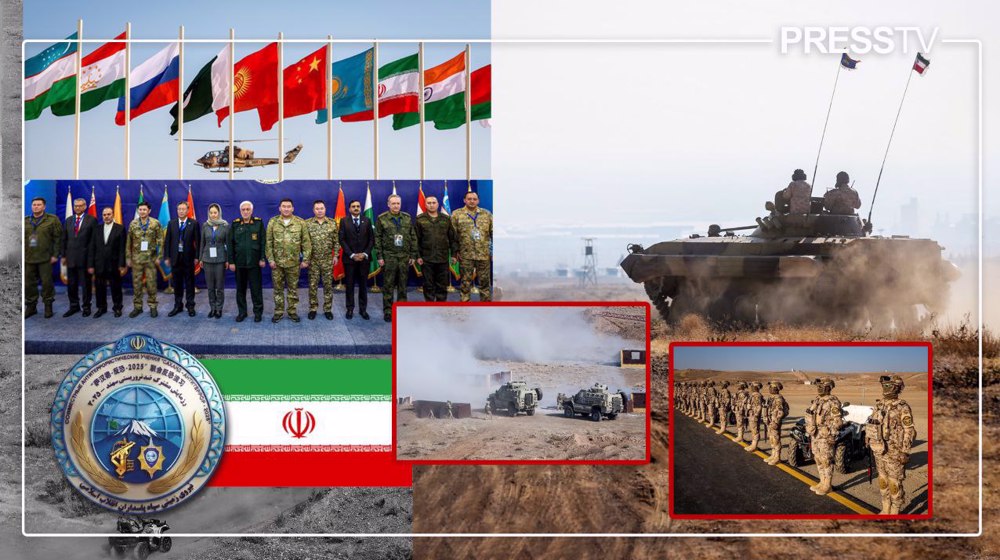
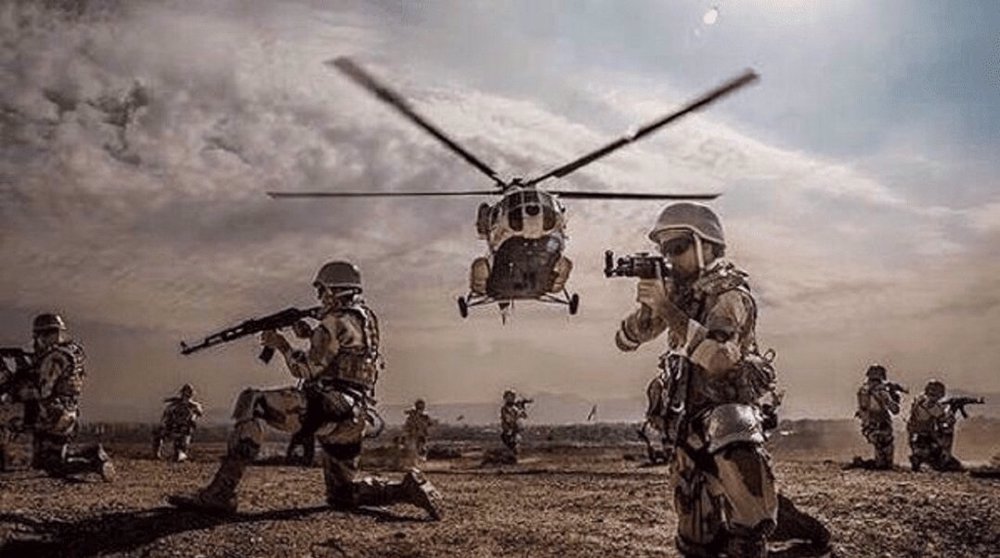
Iran’s hosting of the Sahand-2025 Shanghai Cooperation Organization (SCO) military drill comes at a pivotal moment – just after the 12-day war imposed on the Islamic Republic, and despite decades of sanctions, pressure, and hybrid warfare.
Iran continues to be a key security anchor for a broad Eurasian region stretching from China’s Xinjiang and Central Asia to the Levant. The strategic drill that made headlines across the world reveals that Iran’s role is not peripheral or deniable. It is structural and essential.
In his recent speech, Leader of the Islamic Revolution, Ayatollah Seyyed Ali Khamenei, reiterated that the United States is the true embodiment of global terrorism.
For decades, the US framed its post-9/11 so-called “war on terror” as a noble global-security project, in which Iran became its primary target.
Under that banner, Washington constructed a dense network of military/ terrorist bases around Iran and launched a wide-ranging hybrid warfare campaign designed to disorient the country. Economic sieges, cyberattacks, psychological warfare, and the weaponization of ethnic identities were all aimed at fracturing Iran from within.
Despite intense pressure, Iran did not collapse but strengthened further. It became the region’s most cohesive security actor, preventing extremist spillover from Afghanistan and Pakistan, disrupting and destabilizing networks in Iraq and Syria, and countering threats in the Persian Gulf.
What was intended to weaken Iran on multiple fronts instead sharpened its operational capabilities, turning it into a regional security anchor. This position also gave Iran a platform to promote its revolutionary worldview, showing how the fight against terrorism aligns with resistance to imperialism, a concept Iran has advanced both regionally and globally.
This is why today, two decades later, Iran stands as the main counter-terrorism actor across West Asia, and increasingly across the broader Eurasian space.
Iran’s entry into the SCO: A new strategic map
Iran’s accession to the SCO, finalized under former president, Ebrahim Raeisi, marked a significant geopolitical moment. It expanded the organization’s geographic reach from Central Asia into West Asia and created a contiguous security corridor linking China, Russia, Central Asia, Pakistan, and the Persian Gulf.
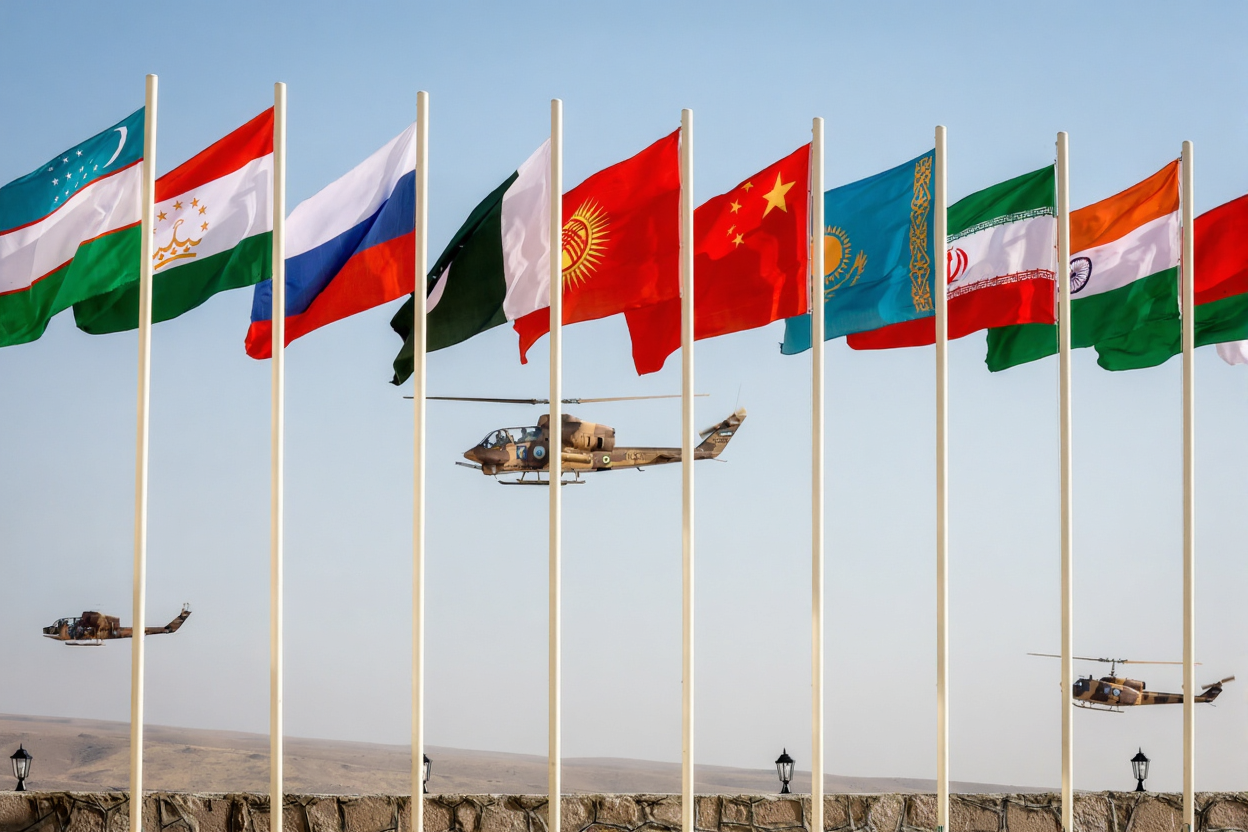
The countries participating in Sahand-2025, China, Russia, India, Pakistan, Kazakhstan, Kyrgyzstan, Tajikistan, Uzbekistan, and Belarus, represent a vast Eurasian arc that sees Iran as indispensable to long-term stability. Their presence signals an understanding that Iran is a central node in continental security architecture.
The presence of Saudi Arabia as an observer is also notable. Although Saudis have at times been forced to go with Western pressure on Iran, its decision to attend the drill led by the Islamic Revolution Guards Corps (IRGC) Ground Force is telling.
Look into the significance of Sahand 2025 as Iran hosts an anti-terrorism military exercise that brings together members of the SCO to counter terrorism across borders.
— Press TV 🔻 (@PressTV) December 5, 2025
Follow Press TV on Telegram: https://t.co/LWoNSpkJSh pic.twitter.com/TBS1IJU5mZ
It’s particularly important given that Australia, placed firmly within the US-led imperial bloc, recently moved to designate the IRGC as a “terrorist organization.”
The irony is clear: while Western powers seek to criminalize Iran’s most effective counter-terror force, Eurasian states are expanding military cooperation with it through SCO exercises like Sahand-2025. This reflects a broader recognition that regional stability is unattainable without Iran.
This coincides with Iran hosting intensive diplomatic engagements such as high-level visits from Turkey and Saudi Arabia, where Syria’s present and future were openly discussed.
These talks prove that Iran is increasingly viewed as a solution-oriented state with unmatched on-the-ground experience confronting transnational threats.
A global battlefield: Terrorism far beyond Syria
One of the clearest reasons for Iran’s rising relevance is the fact that terrorism never remained confined to Syria or Iraq. The networks that operated there expanded across borders, striking Russia and threatening China. Central Asian states have faced similar dangers, revealing that terrorism is fundamentally transnational.
In this context, Iran’s record is not only promising, but it is foundational. The IRGC’s Quds Force, under the leadership of General Qassem Soleimani, played the decisive role in destroying the dreaded terrorist group’s territorial project across Iraq and Syria.
This fact is acknowledged across Eurasia, even by states that disagree with Iran on other matters. General Soleimani’s strategic vision, alliances, and coordination reshaped the region’s security map and prevented extremist expansion into the heart of Eurasia.
Thus, for China, Russia, and Central Asian states, all now confronting intensified US pressure, Iran is not just another regional actor. It is the country with the most proven experience, the highest sacrifices, and the deepest operational knowledge in fighting transnational terrorism.
Sahand-2025 is therefore not an isolated exercise. It symbolizes a new security geometry in which Iran stands at the heart of Eurasian defense planning.
IRGC Ground Force units join forces from five SCO member countries in the 5-day Sahand 2025 anti-terrorism drills in northwestern Iran.
— Press TV 🔻 (@PressTV) December 1, 2025
Follow: https://t.co/mLGcUTSA3Q pic.twitter.com/l8wtkjAYoE
What makes this even more striking is its timing: only months after the 12-day war, when Iran faced direct military aggression from the United States, NATO, and, of course, the Zionist regime.
Instead of emerging weakened or isolated, Iran is even more connected and integrated in multilateral structures. This is a powerful message: despite the immense resources deployed by US imperialism and its allies, Iran remains a central force in protecting the region from terrorism, extremism, and destabilization.
Another point is Iran’s geostrategic role. Bordering the Persian Gulf and sitting at the western pivot of the Eurasian landmass, Iran anchors the safety of multiple energy corridors.
The Strait of Hormuz, through which a significant share of global oil and LNG passes, cannot be secured without Iran. The Bab al-Mandab, the Red Sea, and the maritime routes linking East Africa, West Asia and Europe all depend on regional stability that Iran is bringing to the table.
And of course, for major infrastructure projects like China’s Belt and Road Initiative, Iran’s stability is fundamental. Overland corridors, trade routes, energy pipelines, and supply chains all depend on a secure West Asian link. Iran provides that link.
Confronting Zionism as a geopolitical project
Iran defines counterterrorism as inseparable from resistance to American imperialism and opposition to Zionism. These are not separate issues but part of a single ideological framework and worldview.
For the sake of development, stability, and protection from terrorism, understanding and adopting this cohesive approach is at the core. Fighting terrorism without addressing its root causes, US imperialism and its regional proxies offers no benefit.
Countries that engage with Iran quickly realize what counterterrorism truly means: addressing the underlying networks and power structures, not ignoring the “giant elephant” in the region.
Iran hosts a 5-day anti-terrorism military exercise titled Sahand 2025 in East Azarbaijan province, with delegations from member states of the Shanghai Cooperation Organization in attendance.
— Press TV 🔻 (@PressTV) December 3, 2025
Follow: https://t.co/mLGcUTS2ei pic.twitter.com/47lnuOqvVF
The Shanghai Cooperation Organization (SCO) drill hosted by Iran carries significant political weight, signaling that Eurasia is developing a security architecture independent of Western intervention, with Iran’s role at its core.
Across Eurasia, the conclusion is increasingly clear: without Iran’s perspective, there is no stable region, no secure energy corridors, and no coherent strategy against the hybrid forms of terrorism that have destroyed West Asia for a century.
For global trade, energy flows, regional security, and the lives of millions, Iran has become an essential pillar.
Nahid Poureisa is an Iranian analyst and academic researcher focused on West Asia and China.
(The views expressed in this article do not necessarily reflect those of Press TV.)
200 nights, one resilient nation: Iranian people’s epic in defense of homeland and Revolution
Iran’s nuclear industry will survive war and strikes as knowledge cannot be obliterated by force
New resolution and UNSC referral show IAEA continues to be weaponized by US, Europe against Iran



15 nations reject attacks, threats against safeguarded nuclear facilities
VIDEO | Tabriz hosts 26th Iranian annual nuclear medicine congress
Two years after Israel’s pager terrorism in Lebanon: Scars, loss, and the will to carry on
Three students killed, eight wounded in Philippines school shooting
Two women injured as Saudi forces shell residential area in Yemen’s Sa’ada
Baghaei: ‘Crude’ US propaganda reveals ‘naivety’ behind ‘unlawful war of choice’ against Iran
Yemenis hold rally in Sa'ada in support of armed forces after lightning advances
Dozens killed in mosque blast, militant clashes in Pakistan’s Khyber Pakhtunkhwa


 PressTV NEWSLETTER
now
PressTV NEWSLETTER
now
 This makes it easy to access the Press TV website
